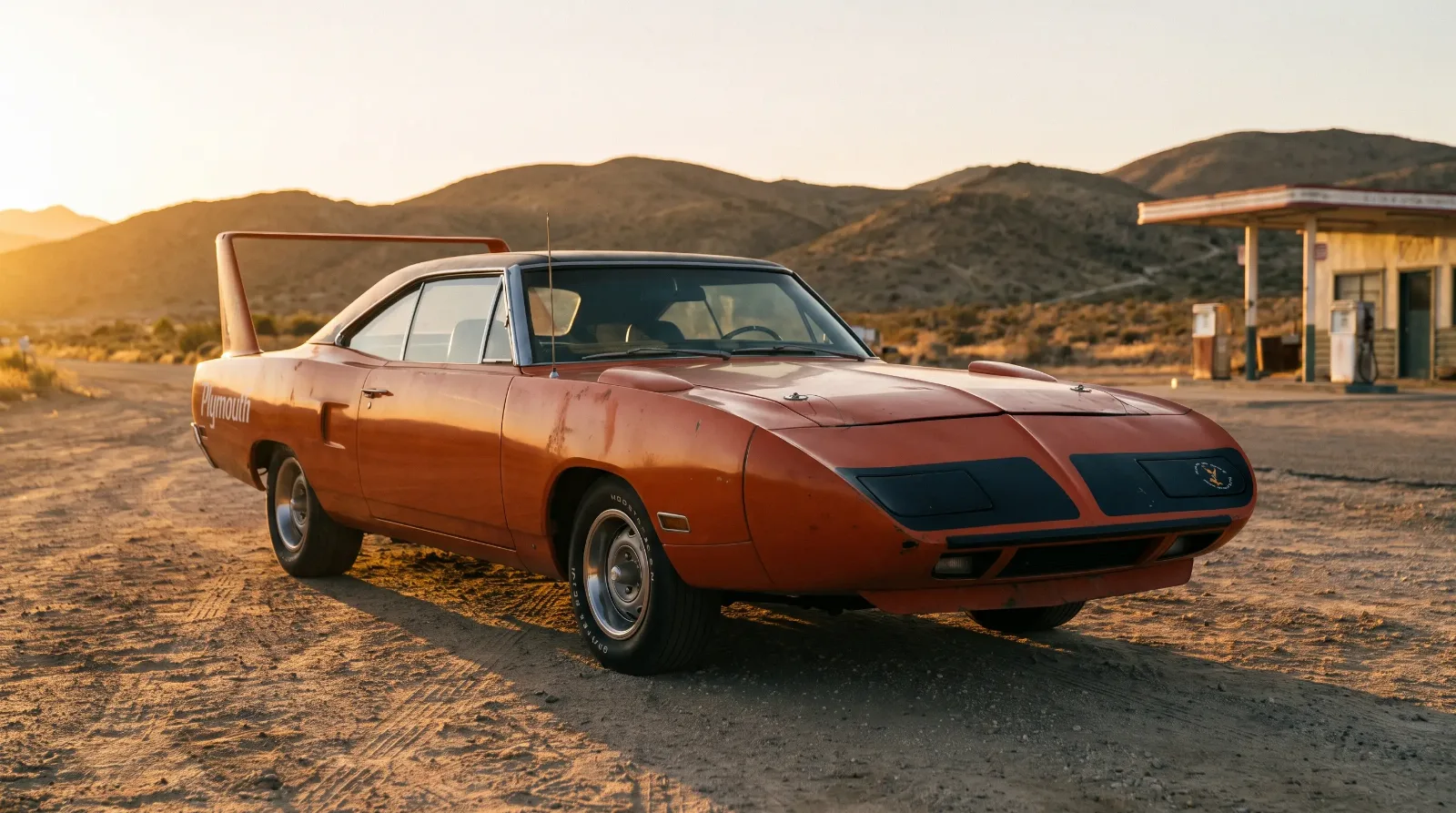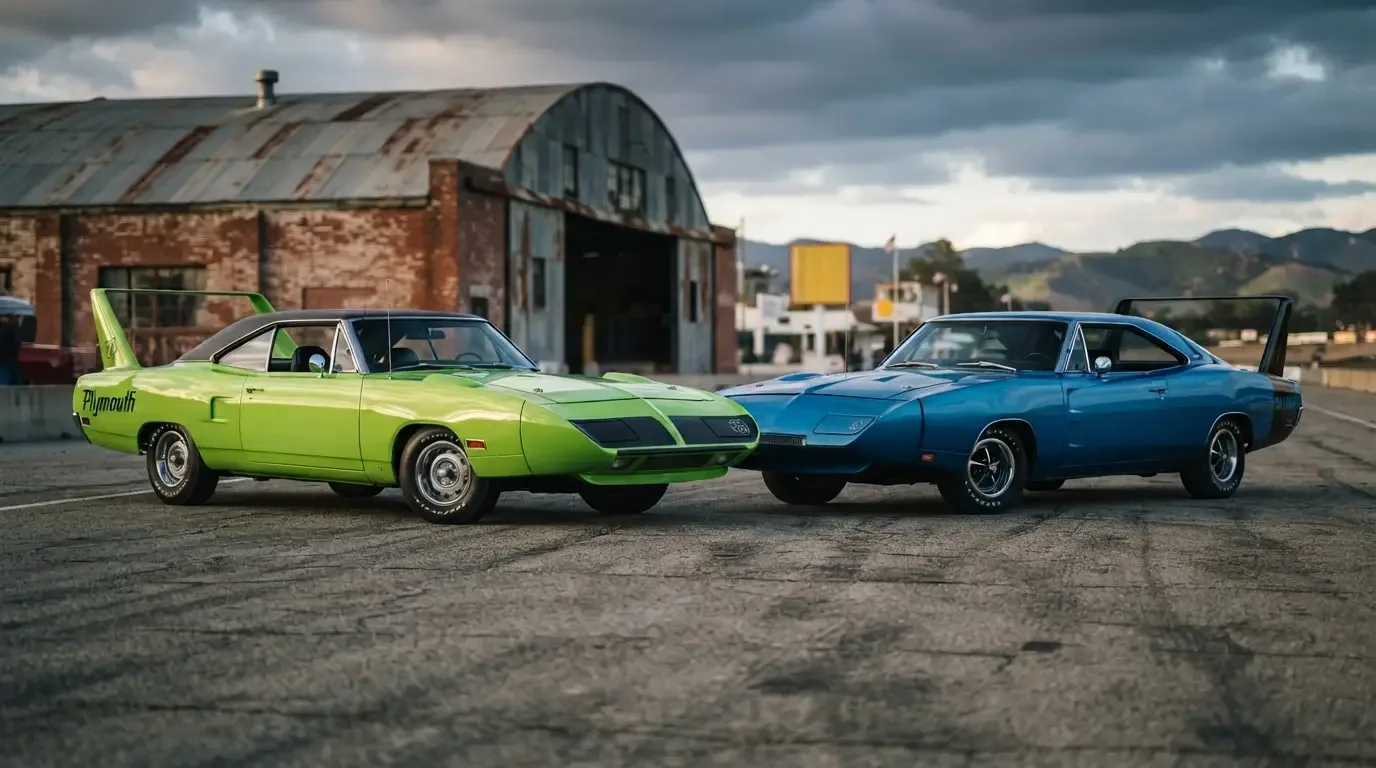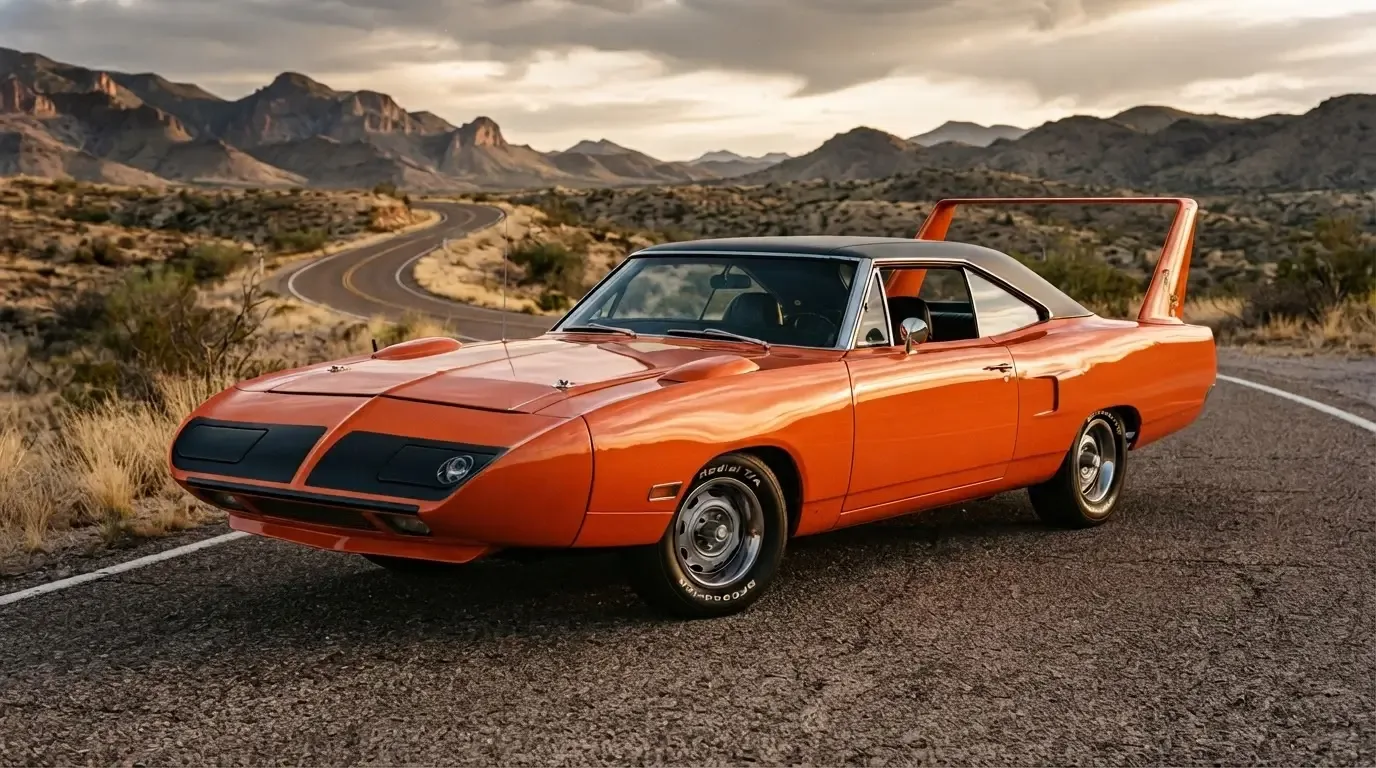
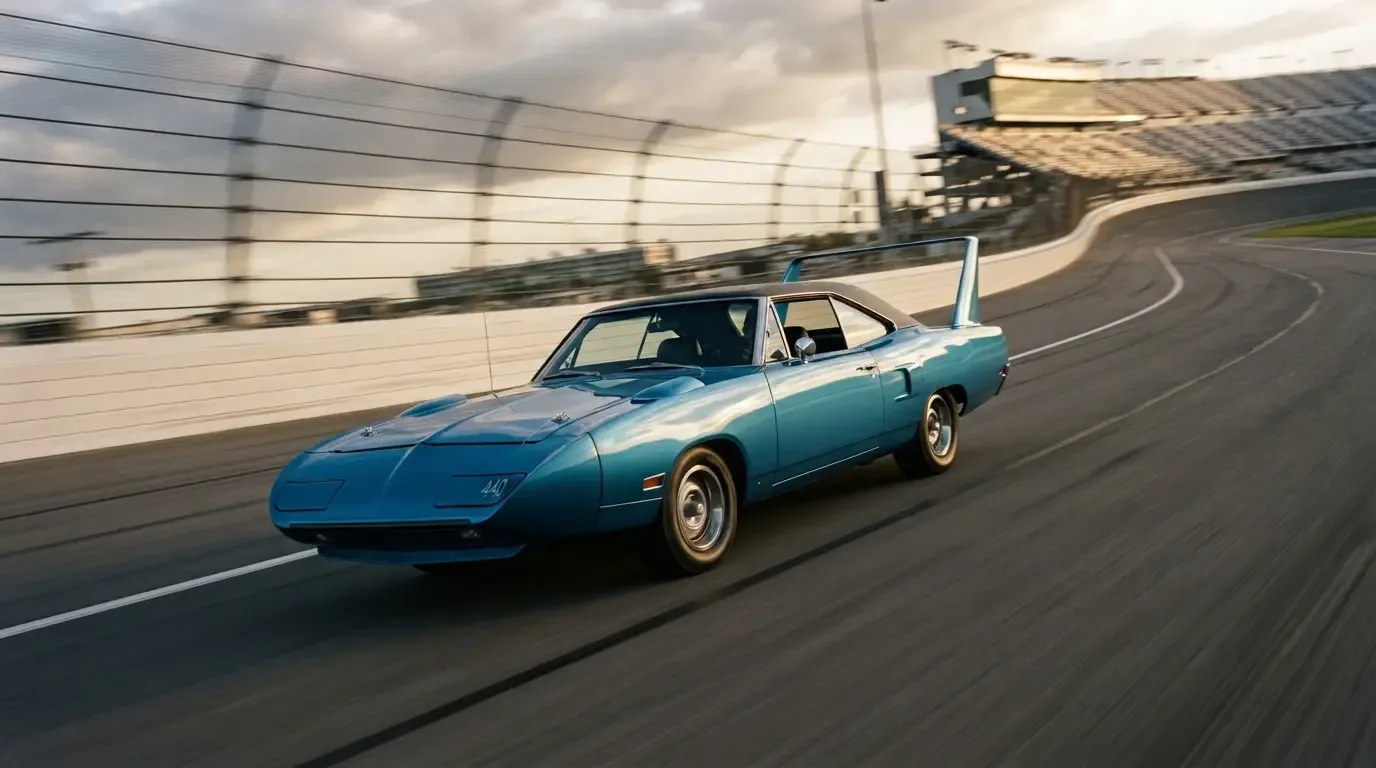
The Plymouth Road Runner Superbird existed for one reason: NASCAR rules. Chrysler built a wing car to win on Sunday, and for a short stretch it worked so well that NASCAR changed the rulebook to make sure it never happened again. That is the short version of the nascar aero car ban, and the long version is a lot more interesting than a spoiler on a trunk lid.
Why the aero war started
By 1969, stock car racing had turned into an arms race between Ford and Chrysler, and the battleground was air. Dodge fielded the Charger Daytona that year with a pointed nose cone and a towering rear wing, chasing every fraction of drag it could shave off a car that was, underneath the sheet metal, still a mid-size family sedan. It worked. The Daytona became the first NASCAR stocker to top 200 mph on a closed course, and Ford and Mercury scrambled to answer with their own slippery Talladegas and Cyclone Spoilers.
Plymouth wanted in. The Road Runner was already the brand's bread-and-butter muscle car, cheap and quick and popular with buyers who wanted speed without the luxury trim. Turning it into a wing car for 1970 meant grafting on a new nose, flush rear glass, and that enormous wing, all in the name of chasing Ford around a superspeedway. I have worked on a few of these cars over the years, and I can tell you the aerodynamics were not an afterthought bolted on for looks. Every panel change had a wind-tunnel reason behind it.
What made the wing cars so fast
The Superbird and its Dodge sibling were not fast because of raw horsepower. A 426 Hemi in a Superbird made the same power on paper as a Hemi in a plain Road Runner. The difference was how clean the car moved through the air at 190 mph, where drag eats horsepower by the fistful. NASCAR's own engineers measured a meaningful drop in aerodynamic drag on the winged cars compared to the standard notchback body, and on a superspeedway that translates directly into lap speed and less strain on the engine to hold it.
That mattered because these cars raced full-length events at Daytona and Talladega, hours of sustained high rpm running. A car that needed less throttle to hold the same speed put less heat into the block and less stress on the valvetrain. Drivers noticed. Richard Petty left Plymouth for Ford in 1969 partly over money, then came back to drive a Superbird in 1970 and won several races in it, which tells you the car worked even for a driver who had briefly bet against the brand.
"You can hand a mechanic a Hemi and a stopwatch and he will find you ten horsepower. Hand him a car shaped right and he will find you thirty without touching the engine. That is what the wing cars proved, and it scared the sanctioning body more than any engine ever did."
- Mike Sullivan
The rule that ended it
NASCAR did not ban the aero cars outright in one swing. For 1971 the sanctioning body limited winged cars to a smaller engine, effectively 305 cubic inches unless the car ran without the aero package, which meant a Hemi Superbird was no longer a realistic entry. That single displacement rule did more to end the wing car era than any press release calling the cars unsafe or unfair. Chrysler and Ford both quietly stopped building aero specials because there was no longer a rules class where the cars made sense.
Plymouth had also already decided the Superbird was a one-year production run. Building the required homologation number of street cars to qualify for NASCAR competition was expensive, the cars did not sell especially well off the showroom floor, and the writing was on the wall that the sanctioning body wanted stock cars to look more like the sedans fans actually drove home from the dealer. You can read the full story of how that homologation requirement shaped every panel on the car, right down to the vinyl roof that hid a factory seam.
Why the ban stuck
Part of the reason NASCAR could kill the wing cars with a displacement rule instead of an outright ban is that the aero advantage was tied directly to top speed on the biggest tracks. Cut the available cubic inches and a wing car lost the very thing that justified the extra weight and complexity of the nose cone and tail. Nobody was going to campaign a 305 cubic inch Superbird against a full-size Hemi running in the unrestricted class. The rule was surgical, and it worked exactly as intended without NASCAR ever having to say the words "aero cars are banned."
There is also a simpler explanation that gets less attention. Speeds at Talladega and Daytona were climbing into territory that worried NASCAR's leadership, tire technology of the era included, and the wing cars were the most visible symbol of that climb. Slowing the whole field down by changing an engine rule was cheaper and less controversial than redesigning tracks or banning specific bodies by name. The aero cars became collateral in a broader speed-control effort, not villains singled out for punishment.
What it means for buyers today
None of this history changes wrenching on the cars today, but it explains why they carry the reputation they do. A genuine wing car represents a rules fight that lasted about two seasons and never repeated itself. NASCAR went back to boxier, more conventional bodies for most of the next two decades, and nothing quite like the wing car era returned until aerodynamic testing became a quieter, more incremental part of stock car development in later years. If you want a car with that specific piece of racing history under the sheet metal, the market for real Superbirds and Daytonas is thin and well documented, and shoppers should expect sellers to lean hard on provenance paperwork.
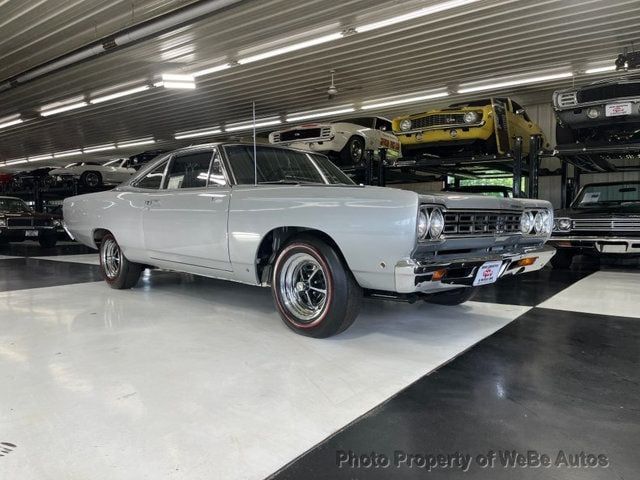
For everyday Road Runner fans who are not chasing a six-figure wing car, the rest of the lineup carries plenty of the same engineering DNA without the NASCAR backstory attached. If you are shopping the model in general, you can browse classic Runner listings and see what is actually available right now, wing or no wing.
The nascar aero car ban is a tidy example of a sanctioning body solving a speed problem without ever writing the word "ban" into a rulebook. Chrysler and Ford spent real money chasing a wind tunnel advantage for two seasons, NASCAR changed one displacement number, and the whole era ended almost overnight. The cars that resulted from that brief window are rarer and stranger looking than anything else Detroit built in the muscle car years, and that strangeness is exactly why people still want them fifty-plus years later.