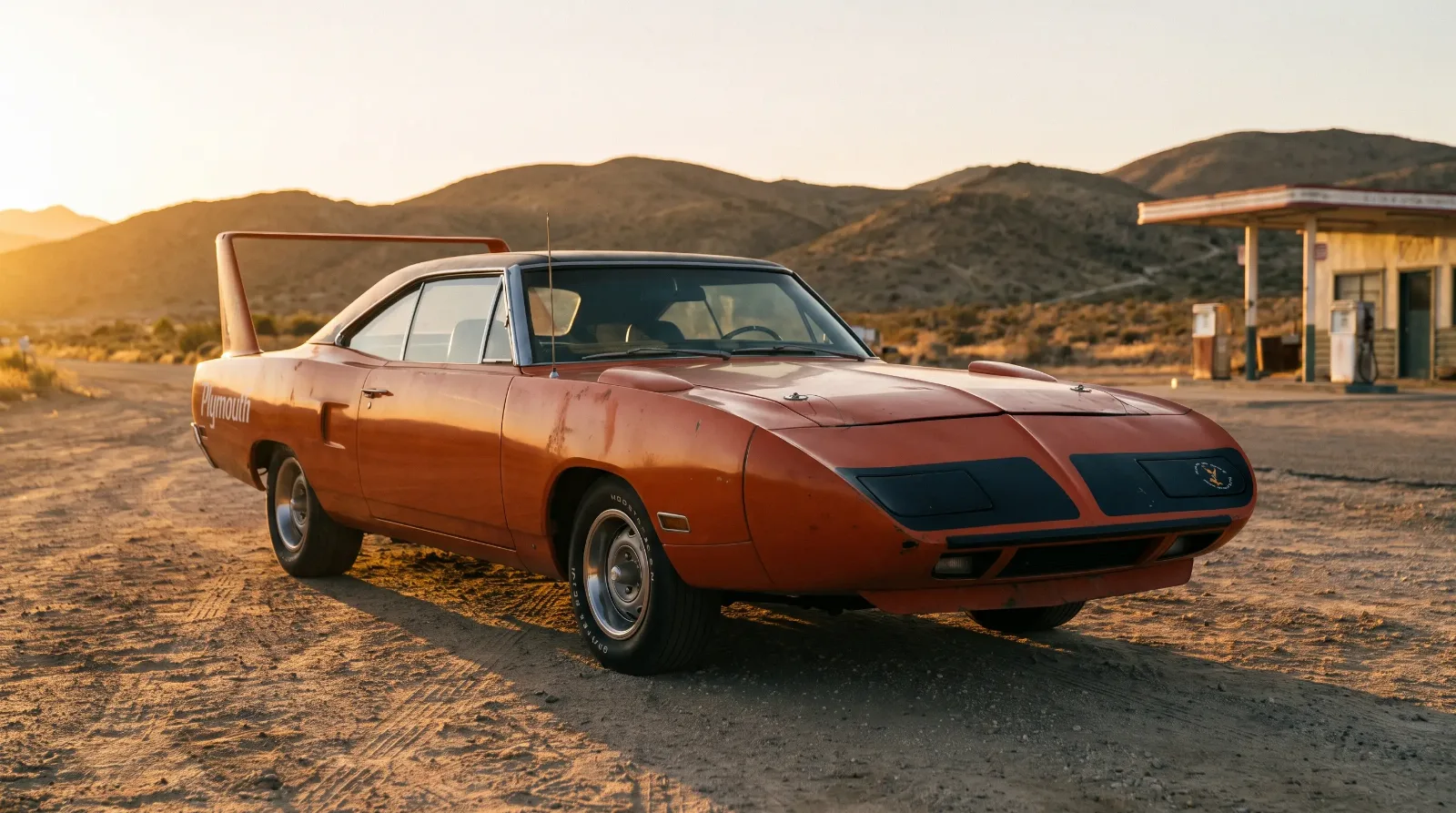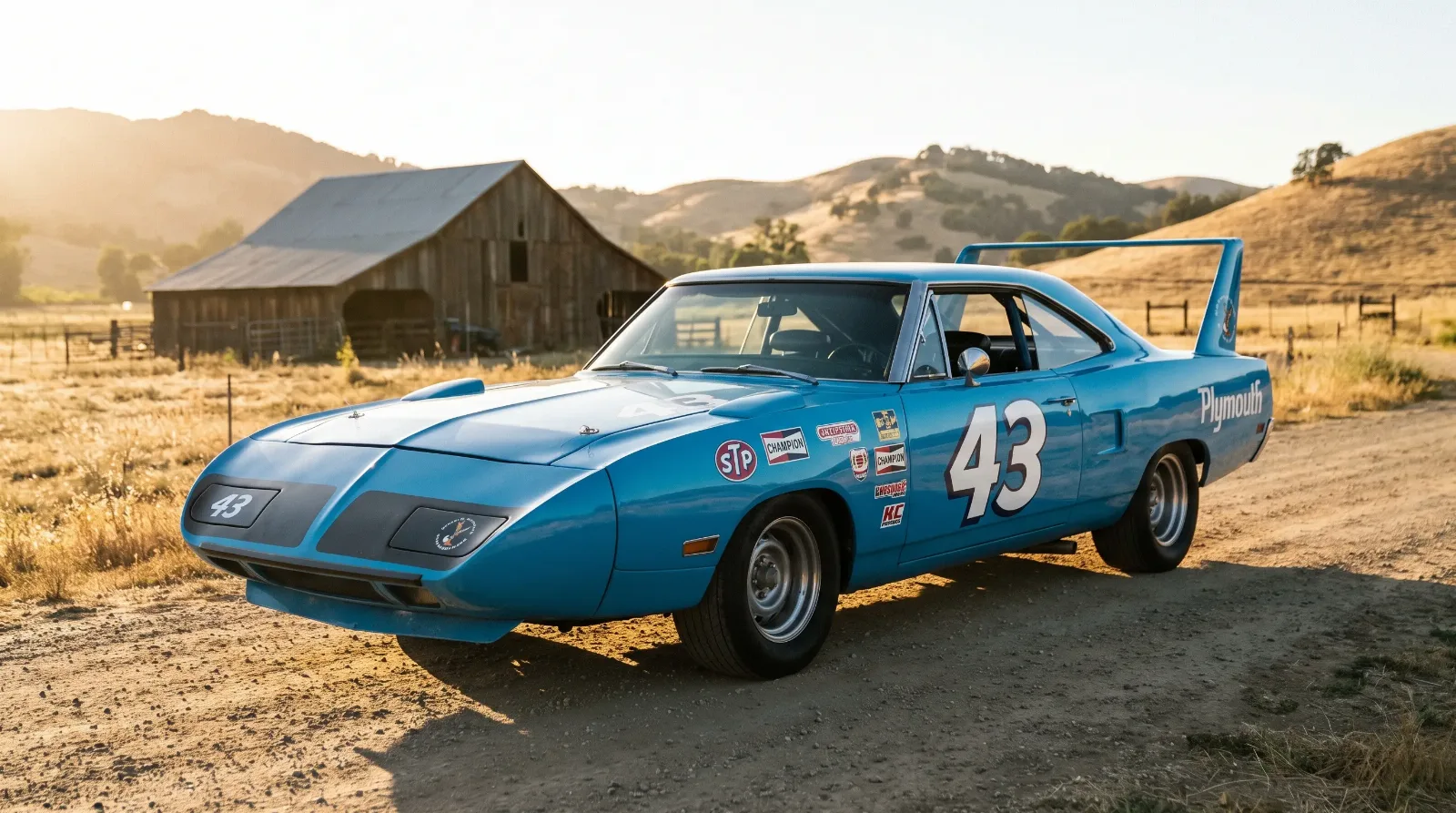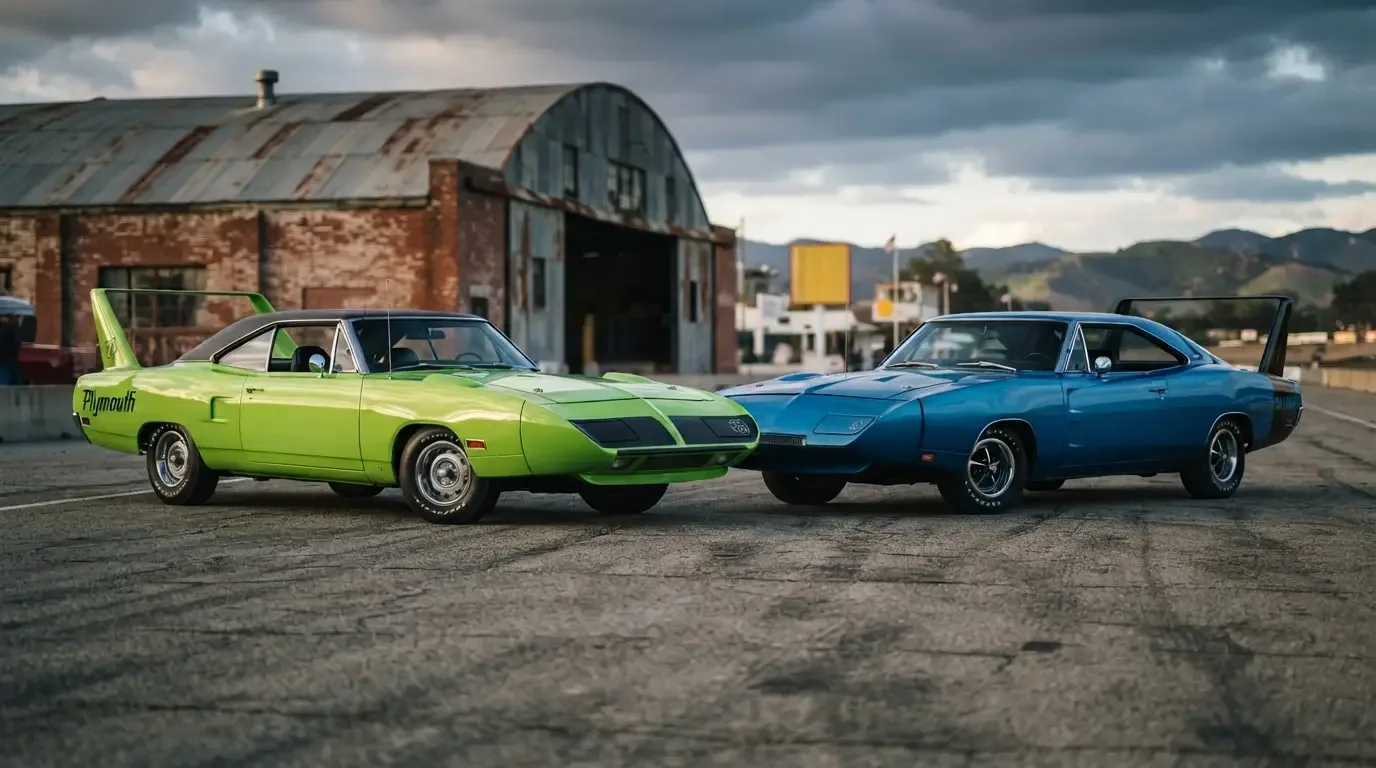
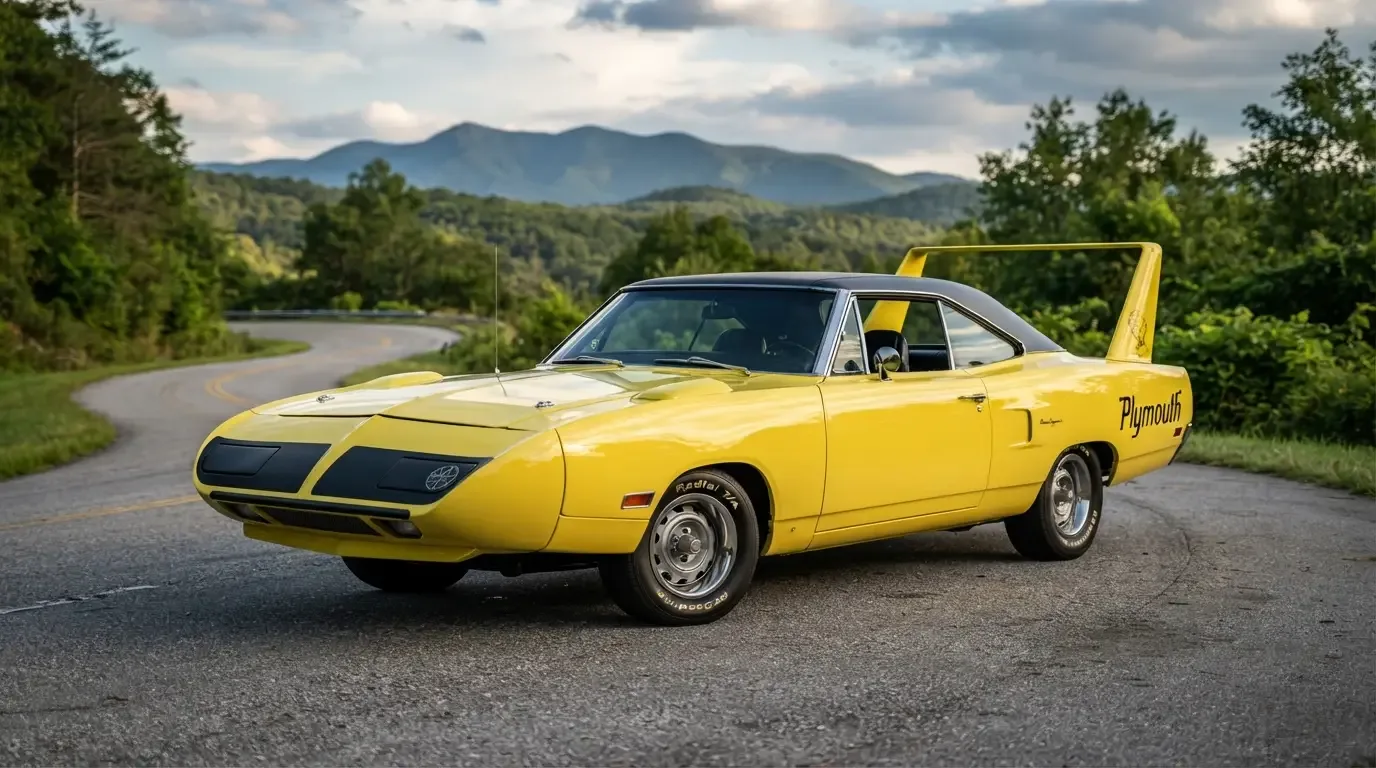
A kid leaning against a chain link fence outside a small town Plymouth dealership in early 1970 would have had exactly one reaction to the car sitting on the lot, and it would not have been admiration. It would have been confusion. The superbird nose cone wing combination stretched the car's silhouette into something that looked less like a family sedan's performance sibling and more like something that wandered off a race track and got lost on the way home. That confusion, multiplied across a country full of Plymouth dealers in 1970, is a big part of why the car sat unsold for months in some showrooms.
The nose that started as a wind tunnel number
Nobody at Plymouth's styling studio drew the Superbird's nose cone because they thought it looked good. They drew it because engineers working from wind tunnel data determined that the standard Road Runner's blunt front end was creating enough aerodynamic drag and front end lift to hurt both top speed and high speed handling stability on NASCAR's biggest superspeedways. The solution was a smoothed, elongated nose that extended the car's front end by nearly two feet, hiding the headlights behind clear covers to keep the airflow as undisturbed as possible.
What is remarkable, looking back at it now, is how little Plymouth's designers seem to have worried about how the result would read to a showroom customer. This was function dictating form almost entirely, with styling reduced to the job of making the aerodynamic solution not look completely absurd, a job it only partially succeeded at in the eyes of 1970 buyers.
The wing and the argument that never quite settled
The rear wing generates just as much debate among historians as the nose does, maybe more. Perched high above the trunk lid on tall struts, the wing was engineered to sit in clean airflow rather than the turbulent air closer to the roofline, and it produced genuine aerodynamic downforce at the speeds these cars ran on superspeedway ovals. The specific height, though, has become something of a legend in itself. Some accounts trace it to a practical need to clear the trunk lid for opening, others to wind tunnel testing that showed real gains at that exact elevation. Both explanations get repeated often enough in club circles that separating settled fact from convenient folklore takes real digging.
Whatever the precise justification, the effect on people seeing the car for the first time was immediate and polarizing. There was no casual glance at a Superbird. People stopped, stared, and usually said something about the wing before they said anything about anything else on the car.
A design too extreme for its own showroom
Plymouth built these aero parts to satisfy NASCAR's homologation rules, which required a minimum public sale run before a manufacturer could race the car, and that regulatory origin explains a lot about why the styling reads as uncompromising rather than customer friendly. Nobody focus grouped this car against a typical Road Runner buyer's taste. The nose cone and wing exist because a rulebook demanded a certain production number, not because Plymouth's marketing department believed buyers were clamoring for a two foot longer front end.
The result was a car that dealers, by several period accounts, struggled to sell at list price, with some documented cases of dealers removing the wing and nose cone entirely to convert unsold units back into standard looking Road Runners just to move inventory. That is a striking image, a factory tearing pieces off its own flagship aero car because customers would not buy it as built, and it says everything about how far ahead of contemporary taste this design actually was.
"I have stood next to a Superbird at more shows than I can count, and the reaction from people seeing one in person for the first time is still somewhere between delight and disbelief. That is a design doing exactly what it was engineered to do fifty plus years later, and precious few cars from this era can claim that kind of staying power."
- Patrick Walsh
How the aero package connects to the bigger Superbird story
Understanding the nose and wing on their own is only half the picture. They were built to solve a specific competitive problem Plymouth was facing on NASCAR's biggest tracks, and the full context of that competition, along with how the finished car actually performed once Richard Petty and other drivers got it on track, rounds out why these parts matter as much as they do. For more on the plymouth superbird, the complete story covers the racing side of this equation in depth.
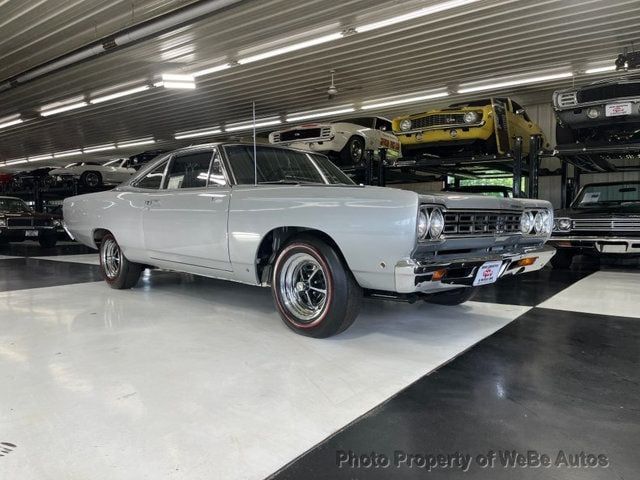
It is also worth remembering that none of this exists without the car it was based on. The Road Runner itself started as a much simpler proposition, a stripped down, affordable muscle car built for buyers who wanted performance without frills, and where this started traces that origin back to its roots before the aero era ever entered the picture.
Why the shape still stops people cold
Five decades on, the nose cone and wing combination remains one of the most recognizable silhouettes in American car culture, instantly identifiable even to people who could not name the model year or the engine option underneath the sheet metal. That kind of visual permanence is rare, and it exists specifically because the design was never softened for public taste in the first place. Plymouth built exactly what the wind tunnel told them to build, sold it reluctantly to a confused public, and ended up with a shape that outlived every sales figure that once made it look like a mistake.
Buyers curious about the broader Road Runner lineage this design grew out of can look through classic Runners on the market to see how the standard cars compare against the aero specials that eventually eclipsed them in cultural memory.
What restorers face bringing these parts back to correct
Original nose cones, molded in fiberglass and prone to cracking after decades of sun exposure and inconsistent storage, have become one of the harder pieces to source correctly for a restoration. Reproduction cones exist and have improved substantially in fit and finish over the years, but purists still hunt for surviving factory originals, partly for authenticity and partly because early reproductions earned a reputation for panel gaps that never quite matched the factory's fit. The wing assembly presents its own challenge, since the mounting hardware and support struts vary subtly enough between build runs that a restorer working toward concours accuracy needs period correct documentation just to confirm they are chasing the right parts.
None of that difficulty seems to discourage anyone. If anything, the scarcity of correct original parts has only added to the mystique surrounding these cars, turning what was once dealer inventory nobody wanted into some of the most fiercely protected original components in the entire muscle car hobby.
A shape born from a rulebook, remembered as art
The Superbird's nose cone and wing were never meant to be beautiful. They were meant to be fast, engineered to a rulebook and a wind tunnel rather than a stylist's sketchpad, and the fact that they have since become genuinely beloved design elements says as much about how car culture's taste evolved as it does about the parts themselves. Function led, form followed reluctantly, and somewhere along the way the result became art anyway.