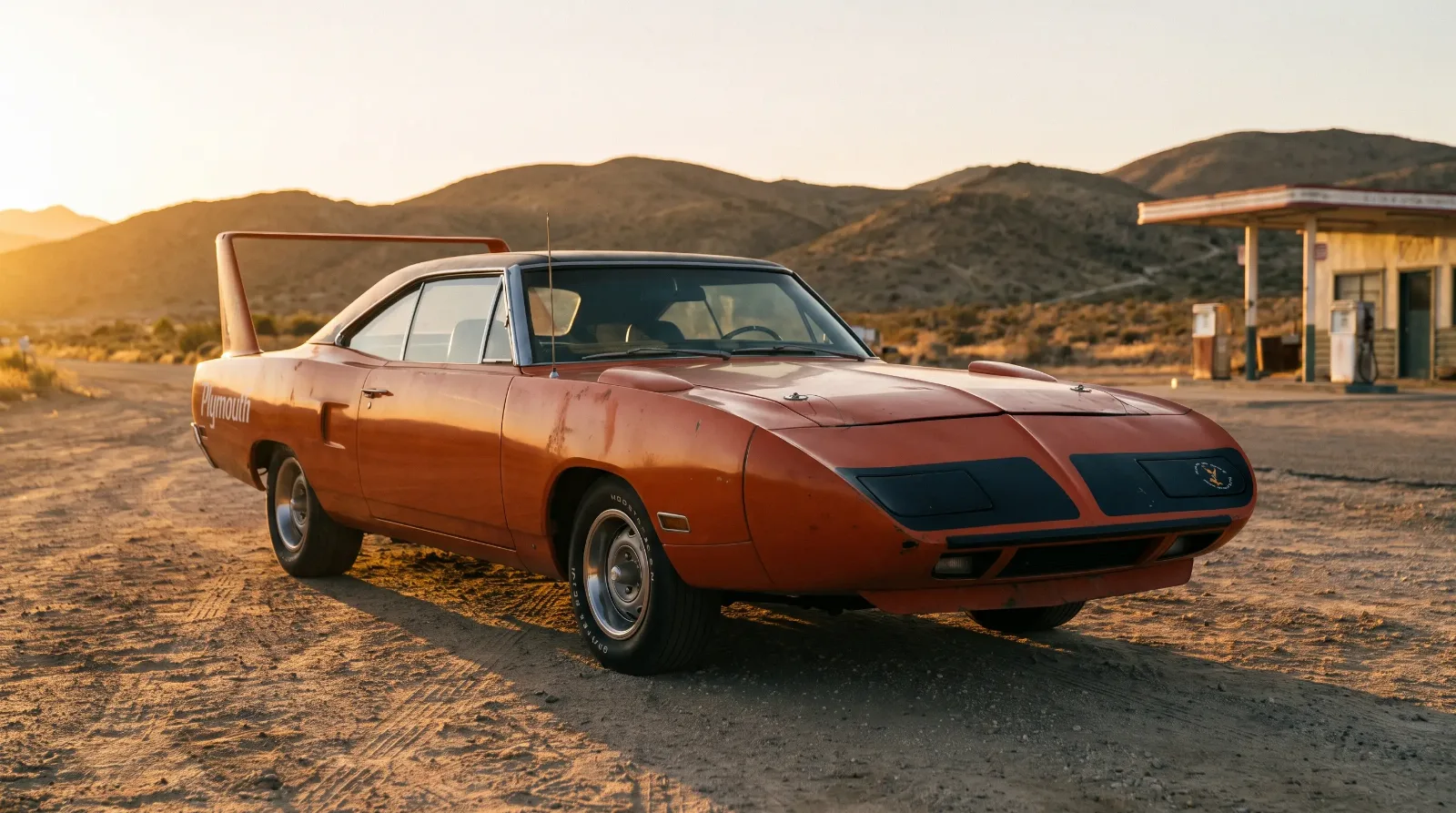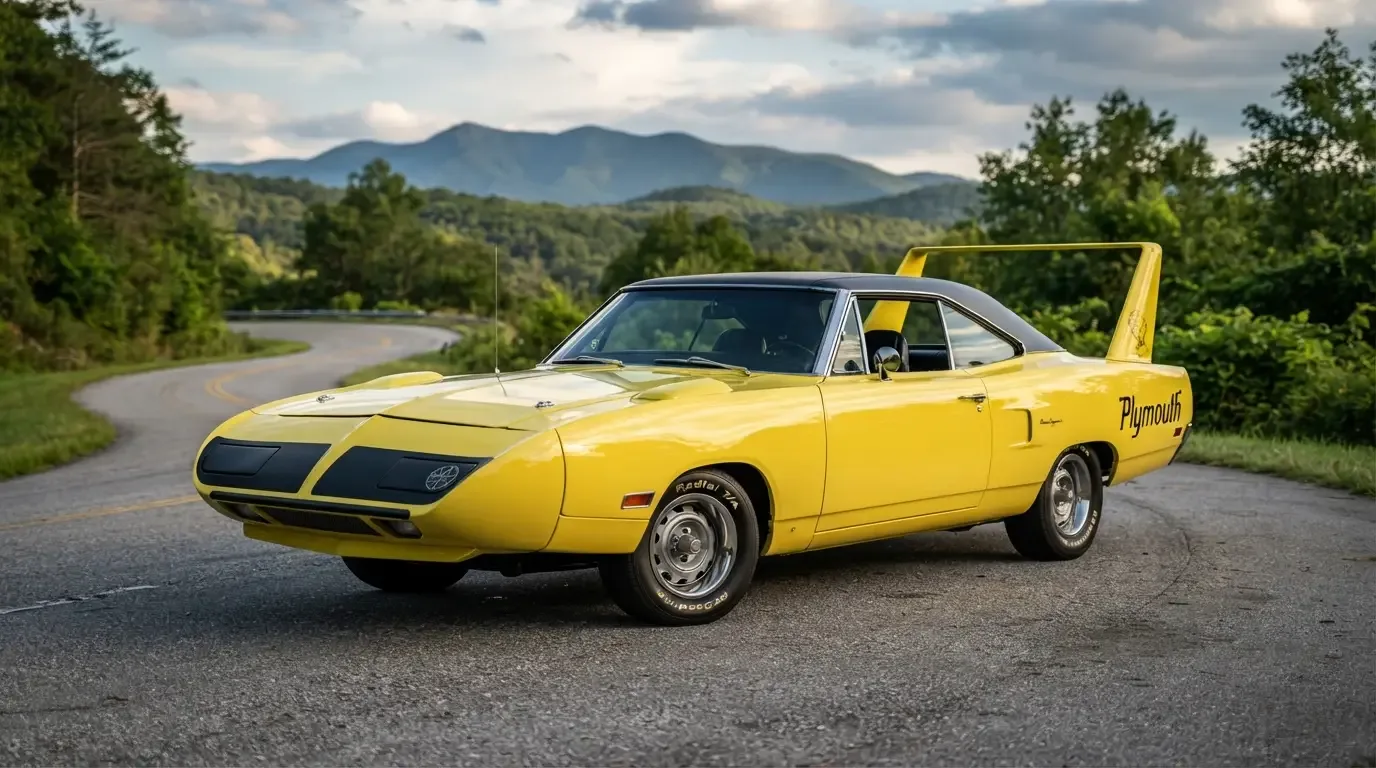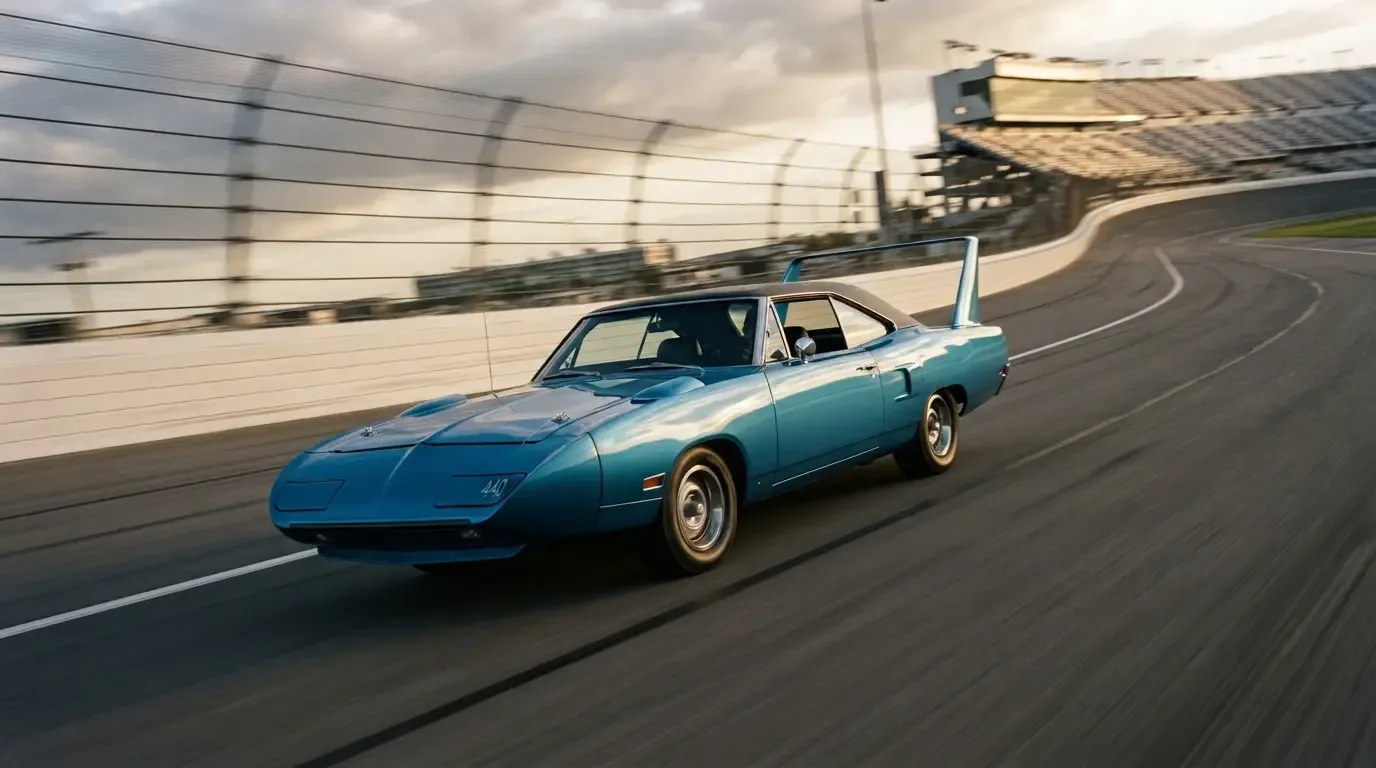
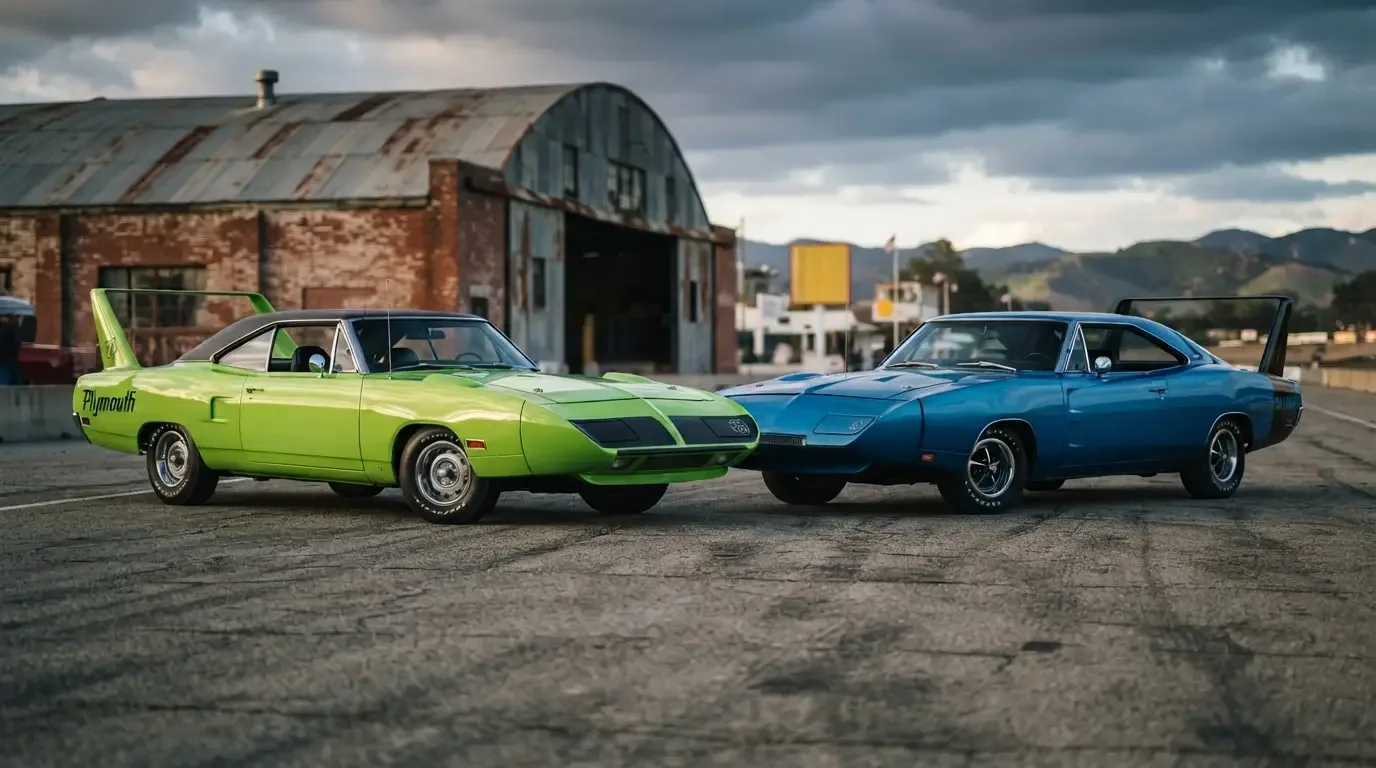
I have watched grown men nearly come to blows over the superbird vs daytona question at a Mopar show parking lot, and I mean that with genuine affection for both sides. These two cars came from the same corporation, shared an engineering department, and still manage to split the Mopar faithful into two camps that each swear their car was the smarter piece of engineering. Having spent a few decades listening to both arguments, I can tell you the honest answer is more interesting than either camp wants to admit.
Two cars, one corporate parent, different starting points
The Dodge Charger Daytona came first, arriving for the 1969 season as Dodge's answer to Ford's growing dominance on NASCAR's biggest superspeedways. Built on the Charger platform, the Daytona got the nose cone and wing treatment a full year before Plymouth followed suit with the Superbird for 1970, built instead on the Road Runner. That one year gap matters more than casual fans realize, because it meant Plymouth's engineers had an extra season of real world racing data from the Daytona program to refine before committing the Superbird to production.
The two cars share more underlying engineering than their different badges suggest, which makes sense given they came out of the same corporate research and development effort. Where they diverge is in the details, and those details are exactly what the swap meet arguments tend to circle around.
The nose cone difference nobody agrees on
Daytona loyalists will tell you their car's nose cone came first and set the template everyone else followed, which is true. Superbird loyalists will tell you Plymouth's version benefited from a year of refinement and testing the Daytona never had access to, which is also true. Both cones served the same aerodynamic purpose, smoothing airflow over a blunt front end that was costing both cars speed and stability at superspeedway velocities, but subtle differences in profile and length exist between the two that wind tunnel obsessives still debate at length.
The wing situation is similarly contested. Both cars mounted a tall rear wing on struts designed to place it in clean airflow above the turbulence generated near the roofline, and both designs trace back to the same basic engineering logic. Exact height and strut geometry differ slightly between the two platforms, differences that Mopar engineers of the era would tell you mattered enormously and that plenty of modern fans suspect mattered less than the mythology suggests.
Where the two cars actually differed under the skin
Body construction separated the two more than most casual observers realize. The Charger's more complex rear window and body structure required different fabrication approaches for the aero conversion than the Road Runner's simpler shape, and each manufacturer's engineering team solved those problems somewhat independently even while sharing corporate resources. Engine offerings largely mirrored each other, with 440 four barrel, 440 Six Barrel, and 426 Hemi options available across both cars, giving buyers of either badge access to essentially the same power under the hood.
What differed more than mechanics were the buyers each car attracted. Dodge and Plymouth dealers served somewhat different customer bases even within the same corporate family, and that meant the Daytona and Superbird, despite their close engineering kinship, ended up in front of slightly different audiences during their respective single model year production runs.
"Every argument about which winged car was better eventually comes back to the same unsatisfying answer. They were close enough in performance that the real difference came down to which dealer was closer to your house and which badge your father swore by. That is not the answer people want at a swap meet, but it is the honest one."
- Wayne Coburn
How the market treats the two differently today
Collector values tell a somewhat different story than the friendly rivalry suggests. The Daytona's smaller production numbers have historically pushed its values at least in line with, and at times ahead of, comparably equipped Superbirds, particularly for Hemi powered examples where scarcity compounds across both engine and body style. That said, the Superbird's larger production run and its stronger connection to Richard Petty's on track success has kept demand for the Plymouth version robust enough that the gap between the two rarely feels dramatic in practice.
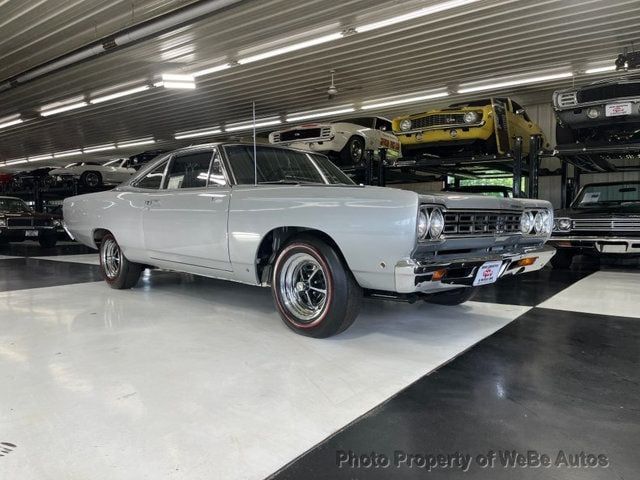
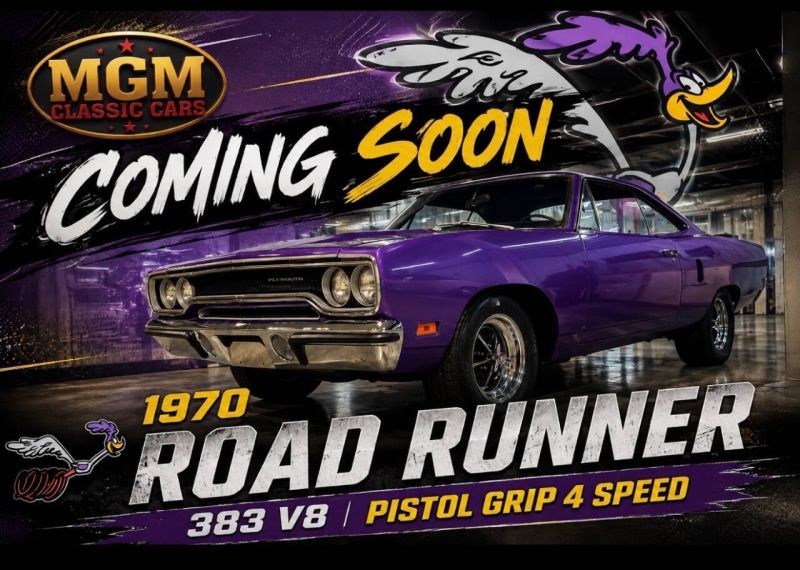
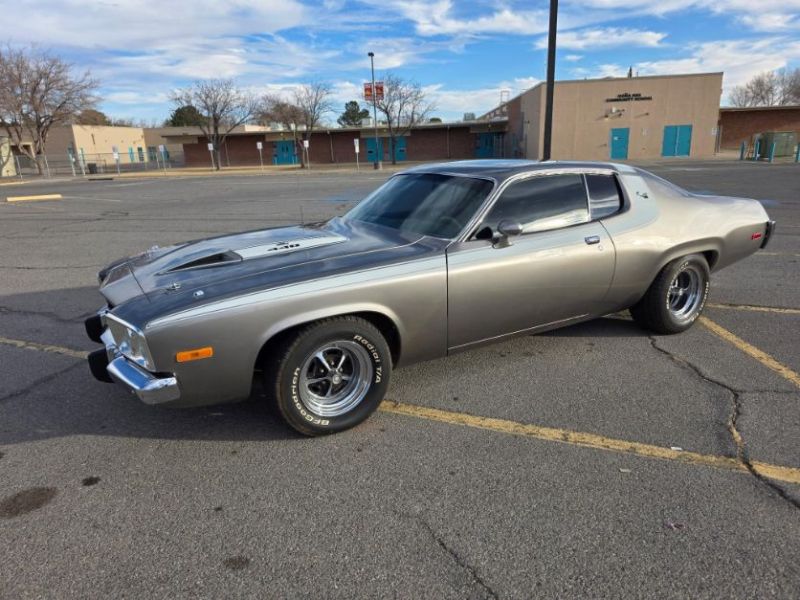
Neither car exists in a vacuum from the platform it was built on, and anyone chasing this history should understand the Road Runner story that gave Plymouth's aero special its foundation. Where this started traces that connection from the standard car through to the winged Superbird that grew out of it.
Why the rivalry never really ends
What keeps this debate alive at every show I attend is that both sides have genuinely compelling arguments, and neither manufacturer's engineers were working with anything but the best data available to them at the time. The Daytona got there first and proved the concept worked. The Superbird arrived with a year of hindsight and Plymouth's own engineering priorities layered on top. Calling one definitively better than the other requires ignoring how closely matched they actually were in period, something both camps conveniently forget mid argument.
For anyone who wants to start their own collection somewhere in this story, whether chasing the winged specials eventually or starting with the standard platform both cars grew from, you can find a classic Runner for sale and work your way toward whichever side of this rivalry you end up favoring.
The paint schemes tell their own story
Beyond the engineering, the two cars presented themselves differently on the outside, and that is part of what fuels the loyalty on each side. Dodge leaned on its own high impact color names for the Daytona, while Plymouth pulled from its parallel palette for the Superbird, and both manufacturers used those loud colors deliberately to make sure nobody mistook either car for a standard model. Stripe packages and badging differed enough that a knowledgeable eye can identify either car from a fair distance, even though the underlying silhouette, dominated by that shared nose and wing profile, reads as nearly identical to a casual observer.
I have heard club members argue that the Daytona's proportions look slightly more aggressive thanks to the Charger's more sculpted body, while others insist the Superbird's Road Runner base gives it a cleaner, more purposeful stance. Neither argument settles anything, which is exactly the point. Fifty years on, people are still relitigating a rivalry that Chrysler itself probably viewed as friendly competition between two divisions chasing the same NASCAR trophy.
The verdict, for what it is worth
I do not actually think there is a clean winner between these two cars, and I have made peace with that after decades of listening to both arguments. The Daytona and Superbird are best understood as two answers to the same engineering question, developed a year apart by teams working for the same corporation with slightly different priorities. Anyone who tells you the debate has an obvious right answer is enjoying the argument more than they are respecting the history.
The Superbird did not fight NASCAR aero war alone. Its Dodge cousin carried the same idea to Talladega, a story told in the Dodge Charger Daytona and the aero wars.