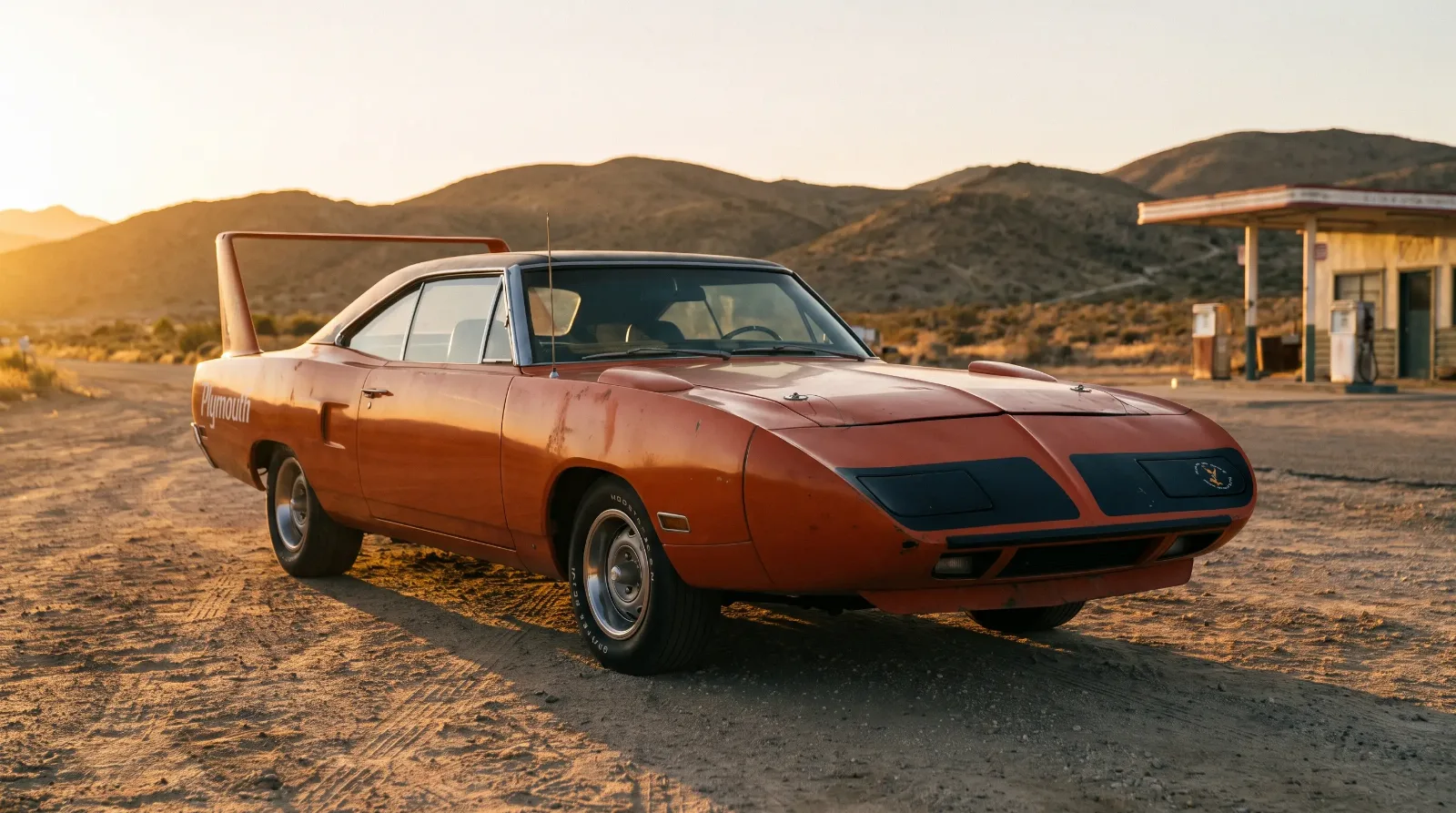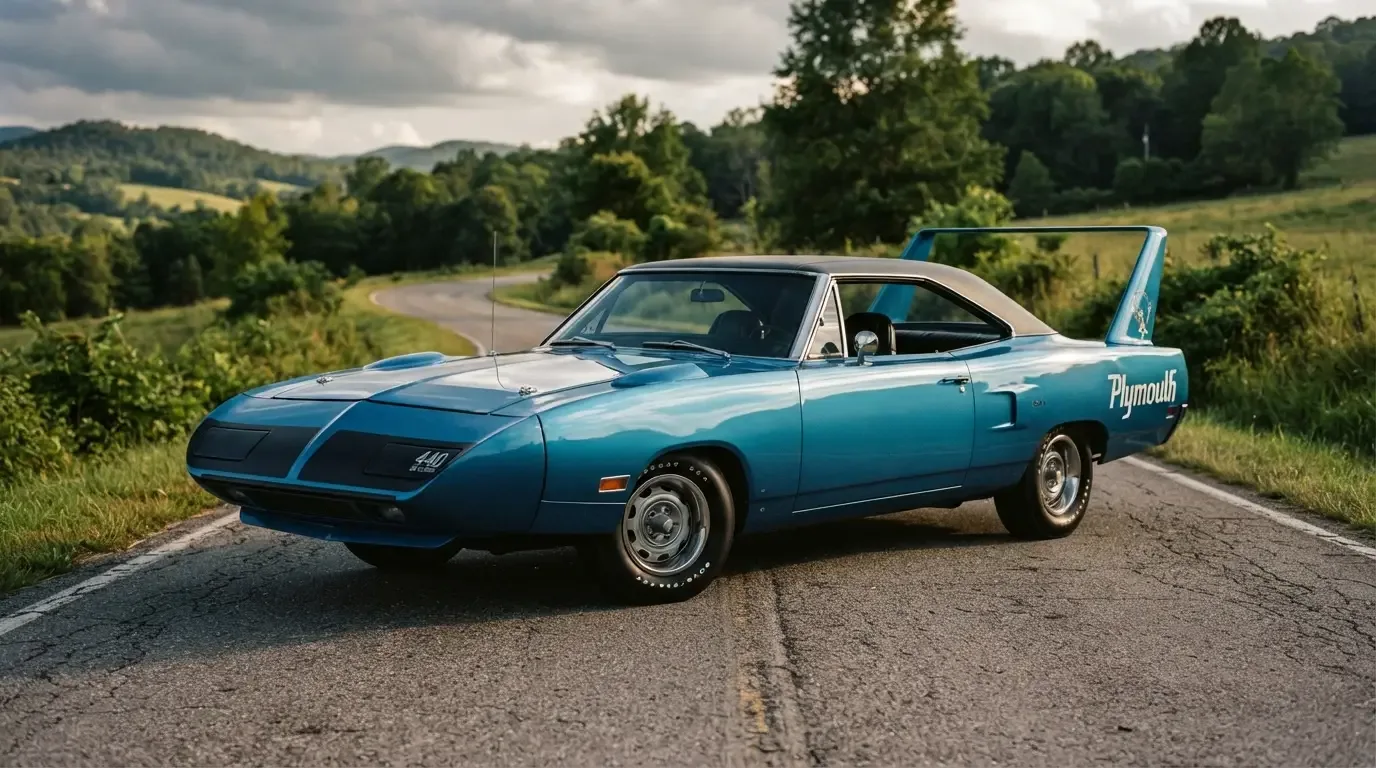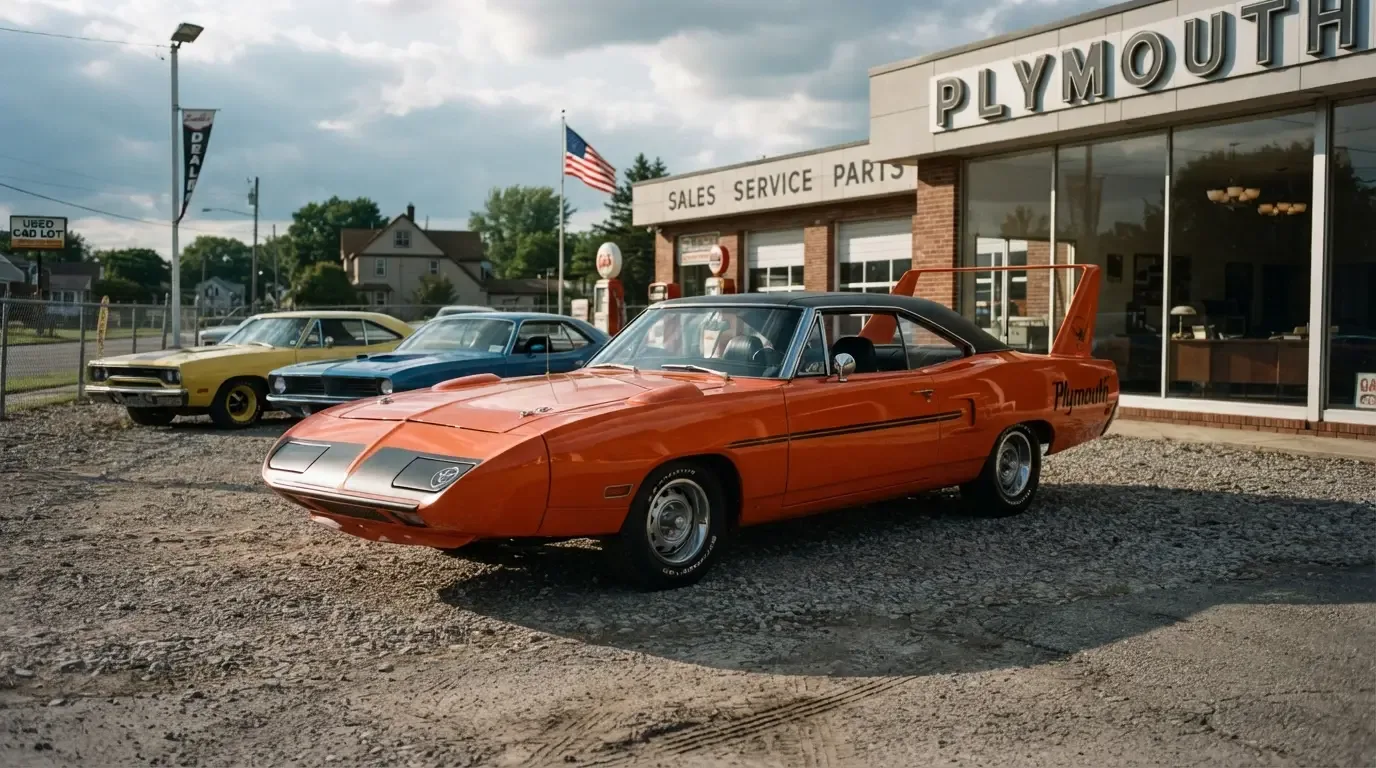
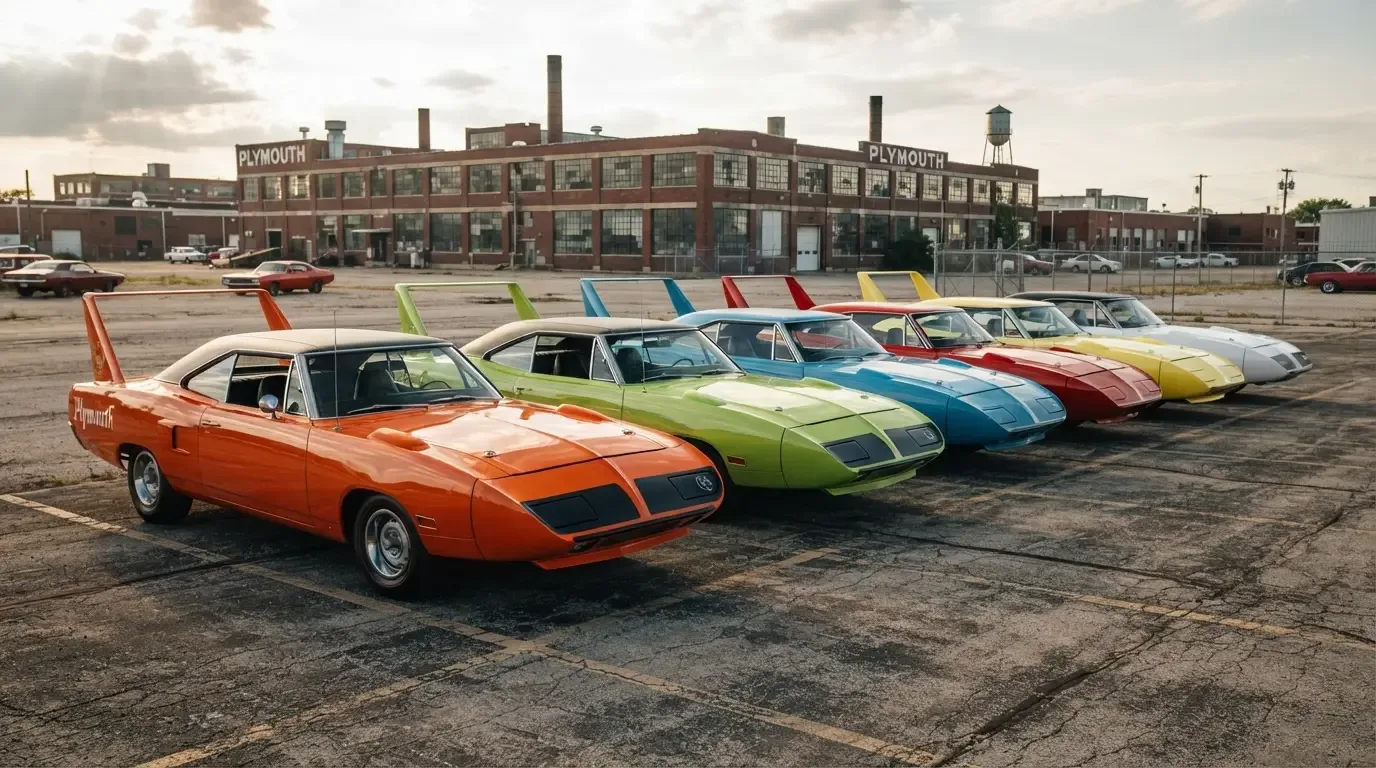
Superbird production numbers get repeated so often as round figures that the actual paperwork gets lost in the retelling. Plymouth built the car for a single model year to satisfy NASCAR's homologation requirement, and the surviving factory records tell a more specific story than the "about 1,900 built" line that circulates in casual conversation.
Why NASCAR set the production floor
NASCAR's homologation rule for 1970 required manufacturers to build one street car for every two dealerships in a manufacturer's network, a formula that pushed Chrysler toward a production target of roughly 1,920 units to legally race the Superbird body on the superspeedway circuit. That number was not a marketing decision. It was a compliance minimum set by the sanctioning body, and Plymouth built to roughly that target rather than to actual retail demand, which is a distinction that explains a lot about what happened to unsold cars afterward.
Chrysler's own broadcast sheets and build records, the primary documentation researchers rely on today, show a run concentrated almost entirely in early-to-mid 1970 production, consistent with a manufacturer racing to hit a rules deadline rather than building a car meant for a full model year sales cycle.
Breaking down the engine mix
Correcting a common misconception starts here: most Superbirds did not carry the Hemi. Broadcast sheet data shows the majority of production used the 440 engine, split between standard four-barrel and Six Barrel induction, with the 426 Hemi representing a small minority of total build volume. That mix matters for anyone trying to authenticate a car today, because a Superbird claiming rare-engine status needs a fender tag and broadcast sheet that actually support the claim, not just a seller's word.
| Engine option | Relative share of Superbird production |
|---|---|
| 440 four-barrel | Largest single group |
| 440 Six Barrel | Significant secondary group |
| 426 Hemi | Smallest group, most valuable today |
Reading a fender tag correctly
Chrysler's fender tags from 1970 encode the plant, model, trim, and drivetrain in a string of alphanumeric codes stamped on the left front fender shield. Combined with the broadcast sheet, which traveled with the car down the assembly line and listed every option installed, these two documents are the primary source material historians use to verify a Superbird's original configuration. A tag that decodes correctly to Superbird trim with an engine code matching the drivetrain currently in the car is the baseline standard of proof. Sellers who cannot produce at least the fender tag decode are asking buyers to trust a story instead of a record.
I want to gently push back on a claim that circulates a lot in enthusiast forums, that Plymouth built exactly one precise number of Superbirds and not one more or fewer. Total production figures compiled from dealer and factory sources land anywhere from roughly 1,920, the count from Chrysler's own NASCAR serial number list, to figures as high as 1,935 once Canadian-market cars get folded in, and researchers who have cross-referenced Chrysler's own records against surviving VIN registries generally treat any single precise figure with some caution rather than as settled fact. The bigger point survives regardless of which exact figure you land on: this was a small, deadline-driven production run built to satisfy a racing rule, not a car built to a normal sales forecast.
"Every round number you hear about this car traces back to somebody's paraphrase of a paraphrase. Go to the broadcast sheet. Go to the fender tag. Those are the only two documents that do not have an opinion."
- Tom Ramirez
Where the plant records leave gaps
Chrysler built the Superbird across facilities handling standard B-body production, retrofitting the aero nose cone and wing as a secondary assembly step rather than running the car down a dedicated line from the start. That production method means some individual build records are less complete than researchers would like, particularly for cars assembled early in the run while the aero-specific tooling was still being refined on the floor. A handful of surviving broadcast sheets show corrections and notations suggesting the line crews were adapting to the new bodywork in real time, which is exactly what you would expect from a program built against a hard NASCAR deadline rather than a normal product development cycle.
This is not a knock on the factory's record keeping. It is a reminder that primary sources from a rushed program are still primary sources, gaps and all, and that a careful historian treats an incomplete broadcast sheet as a partial answer rather than throwing it out in favor of a cleaner-sounding secondhand claim. The paperwork that does survive, even when it raises as many questions as it answers, is more reliable than any number pulled from a magazine article written years after the fact without access to Chrysler's own files.
What the numbers mean for buyers today
Small production numbers plus decades of parts scarcity have made restoration and authentication a specialized field. Registries maintained by Superbird and Daytona owner clubs cross-reference VINs against known factory records, and a car with a documented registry history carries more confidence than one appearing on the market for the first time with no paper trail. Given how often engine and trim swaps happened in the decades before the model's values climbed, buyers should treat any production-number claim about a specific car as a starting point for verification, not a conclusion.
For the fuller context of why NASCAR's homologation rule existed in the first place and how it shaped the car's aerodynamic bodywork, the whole picture covers that background in more depth than the production figures alone can explain.
Comparing Chrysler's homologation cars
The Superbird was not Chrysler's only rules-driven build of the era. The Dodge Charger Daytona preceded it in 1969, using a similar nose cone and wing philosophy to homologate a body for the same NASCAR aero war. Comparing production and documentation practices across the two cars is instructive, because Dodge and Plymouth ran the programs through slightly different plants and paperwork trails even though the underlying engineering shared a great deal. A researcher cross-referencing Daytona and Superbird broadcast sheets side by side can see the family resemblance in how Chrysler's documentation evolved between the two rushed programs, tightening slightly by the time the Superbird went into production a year later.
That comparison also underscores why lumping the two cars' production numbers together, something casual references sometimes do without saying so explicitly, produces exactly the kind of inflated round figures that muddy the historical record. Treating the Superbird's numbers on their own terms, sourced to its own broadcast sheets rather than borrowed conclusions from its Dodge sibling, is the only way to get the count right.
The record beyond the myth
Superbird production numbers deserve more scrutiny than the internet tends to give them. The car was built fast, to a rules deadline, in an engine mix that favored the 440 over the Hemi by a wide margin, and the exact total still carries some documented uncertainty even among careful researchers. None of that makes the car less significant. It makes the paperwork more important than the folklore. If the history has you thinking about the model more broadly, you can shop classic Runner listings and see how documentation, or the lack of it, shows up in current asking prices.