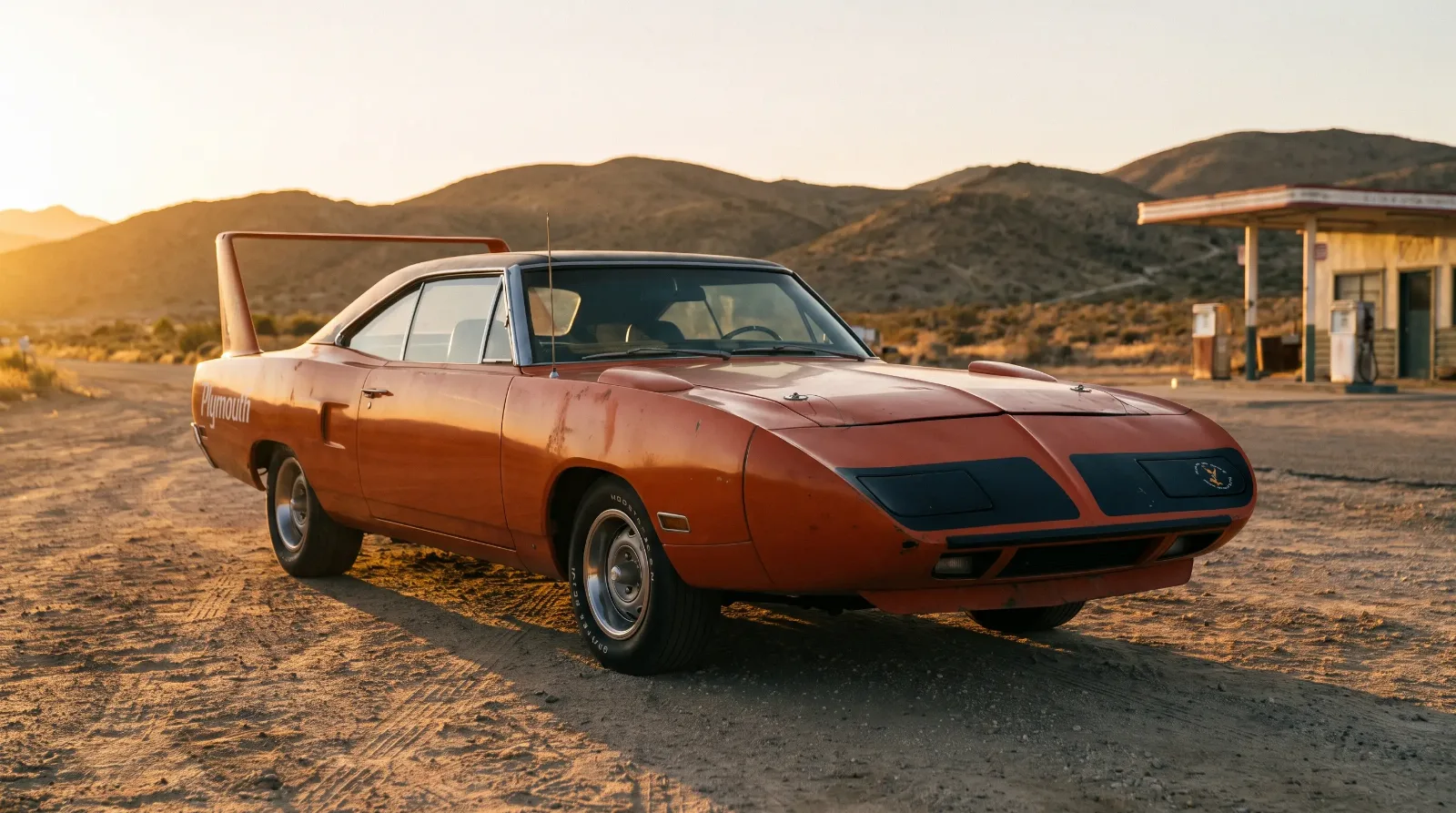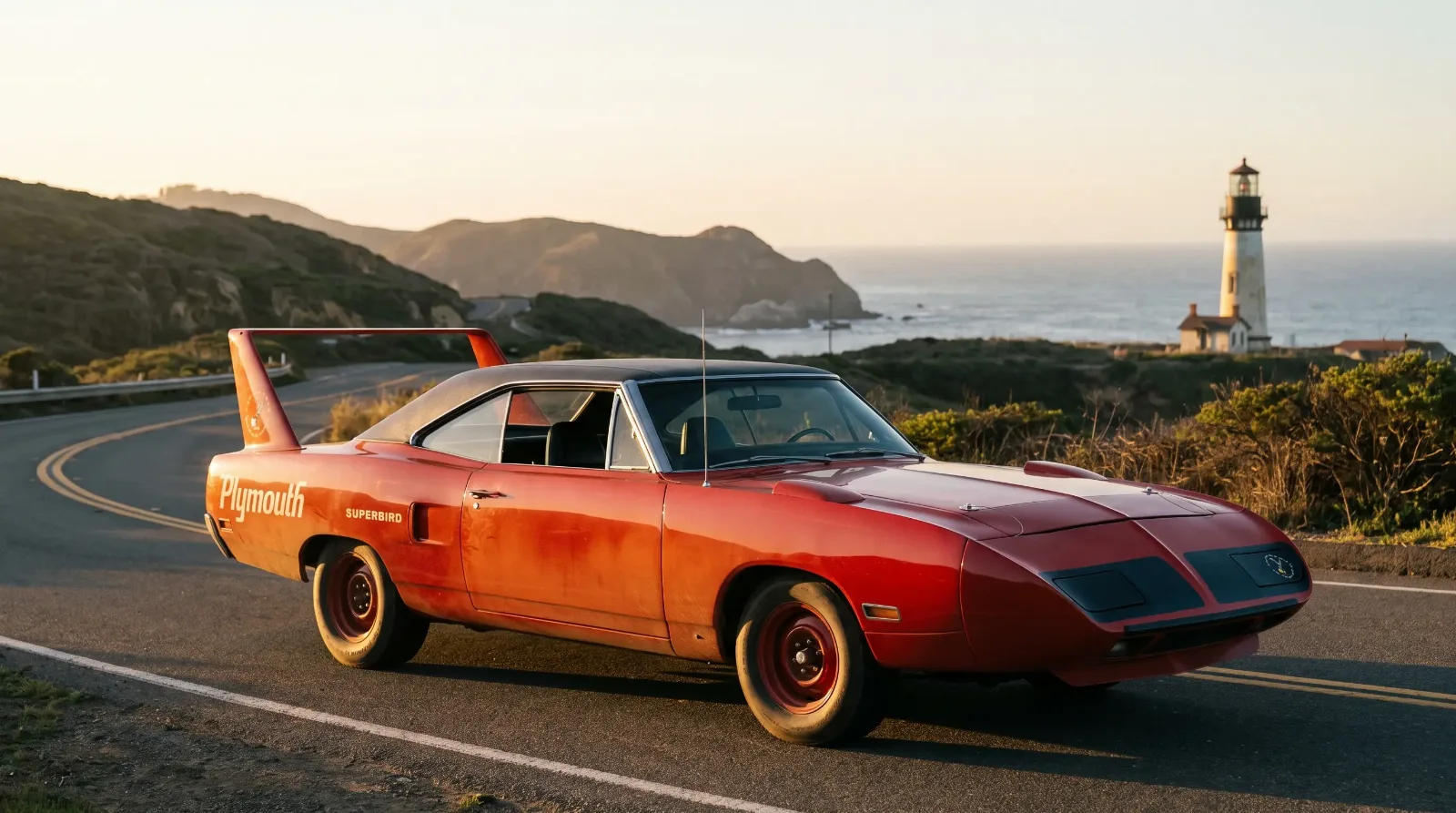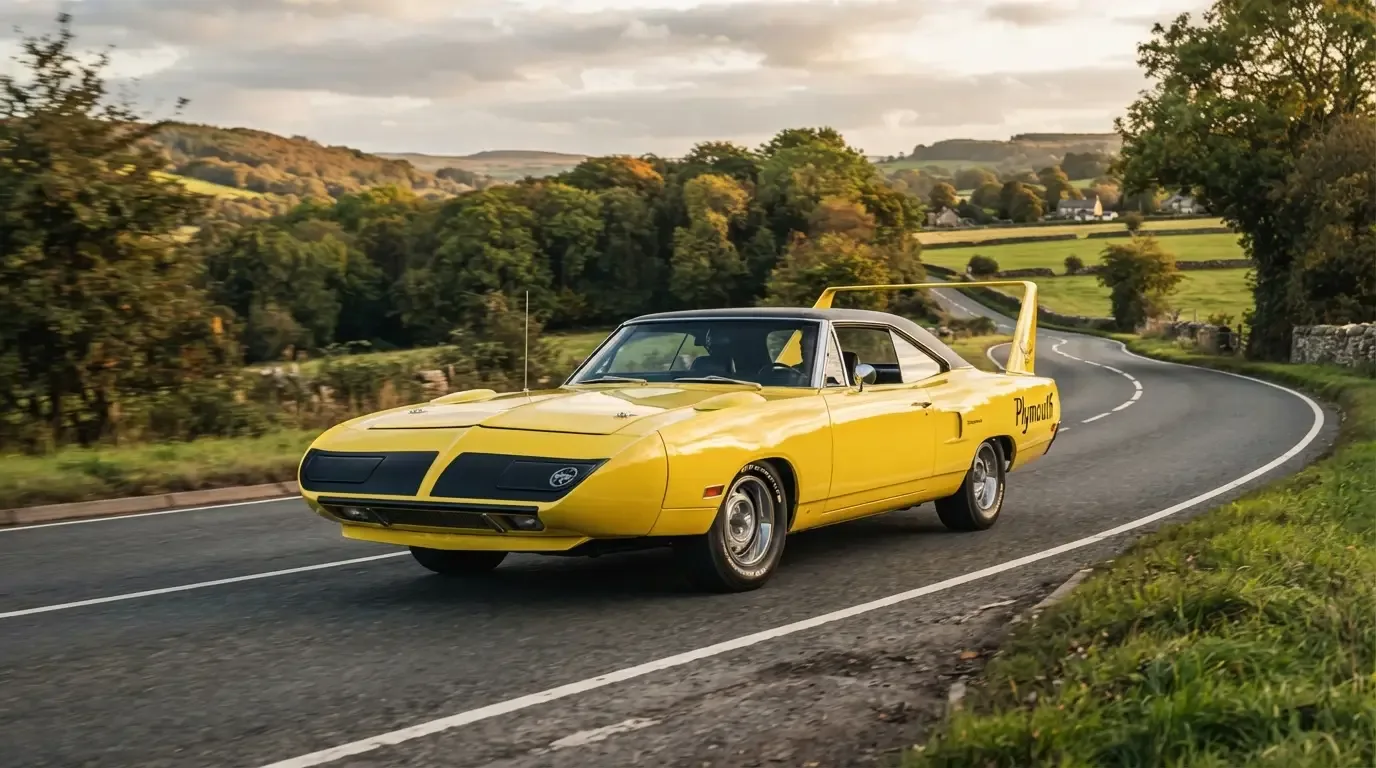
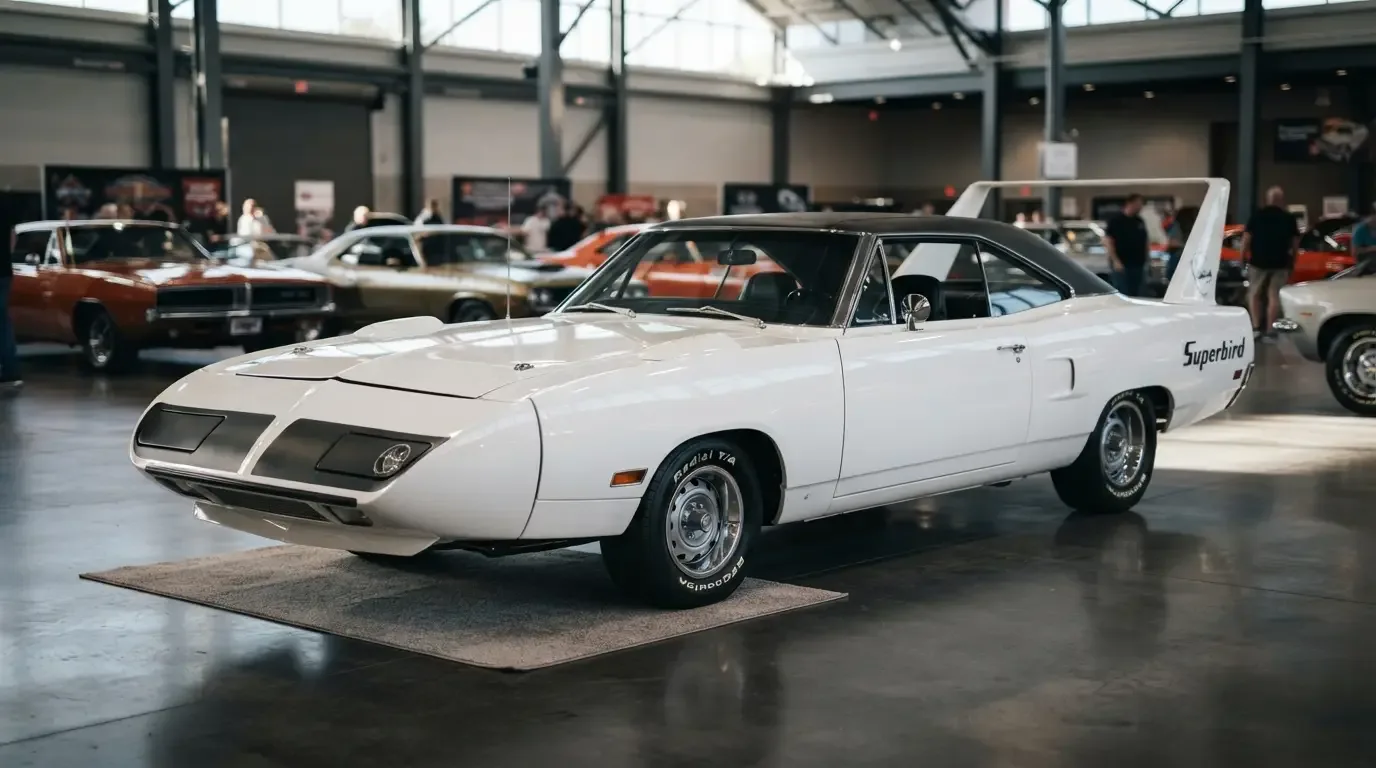
Superbird value has moved in one direction for two decades, but not evenly, and the reasons behind the climb tell you more than the raw numbers do. A car that Plymouth practically couldn't give away in 1970, dealers were discounting them and running them as fleet units to clear inventory, now anchors the top of the muscle car market. Understanding why that happened is the difference between paying a fair price and paying a headline price.
The unsold-car story that built the scarcity premium
Plymouth built the Superbird to satisfy NASCAR's homologation requirement, not because dealers were begging for wing cars. Buyers in 1970 wanted a fast, clean muscle car, not something with a nineteen-inch nose cone that made parking a chore. Dealers discounted them heavily, some sat on lots into the following model year, and a number were reportedly converted back toward standard trim just to move inventory. That resistance from the original market is exactly what created today's scarcity. Roughly 1,935 were built, and survival rates for a car nobody wanted to keep stock in period are lower than production numbers alone suggest.
Engine, options, and where the real money sits
| Configuration | Market position | Rough auction range |
|---|---|---|
| 426 Hemi, 4-speed, documented | Top tier, extremely rare | $400,000 to $700,000+ |
| 426 Hemi, automatic, documented | Top tier | $350,000 to $600,000 |
| 440 Six Barrel, documented | Strong upper-middle tier | $150,000 to $300,000 |
| 440 four-barrel, documented | Solid entry point for a real car | $120,000 to $200,000 |
Treat these as a starting reference, not a firm quote, and check them against the most recent Mecum and Barrett-Jackson results before pricing a specific car, because this segment moves with each major sale. Recent results bear that out: Mecum sold documented Hemi Superbirds for $380,000 and $550,000 at its Indianapolis 2025 sale, classic.com tracked an average of roughly $555,000 across 24 Hemi Superbird sales between 2021 and 2025, and one exceptional example brought $1.65 million at a 2022 Barrett-Jackson sale, well above the norm for the model. What stays constant is the ordering: Hemi cars sit well above 440 cars, and manual transmission Hemi cars sit above automatics, mirroring the pattern across nearly every muscle car of this era.
What actually moves a Superbird's price at sale
Documentation drives more of the final number than color, and color drives more than most buyers expect. Original paint colors that were unusual even in 1970, like the brighter hues Plymouth offered under its High Impact palette, tend to bring a premium among collectors who want a car that looks the way period brochures promised. A broadcast sheet and a clean, verifiable ownership chain can add tens of thousands of dollars over an otherwise identical car with gaps in its paperwork.
Condition matters, obviously, but originality often matters more in this specific market. A driver-quality Superbird with its original drivetrain, original sheet metal, and a documented history will frequently outsell a cosmetically flawless car that has been heavily restored with reproduction parts and an engine swap somewhere in its past. Buyers at this level are paying for authenticity as much as they're paying for shine.
"I have watched a rough, honest, numbers-matching car outsell a trailer-queen restoration because the buyer wanted the real story, not just the paint job."
- David Mercer
Reading the auction cycle before you buy or sell
Muscle car values, Superbirds included, are not immune to the broader collector market cycle. Interest rate environments, generational shifts in who is buying, and general economic confidence all move the top of this market faster than the middle. When the broader auction environment cools, unusual or heavily modified cars soften first while documented, top-tier originals hold value best. That pattern has repeated across multiple market corrections, and it is the single most useful thing I tell clients timing a sale.
If you already own a documented car and you're weighing a sale, watch which specific auctions are drawing the strongest Mopar crowds that season, not just the overall sale totals. A car consigned at the right event, in front of the right bidders, can bring a meaningfully higher price than the same car at a general collector car sale.
My take for buyers entering this market now
A documented Superbird remains a sound long-term hold if you buy the paperwork as carefully as you buy the car, and if you understand you are paying near the top of the muscle car market for the privilege. This is not an undervalued corner waiting to be discovered. It is a mature, well-tracked market where the informed buyers already know what they're looking at. Your edge comes from verification and patience, not from finding a bargain nobody else noticed.
For the full history behind why this car exists and how it earned its reputation, more on the plymouth superbird covers the NASCAR background in detail, and our complete history puts the Superbird in context against the rest of the Road Runner lineage it came from.
Where this leaves a serious buyer today
Superbird value is not going to correct downward simply because the car is expensive. Scarcity is fixed, roughly 1,935 were built and that number will never grow, and demand from a broadening collector base keeps pressure on price. What can and does change is which specific cars command a premium within that market, and that comes down entirely to documentation, originality, and story. If you're ready to see what's actually available, you can browse classic Runners on the market and compare real listings against everything discussed here.
How the buyer pool has changed over two decades
The people bidding on Superbirds today are not the same buyers who chased this car in the 1990s and early 2000s. That earlier generation often came to the hobby with direct memory of the muscle car era, buying back the cars they wanted as teenagers and couldn't afford at the time. Today's top-end bidders increasingly include collectors who never saw the car new and are buying it as a recognized, historically significant asset, the way a serious buyer might approach a significant piece of design or a limited-production sports car from any era.
That shift matters because it broadens demand beyond a single generation's nostalgia, which is part of why prices at the top of this market have proven more resilient through recent economic cycles than some other muscle car segments tied more tightly to a specific buyer's personal history with the model. A car doesn't need a buyer who remembers 1970 firsthand anymore. It needs a buyer who understands what the car represents.
A word on restoration versus preservation
I've seen owners chase concours-level restorations on cars that would have sold for more money left exactly as they were found. The Superbird market, more than most muscle car segments, rewards honest preservation over aggressive restoration when the underlying car and its documentation are strong enough to support it. A well-preserved original finish, even with visible wear, often out-values a repainted car of identical mechanical specification once buyers start comparing the paperwork side by side. If you're sitting on a documented, largely original example, think carefully before committing to a full restoration that might actually cost you money at resale rather than adding it.
Sources and notes
- Plymouth Superbird - Wikipedia
- Hagerty Insider - Superbird market trend analysis
- autoevolution - Hemi Superbird Mecum Indy 2025 sale results
- Barrett-Jackson - 1970 Plymouth Hemi Superbird docket
- Supercars.net - 1970 Plymouth Road Runner Superbird 440
- Sports Car Market - 1970 Plymouth Superbird profile