
I've told this story on stage at a car club dinner more than once, and it always gets the same reaction. Ask a room full of muscle car people which car started the segment and every hand points at the GTO. Ask which car actually made muscle cars affordable for the average buyer and the room goes quiet, because the honest answer is the Road Runner, and most people have never sat down and done the road runner vs gto price comparison line by line.
Car Features
7 min read
Why the Road Runner Undercut the GTO
A real road runner vs gto price comparison shows why Plymouth's stripped-down coupe forced Pontiac's flagship to confront a gap it could never comfortably close.
The number that changed the conversation
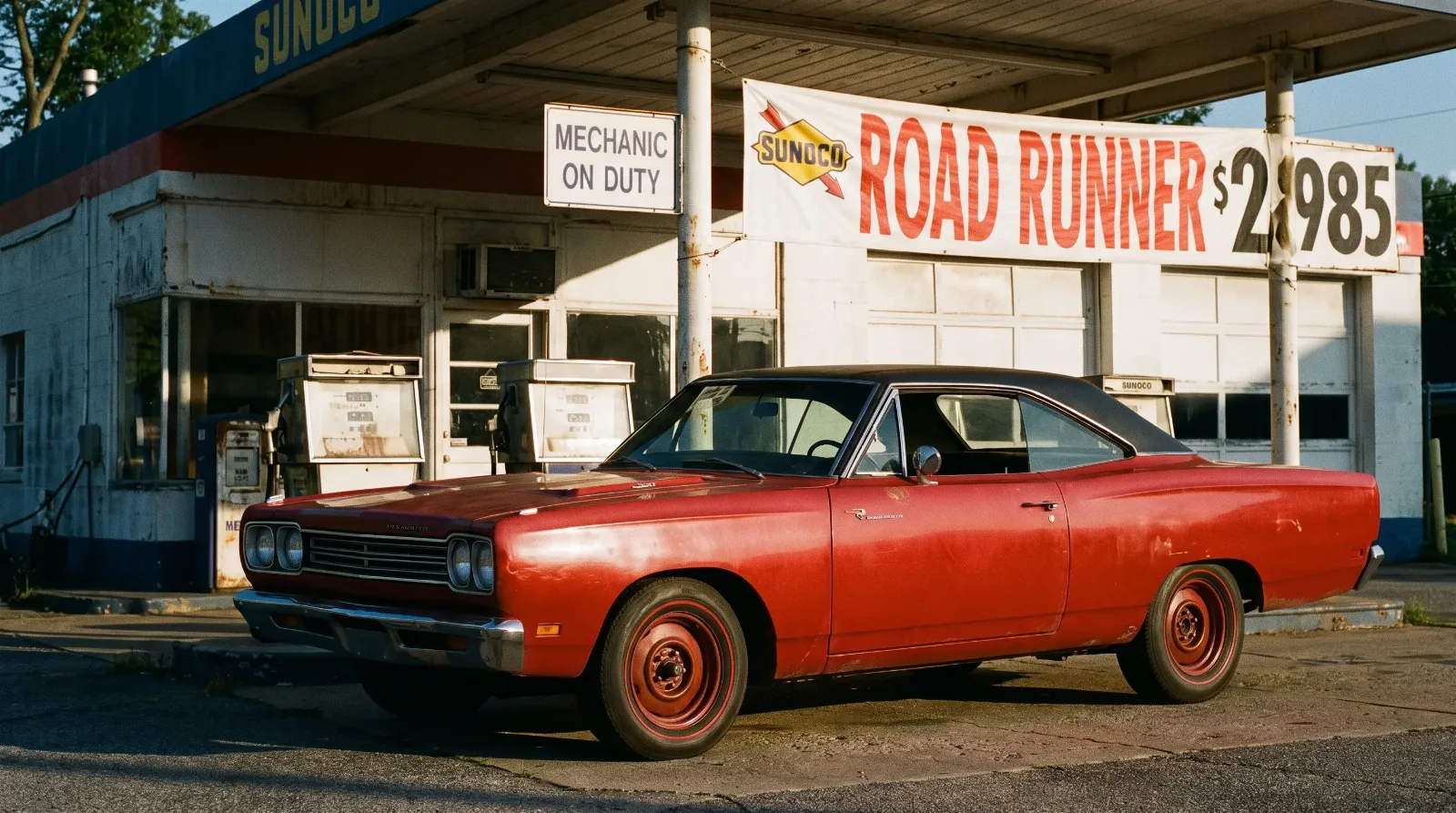
A 1968 GTO started at $2,996 but with the options most buyers actually chose typically landed above $3,100 by the time it left the dealer lot. The Road Runner started at $2,896 as a base coupe with a standard engine that could genuinely compete with the GTO in a straight line. That is not a small gap. It is the difference between a car a young factory worker could reasonably finance and a car that pushed his monthly payment into territory he'd think twice about.
Pontiac built the GTO's reputation on options and image, the Judge package, the hood scoops, the whole performance-luxury identity. Plymouth looked at that formula and decided the real opportunity was underneath it, at a price point Pontiac had no interest in chasing because it would have undercut their own margins.
Why Pontiac couldn't just answer with a cheaper GTO
Pontiac's whole brand position by 1968 was built on the idea that the GTO was the performance car with attitude, not the bargain option. Cutting the price and stripping the trim to compete directly with the Road Runner would have undermined years of brand building around that image. Plymouth had no such conflict. The Road Runner nameplate was brand new, built specifically to occupy the low-price high-performance space that Pontiac's own positioning wouldn't let it defend.
That's the real story behind why the Road Runner undercut the GTO so effectively. It wasn't just a pricing decision, it was Plymouth exploiting a gap that Pontiac's own marketing strategy had created and could not easily close without contradicting itself.
What the performance numbers actually showed
This is where the Road Runner's pitch could have fallen apart if the car hadn't backed it up. A cheap car that couldn't actually run with the GTO would have been a punchline, not a sales phenomenon. Instead, period magazine testing generally showed the standard 383 Road Runner running in the same low-to-mid 15 second quarter mile range as a base GTO, despite costing hundreds less. That combination, real performance at a lower price, is what actually drove the sales numbers, not the cartoon branding alone.
Buyers noticed. Motor Trend named the Road Runner its Car of the Year for 1969, an honor that went to a car explicitly built around cutting cost, which tells you the magazine's judges cared more about the value proposition than about trim levels or luxury features.
| Comparison point | 1968 Road Runner | 1968 GTO (typical build) |
|---|---|---|
| Starting price | Approximately $2,896 | Base $2,996, typically optioned closer to $3,100-3,200 |
| Standard engine | 383 V8, 335 hp | 400 V8, 350 hp |
| Base trim level | Stripped, bench seat | Better appointed, more standard trim |
"The GTO invented the category. The Road Runner exposed a gap in it. Once buyers realized they could get real performance without paying for trim they didn't want, the whole segment had to adjust, and it never fully went back to the old pricing model."
- Patrick Walsh
How magazine writers of the era framed the rivalry
Contemporary road tests from 1968 and 1969 tended to frame the Road Runner and GTO as answering different questions rather than declaring an outright winner, and that framing tells you something important. Car and Driver, Motor Trend, and the other major outlets of the day generally praised the GTO's more refined road manners and better standard trim while praising the Road Runner's blunt value proposition and surprising straight-line performance for the money. Neither magazine claimed the Road Runner was simply a cheaper GTO clone. They treated it as a genuinely different answer to the same basic question of how to sell speed to a young buyer.
That distinction mattered to period readers deciding between the two cars, and it still matters to anyone researching the rivalry today, because it means the Road Runner's success was not just about undercutting the GTO on price. It was about correctly reading a segment of the market the GTO's own positioning had left open.
Part of a bigger price war across the whole industry
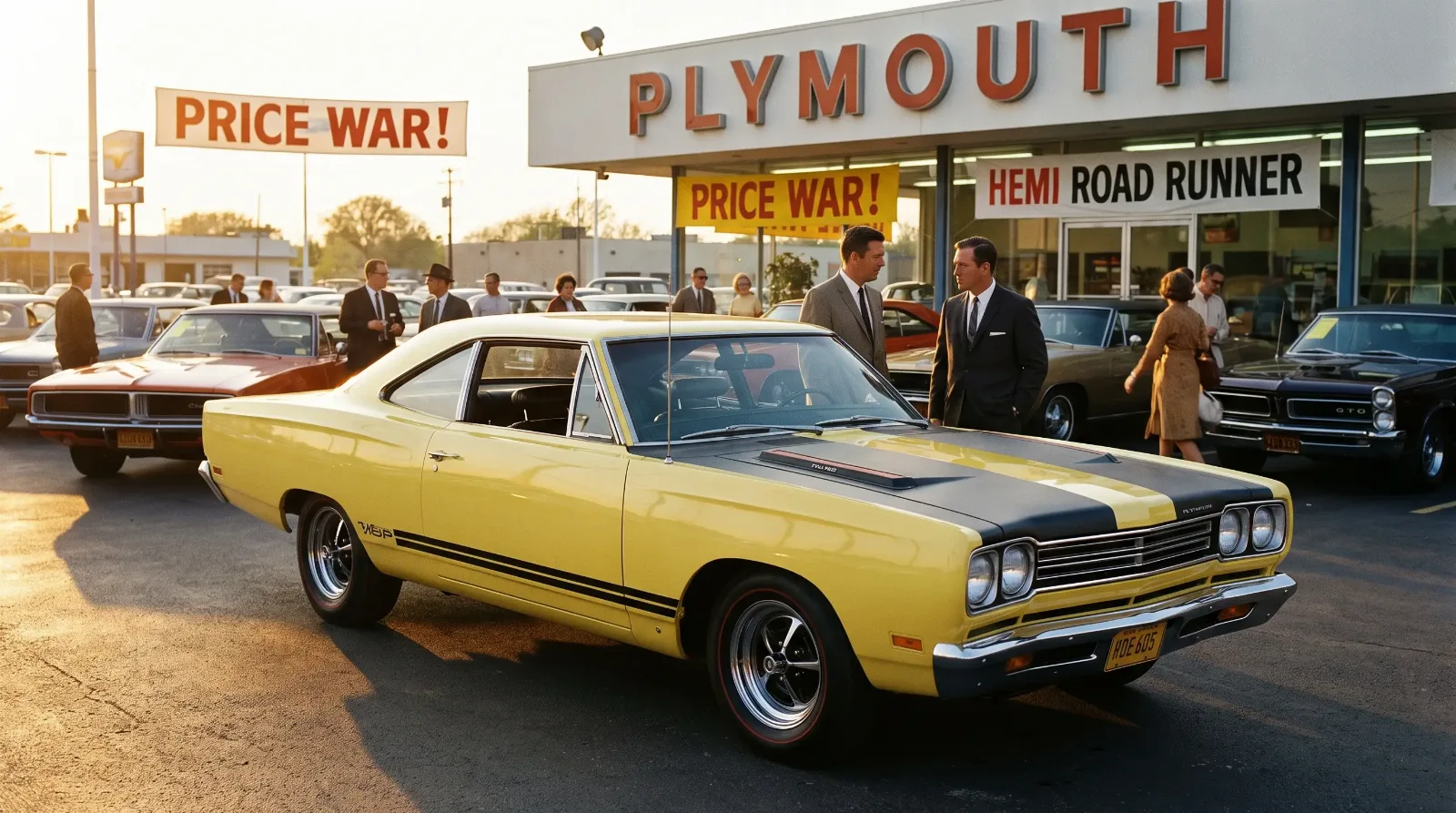
The Road Runner's price undercut of the GTO wasn't happening in isolation. It was one front in a much broader price war that reshaped the muscle car segment across 1968 and into 1969, as other manufacturers scrambled to figure out how to compete on value instead of just horsepower. a related story covers how that wider price war played out across the industry and what it meant for buyers shopping multiple brands at once.
Our 1968 plymouth road runner retrospective goes deeper into how Plymouth built the car around that price target from the very first planning meetings, if you want the full origin story behind the pricing strategy.
What this rivalry means for buyers today
The price gap that defined the Road Runner versus GTO rivalry in 1968 has largely disappeared from the collector market, where both cars now command serious money depending on condition and documentation. But understanding the original pricing dynamic still matters, because it explains why so many more Road Runners were built than GTOs in some model years, and why parts availability and club knowledge often skew in the Road Runner's favor today. If you're shopping, Runners for sale now gives a real sense of where values currently sit relative to their old rival.
What each nameplate's owner base looks like today
Spend time at a mixed muscle car show and you can generally spot a pattern in who gravitates toward a Road Runner versus a GTO, even decades removed from the original price gap that separated them. Road Runner owners, in my experience covering these events, talk more often about the value proposition and the mechanical honesty of the car, echoing the same language Plymouth used to sell it new. GTO owners lean more into the car's role as the originator of the whole muscle car category and its more refined road manners. Neither group is wrong. They are just responding to the same brand positioning Plymouth and Pontiac established back in 1968, still resonating with buyers two generations removed from the original showroom pitch.
The rivalry's real legacy
The GTO started the muscle car era. The Road Runner forced it to grow up and confront the fact that not every buyer wanted or could afford a loaded performance car. That tension between prestige and price is still the most interesting part of this rivalry, decades after both cars stopped competing for the same showroom customer.
Sources and notes
Related Reading
Have a
Plymouth Road Runner
for Sale?
Reach thousands of serious classic car collectors across the US.
Sell It Here →
Are You a Classic Car Dealer?
List your full inventory and connect with targeted classic car buyers.
Join as a Dealer →
#muscle car rivalry
#muscle car history
#Pontiac GTO
#Plymouth Road Runner
#1968 Road Runner
#road runner vs gto price

About the author
Patrick Walsh
Automotive journalist covering classic car shows, events, and the enthusiast community across North America.
Related Listings - Plymouth Road Runner

Comments
Be the first to comment on this article.