
Before you price a 1970 to 1981 Camaro, get it on jack stands, pull the rear seat cushion and take a magnet, a flashlight and a pick to the lower half of the body. Most 2nd gen Camaro rust hides in a short list of places, and an hour with those three tools tells you more than the seller's photos ever will. This guide walks the inspection in the order I do it, explains why each spot goes bad, and covers what to buy when it has. It is the first job in a Camaro restoration, before anyone talks about paint or engines.
Car Features
8 min read
Second-Gen Camaro Rust: Floor Pans, Lower Quarters and What to Check
Where 2nd gen Camaro rust hides on a 1970 to 1981 car: the floor under the rear seat, the lower quarters, the rockers, and how to check and repair each one.
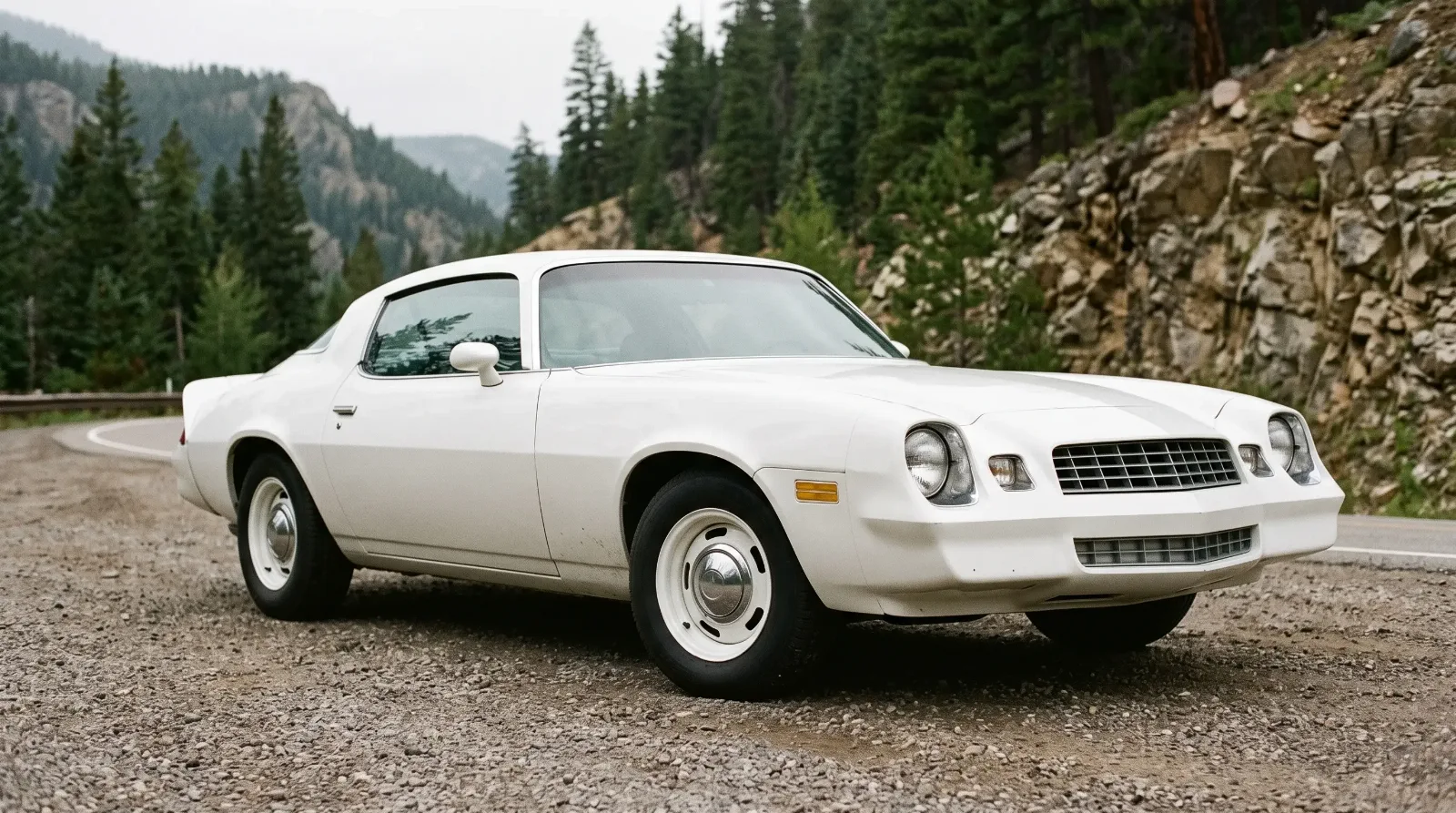
Why a 2nd gen Camaro rusts where it does
Start with the structure, because it decides where the damage matters. The second-gen car is a unibody with a bolted-on front subframe, and it was built as a coupe only. The body shell carries the load from the cowl back. The floor, the rockers and the rear frame rails are not trim; they are the car. A rusty fender is a parts order. A rusty rocker on a unibody is surgery.
The front subframe bolts to the body through rubber body-mount bushings, with more bushings at the radiator support. Those bushings wear and crack, and when you replace them you get your first look at the mount pads on the body side. Check those pads every time the bushings come out. If you want the model-year background before you crawl underneath, our second-gen Camaro guide covers what changed from year to year.
Water does the rest. It gets in through window seals and the cowl, it runs down inside the body, and it sits wherever the stampings make a low spot. Road salt makes every one of those spots worse, which is why a dry-state car and a rust-belt car of the same year can be different purchases entirely.
The floor under the rear seat
This is the first place I look, and it is the one most often missed, because the seat hides it. Moisture trapped beneath and behind the rear seat often corrodes that section of the floor pan. Water that gets past tired window and body seals ends up in the carpet and padding, and the padding holds it against the steel for years.
The sequence for checking it:
- Pull the rear seat bottom. It is the easy part to remove and it exposes the worst area.
- Peel back the carpet and the jute pad. If the pad is damp or smells of mildew, assume the steel under it has been wet for a long time.
- Press the floor with a thumb, then probe any bubbled area with a pick. Solid steel rings; rotten steel crunches or gives.
- Go underneath and look at the same area from below, especially where the floor meets the rear rails.
The fix is common enough that reproduction pieces exist. AMD sells a repair panel, part 420-3570-L, for the under-seat floor on 1970 to 1981 Camaro and Firebird bodies. The job is drill out the spot welds, cut the rot back to clean metal, fit the patch, clamp or cleco it in place, then plug weld and stitch it with the MIG. Do not run a continuous bead on thin floor steel. It warps the pan and you will chase the distortion for a day.
Lower rear quarters and wheel openings
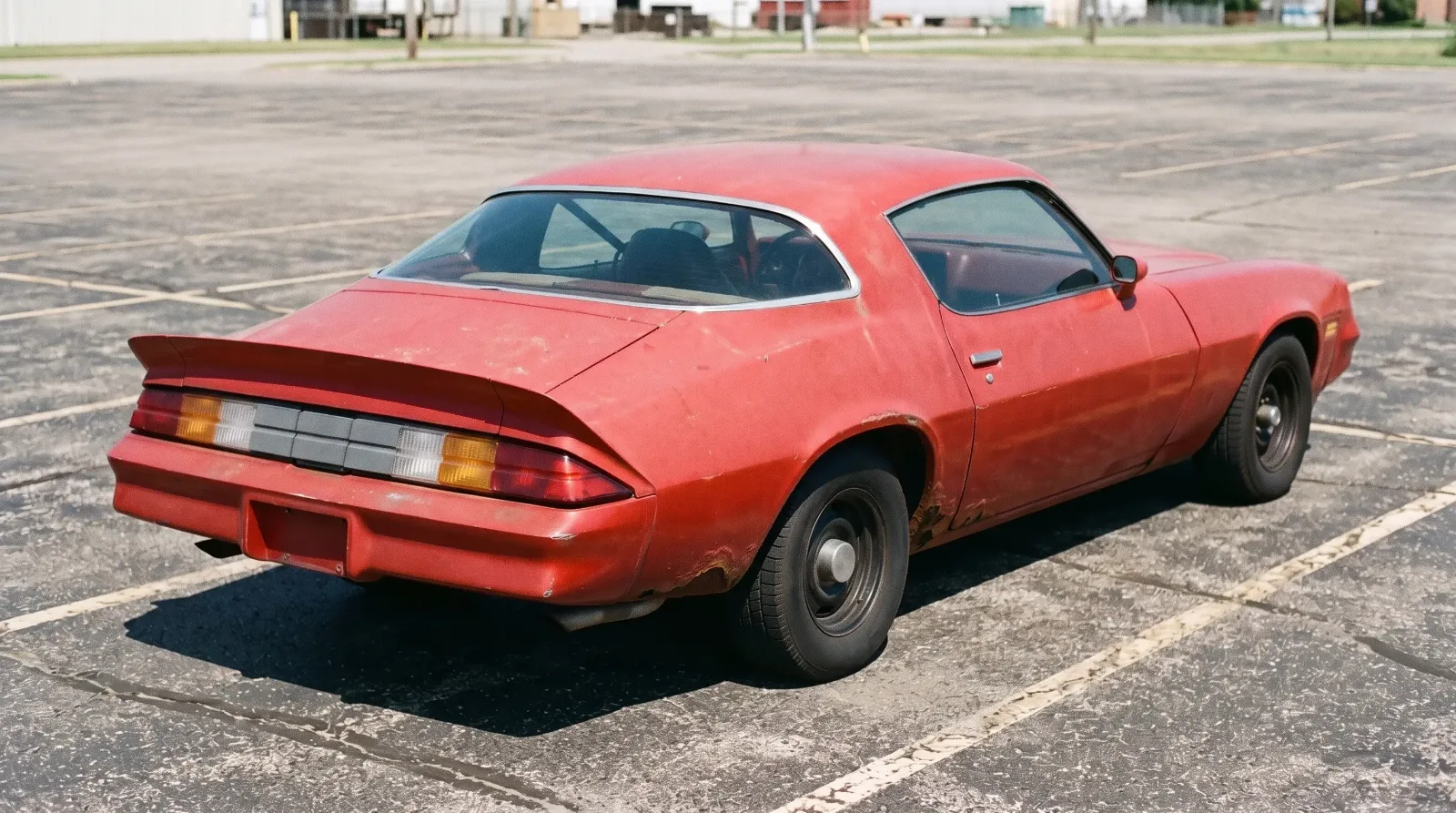
The lower rear quarter takes a beating from the rear tire. The tire throws road debris at the panel behind it, the stones chip the paint, and salt and moisture get into the chips. Panel sellers call the area behind the rear tire one of the most vulnerable spots on the car. The rust usually starts low and behind the wheel opening and works up and back. Run a magnet along the bottom of the quarter and around the wheel lip. Filler does not hold a magnet the way steel does, and a soft spot along a straight-looking panel means someone has already been there.
Partial repair sections for the lower quarter are sold for 1970 to 1973 cars, 16 inches tall and cut with the side-marker hole already in place. Buy for the year you have. A 1972 panel on a 1977 body is a mistake you find after the cutting is done.
When you replace a lower quarter, measure before you cut. Take door gap measurements, take a diagonal or two across the opening, and write them on the body with a marker. Then cut above the rot, leave yourself a clean edge, and butt weld the section in short tacks, moving around the seam so the heat never builds up in one place. A lower quarter that went in hot will oil-can, and no amount of filler makes that right.
Rockers, rear rails, the cowl and the subframe
The rest of the list is where the evidence is thinner, so I will be straight about that. A generic inspection guide written for the 1981 car names floor pans, rocker panels, rear quarter panels, wheel wells and frame rails as rust-prone areas, especially in road-salt states, and the same page lists the subframe as well. That is a vehicle-history site, not a restorer, so read it as a checklist rather than evidence. I have not found a solid documented pattern of front subframe rust specific to 1970 to 1981 cars, so check it the way you would on any old car and do not assume either way.
The rockers are worth the most attention because they are structure. Tap along the bottom edge with a screwdriver handle. Look for fresh undercoating applied over a lumpy surface, which is often hiding repairs. If a rocker has to come out, brace the body first. Weld or bolt a bar across the door opening before you cut, and do one side at a time. Take both rockers and the floor out of an unbraced unibody and the door gaps will close up on you.
The lower cowl panel is reproduced for 1970 to 1981 Camaros, replacing GM part 9816673 on cars without air conditioning. That tells you the part exists, not how often the original rots. The upper dash and cowl panel is reproduced too, and its maker says the area just below the windshield is a common rust spot on 1970 to 1981 Camaros and Firebirds. That is a parts seller talking, so weigh it accordingly, but check the cowl anyway. Water that gets past the cowl ends up on the floor, and a wet front floor with no obvious leak usually traces back up there.
"Brace it before you cut it. Every unibody job I have seen go wrong started with someone pulling out the rocker and the floor on the same afternoon because the car looked solid. It looked solid because the rot was holding it together."
Ray Delgado
Buying the right panels, and the 1981 detail
Order panels for the body you actually have. The split runs between the 1970 to 1973 cars and the 1974 to 1981 cars at the rear, and the front subframe hardware is sold by year range too: AMD's 12-piece body-mount bushing set is listed for 1970 to 1972. Confirm the year before you order, because the VIN plate on the dash is the quickest way to settle it.
One note on the last year. A 1981 car has the 17-character VIN that carried into the next generation, so its decode works like the third-gen VIN, but its sheet metal is pure second gen. Order rust repair panels for 1974 to 1981, not for 1982.
Do the rust work first and do it completely. Paint, interior and drivetrain all sit on top of this metal, and any of it you finish before the floor and rockers are right will come apart again when you go back in.
Sources and notes
- AMD: under rear seat floor panel, 1970 to 1981 Camaro and Firebird
- Lower rear quarter repair section, 1970 to 1973 Camaro
- OER: upper dash and cowl panel, 1970 to 1981 Camaro and Firebird
- AMD: lower cowl panel without A/C, 1970 to 1981 Camaro and Firebird
- AMD: 12-piece subframe and radiator support bushing set, 1970 to 1972
- Wikipedia: Chevrolet Camaro (second generation), structure and body changes
Related Reading

Have a
Chevrolet Camaro
for Sale?
Reach thousands of serious classic car collectors across the US.
Sell It Here →
Are You a Classic Car Dealer?
List your full inventory and connect with targeted classic car buyers.
Join as a Dealer →
#chevrolet camaro
#camaro restoration
#camaro rust
#floor pans
#rust repair
#quarter panels
#second generation Camaro

About the author
Ray Delgado
Metal fabricator and chassis builder who has spent 25 years turning flat sheet and mild steel into hot rods, gassers and restomod underpinnings.
Related Listings - Chevrolet Camaro
Comments
Be the first to comment on this article.