
The short answer is that Ford moved it. Carroll Shelby did not choose to leave California, and the 1968 Shelby was not built in Shelby's own shop. By the time the 1968 cars went into production, Ford controlled engineering and purchasing, had decided to close the California operation, and had sent the work to a fiberglass supplier in Ionia, Michigan. The record of Shelby production in Michigan in 1968 is fairly well documented, and it explains a good deal about how the 1968 cars differ from the 1965 to 1967 Shelbys.
Car Features
6 min read
Why Shelby Production Moved to Michigan in 1968
Ford took control, closed the California shop and sent 1968 Shelby production to A.O. Smith in Ionia, Michigan. The dates and numbers.
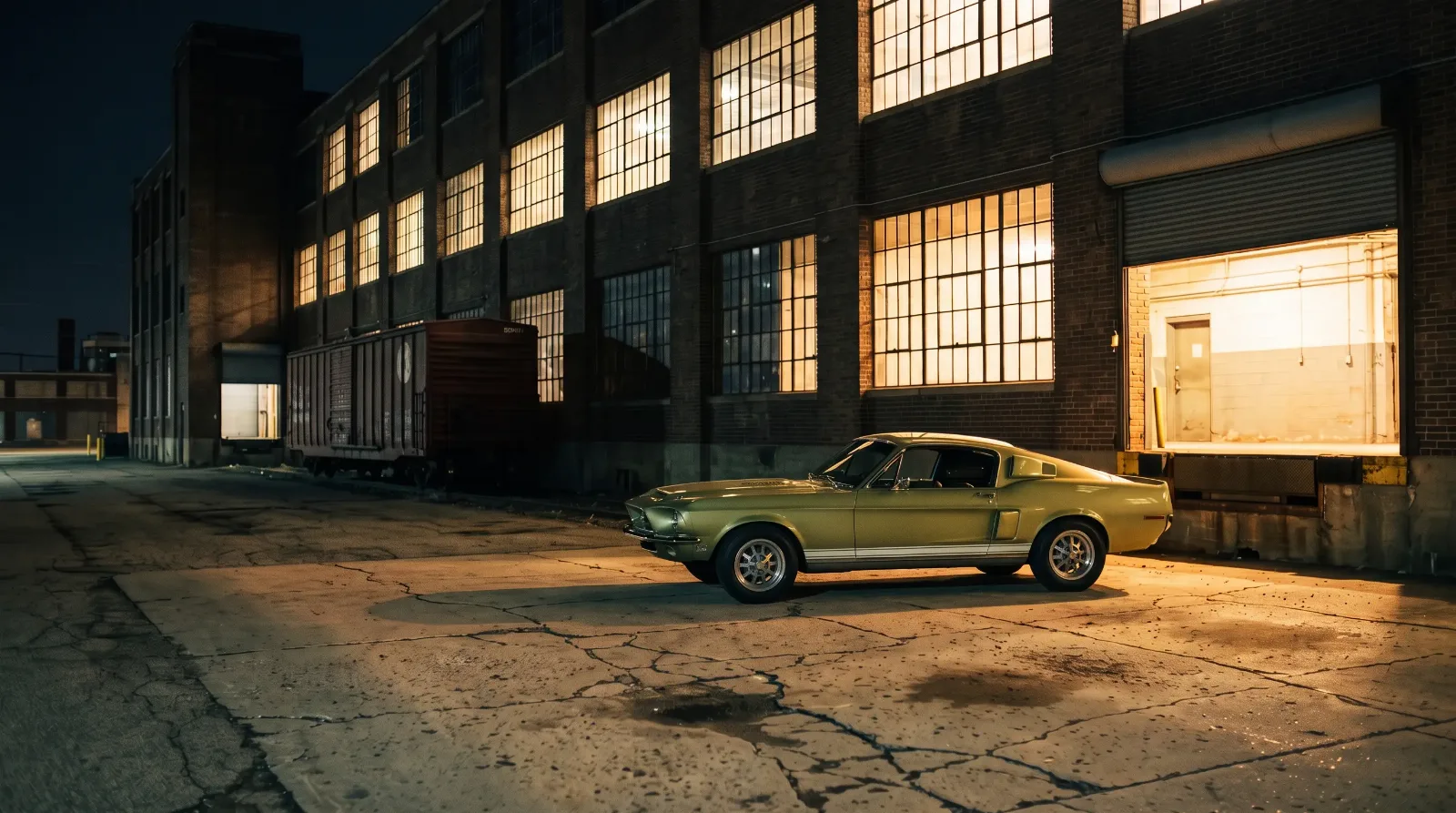
The full run from the first GT350 onward is in our Shelby history. This piece covers only the move and the year it produced.
Ford takes control, 1966 to 1967
The change happened in two steps. By October 1966, Ford had taken over engineering and purchasing for the Shelby Mustang program. The cars still carried Shelby's name and were still finished in California, but the decisions that shape a production car, what parts to use and who supplies them, now ran through Ford.
The second step came in May 1967, when Ford decided to end the California operation altogether. The reasons on record are financial and quality problems on Shelby's side. Ford wanted the program under its own control.
The move itself followed in August 1967. A small group of Shelby and Ford engineering staff went to Michigan, along with the remaining cars, and the 1968 model year was built there.
Why A.O. Smith, and why Ionia
A.O. Smith was not a stranger to the program. The company had been brought in earlier to fix fit and quality problems with the Shelby fiberglass. As the record reads, handing final assembly to the supplier already working on that fiberglass put the most troublesome part of the car and the rest of the finishing work under one roof.
The Ionia plant was not a Shelby-only operation either. In the same period it was building the Mercury Cougar XR-7G. It was also making fiberglass for Ford's own Shelby-styled parts that year: the 1968 California Special used a decklid with spoiler, quarter end caps, a taillight panel and side scoops designed by Shelby Automotive and made by A.O. Smith in Ionia, with an initial order of 6,180 parts sets.
One correction worth making gently. You will occasionally see the 1968 Shelby assembly site given as Southfield, Michigan. Two better sources, including a Michigan heritage organization, place it at A.O. Smith in Ionia, and that is the location to use.
How Shelby production in Michigan worked in 1968
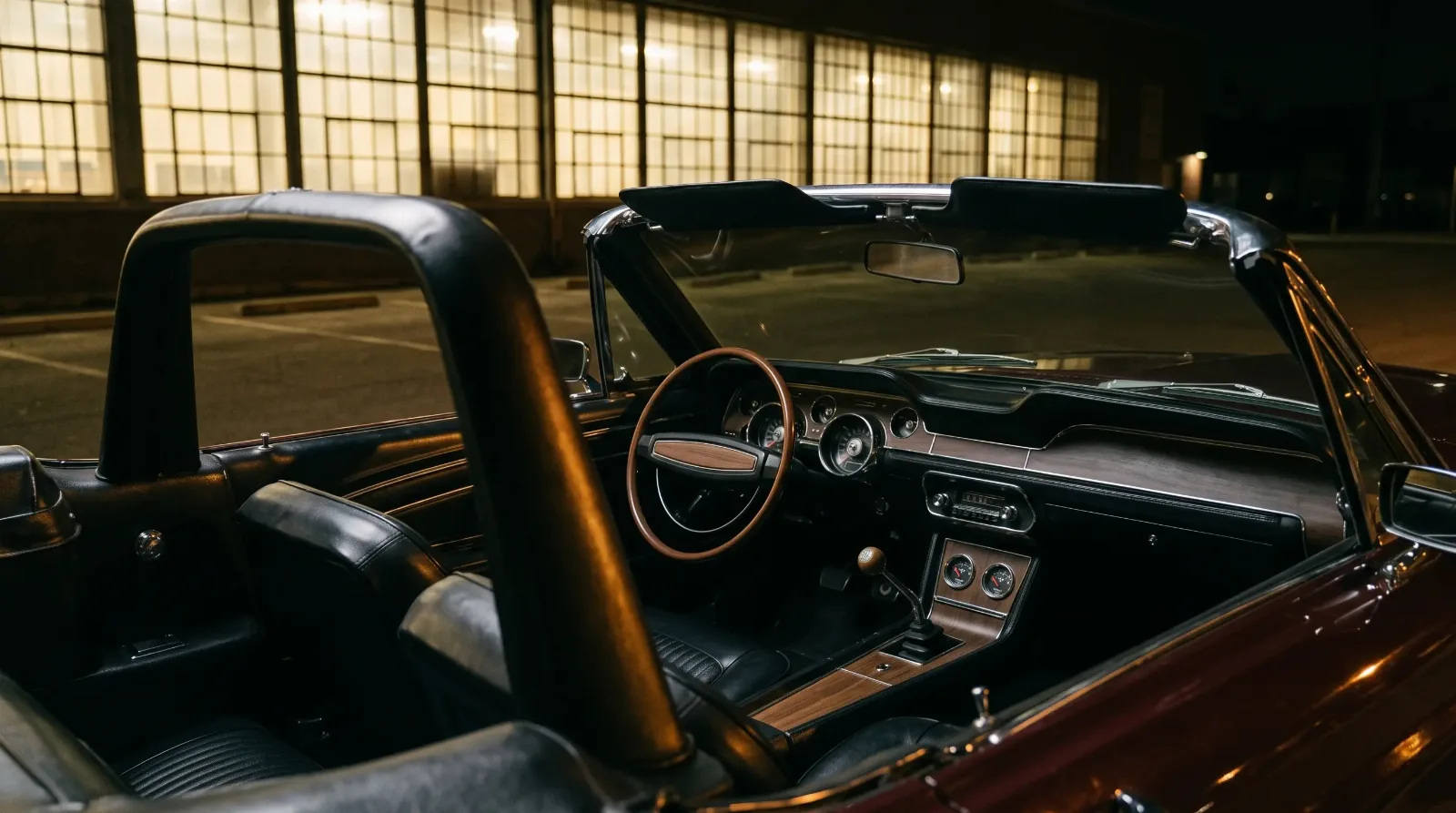
The base cars did not start in Michigan. Ford built them at its Metuchen, New Jersey plant, which is why a 1968 Shelby carries a "T" plant code in its Ford VIN. They were shipped to Ionia by rail as knock-down cars, and A.O. Smith finished them on a moving line.
The Ionia work included the fiberglass body pieces, the roll bar, the gauges, the fog lamps, the console and the Shelby VIN plate. That last item matters to anyone checking a car today: the Shelby identity was applied in Michigan, on a car whose Ford identity was assigned in New Jersey. Both should agree with the records.
Production ran about nine months. The engine lineup at the start was a 302 rated at 250 hp in the GT350 and a 428 Police Interceptor rated at 360 hp in the GT500. In April 1968 the GT500KR arrived with the 428 Cobra Jet, rated at 335 hp and 440 lb-ft, a figure widely seen as conservative. Roughly 1,570 KRs were built, most of them between May and July 1968.
"People sometimes call the 1968 cars less authentic because they were finished in Michigan. The production records do not support that view. They show a larger, more consistent run, built under tighter control, and that was the point of the move."
Tom Ramirez
What the move produced: the 1968 numbers
The clearest result of the move is volume. For 1967, the last California year, Shelby built 2,048 GT500 fastbacks and 1,175 GT350s, with a single GT500 convertible. For 1968, the Michigan year, the total came to 4,450, and the convertible became a regular production body.
| 1968 Shelby model | Built |
|---|---|
| GT350 fastback | 803, plus 224 for Hertz |
| GT350 convertible | 404 |
| GT500 fastback | 1,044, plus 2 for Hertz |
| GT500 convertible | 402 |
| GT500KR fastback | 1,053 |
| GT500KR convertible | 517 |
| Trans-Am coupe | 1 |
| Total | 4,450 |
Those figures add up to the published total, which is a good sign. The KR convertible count is sometimes printed as 518 rather than 517, and one auction catalog gives 318, which looks like a transposition. The 203 Shelbys assembled in Mexico in 1968 are a separate story and are not included in the US total.
The bigger picture is that Ford got what it wanted. Shelby output rose by more than a third over 1967, the convertible joined the line, and the KR gave the program a strong second half. The parts that had caused trouble were now made and fitted by the same supplier.
What the move meant for the Shelby name
The move to Michigan settled who controlled the car, and the rest followed from that. For 1969 the Shelby was restyled around the new Mustang body. Carroll Shelby ended his agreement with Ford in the summer of 1969. No 1970 Shelbys were built; about 789 unsold 1969 cars received 1970 VINs under FBI supervision, and that ending is told in full in our piece on the last Shelbys.
Read in order, the dates tell a consistent story. Ford took over purchasing and engineering in 1966, decided to close California in May 1967, moved the work to Ionia that August, and built a bigger year in 1968. Shelby left the following summer. The 1968 cars sit right at the turning point, the first Shelbys finished away from Shelby's own shop, and a larger run than either 1967 or the 1969 to 1970 cars.
Sources and notes
- MotorCities National Heritage Area: the Shelby Mustangs built by A.O. Smith in Ionia
- Shelby Mustang (Wikipedia): Ford control, 1968 engines, Metuchen base cars
- Shelby FAQ: 1968 production by model, Hertz cars
- Dan Jedlicka: Shelby Mustang production totals
- California Special Mustang (Wikipedia): A.O. Smith Ionia parts sets
- Supercars.net: 1968 Shelby EXP 500 Green Hornet
Related Reading
Have a
Ford Mustang
for Sale?
Reach thousands of serious classic car collectors across the US.
Sell It Here →
Selling a classic? Here's how: where to sell your classic car online
Are You a Classic Car Dealer?
List your full inventory and connect with targeted classic car buyers.
Join as a Dealer →

About the author
Tom Ramirez
Corvette researcher and historian based in Bowling Green, Kentucky. Two decades documenting Corvette production history from original factory records.
Related Listings - Ford Mustang

More in Car Features
Comments
Be the first to comment on this article.