
The judge lies on a creeper under the car, a flashlight in one hand and a clipboard balanced on his chest. Above him, on the lift, an old Camaro shows its underside the way it left the plant: overspray where the factory sprayed it, inspection marks nobody bothered to clean off, a fuel line still wearing its original clips. At the Muscle Car and Corvette Nationals a judge in the Vintage Certification program can spend about three hours with one car. That long look is how a survivor Camaro earns its name. It is also the best argument for why some cars should never be restored at all.
Car Features
7 min read
Survivor Camaros: Why Unrestored Originality Matters
What makes a survivor Camaro, how Bloomington Gold, MCACN and Carlisle judge originality, and why an unrestored car is the answer key for every restorer.
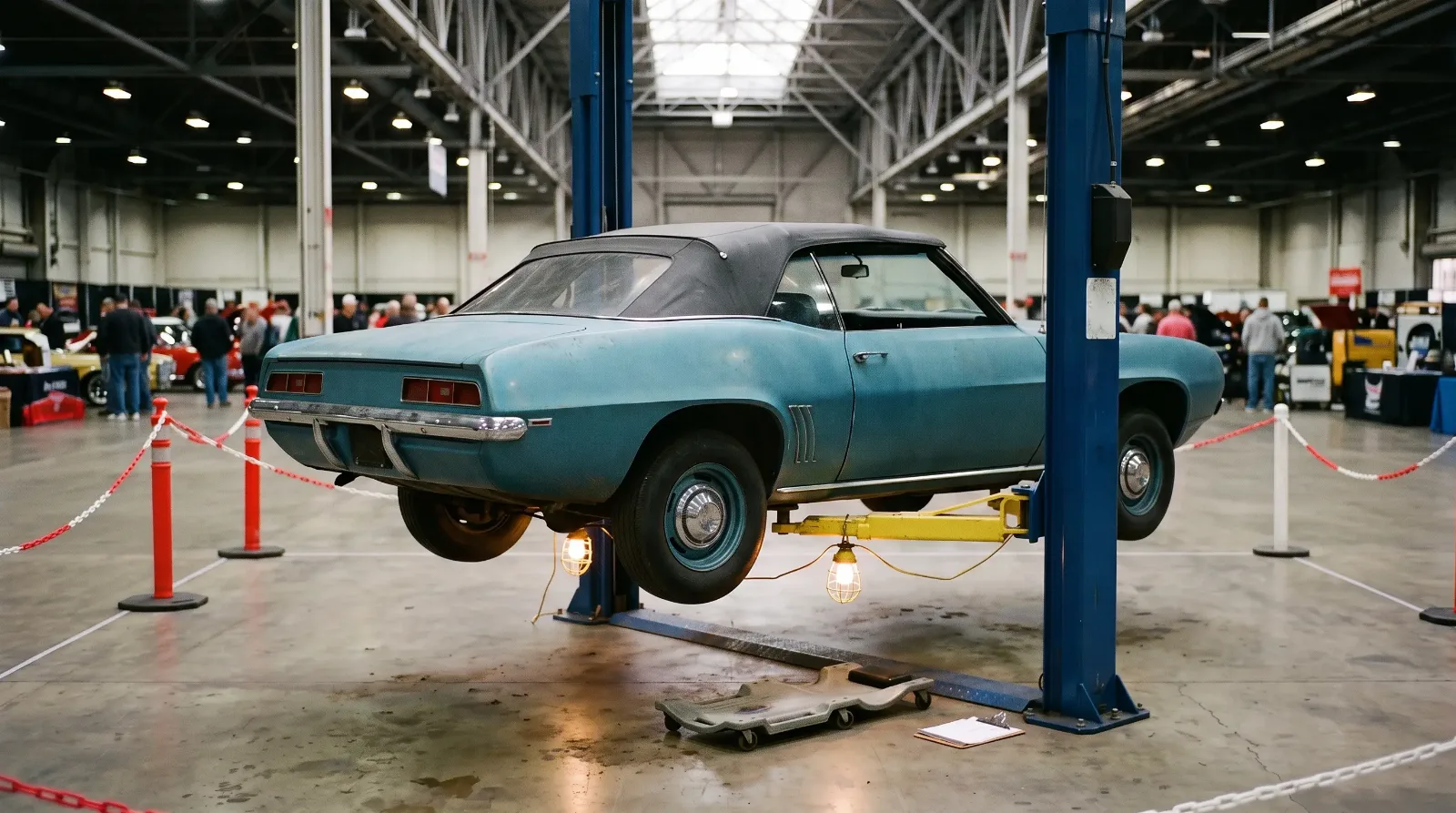
Most of the Camaros you see at shows have been taken apart and put back together, often beautifully. That work has its place, and if your car needs it, start with our Camaro restoration guide. This story is about the other cars. The ones that made it this far without a second coat of paint.
What a survivor Camaro actually is
The word gets used loosely, so it helps to start with how the people who judge these cars define it. Sports Car Market has described a survivor as a car "essentially in original, unrestored condition." Hemmings' Richard Lentinello put it more strictly: all original except the tires and battery. Between those two lines sits most of the argument at any car show.
The formal idea of a survivor came from the Corvette world. Bloomington Gold, founded in 1978 by David Burroughs, added Survivor certification in 1989, and Burroughs has described "Survivor" as a Bloomington Gold trademark. As described in 2007, its test looked at four areas: exterior, interior, engine compartment and chassis. A car had to be more than half original in three of the four, and good enough to serve as a model for someone else's restoration. Original in all four earned the Benchmark title.
That last rule matters. A survivor isn't simply an old car that was never painted. It's an old car whose own parts are still telling the truth about it.
How Camaros are judged for originality
Camaro owners have their own programs. Two are worth knowing, and both have changed their rules over the years, so check the current version before you enter a car.
| Program | Where it runs | What it looks for |
|---|---|---|
| Vintage Certification | Muscle Car and Corvette Nationals (MCACN) | Unrestored cars; about 3 hours of judging per car, underbody on a lift; 2012 rules covered cars built before 1988 |
| Vintage Camaro Certification | American Camaro Association, Camaro Nationals at Carlisle, Pa. | Unrestored Camaros over 30 years old; four levels; an 8-page report, plaque and certificate |
| Bloomington Gold Survivor | Bloomington Gold (Corvette-focused) | Four sections judged for unrestored content; Gold, Silver and Bronze tiers from 2014 |
The MCACN levels shift with time. A 2017 description lists Time Capsule for cars 95 percent or more unrestored in every reference area, followed by Legend, Heritage, Legacy and Reference, each set at 85 percent or more unrestored across a shrinking number of areas. The 2012 announcement worded them differently, and the 2025 announcement judged six areas, adding operation to the engine compartment, exterior, interior, underbody and trunk. Treat any level name as dated, and ask the owner which year's rules the car was judged under.
The Carlisle program has a long run of its own. By 2006 Vintage Camaro Certification was in its seventh year at the Camaro Nationals, held alongside the All-GM Nationals.
Why unrestored originality matters
David Burroughs said it plainly: "Refinishing hurts the value." In his view even a touched-up original engine bay loses historical value. European collectors, he noted, had long preferred unrestored cars.
The reason runs deeper than money. A restoration is a set of decisions, and every decision is someone's best guess about how the factory did it. A survivor is the answer key. When a restorer wants to know which clips held a brake line, what color an inspection mark was or how much overspray landed in a wheel well, the only real evidence is a car nobody has touched.
"A restored car tells you what the restorer believed. A survivor tells you what happened. I would rather listen to the car."
Nora Beckett
Originality also protects a car's identity. On a 1968 Camaro, no number in the VIN or the cowl tag says Z/28. The most concrete proof is the original 302 itself. Once that engine is gone, the car's story becomes a matter of opinion. The same logic explains why clones exist. Chevrolet built 602 Z/28s in 1967 and 7,199 in 1968, against far larger SS numbers, and scarce cars invite copies. If you want to see how thin some of those slices are, look at the production numbers, and remember that even those totals are estimates. Classic Industries notes that Chevrolet itself does not know exactly how many Camaros were delivered.
Against that uncertainty, an untouched car is a fixed point. Its stampings, tags and factory finishes sit where they always sat. Nobody had a reason to move them.
Restore or preserve: the hardest choice an owner makes
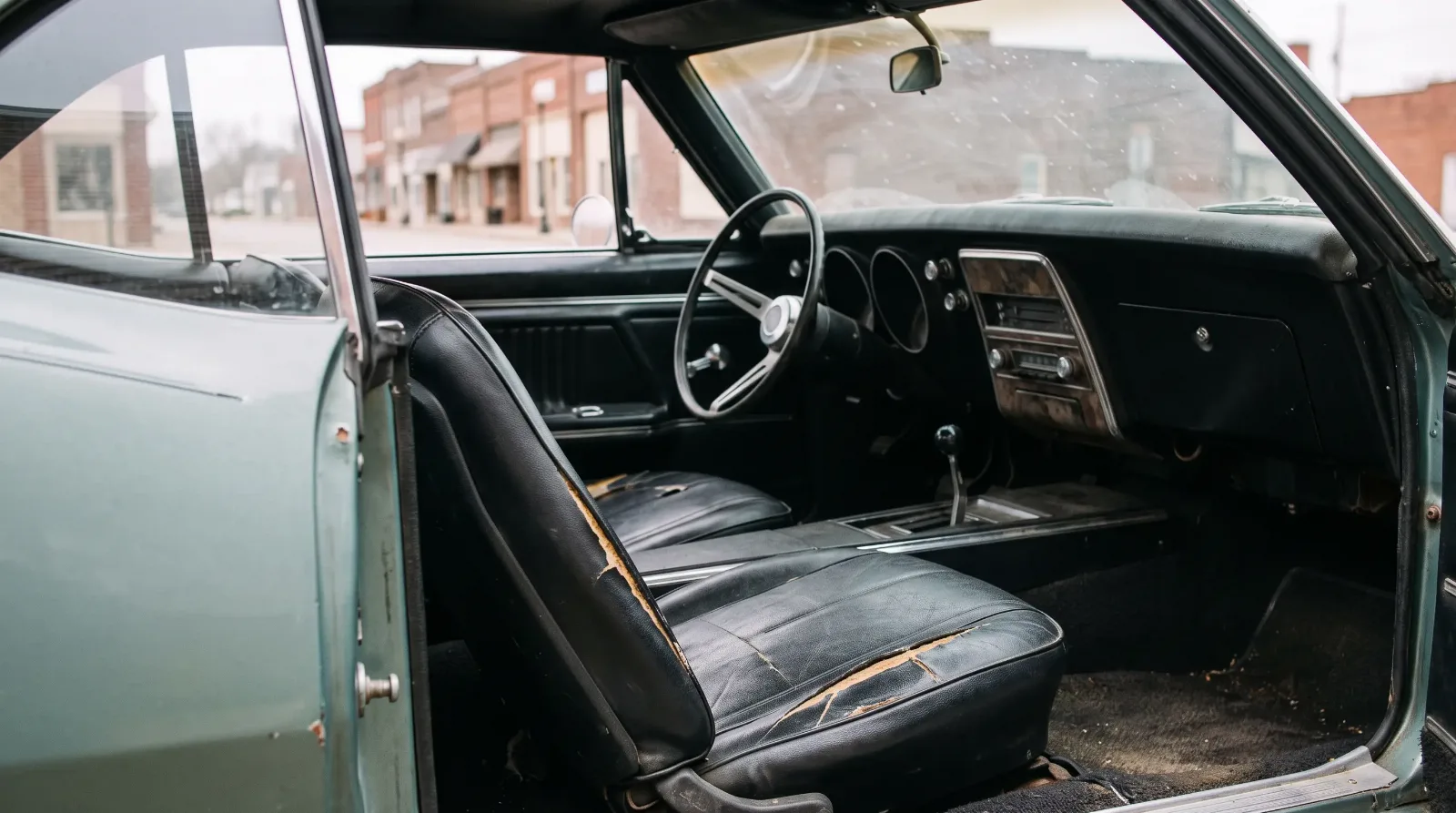
The 1967 Cherokee, the Camaro show car that came out of Bill Mitchell's studio with a Vince Piggins engine, shows how heavy this choice can be. It was shown unrestored at MCACN in 2010, still on Rally wheels. Then it was restored for The Brothers Collection, with paint by Charley Hutton's Color Studio in Nampa, Idaho, and revealed again at MCACN in Rosemont, Illinois, in 2013.
Both versions of that car had something to say. One carried the marks of its years. The other showed what it looked like when it was new. Neither is wrong. But only one of those cars can exist at a time.
For an ordinary Camaro that has survived, the question is quieter and more personal. A cracked seat, a faded hood, a chip in the paint by the driver's door where someone's ring tapped it for twenty years: each one is a small record. Fixing one doesn't feel like much. Fixing all of them, over a decade, can turn a survivor into a nice old car.
There's a moment at the end of a long judging session when the creeper rolls out from under the car and the judge stands up, brushing off his knees. Whatever score the car gets, he has just seen something rare: a machine from decades ago that nobody tried to improve. Keep it that way if you can.
Sources and notes
- Sports Car Market: What makes a survivor (2007)
- CorvetteBlogger: Bloomington Gold changes to Survivor judging (2014)
- Camaro Research Group forum: Vintage Certification at MCACN, 2012 announcement
- Supercar Registry: MCACN 2017 Vintage Certification levels
- Supercar Registry: Vintage Certification 2025 announcement
- Barn Finds: proving a real 1968 Z/28
Related Reading
Have a
Chevrolet Camaro
for Sale?
Reach thousands of serious classic car collectors across the US.
Sell It Here →
Selling a classic? Here's how: the best sites to sell a classic car
Are You a Classic Car Dealer?
List your full inventory and connect with targeted classic car buyers.
Join as a Dealer →
#chevrolet camaro
#classic camaro
#bloomington-gold
#survivor Camaro
#unrestored Camaro
#Camaro originality
#MCACN

About the author
Nora Beckett
Automotive features writer and photographer who tells the human stories behind the cars, from show fields to cross-country road trips.
Related Listings - Chevrolet Camaro
Comments
Be the first to comment on this article.