
There is a fellow at nearly every classic Ford show who will tell you, with total confidence, that Ford never raced the two-seat Thunderbird. He is wrong, and the proof is a small fleet of cars the factory quietly built and handed to a former Indianapolis driver named Pete DePaolo in 1957. Ford's own people called them Battlebirds, and the name stuck because it fit. These were not showroom Thunderbirds with a decal. They were purpose-built competition cars wearing Thunderbird sheet metal, and Ford tried very hard not to be seen doing it.
Car Features
6 min read
The Battlebird: Ford's Secret Daytona Racers
Ford quietly built and raced factory Battlebird Thunderbirds through Pete DePaolo Engineering in 1957, a program that ended almost as fast as it began.
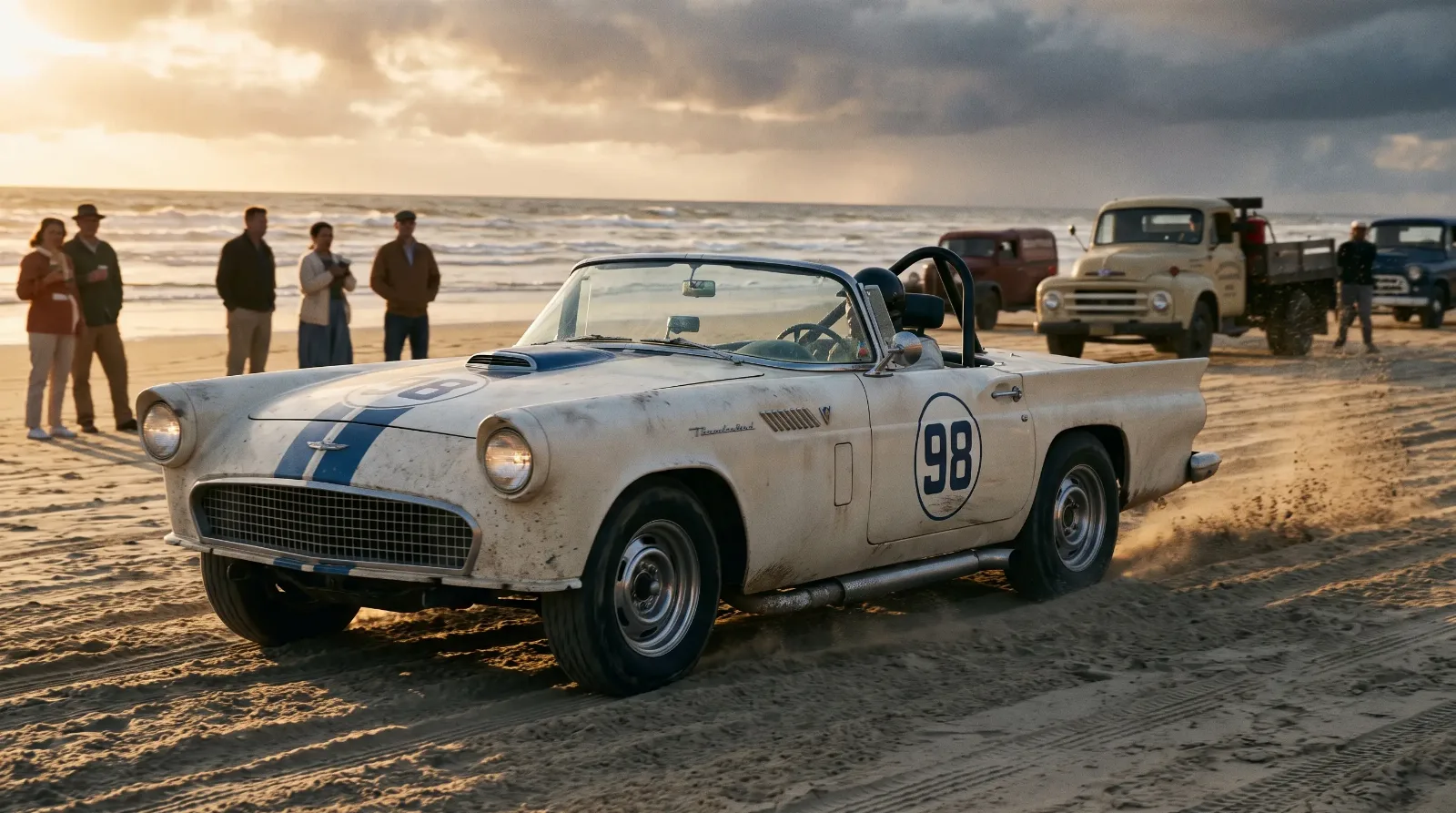
The club had heard the rumor for years before the proof surfaced
Ford's official position through most of the 1950s was that the company did not race, a stance tangled up in the Automobile Manufacturers Association's informal agreement to stay out of factory-backed motorsport. Officially, nobody at Ford was building race cars. Unofficially, Pete DePaolo Engineering, based out of California, was doing exactly that with Ford's blessing and Ford's parts, and the results ran under private entrant names to keep Dearborn's fingerprints off the program.
I have sat in enough club meetings over the years to hear this story told a dozen different ways, usually by someone whose father or uncle worked at a Ford dealership in 1957 and swore he saw one of these cars up close. The documentation eventually caught up with the folklore. The Battlebird program was real, and it was built specifically to take on Chevrolet's Corvette on NASCAR's Grand National stock car circuit and at Daytona Beach's Speed Weeks.
What made a Battlebird different from a showroom car
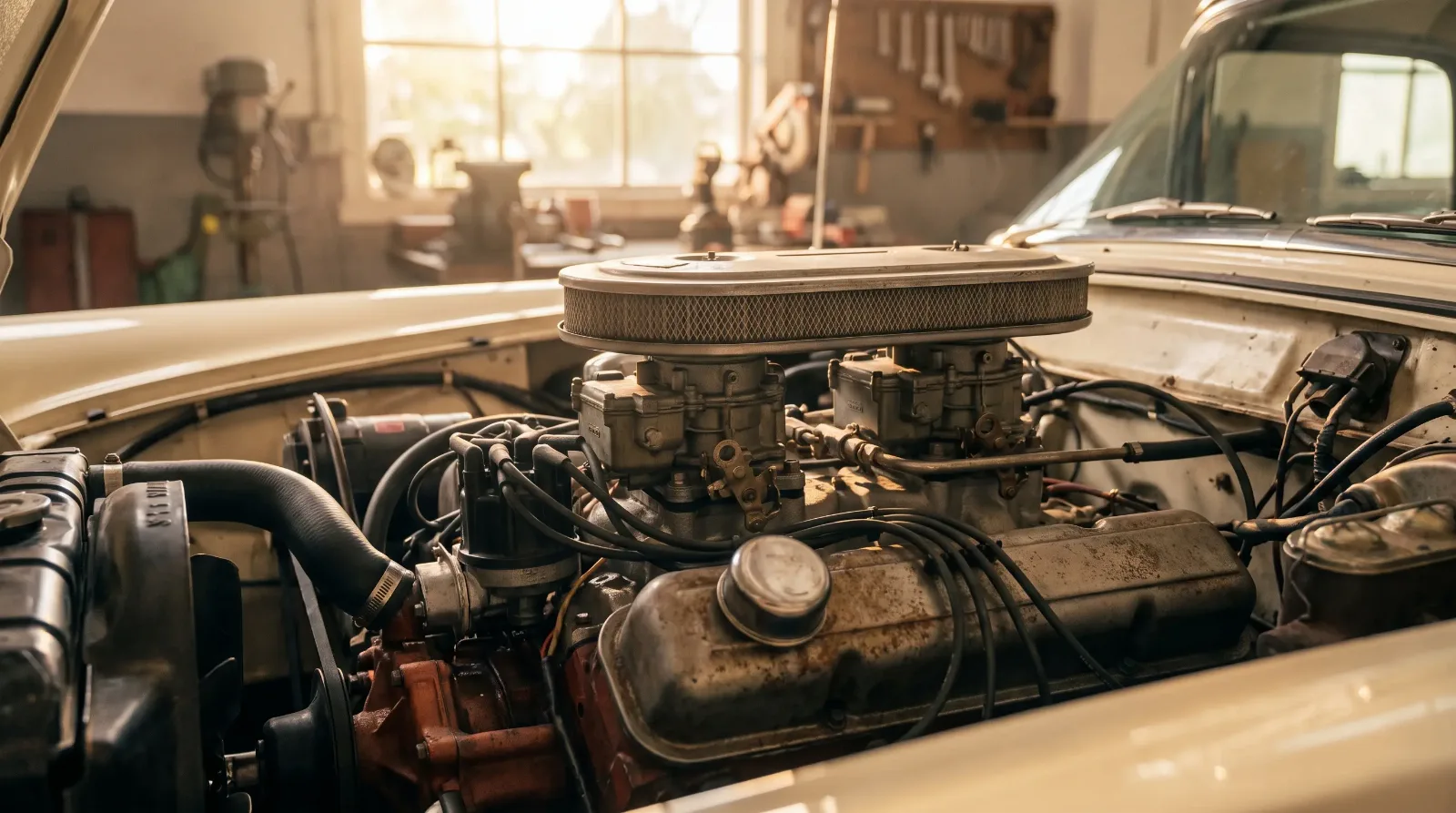
A Battlebird started life as a two-seat Thunderbird body and chassis, then got worked over with real racing intent. Weight came out wherever the rules allowed. The supercharged F-code and dual quad E-code engines that Ford sold to the public formed the mechanical foundation, but DePaolo's shop tuned and prepared them well beyond what a dealership service bay would touch. Suspension, brakes, and cooling all got attention aimed at surviving hours of high speed running rather than a Sunday drive to church.
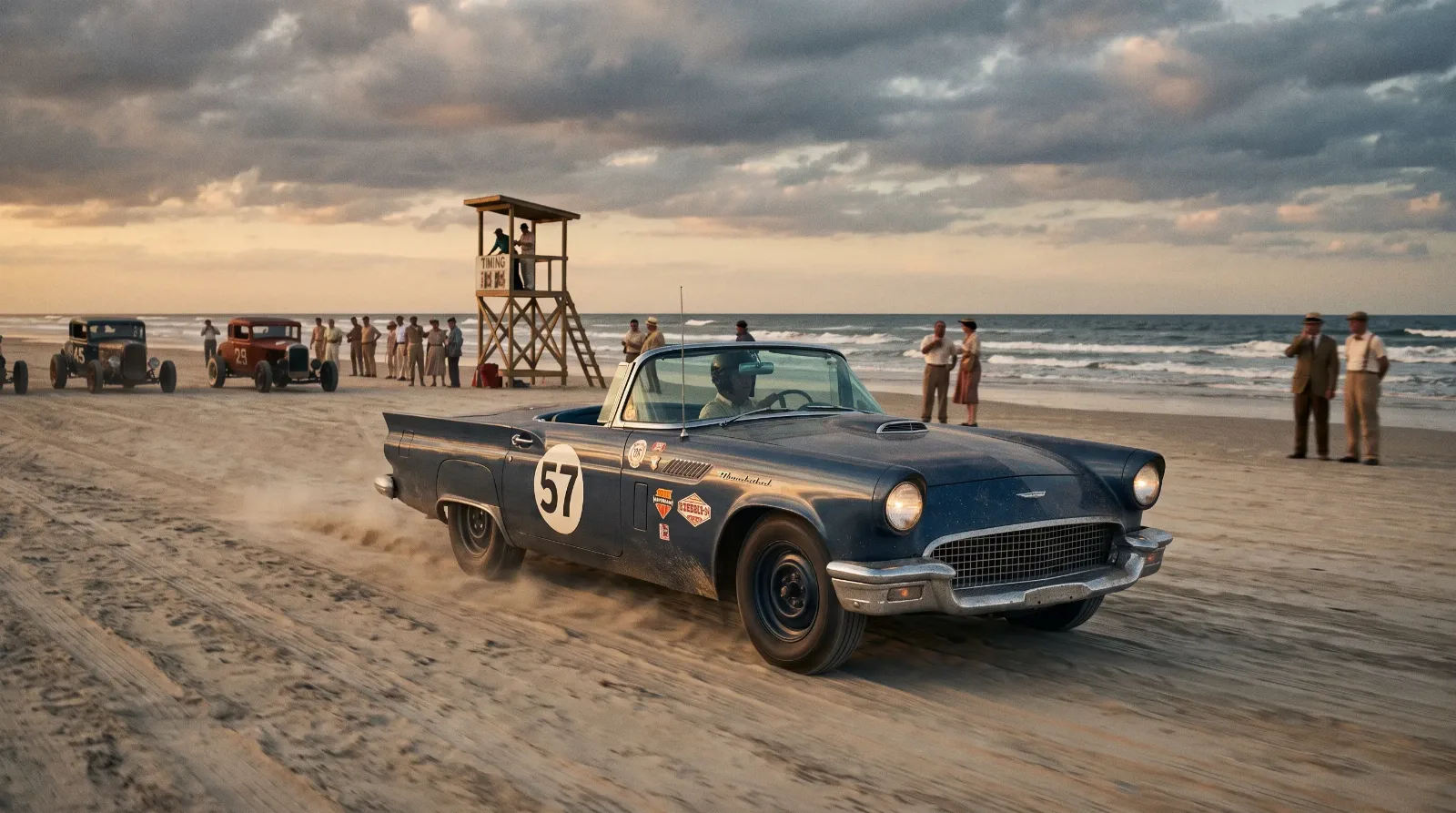
The cars ran at Daytona's Speed Weeks in February 1957, and factory-adjacent teams entered them in NASCAR Grand National events that same season. Results were mixed. The Thunderbird was fast, sometimes fastest, but reliability under real racing stress separated the good runs from the disappointing ones, the same story that has followed every factory hot rod program before and since.
Why Ford ended the program so quickly
The Automobile Manufacturers Association banned factory participation in racing in June 1957, and that ban landed like a hammer on programs across Detroit, not just Ford's. The Battlebird effort, already operating in a gray area, wound down along with similar quiet racing programs at Chevrolet and Chrysler. The two-seat Thunderbird itself was on its way out too, replaced for 1958 by a larger four-seat car that had nothing left to prove on a race track and was not built with racing in mind.
That timing means the Battlebird story is compressed into a single season, which is part of why so few people outside serious Thunderbird circles know it happened at all. A program that might have grown into a multi-year effort got cut off just as it was finding its footing, and the cars themselves scattered, some restored, some lost, and a few debated to this day over exactly which chassis carries genuine Battlebird history.
"My old man used to say the Battlebird was Ford's best kept open secret. Everybody at the track knew what it was. Nobody at the head office would say the word out loud."
- Wayne Coburn
The drivers who actually raced them
A handful of names come up whenever the Battlebird story gets told properly. Chuck Daigh, a Californian who had driven for several factory-adjacent teams through the decade, ran a Thunderbird at Daytona's Speed Weeks in 1957, chasing top speed records on the sand. Marvin Panch, who would go on to a long NASCAR career including a Daytona 500 win years later, is another name associated with the program's stock car entries. These were not amateur weekend racers borrowing a dealer demonstrator. DePaolo brought in people who already knew how to push a car to its limit and, just as important, knew how to bring it back in one piece when the engine or brakes started complaining.
Club lore likes to inflate every old racing program into something bigger than it was, and I try to push back on that instinct as much as anyone. But the Battlebird drivers were legitimate, and the equipment they were given, while compressed into a single short season, was a genuine factory effort rather than a garage hobbyist's dream. That distinction is worth holding onto when you hear the story told at a swap meet with the details getting bigger every time.
Tracking down the real cars today
Genuine Battlebird history is hard to verify and easy to claim, which means any car offered with that pedigree deserves real scrutiny. Race history documentation, period photographs, and a chassis that can be traced back through DePaolo's shop records matter enormously here, more than on almost any other Thunderbird variant. A regular 1957 Thunderbird dressed up with a racing story is not the same thing as a car that actually ran at Daytona in 1957, and serious collectors know the difference in the price they are willing to pay.
I have learned to ask three questions whenever someone offers up a car with Battlebird history. Where is the chassis number documented against DePaolo's shop records. Who owned it in the years right after 1957, before the story had any market value attached to it. And does the car's modification list actually match what a competition Thunderbird from that program would have carried, rather than a generic set of period speed parts bolted on later by an enthusiast chasing the same legend everyone else is chasing. Cars that answer all three honestly are rare enough that most club members will never own one. That is fine. The story belongs to the whole club, not just the chassis numbers.
Readers who want the full story on the two-seat Thunderbird generation will find the Battlebird program makes a lot more sense once you understand the three model years, the engine options, and the competitive pressure Ford was under from 1955 through 1957. And if the Battlebird story has you wanting to own a piece of that era even without full competition provenance, there is real value in a well documented standard car too. Take a look at what is currently listed as classic Thunderbird for sale and you will see the range, from clean drivers to cars with a story worth telling at the next club meeting.
Sources and notes
Related Reading
Have a
Ford Thunderbird
for Sale?
Reach thousands of serious classic car collectors across the US.
Sell It Here →
Are You a Classic Car Dealer?
List your full inventory and connect with targeted classic car buyers.
Join as a Dealer →
#ford thunderbird
#NASCAR history
#two-seat thunderbird
#1957 thunderbird
#Battlebird
#Daytona racing

About the author
Wayne Coburn
Longtime Corvette owner, judge and club figure who knows the cars, the records and the people behind them.
Related Listings - Ford Thunderbird
Comments (1)
D
Don Metzger
2 months ago
The documentation point can't be overstated. I've seen beautiful cars pass at auction because the seller couldn't back up what they were claiming.