
Every club has a member who collects the oddball trim packages nobody else bothers chasing, the ones that never made it onto a factory poster and only show up if you know exactly what letters to look for on a build sheet. In Thunderbird circles, that member is usually the one who ends up explaining the difference between a car a seller calls a "Special Landau" and the genuine, documented rarity that is the Apollo, because most casual fans have never heard either name next to the better known Town Landau.
Car Features
7 min read
The Apollo and Special Landau Editions
The Thunderbird Special Landau, sometimes called the Apollo trim by old club hands, survives today mostly through club research and dealer paperwork rather than mainstream Ford literature.
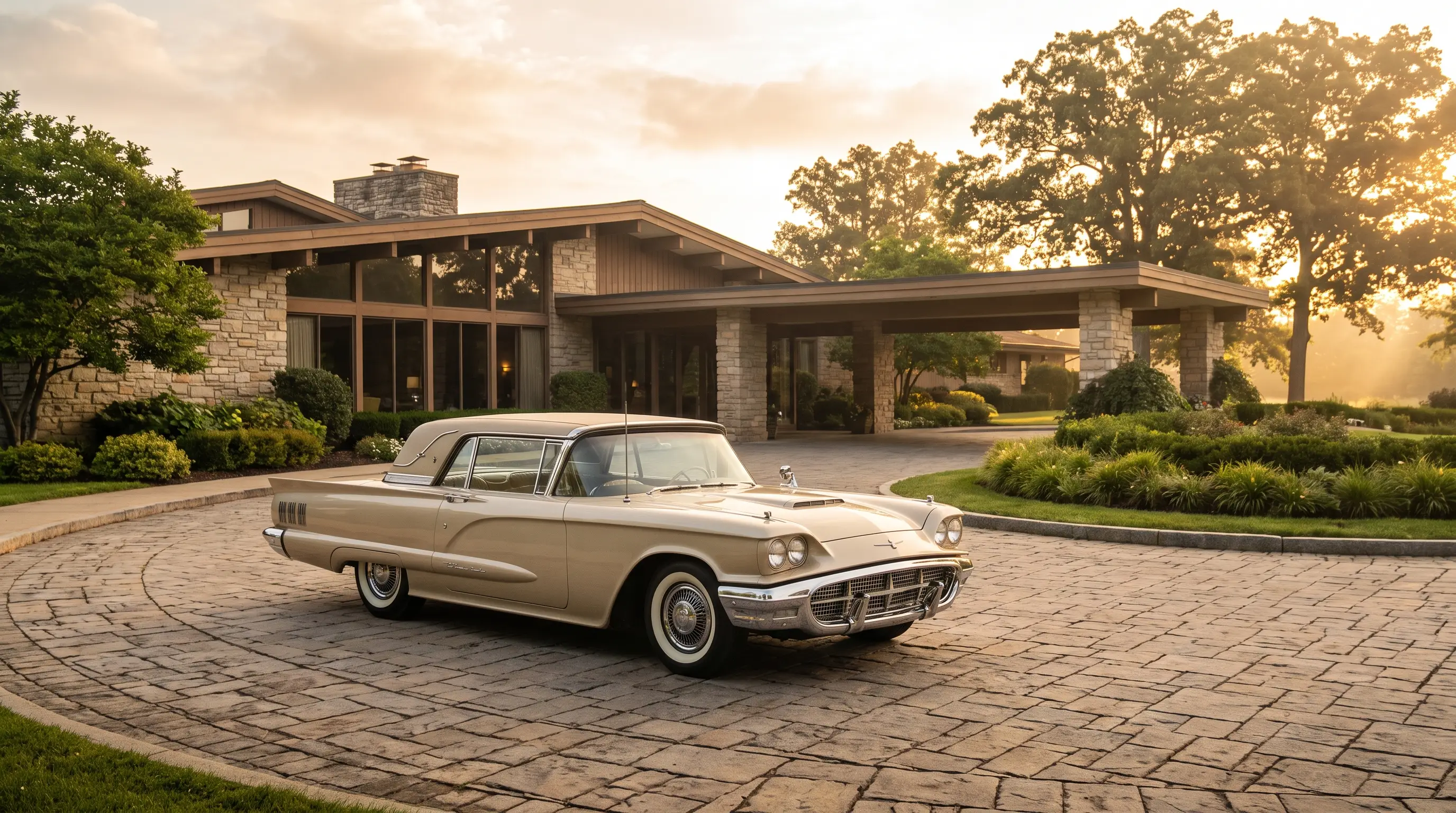
A trim package built for a specific moment
"Special Landau" is a name you see attached to Thunderbirds of this era mostly on dealer listings and auction descriptions, and it gets used loosely enough that it is worth being careful with. The Town Landau, with its vinyl roof and landau bars, was the genuine catalog offering for 1966. Cars advertised as a "Special Landau" today are more often a Town Landau being described with extra emphasis than a documented, separate factory package, so treat that label as a seller's flourish rather than a confirmed model designation until the paperwork says otherwise.
The Apollo is a different animal entirely, and a real one. For 1967, the retailer Abercrombie and Fitch commissioned Ford to build exactly five specially trimmed Thunderbird Landau coupes as showroom display cars for their flagship stores in New York, Chicago, Palm Beach, Miami, and San Francisco. These were not a dealer-orderable trim level any regular buyer could check a box for. They were a one-time custom commission, finished in a distinctive blue with gold anodized landau bars and an interior kitted out with a telephone, a Philco television, and a fold-down table, features nowhere near a standard options list. One of the five was reportedly destroyed in transit, and only a handful survive today, which is exactly why the Apollo name gets thrown around more loosely than the facts support.
Why the details matter to collectors
For the Apollo, the difference between a genuine example and a standard Landau dressed up to look like one comes down entirely to documentation and small physical details, the Apollo Blue Metallic paint, the gold anodized landau bars, the cabin electronics that were never a factory option. That is exactly the kind of puzzle that keeps a certain type of collector engaged for decades. It is not about horsepower or top speed. It is about knowing a car's specific history well enough to spot the difference between what it claims to be and what the paperwork actually supports.
Club meets are where this knowledge really gets tested and refined. Somebody shows up with a car described as a "Special Landau," another member has spent years cataloguing every reference to the Apollo commission they could find, and the resulting conversation, sometimes friendly, sometimes a little tense, is how the community keeps its collective memory accurate. Without that ongoing back and forth, details this specific would have faded out of circulation entirely by now.
For background on the formal styling language the Landau roof built on top of, our 1964 Ford Thunderbird retrospective covers the redesign that established that look and the broader formal image Ford kept refining through the rest of the decade.
Engines and equipment behind the badge
The Apollo was not defined by a unique engine. It rode on the same mechanical package available across the 1967 Thunderbird Landau coupe, and its distinction was entirely about trim, paint, and cabin equipment. That is worth understanding because it separates a special commission, which is about appearance and equipment, from a true mechanical variant. If you want to see how one specific engine option shaped a Thunderbird's character during this era, a related story looks at the 390 that powered a large share of these cars.
"The Apollo is the kind of car that teaches you humility as a collector. You think you know every variant of a model, and then somebody shows up with paperwork for something you have never heard of, five cars built for a department store, and you go back to the research with a little more respect for how deep this stuff actually goes."
- Wayne Coburn
Hunting for a genuine example
Anyone looking for a genuine Apollo today should treat the search less like a straightforward purchase and more like a research project, since only a handful of the five were built and not all are known to survive. Sellers who know what they have will usually back it up with paperwork tracing to the Abercrombie and Fitch commission. Sellers who label an ordinary Landau a "Special Landau" without that provenance are more common, which is exactly why club connections matter so much when a name this specific is on the table. A knowledgeable community can point you toward cars with real documentation faster than any classified ad search ever could.
If the broader hunt for a well documented late 1960s Thunderbird interests you regardless of trim specifics, you can look at Thunderbirds for sale now and start narrowing the field, then bring your shortlist back to people who know these cars well enough to help you separate a genuine rarity from a good story with no paper behind it.
Why obscure history survives at all
It would be easy for a commission this limited to simply vanish from collective memory, the way plenty of dealer promotions from the 1960s eventually did once the people who arranged them were no longer around to talk about them. The Apollo has hung on for a specific reason. Somewhere along the way, a handful of dedicated owners decided the story was worth preserving, and they did the unglamorous work of asking older club members, digging through personal archives, and cross referencing whatever dealer paperwork surfaced at estate sales and swap meets over the years.
That kind of preservation work rarely gets credit outside the club itself, but it is the only reason a story this specific has not disappeared entirely. Every generation of Thunderbird has a few of these footnotes, cars that were real, sold or displayed for real customers, but never popular enough to leave much of a paper trail behind. A documented Apollo matters to serious collectors precisely because so few exist, which makes a verified example rarer, in practical terms, than some cars with far larger production numbers overall.
I would rather see a Thunderbird collection with one properly documented oddity like this than a garage full of common trims with no story attached at all. The common cars are easier to find and easier to value. A genuine Apollo, or even a well documented Town Landau wrongly called a "Special Landau" by an earlier owner, rewards the kind of patience that most car hobbies do not require, and that patience is exactly what keeps a research minded corner of this hobby interesting decade after decade.
New members sometimes ask why any of this matters when the car underneath is mechanically identical to a standard hardtop. My answer is always the same. History is not only about what a machine does, it is about what it meant to the people who bought it, sold it, and kept its story alive long after the badge stopped being current. The Apollo earns its place in that story the same way any well documented classic does, one careful owner and one preserved piece of paperwork at a time.
Sources and notes
Related Reading
#ford thunderbird
#Thunderbird Landau
#Special Landau
#Apollo trim
#classic Ford trim packages
#Thunderbird club

About the author
Wayne Coburn
Longtime Corvette owner, judge and club figure who knows the cars, the records and the people behind them.
Related Listings - Ford Thunderbird
Comments
Be the first to comment on this article.