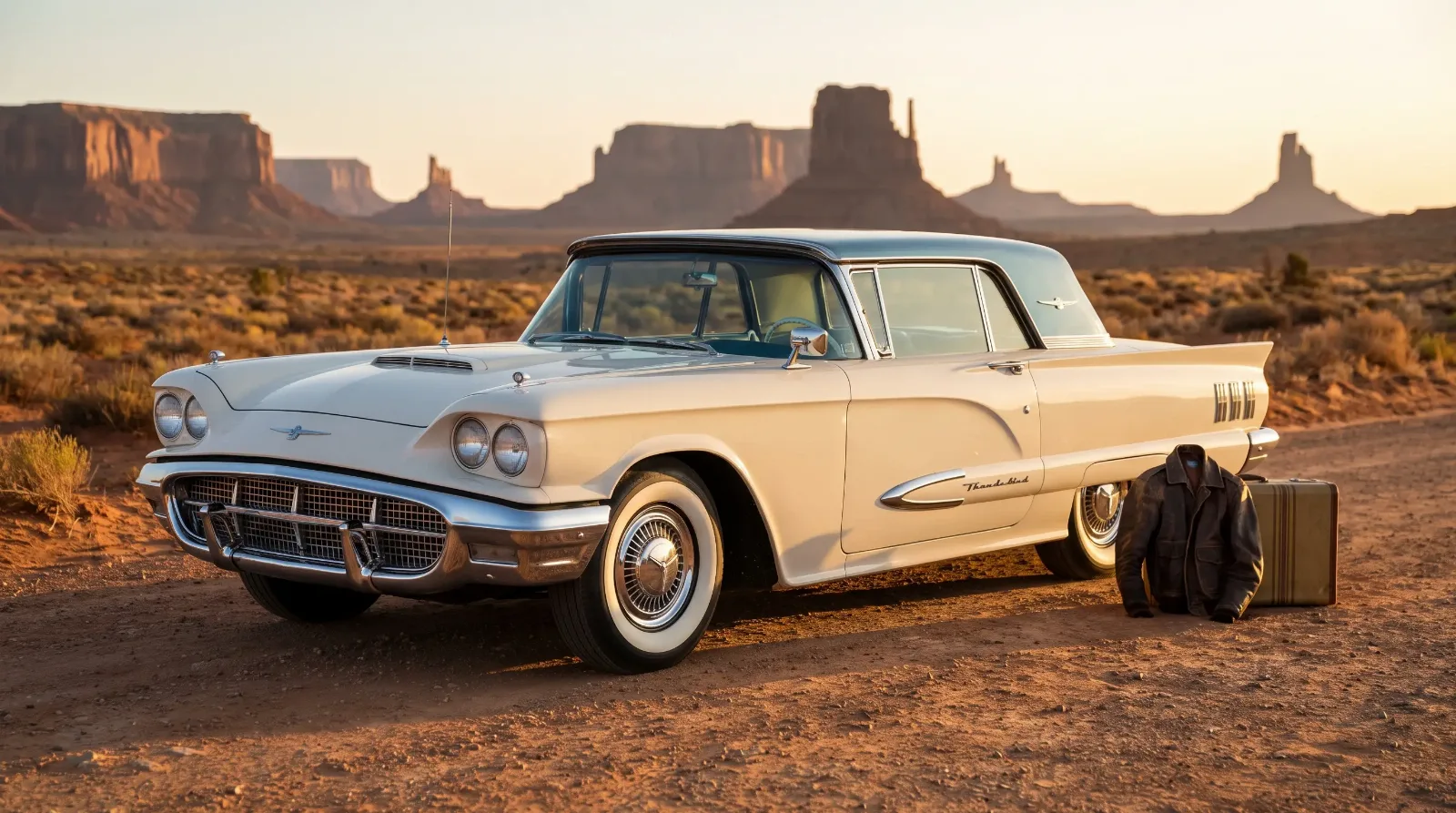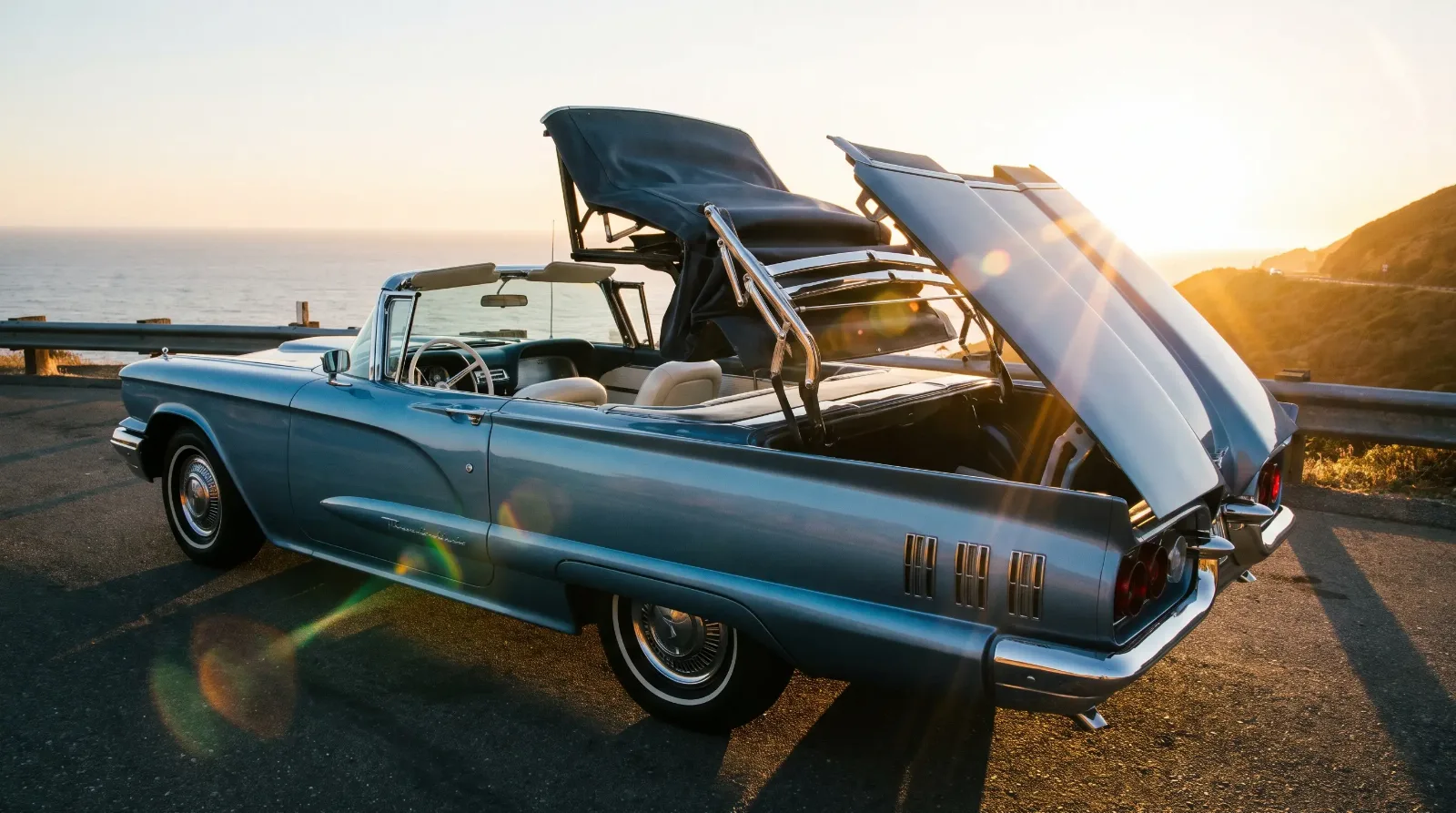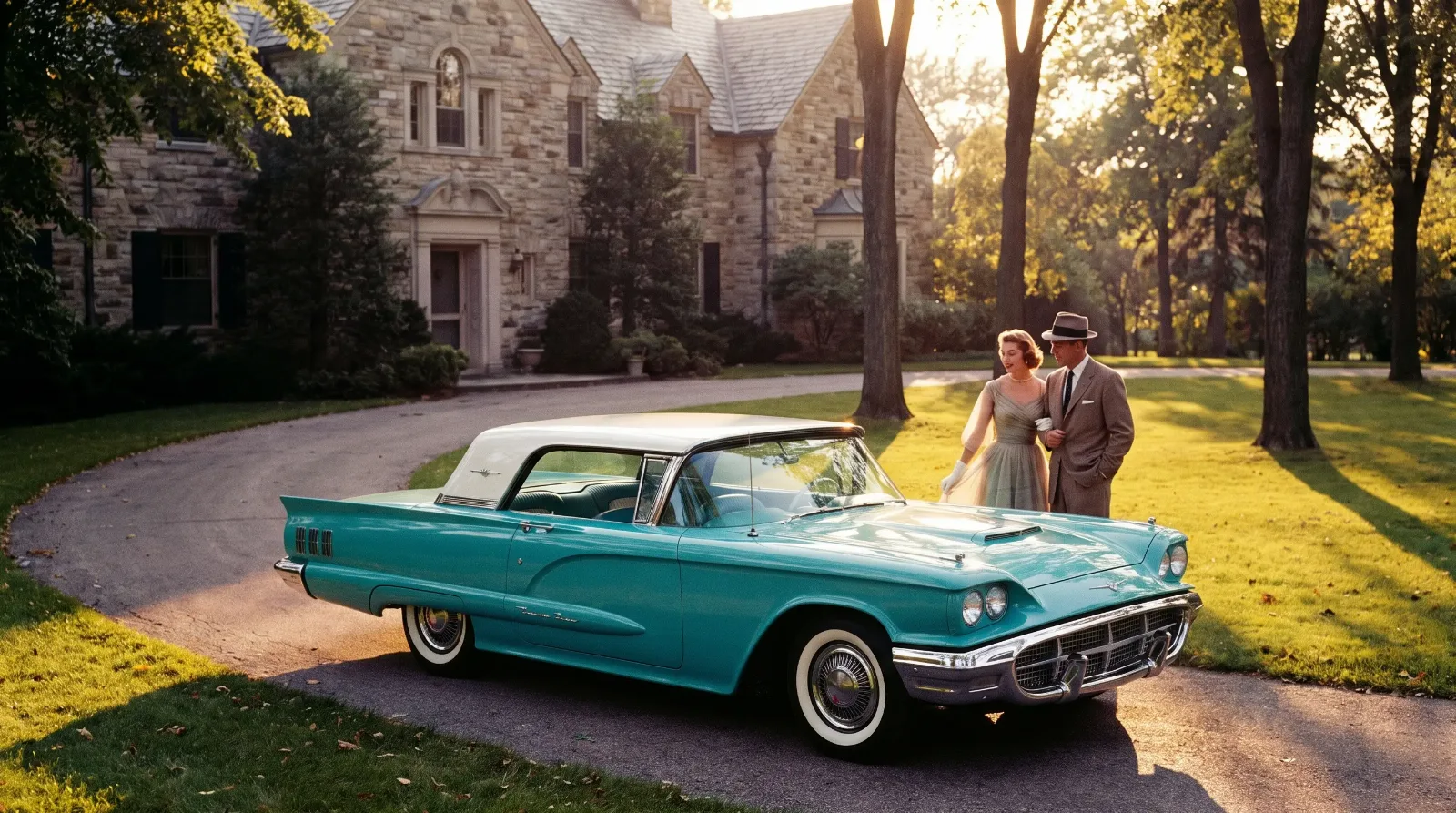
1958 Thunderbird styling gets misread more often than almost any other Ford design of the era. The common story is that Ford simply stretched the two-seat Thunderbird into a four-seater and called it done. The factory record tells a more deliberate story, one built around a formal roofline that was chosen specifically to separate the new Square Bird from both its two-seat predecessor and from the sportier competition Ford was watching from Detroit's other manufacturers.
The roofline was the design brief, not an afterthought
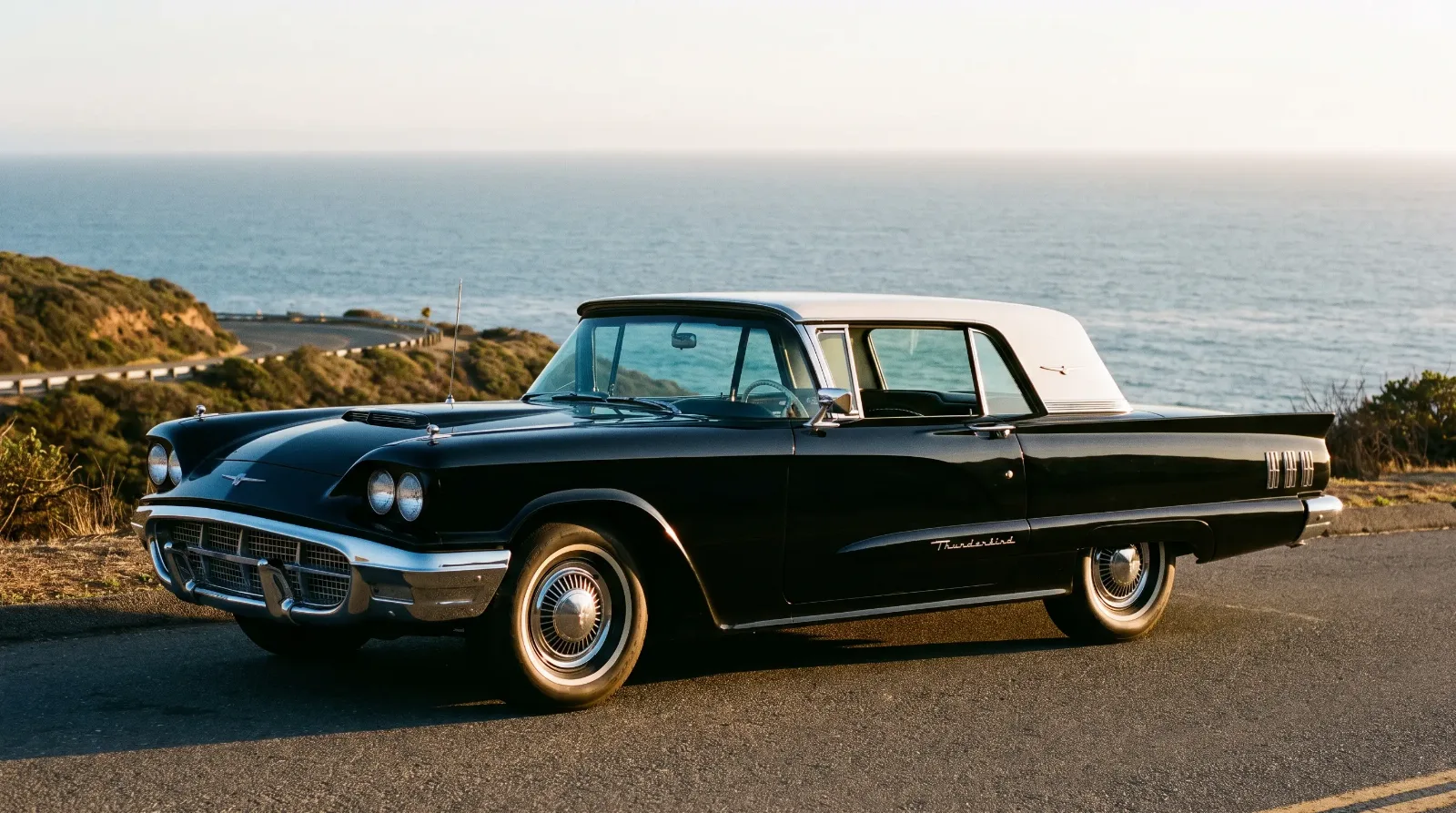
Design work on the second-generation Thunderbird began years before the 1958 launch, and the direction from Ford management was explicit: build a personal luxury car, not a sports car with extra seats. That distinction drove the roofline decision more than any single styling element on the car. Where the original two-seat Thunderbird had a low, sporting greenhouse, the Square Bird's designers gave it a squared-off, formal roof with a nearly vertical rear window and a wide C-pillar. This wasn't a limitation of engineering; it was a deliberate signal that this car belonged in the same conversation as a Lincoln or a well-equipped Mercury, not a Corvette.
The name enthusiasts later gave the car, Square Bird, describes exactly this: a boxier, more architectural shape compared to both the rounded original Thunderbird and the more sculpted Bullet Bird that would follow it starting in 1961. Ford's own design documentation from the period frames the roofline choice around visibility and formality rather than aerodynamics, a priority list that tells you plainly what kind of buyer this car was built to attract.
Correcting the "just a stretched two-seater" myth
It's worth being direct about a misconception that circulates in enthusiast circles: the idea that the 1958 Thunderbird was simply the two-seat platform lengthened to fit a back seat. This is not accurate. The Square Bird rode on an entirely new unibody platform, shared in modified form with Lincoln's smaller offerings of the period, not a stretched version of the 1955-1957 Thunderbird's body-on-frame construction. The switch to unibody construction was itself a significant engineering decision that shaped the styling possibilities, allowing a lower overall roofline without sacrificing structural rigidity the way a stretched frame car would have required.
Ford's press materials at launch emphasized this as a genuinely new car, not a derivative, and the sales figures suggest the buying public understood the distinction. This was a fresh design exercise built around a formal, four-passenger brief from the start, and the roofline is the clearest physical evidence of that intent.
Reading the roofline against period competition
Compare the Square Bird's roof to what Buick and Oldsmobile were doing with their personal luxury offerings in the same years, and the formal-roof strategy looks less like an isolated Ford decision and more like an industry read on where the personal luxury segment was heading. Wide C-pillars, near-vertical backlights, and a general move away from the swoopy, low-slung profiles of the mid-1950s show up across several manufacturers' 1958 and 1959 lineups. Ford wasn't alone in this bet, but the Thunderbird's version of it, paired with the car's smaller overall footprint compared to full-size sedans, gave it a distinct identity within that broader trend.
Trim codes and body tags from this period, cross-referenced against Ford's own build sheets, confirm the roofline treatment was consistent across the 1958 through 1960 production run with only minor detail changes, unlike the more dramatic year-to-year shifts Ford would apply to the Bullet Bird generation that followed. That consistency itself is evidence the design was considered settled and correct from the outset, not iterated toward under sales pressure.
"The record does not support the idea that this was an improvised design. The formal roofline shows up in the earliest planning documents as a stated goal, not a compromise Ford backed into."
- Tom Ramirez
Why the roofline still matters to collectors
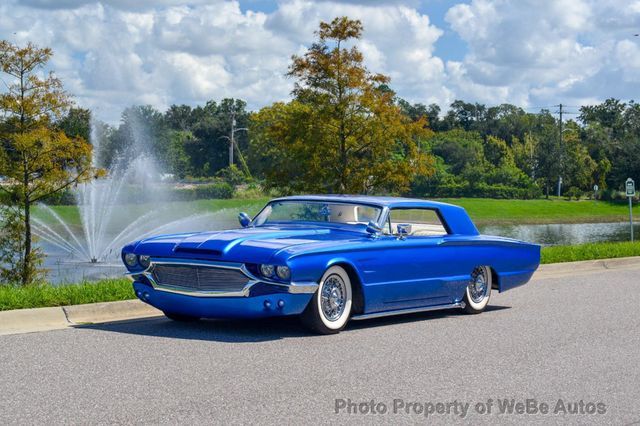
Originality on this particular styling element carries weight with serious buyers because the roofline is structural, not a bolt-on trim piece that can be easily replaced or altered. A Square Bird with an unmodified roof, free of amateur chop or repair work around the C-pillars, retains the exact silhouette Ford's designers intended, and that silhouette is what distinguishes this car in a crowded field of late-1950s American coupes and convertibles at any show field or appraisal.
For readers who want the whole picture on how the Square Bird generation came together beyond just its roofline, that broader retrospective covers the sales strategy and market reception around the redesign. If the styling has you looking to buy, shop classic Thunderbird listings and pay close attention to roofline condition specifically, since it is one of the harder things to correct on a car this age.
The design team behind the decision
Ford's styling studios in this period operated under a competitive internal structure, with multiple design teams often working parallel proposals before management selected a final direction. Records from the Square Bird's development show the formal-roof concept won out over more overtly sporting proposals that would have kept closer visual continuity with the original two-seater's low, curved greenhouse. Management's choice to favor the boxier, more upright design over sportier alternatives on the table is itself telling: it confirms the personal luxury brief was treated as non-negotiable at the executive level, not something individual designers were free to soften back toward the two-seater's more overtly athletic look.
This kind of internal competition between studio proposals was standard practice at Ford and across Detroit more broadly during this era, and the surviving record of alternate proposals for the Square Bird gives useful insight into just how differently this car could have looked had a different faction within the design department won the argument. The formal roofline wasn't the only option on the table. It was the option that best served what Ford's leadership had already decided the car needed to be.
Proportions and how the roofline interacts with the body
A formal roofline only works visually if the rest of the body supports it, and the Square Bird's designers clearly understood this. The car's beltline, hood length, and rear deck were all proportioned to balance against the more upright greenhouse, avoiding the top-heavy or awkward look that a formal roof grafted onto the wrong body can produce. This is part of why the Square Bird still reads as a coherent, intentional design today rather than a compromise, the roofline and body were developed together as a single proposal, not bolted together from mismatched parts of different design exercises.
Viewed from the rear three-quarter angle, a position period photographers favored heavily in period advertising, the relationship between the wide C-pillar and the car's low, wide rear deck creates a sense of substance that a taller, narrower greenhouse would have undermined. This is the kind of detail that separates a genuinely resolved design from one that merely follows a stated brief without fully understanding why the brief existed in the first place.
What changed for 1959 and 1960 within the same body
While the fundamental roofline held steady across the three model years, Ford made incremental trim and detail adjustments each year, different grille treatments, revised taillight arrangements, and interior trim updates, without touching the core formal-roof identity that defined the generation. This is worth knowing when evaluating a specific model year: styling changes within the Square Bird era were evolutionary refinements to an already-settled design language, not a search for the right answer that hadn't yet been found.