1958 Thunderbird advertising had one central job: convince buyers who had never considered a sports car that this was still, somehow, a Thunderbird. Ford's marketing department inherited a two-seat car with a devoted following and now had to sell an entirely different four-passenger proposition without losing the name's cachet. The resulting campaigns are worth studying as period documents, not just nostalgia pieces, because they reveal exactly how Ford repositioned an entire product category in real time.
Selling "personal luxury" as a new category
Ford's copywriters leaned hard on a phrase that barely existed in mainstream advertising before this car: personal luxury. Print ads from 1958 describe the Thunderbird not as a sports car and not as a standard sedan, but as something occupying its own space, a car for a buyer who wanted distinction without sacrificing comfort or practicality. This positioning was deliberate and new. Ford was essentially inventing a marketing category to justify a product that didn't cleanly fit the boxes buyers already understood.
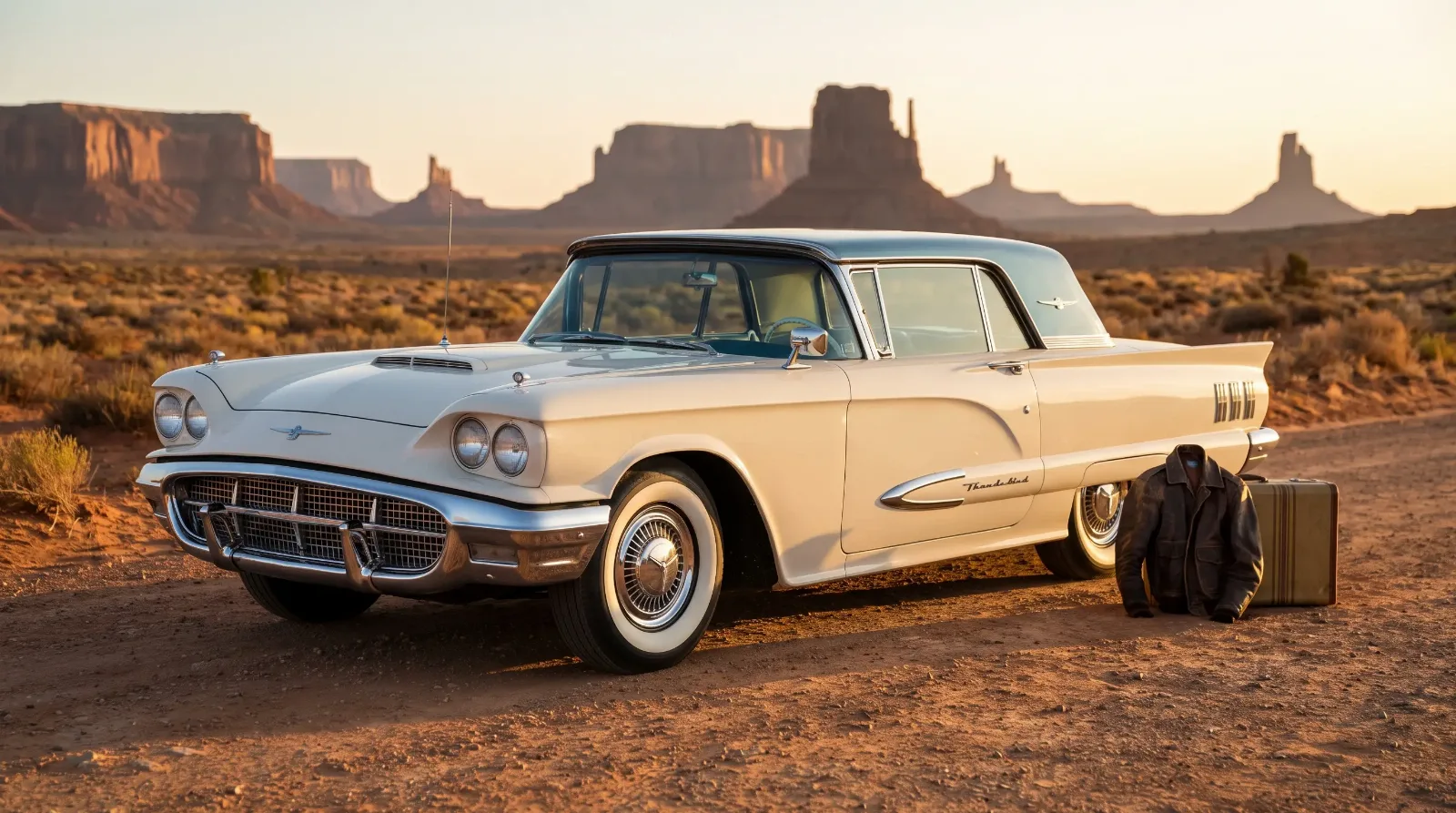
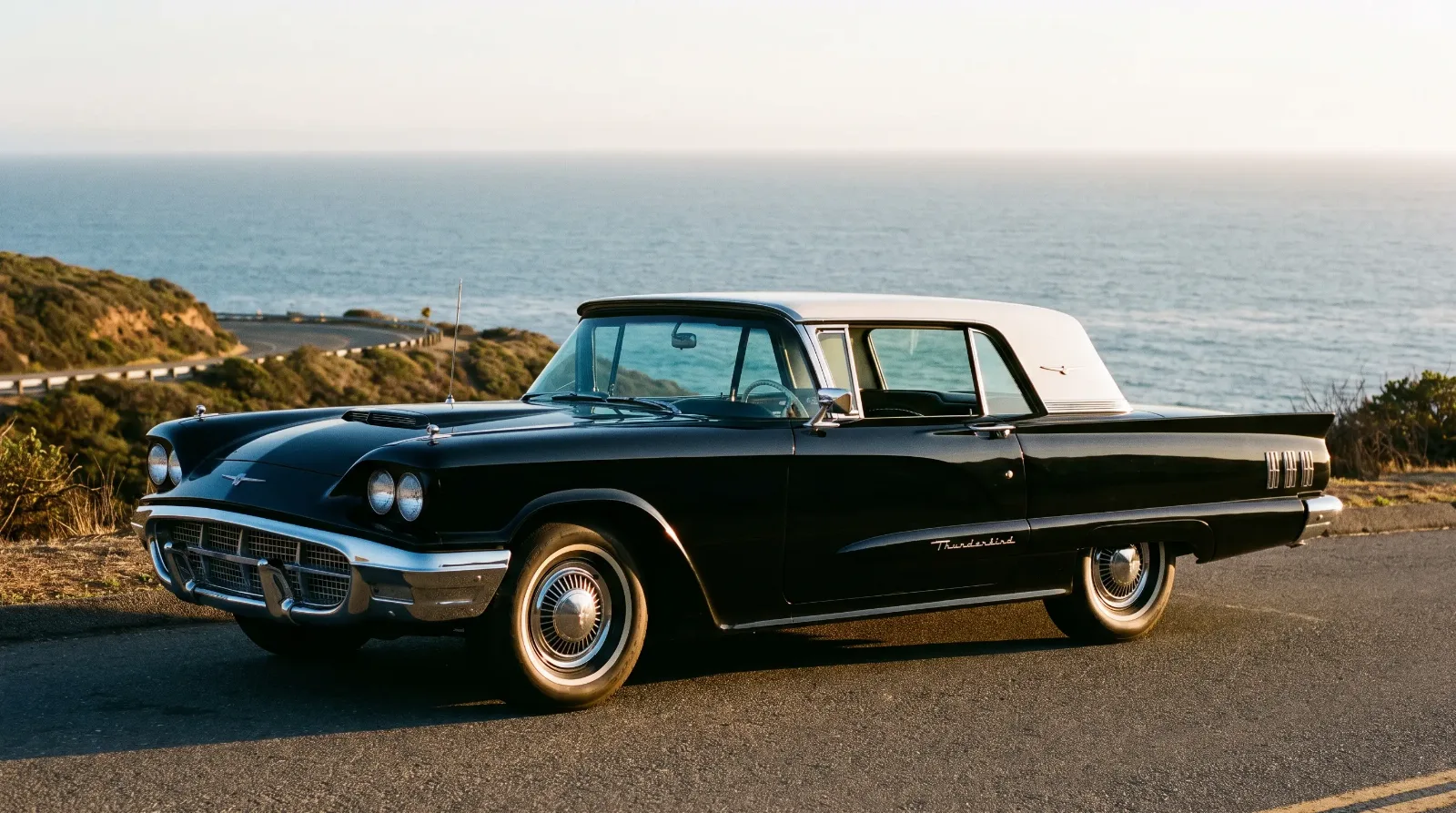
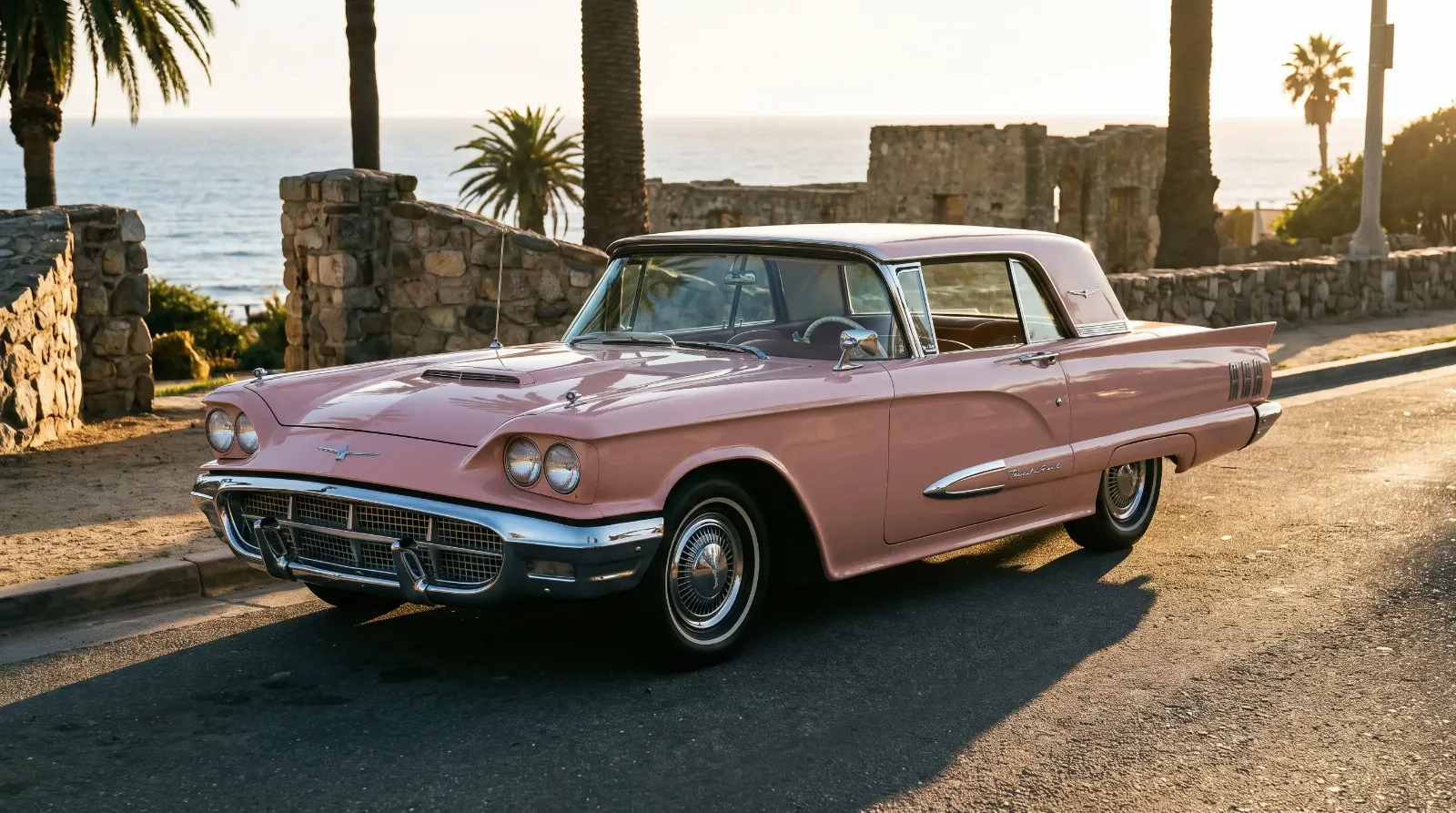
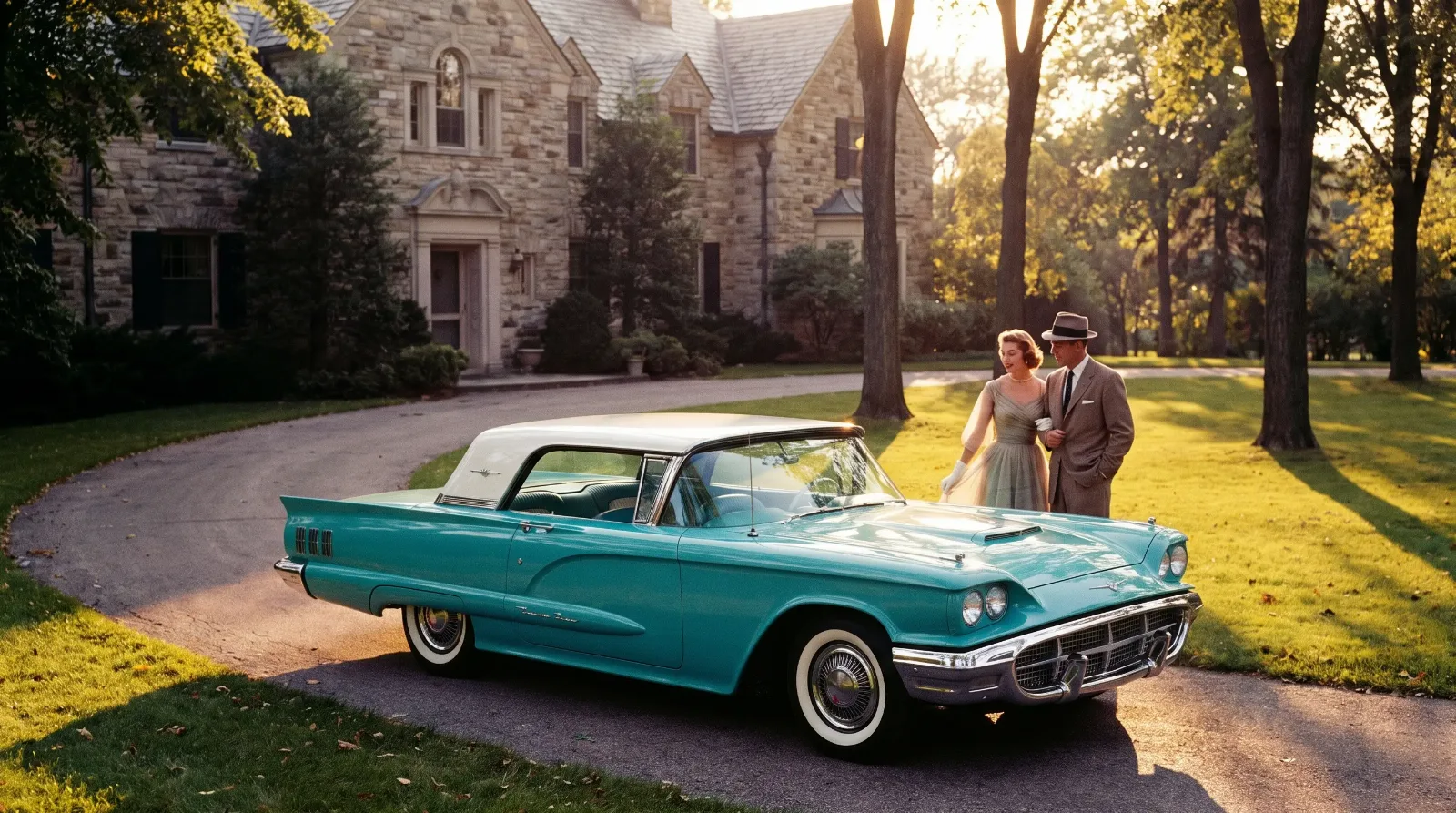
The imagery supported this framing consistently. Ads placed the Square Bird in settings associated with success and leisure, country clubs, coastal roads, evening arrivals at restaurants, rather than the racing and performance imagery that had defined two-seat Thunderbird advertising just a year earlier. The shift in visual language was as deliberate as the shift in the car itself.
How Ford addressed the loss of the two-seater
Some period advertising directly acknowledged the change from two seats to four, framing it as an improvement rather than a compromise. Copy emphasized that owners no longer had to choose between a Thunderbird and a car practical enough for a family or a business associate riding along. This was a calculated response to an audience that Ford's own market research understood might be skeptical of the change, and it's a rare example of period advertising engaging directly with a product transition rather than pretending the previous version never existed.
Dealer materials from the same period, aimed at salespeople rather than consumers, were more explicit still, coaching sales staff on how to reframe customer objections about the loss of the original two-seat format into a pitch about expanded usability and broader appeal.
Print, television, and the growing role of color
By 1958, full-color print advertising in magazines like Life and the Saturday Evening Post was standard for a car at this price point, and Ford used that color palette deliberately, showcasing the Square Bird's expanded exterior color offerings as part of the sales pitch itself. Color choice became a marketing tool, not just a manufacturing option, tying directly into the broader cultural moment where car color signaled personality and status in a way it hadn't a decade earlier.
Television advertising was still a developing medium for automakers in this period, and Ford's Thunderbird spots leaned on lifestyle scenes over technical specification, a strategy that fit the personal luxury positioning better than any recitation of horsepower or torque figures would have. The car's engineering was almost incidental to the pitch. The feeling of arriving somewhere in it was the product being sold.
"Ford wasn't selling a car in these campaigns. It was selling a version of the buyer's own life that looked slightly better than the one they already had."
- Sarah Whitfield
Advertising as a window into who actually bought this car
Reading period Thunderbird advertising closely tells you almost as much about the intended buyer as the sales brochures' technical specifications do. The people depicted in these ads skew older and more affluent than the youth-oriented sports car marketing that had defined the two-seat Thunderbird's brief run. That shift in target demographic wasn't incidental. It reflects Ford's own internal recognition that the two-seat Thunderbird, despite critical acclaim, had never sold in the volumes the company wanted, and the Square Bird's advertising was built from the ground up to correct that by chasing a wider, wealthier audience.
The strategy worked commercially. Square Bird sales figures dwarfed those of the two-seat generation it replaced, and the advertising's consistent messaging around practicality paired with distinction likely played a real role in that success, not just the car's mechanical improvements. For the fuller narrative of how the redesign came together, the 1958 ford thunderbird story covers the engineering and market decisions behind the car this advertising was built to sell, and the full story traces the Thunderbird nameplate's entire arc from its two-seat origins forward.
Comparing the pitch to the competition's
Buick's approach to marketing the Riviera-adjacent personal luxury concept and Chrysler's positioning of its own upscale coupes offer a useful contrast to how Ford handled the Square Bird's introduction. Where some competitors leaned on performance credentials or engineering firsts to justify their price point, Ford's Thunderbird campaigns consistently prioritized lifestyle and status signaling over technical boasting. This wasn't because the Square Bird lacked engineering talking points, the 430 V8 option alone would have supported a performance-forward campaign if Ford had wanted one. It was a deliberate choice to sell an identity rather than a spec sheet.
That choice paid off in a way that's easy to underappreciate from a modern vantage point. Buyers in this segment weren't cross-shopping on quarter-mile times. They were choosing between cars that all performed adequately and deciding based on which one made a statement they wanted to make about themselves. Ford's advertising understood that dynamic earlier and more thoroughly than several of its competitors did in the same years, and the sales results bore that understanding out.
Regional dealer variation in the campaign
National print and early television campaigns set the tone, but individual Ford dealers had latitude to localize their own advertising within Ford's broader brand guidelines, and surviving examples from different regions show real variation in emphasis. Dealers in warmer coastal markets leaned harder into convertible imagery and open-road lifestyle framing, while dealers in more conservative inland markets sometimes emphasized the car's practicality and four-passenger capacity more heavily, tailoring the personal luxury pitch to what would actually resonate with their specific customer base rather than running a one-size-fits-all message nationwide.
This regional flexibility, common practice for Ford dealers of the era, means the surviving body of period Thunderbird advertising is more varied and locally specific than a quick glance at the national campaigns alone would suggest, and it's part of what makes original dealer-level material valuable to researchers and collectors studying exactly how this car was sold market by market.
What survives and what collectors want
Original period advertising material, dealer brochures, magazine tear sheets, and promotional photography, has become its own small collecting niche among Thunderbird enthusiasts, valued as documentation of exactly how the car was pitched to its first owners. Complete, unmarked dealer brochures from 1958 in good condition are genuinely scarce given how disposable this material was treated at the time. If the era's marketing has you curious about the cars themselves, classic Thunderbirds on the market gives a current look at what's out there today.
Sources and notes
- Mac's Motor City Garage: Marketing Coup, the 1958-60 Ford Thunderbird
- Tunnel Ram: Glamorous, Stylish and Powerful, America's Personal Luxury Cars 1958-1978
- Tunnel Ram: Classic Ford Thunderbird Ad Gallery 1955-1978
- Wikipedia: Ford Thunderbird (second generation)
- MotorCities: Remembering the 1958-1960 Ford Thunderbirds