
Ford's engineering records from the 1955 Thunderbird program show a design team working under real constraint, building an interior for a car with a much smaller footprint than the sedans the same designers had spent their careers laying out. The 1955 Thunderbird interior had to fit two people, a full instrument cluster, and enough storage to be usable as an actual car rather than a styling exercise, all inside a package tighter than almost anything else Ford built that decade.
Car Features
6 min read
Inside the Early Thunderbird: Dash and Interior
Ford's own design records show the 1955 Thunderbird's dashboard and bucket seat layout were purpose engineered for a two-seat cabin, not adapted from an existing sedan.
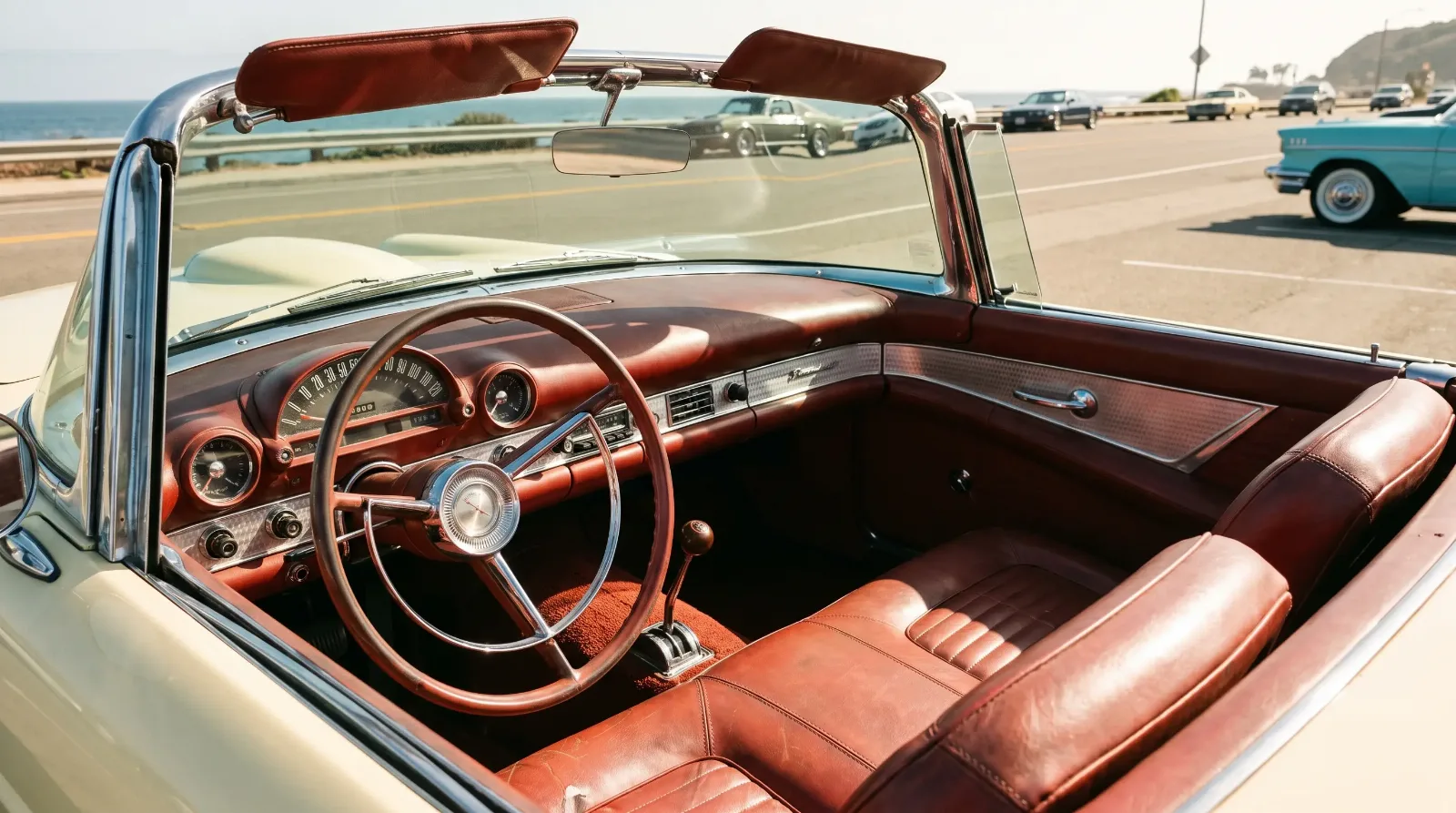
The dash Ford built from scratch
The 1955 Thunderbird's instrument panel departed from the flat, simplified dashboards common on contemporary Ford sedans. Engineers grouped a full set of gauges directly ahead of the driver, including a speedometer, and supporting instrumentation that gave the car a genuinely sporting instrument layout rather than the idiot-light simplicity that satisfied most family car buyers. This was a deliberate choice aimed at buyers who wanted their car to feel like a driver's instrument, not just transportation.
Documentation from Ford's design studio shows the dash went through multiple iterations before production, with engineers balancing the desire for a comprehensive gauge package against the manufacturing reality of tooling a dashboard for a low volume model that could not absorb the same development budget as Ford's mainstream sedans. What reached showrooms in 1955 represented a genuine compromise between ambition and practicality, one that held up well enough that Ford carried the basic approach forward with only modest changes through the 1957 model year.
Seats built for two, not four
Bucket seating in the Thunderbird was not simply two individual chairs bolted where a bench seat would normally go. Ford's engineers designed the seats and the surrounding console area specifically around the two-passenger layout, treating the space between driver and passenger as a deliberate design element rather than empty room left over from removing a rear seat that was never there in the first place. This distinguished the Thunderbird's interior architecture from other Ford products of the period, nearly all of which were designed around a bench seat as the default assumption.
Factory records indicate Ford offered a range of interior trim materials and colors coordinated with the exterior paint choices, following the same paired-color logic that governed the car's hardtop and body colors. Vinyl was standard, with leather available as an upgrade, and the combinations were specified closely enough by the factory that a restorer working from an original build sheet can determine exactly what a given car should have left the factory wearing.
Storage, wraparound glass, and small details that mattered
Practical storage in a two-seat sports car is a genuine engineering problem, not an afterthought, and Ford's records show real attention paid to trunk space and small item storage inside the cabin given how little room the platform offered to begin with. The wraparound windshield, a styling signature of the mid 1950s across the industry, also created real engineering tradeoffs around visibility, weatherproofing, and structural rigidity at the A-pillar that Ford's body engineers had to solve specifically for this low, small cabin.
Later corrections to some of these early solutions came in subsequent model years as Ford refined the package based on dealer feedback and warranty data, a normal part of any new model's early life but one that is well documented in the factory's own paper trail for this car specifically, which is unusual for a low volume model from this era.
"The production records do not lie about intent. Ford built this dashboard and this seating layout on purpose, revised it on purpose, and every change traces back to an actual design or manufacturing reason you can find in the paperwork if you look."
- Tom Ramirez
What changed between 1955 and 1957
Factory records covering the three model years of the two-seat Thunderbird show a steady pattern of refinement rather than wholesale redesign. The 1956 model year brought exterior fuel filler and spare tire relocation changes that also touched trunk packaging inside the cabin, while the instrument panel and seating carried forward with detail revisions rather than a fresh layout. By 1957, Ford had made further small adjustments to trim options and available interior colors, tracking the broader palette changes documented on the exterior side of the car.
This incremental approach reflects standard practice for a low volume specialty model within a larger manufacturer. Ford did not have the tooling budget to redesign the Thunderbird's interior from a blank sheet each year the way it might for a high volume sedan, so engineers worked within the existing dashboard and seating architecture, adjusting materials, colors, and minor functional details as feedback came in from dealers and from the relatively small but vocal group of early owners. A restorer working on a specific model year needs to know exactly which of these running changes applies to their car, since parts and trim that look similar across the three years are frequently not interchangeable without modification.
Correcting a common misconception about the interior
A persistent myth among casual enthusiasts holds that the early Thunderbird interior was simply a shrunken sedan cabin with two seats instead of a bench, an idea that does not survive contact with Ford's actual design and engineering records. The instrument panel, the console, and the seating were purpose engineered for this specific car, not adapted wholesale from an existing Ford product. That distinction matters to anyone trying to understand why this interior still feels distinctive compared to other mid 1950s American cars, including other Ford products built in the same factories during the same years.
The confusion likely started because casual observers assumed a small specialty car from a mainstream manufacturer must have been built on the cheap, reusing whatever parts were lying around the plant. Ford's own engineering paperwork tells a different story, one of a team given a specific brief for a two-passenger cabin and asked to solve it from the ground up within real cost and tooling limits. That is a harder job than adapting an existing sedan interior, and the surviving documentation gives that team credit the enthusiast folklore rarely does.
For readers who want the full context of how this interior fits into the larger story of the car, where this started traces the two-seat Thunderbird's development from its earliest planning stages through the 1957 model year changes. Anyone evaluating an original or restored interior today can also compare notes against what is currently available by looking at shop classic Thunderbird listings to see how closely surviving cars match the factory documentation. The paperwork is out there for anyone patient enough to go looking, and it settles more arguments than any amount of confident opinion at a car show ever will.
Sources and notes
Related Reading
Have a
Ford Thunderbird
for Sale?
Reach thousands of serious classic car collectors across the US.
Sell It Here →
Are You a Classic Car Dealer?
List your full inventory and connect with targeted classic car buyers.
Join as a Dealer →
#ford thunderbird
#classic car interiors
#thunderbird history
#two-seat thunderbird
#1955 Thunderbird interior
#Thunderbird dashboard

About the author
Tom Ramirez
Corvette researcher and historian based in Bowling Green, Kentucky. Two decades documenting Corvette production history from original factory records.
Related Listings - Ford Thunderbird




Comments
Be the first to comment on this article.