
Ask ten Thunderbird owners why Ford killed the two-seat Thunderbird after 1957 and you will get ten different answers, most of them wrong. I have heard the one about Ford losing its nerve. I have heard the one about the Corvette scaring them off. I have heard, more than once, a version where some nameless executive just woke up one morning and decided two seats were a bad idea. None of that matches what actually happened in Dearborn, and it is worth sorting out, because the real story says more about the American car business in the 1950s than any myth does.
Car Features
7 min read
Why Ford Killed the Two-Seater After 1957
The two-seat Thunderbird was selling well when Ford pulled the plug. Here is the real reason behind the switch to four seats in 1958.
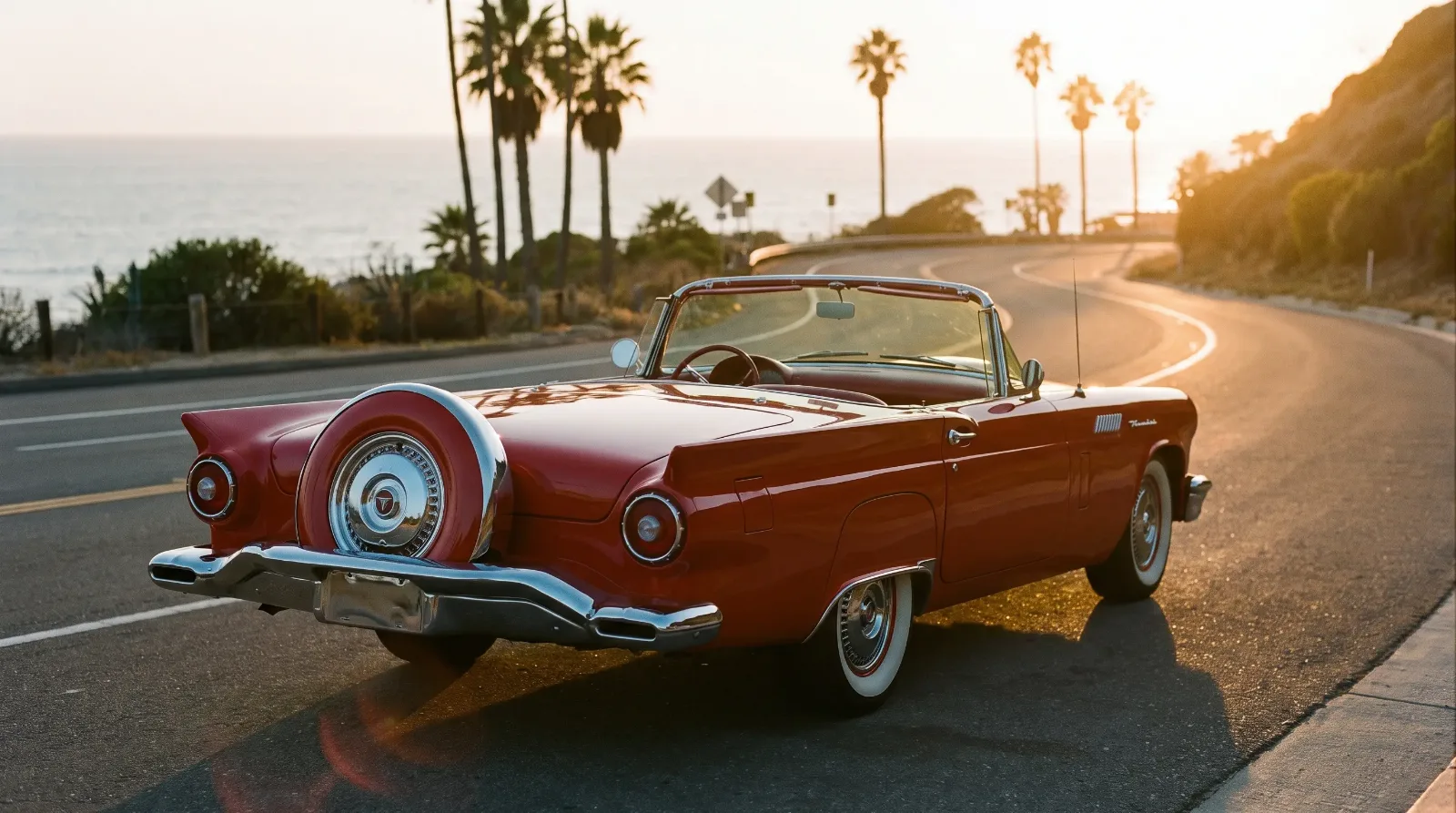
The short version is boring compared to the legend: Ford killed the two-seat Thunderbird because it was not selling the way a four-seat car would, and the people running the company had already seen the sales sheet that proved it. If you want the long version, with dates and names attached, our complete history of the two-seat car lays out how the original Thunderbird came to be in the first place, and it is worth reading before you dig into why it ended.
The two-seater was never built to be a volume car
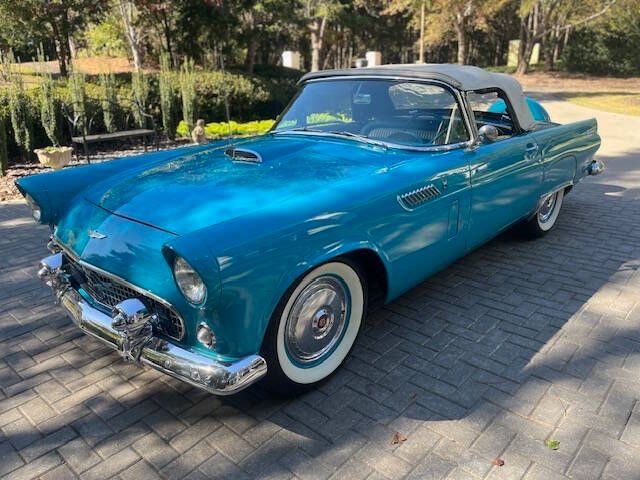
When the first Thunderbird went on sale for the 1955 model year, Ford was not trying to out-sell Chevrolet's Corvette on price or performance. It was trying to build something with more polish, more comfort, and a back seat's worth of luxury crammed into a two-seat body. It worked, in the sense that the Thunderbird outsold the Corvette by a wide margin every year it existed in two-seat form. In 1955 Ford moved roughly 16,000 Thunderbirds against a few hundred Corvettes. That is a real win on paper.
But a win against a car that was nearly failing is not the same as a win against the market Ford actually wanted. Robert McNamara, who ran the Ford Division through the mid 1950s before rising higher in the company, looked at the Thunderbird not as a sports car but as a personal car, something closer to a well-dressed coupe than a track toy. He also looked at the numbers and did not love what he saw. Sales dropped from that first year's roughly 16,000 units to about 15,600 in 1956, then down again to just over 21,000 for 1957, a figure that sounds like growth until you remember Ford had widened the car's appeal with a facelift and new engine options to get there. Even with the improvements, the car was topping out. A two-seat body simply could not pull in buyers who needed to carry a spouse, a kid, or a set of golf clubs.
McNamara wanted a personal car for a bigger market
McNamara's read on the Thunderbird buyer was that the person who wanted a stylish, well-trimmed Ford was usually not shopping for a sports car. They wanted something they could actually live with. A two-seater is a second car for most families, and in the mid 1950s most families were not buying second cars yet. Ford's own market research pointed at a growing appetite for what would later get the label "personal luxury car," a category that did not really exist before the Thunderbird helped invent it. The problem was that the two-seat format was fighting against the very market it had opened up.
So the decision was made, well before the 1957 model year ended, to stretch the next Thunderbird onto a longer wheelbase and add a back seat. This was not a last-minute panic move. Ford had prototypes of a four-seat Thunderbird in development while the two-seat car was still on dealer lots. The 1958 Thunderbird, sometimes called the Square Bird for its boxier lines, rode on a wheelbase that grew from 102 inches to 113 inches specifically to fit four adults without feeling cramped.
The Corvette factor gets overstated
People love to frame this as Ford blinking first in a fight with Chevrolet. It makes a tidier story. But the Corvette in the mid 1950s was not a threat by sales volume, not even close. Chevrolet nearly canceled the Corvette outright after weak early sales, and it took the arrival of Zora Arkus-Duntov's engineering work and the small block V8 to turn it into something credible. Ford was not retreating from a rival that was beating it. Ford was walking away from a body style that had already proven its ceiling, regardless of what Chevrolet was doing across town.
That said, Ford did watch the Corvette closely enough to know that the sports car buyer, the person cross-shopping strictly on performance and handling, was a small and stubborn niche. The Thunderbird had never really been chasing that buyer anyway. It chased comfort first, and comfort scales better with four seats than two.
What Ford gained, and what it gave up
The gamble paid off commercially in a way that still surprises people who assume bigger cars sell worse. The four-seat 1958 Thunderbird sold over 37,000 units, nearly double the best year the two-seater ever managed, even in a recession year that hurt the broader auto industry. Ford had correctly read the market. Personal luxury, not sports car thrills, was where the money was.
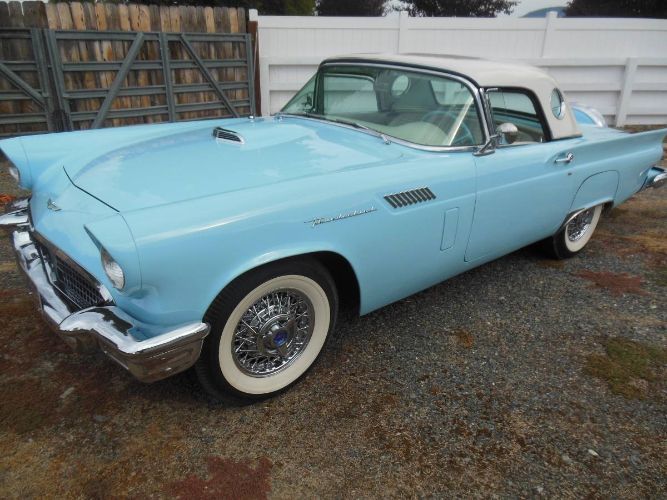
What Ford gave up was a genuine piece of design purity. The two-seat Thunderbird has a simplicity the four-seat cars never recaptured, a single clean idea executed without compromise. Collectors today treat the 1955 through 1957 cars as a distinct species from everything that followed, and the value gap reflects that. If you want to see how that gap plays out in real prices and what it means for buying one today, keep exploring what the two-seat cars are worth on the current market.
The legend versus the ledger
The honest answer to why Ford ended the two-seat Thunderbird is unglamorous. It was not fear of the Corvette, it was not a design failure, and it was not a change of heart about what the Thunderbird should be. It was a company reading its own sales figures and making the same call any good CEO would make: build more of what people are actually buying. The two-seat Thunderbird was a beautiful answer to a small question. The four-seat car answered a much bigger one.
If the two-seat story still pulls at you the way it pulls at me, and you are thinking about owning one rather than just reading about it, there is a classic Thunderbird for sale worth a look before prices climb any further on the early cars. The two-seaters are a shrinking population, and every year that passes makes the survivors a little more precious.
"Everybody wants to blame the Corvette. Nobody wants to blame the spreadsheet. I have read the sales numbers from those three years more times than I can count, and the spreadsheet wins every time."
- Wayne Coburn
Why Ford ended the two seat Thunderbird comes down to a company that built a halo car, learned exactly what its buyers actually wanted, and had the discipline to change course while the two-seater was still selling well enough to leave everyone wondering why. That discipline, more than any styling cue, is the real legacy of those three model years.
Sources and notes
- Ford Thunderbird (first generation) - Wikipedia
- Ford Thunderbird (second generation) - Wikipedia
- Vintage Thunderbird Club - Production Statistics
- Automobile Catalog - Thunderbird 1st Gen Production Numbers
- Old Cars Weekly - Car of the Week: 1958-1960 Ford Thunderbirds
- Conceptcarz - 1955 Ford Thunderbird
Related Reading
Have a
Ford Thunderbird
for Sale?
Reach thousands of serious classic car collectors across the US.
Sell It Here →
Are You a Classic Car Dealer?
List your full inventory and connect with targeted classic car buyers.
Join as a Dealer →
#classic ford
#ford thunderbird
#personal luxury car
#two-seat thunderbird
#1957 thunderbird
#square bird

About the author
Wayne Coburn
Longtime Corvette owner, judge and club figure who knows the cars, the records and the people behind them.
Related Listings - Ford Thunderbird
Comments
Be the first to comment on this article.