
450 horsepower. That's the number stamped into Chevelle lore, printed on decade after decade of magazine covers, and quoted by every seller trying to justify an asking price. It's also not a number you can compare directly to anything made after 1971. The LS6's 450 hp rating is a gross figure, and gross numbers from this era are not the same measurement as the net horsepower ratings that came after, or the horsepower numbers on a modern car's window sticker. Mixing them up isn't a minor technicality. It changes the whole conversation about what this engine actually made.
Car Features
6 min read
The 450-HP Myth: Gross vs Net Ratings
The LS6's 450 hp rating is a SAE gross figure, not net. Here's what that measurement actually meant and why it matters when comparing engines across eras.
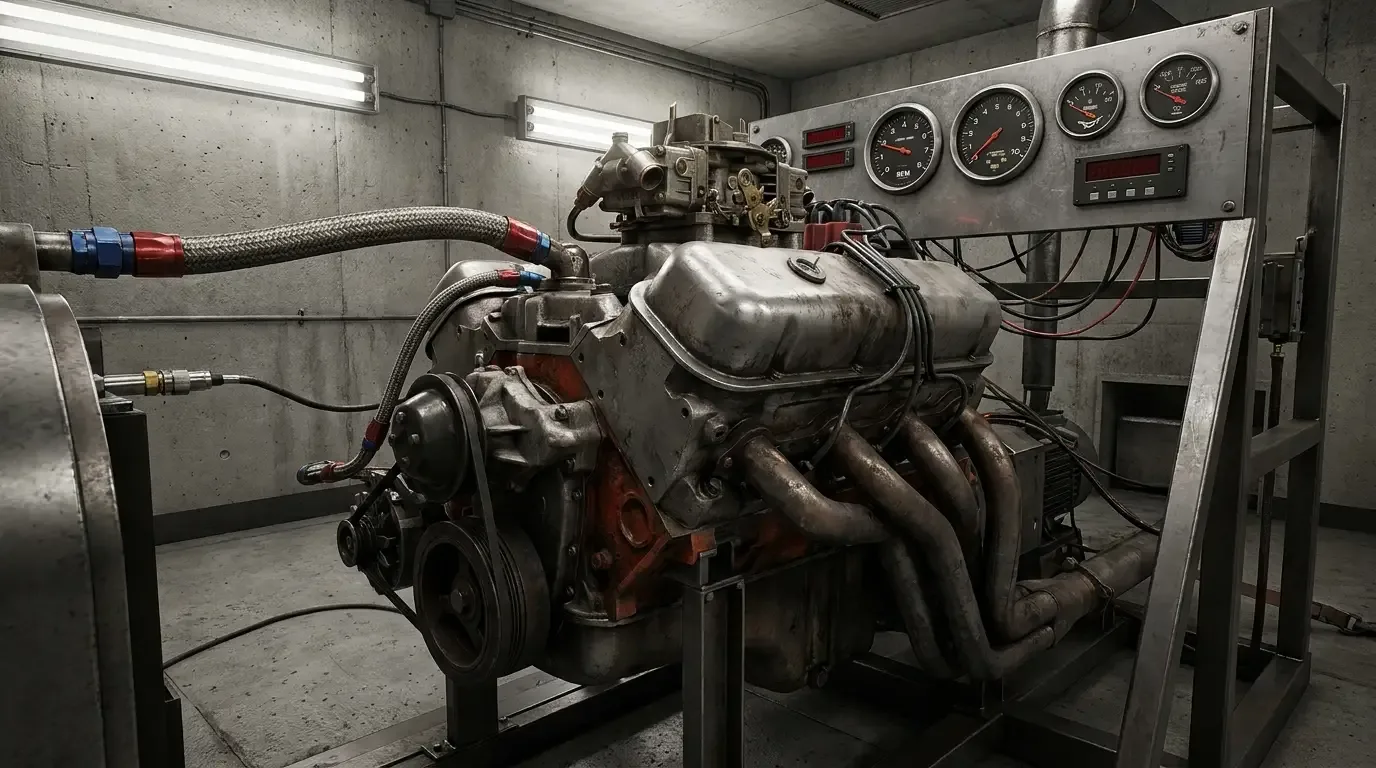
I spend my working life on a dyno, and the first thing I tell anybody who wants to argue about period horsepower claims is: know which measurement standard you're even talking about before you argue about the number itself. The LS6 story is a good case study in why that matters, and it connects directly to the big-block Chevelle story as a whole.
What "gross" horsepower actually measured
SAE gross horsepower, the standard used through 1971, was measured on a dyno with the engine stripped of most of the accessories it would actually run in the car. No alternator load, no power steering pump, no smog equipment, often no mufflers or a minimal open exhaust setup instead of the full system the car shipped with, and frequently tuned with ignition timing set more aggressive than what a customer would get at the dealership. It's not a fraudulent number. It's a real measurement of what that engine could produce under a specific, favorable, and not-very-real-world set of conditions.
The 450 hp LS6 figure was generated exactly that way. Pull the accessories off, run open exhaust, dial in the timing for peak output, and 450 gross horsepower at 5600 rpm is a legitimate dyno result under those rules. What it is not is a number that tells you what the engine made bolted into a Chevelle with a full exhaust system, power steering, an alternator, and a factory-tuned timing curve set for pump gas reliability rather than peak dyno output.
What changed in 1972
Starting with the 1972 model year, the SAE switched the industry to net horsepower ratings, measured with the engine installed essentially as it would ship, accessories running, full exhaust in place, production tune. Every manufacturer's numbers dropped when this happened, and it wasn't because engines suddenly got weaker overnight. It's because the measurement finally matched what a customer's car actually produced on the road instead of what a stripped-down test mule produced on a bench.
That's a big part of why people look at a 1972 or later big-block's net horsepower rating and assume the engine got gutted for emissions. Sometimes it did, compression dropped across the board for unleaded, lower-octane pump gas around this period, and that's real too. But a meaningful chunk of the apparent drop is just honest accounting catching up to the marketing.
| Rating standard | Years used | Test conditions |
|---|---|---|
| SAE gross | Through 1971 | Stripped accessories, open or minimal exhaust, optimized timing |
| SAE net | 1972 onward | Full accessories installed, production exhaust, production tune |
So what did the LS6 actually make, net?
Nobody dyno tested the exact 1970 LS6 under net conditions at the time, because net wasn't the standard yet, so any net-equivalent figure you see quoted is a modern estimate, not a period fact. Rough estimates in the enthusiast community put a realistic net equivalent somewhere in the 330 to 365 horsepower range once you account for full accessories, exhaust back pressure, and a production timing curve, but treat that range as an estimate, not a factory-tested figure, since no period net test exists for this specific engine and year. That's still a serious number for 1970. It's just not 450.
This isn't a knock on the LS6. Even at a realistic net-equivalent output, it was one of the strongest engines GM built that year, and the torque curve underneath that horsepower number is real regardless of which measurement standard you use. The point isn't that the engine was weak. The point is that comparing a 1970 gross rating directly against a modern net-rated engine, or against a 1973 big-block's net rating, without adjusting for the measurement change is comparing two different units and calling them the same thing.
Why this matters when you're reading old road tests
Every period magazine test you read of an LS6 Chevelle is working from the gross rating, because that's what existed at the time. When a 1970 test says "450 horsepower" in the intro paragraph and then reports a 13-something quarter mile time, that's consistent, the trap speed and elapsed time are the real measured data, the horsepower figure quoted alongside it is the gross rating everybody used. Don't let a skeptic talk you out of trusting the timeslip because the horsepower number sounds inflated by modern standards. The timeslip is real. The horsepower rating is just measured a different way than what you're used to seeing on a dyno sheet today.
If you're cross-shopping an LS6 against something built after the net-rating switch, or against a modern engine, do the mental math first. Don't argue gross against net like they're the same currency, because they aren't, and that mistake is where most internet arguments about "which engine was really stronger" go wrong before they even get started.
"450 gross and roughly 350 net aren't two different engines lying to you. They're the same engine measured two different ways, and only one of those ways matches what actually left the tailpipe on the street."
Dan Reeves
The LS6 earned its reputation honestly, gross rating or not, and the torque curve alone justifies the legend. Just know what you're actually comparing before you put that number up against anything built after 1971. For the small-block big-block sibling of this same era, next: The L78 396 covers an engine that has its own set of rating myths worth sorting out the same way.
Sources and notes
- 1971 vs. 1972: How the Horsepower Ratings Change Impacts Value - Hagerty Insider
- Understanding Gross Versus Net Horsepower Ratings - Ate Up With Motor
- 50 Years Ago America's Engines Lost Up to 130 HP Overnight - Carscoops
- The Chevrolet 454 LS6 Was The Peak Of GM Big Block V8 Performance - DrivingLine
- Horsepower Ratings: Gross Versus Net - Chevy Hardcore
- Muscle Car Horsepower - How Exaggerated Was It? - Hagerty Media
Related Reading
Have a
Chevrolet Chevelle
for Sale?
Reach thousands of serious classic car collectors across the US.
Sell It Here →
Are You a Classic Car Dealer?
List your full inventory and connect with targeted classic car buyers.
Join as a Dealer →

About the author
Dan Reeves
Performance engine builder from North Carolina's motorsports corridor, focused on swaps, forced induction and making real, repeatable power.
Related Listings - Chevrolet Chevelle



Comments
Be the first to comment on this article.