
Before the LS6 existed, before 454 cubic inches ever showed up under a Chevelle's hood, there was the L78. 375 gross horsepower, solid lifters, 11:1 compression, and a willingness to rev that most big-blocks of its era simply didn't have. It's the engine that made people stop assuming "big-block" automatically meant "torque monster that dies above 5000 rpm" and start taking the 396 seriously as something that could run with a hot small-block on top end, not just bully it off the line.
Car Features
6 min read
The L78 396: Chevelle's High-Winding Small-Block-Killer
The L78 396 made 375 gross hp on solid lifters and 11:1 compression, earning a reputation for out-revving small-blocks. Here's what made it different and how to verify a real one.
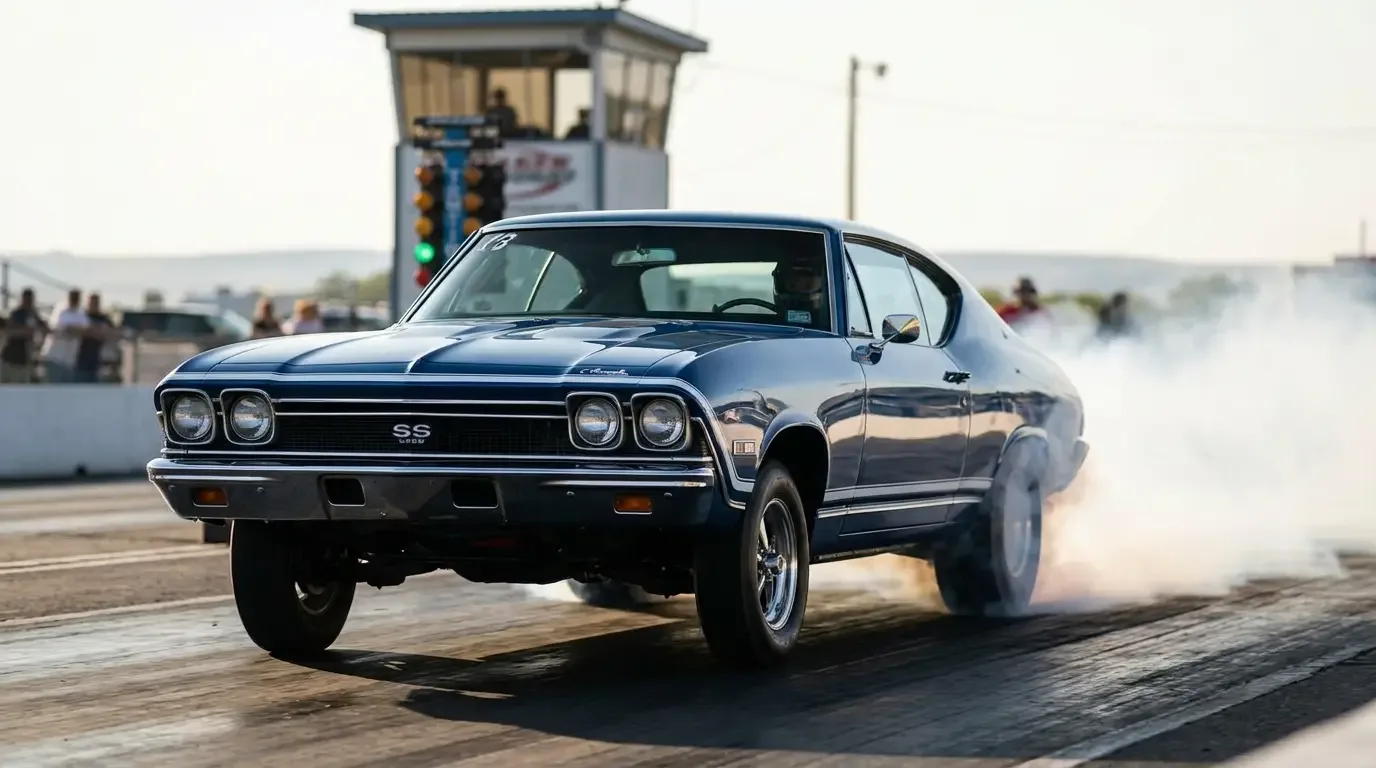
I build engines for a living and I still think the L78 gets undersold next to the LS6 in most Chevelle conversations. It doesn't have the 454's displacement or the marketing weight of the SS454 program, but mechanically it's a more interesting engine than people give it credit for, and its story connects straight back to the 454's full story that eventually followed it.
Where the L78 came from
The L78's roots trace to the 1965 Z16 SS396, a low-volume, mid-year package Chevrolet built to answer the GTO before the corporate displacement caps on mid-size cars had fully loosened up. Production numbers on the Z16 are famously small: 201 total, 200 regular-production coupes built at the Kansas City plant plus a single Baltimore-built prototype, and it carried a 375 horsepower 396 with solid lifters, forged internals, and heavy-duty suspension and brakes as part of a package, not an option list.
Once the displacement restrictions eased for 1966, the 396 became a regular option across the SS396 lineup, and the L78 code carried forward as the top-tier version, sitting above the L35 and L34 396 in the option hierarchy through the rest of the decade, into 1969, before the 454-based LS5 and LS6 took over as the top-shelf big-block for 1970.
Why "small-block killer" isn't just a nickname
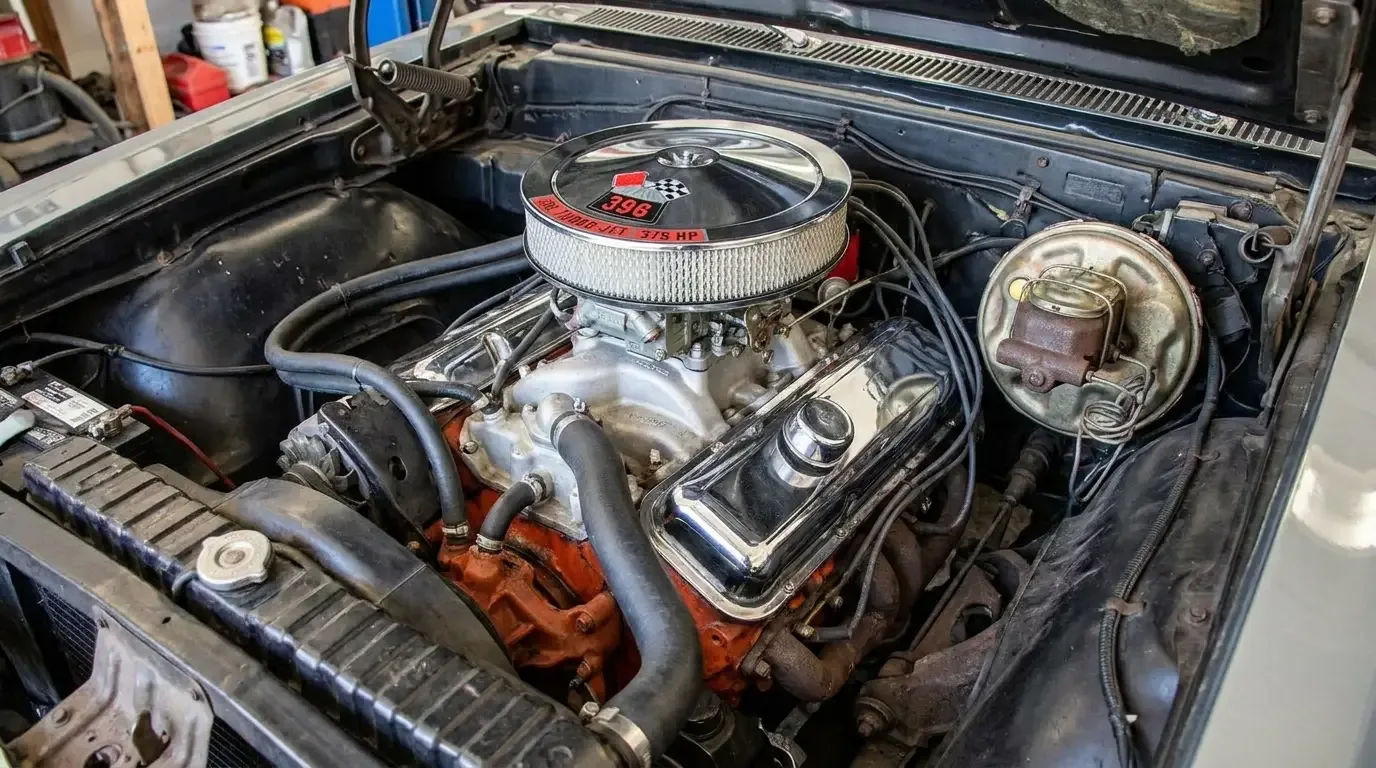
The L78 earned that reputation because of what it did with rpm, not just what it did with torque. Solid lifters, a healthy solid cam, 11:1 compression, and free-breathing rectangular port heads let this thing pull hard well past where most 1960s big-blocks started running out of breath. A stock L34 or L35 396 makes its case at lower rpm and starts falling off the cam earlier. The L78 kept pulling, and that meant it could hang with, and often beat, a well-built small-block like a 327/350 hp or an early 302 on a track where both cars were spinning to the redline, not just launching off the line.
That's the actual meaning behind the nickname. It wasn't that the L78 was small. It's that it behaved like a high-winding small-block wearing a big-block's displacement, which is a genuinely unusual combination for the era. Most manufacturers built their biggest engines to be torque generators and left the high-rpm character to smaller, lighter-breathing engines. The L78 didn't follow that script.
| Spec | L78 396 |
|---|---|
| Gross horsepower | ~375 hp |
| Compression ratio | 11.0:1 |
| Valvetrain | Solid lifters |
| Heads | Rectangular port, closed chamber |
| Years offered | 1965 (Z16) through 1969 |
Living with a solid-lifter big-block
Here's the part sellers gloss over. Solid lifters mean periodic valve lash adjustment, and that's not a one-time deal, it's ongoing maintenance the car actually needs to run right. Skip it long enough and you get noisy, uneven valvetrain behavior that masks itself as "that's just how these run" to buyers who've never heard a properly adjusted L78 idle. If you're looking at one and the seller can't tell you when the lash was last set, budget time and money for doing it yourself before you trust anything else about the tune.
The other thing to actually check, not just ask about, is whether the heads on the car match what an L78 should carry. Rectangular port heads got swapped onto lesser 396s constantly over the decades because they're a known performance upgrade, and a car wearing L78 heads on an L35 short block is not an L78, no matter what the fender emblem says. Casting numbers on the heads and the block need to agree with each other and with the build date before you take anybody's word for it.
🔧 Inspection Priorities
- Block and head casting numbers, cross-referenced. Rectangular port heads get swapped onto lesser engines more than any other L78 component.
- Valve lash history. Solid lifters need it done right and done regularly, and a car that's been neglected here will tell you in the idle quality alone.
- Original carburetor and intake match. An L78 with the wrong induction setup is making different numbers than the spec sheet claims, regardless of the badge.
What they cost and where to look
A documented L78 commands a real premium over an L35 or L34 car of the same year, and it should, given how much rarer correct examples are getting. Z16 cars are in a different conversation entirely, closer to unicorn pricing than regular market pricing, given how few genuinely exist. Regular L78-optioned 1966 through 1969 Chevelles are more attainable and, honestly, a better everyday proposition for most buyers than chasing a Z16 that may not even be real once you dig into its paperwork.
If you're shopping this generation, you can shop 396-powered Chevelles across model years and get a feel for how wide the spread runs between a genuine L78 and a dressed-up base 396. That spread is the market telling you exactly how much documentation is worth.
"The L78 didn't just make horsepower, it made horsepower at rpm most big-blocks of that decade never bothered chasing. That's the whole reason it earned the nickname instead of just a big number on a spec sheet."
Dan Reeves
The L78 set the tone for what Chevrolet built next, and understanding where it sat between the mid-tier 396s makes the rest of the lineup easier to place. Next: L34 and L35 covers the two 396 variants that most buyers actually drove, and why they're not the consolation prize people assume.
Sources and notes
- 1965 Chevelle SS396 Z16: 201 Built - Curbside Classic
- Birth of the Big-Block Chevelle: The 1965 Z16 - Mac's Motor City Garage
- Chevy 396 & 402 Big Block Guide - Complete Specs and History - Muscle Car Club
- Chevelle Engine Options: 1966 - Chevy Hardcore
- The 396ci Big Block V8 Was A Game-Changer For Chevrolet Muscle Cars - DrivingLine
- 1965 Chevelle SS 396 Z16: A Legend Is Born - SS396.com
Related Reading
Have a
Chevrolet Chevelle
for Sale?
Reach thousands of serious classic car collectors across the US.
Sell It Here →
Are You a Classic Car Dealer?
List your full inventory and connect with targeted classic car buyers.
Join as a Dealer →

About the author
Dan Reeves
Performance engine builder from North Carolina's motorsports corridor, focused on swaps, forced induction and making real, repeatable power.
Related Listings - Chevrolet Chevelle

Comments
Be the first to comment on this article.