
Two 454s, one engine bay option box, and a lot of confusion that's still floating around forums twenty-plus years after both of these cars stopped being new. The 1970 Chevelle SS454 came with a choice: LS5 or LS6. Same displacement, same basic block architecture, completely different intentions. One was built to be a strong, tractable big-block you could drive every day. The other was built to win at the strip on Sunday and be tolerated on the street the rest of the week. People conflate them constantly. They shouldn't.
Car Features
6 min read
LS6 vs LS5: Chevelle's Two 454s
LS6 and LS5 both displaced 454 cubic inches in the 1970 Chevelle SS454, but the internals, cam, and intent were completely different. Here's what actually separates them.
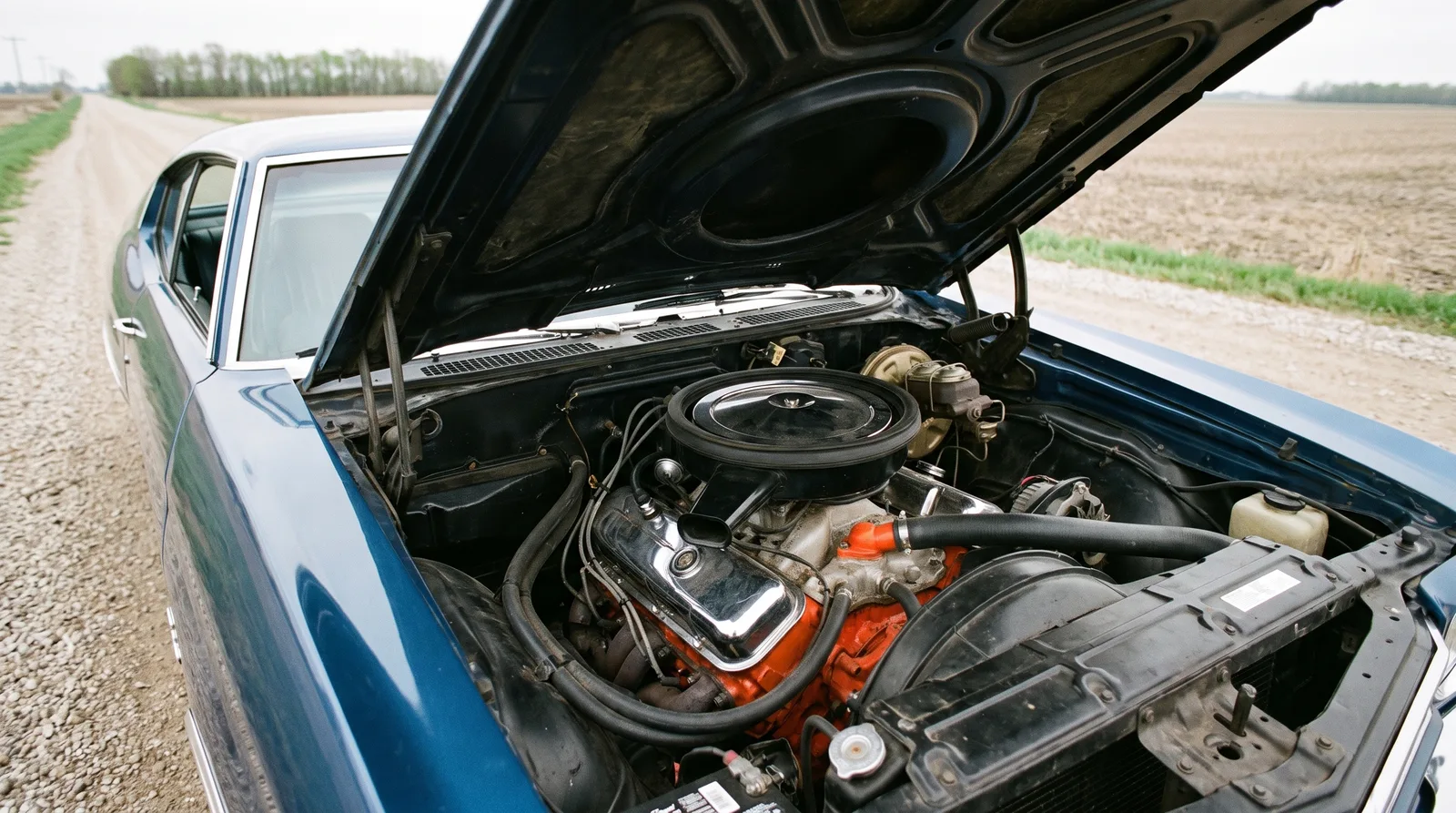
I build and dyno LS, Coyote, and Hemi swaps for a living, and I still get asked at least once a month whether an LS5 is "basically an LS6 with less advertising." It isn't. The differences are real, they're mechanical, and they show up on a dyno sheet, not just on a build sheet. If you're trying to sort out where a specific car sits in the LS6 legend, this is the comparison that actually matters.
The numbers on paper
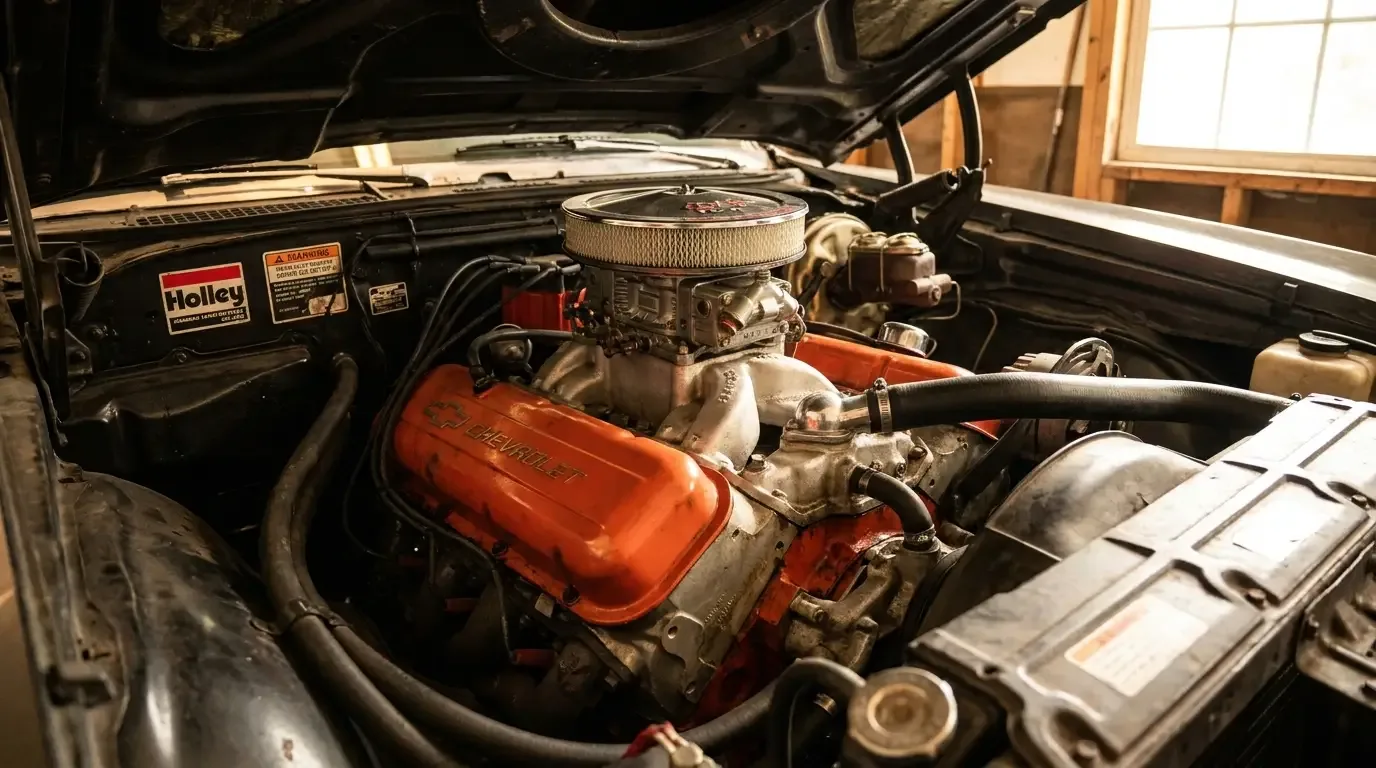
LS5: 360 gross horsepower at 4400 rpm, roughly 500 lb-ft of torque around 3200 rpm, 10.25:1 compression, hydraulic lifters, a Rochester Quadrajet carburetor. That's the engine most 1970 SS454 buyers actually drove home. It's a torquey, driveable big-block that doesn't ask much of you. Idle it, drive it, don't think about it too hard.
LS6: 450 gross horsepower at 5600 rpm, same claimed 500 lb-ft torque figure but making it at 3600 rpm rather than the LS5's 3200, 11.25:1 compression, solid lifters, forged steel crank, forged aluminum connecting rods, four-bolt main caps, and an aluminum intake feeding a Holley 780 cfm carburetor instead of the Quadrajet. On paper it's ninety more horsepower for a nearly identical torque number. On the road and on the dyno, it's a completely different personality of engine.
| Spec | LS5 | LS6 |
|---|---|---|
| Gross horsepower | ~360 hp | ~450 hp |
| Compression ratio | 10.25:1 | 11.25:1 |
| Valvetrain | Hydraulic lifters | Solid lifters |
| Carburetor | Rochester Quadrajet | Holley 780 cfm |
| Crankshaft | Cast | Forged steel |
| Main caps | Two-bolt | Four-bolt |
Why the internals matter more than the horsepower number
Anybody can print a bigger number on a spec sheet. What separates the LS6 from the LS5 is what's actually holding the bottom end together when you use that horsepower. Four-bolt main caps and a forged crank aren't there for bragging rights. They're there because Chevrolet expected these blocks to see sustained high rpm and hard launches, the kind of use that will find every weak point in a two-bolt, cast-crank assembly eventually. The LS5 wasn't built with that kind of abuse in mind. It was built to make good torque at low rpm and live a long, easy life doing it.
Solid lifters versus hydraulic tells the same story a different way. Solid lifters need periodic valve lash adjustment and they're noisier, but they let the engine rev higher and hold that higher lift longer without the valvetrain going soft on you. That's a race engine decision wearing a street car's clothing. The LS6 cam profile and the solid lifter setup work together, and neither one makes sense installed alone.
What that means for how they drive
Drive an LS5 Chevelle and it feels like a big, confident torque machine that doesn't need to be revved to make its case. Drive an LS6 and it wants to be worked, it wants rpm, and it rewards you for giving it that rpm in a way the LS5 simply doesn't. Neither approach is wrong. They're different tools built for different jobs, and the mistake buyers make is assuming the higher number automatically means the better car for them. If you're daily-driving a big-block Chevelle in traffic, the LS5's low-end manners will make you happier than an LS6 that wants to be up around 4500 rpm to feel right.
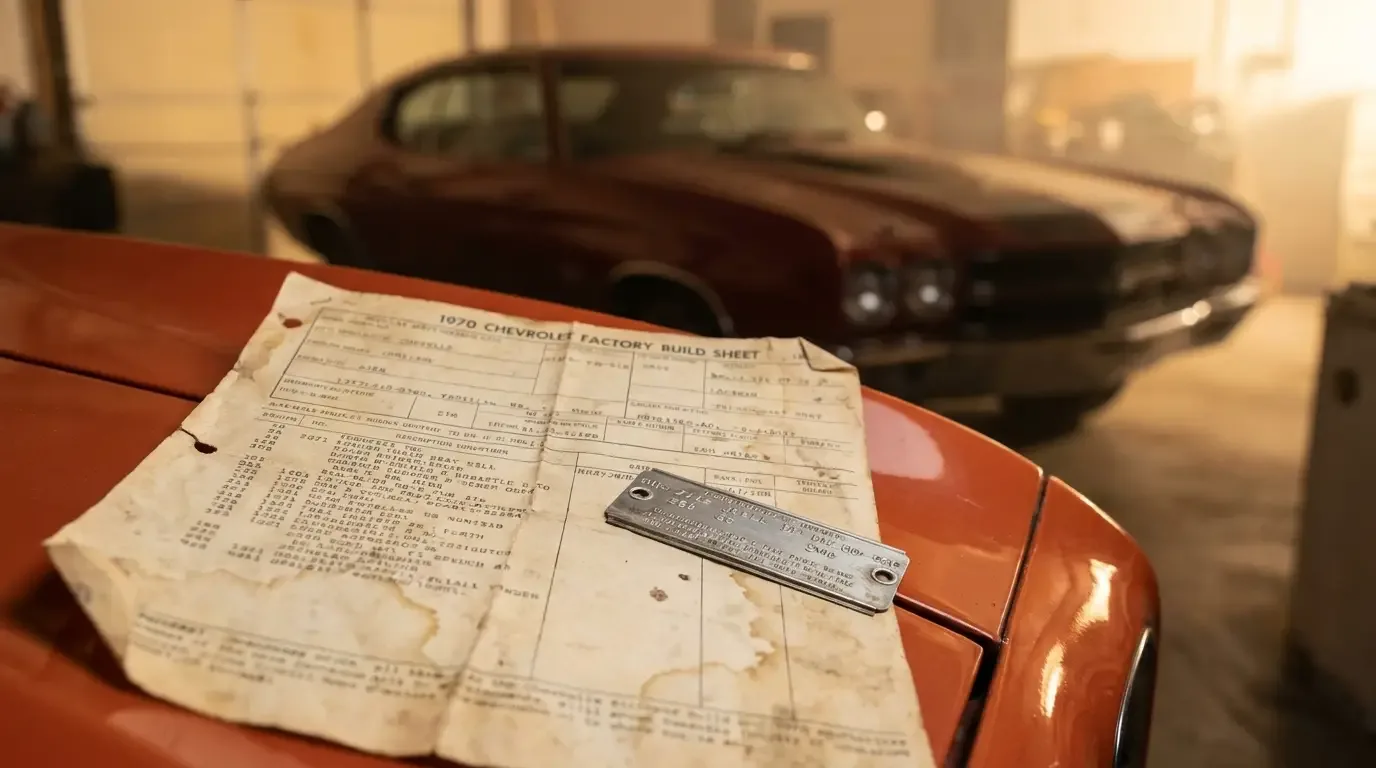
The LS6 was also offered with a more aggressive rear gear as part of the overall package on plenty of build sheets, which changes the driving character even more. A numbers-matching LS6 with a 4.10 or numerically higher rear gear is a different animal at 65 mph than an LS5 with a 3.31, and that's before you factor in the engine difference at all.
What this means for buyers and values today
LS6 cars bring real money, and they should, because genuine four-bolt, forged-crank LS6 short blocks are not common and they're not cheap to correctly replace if something's gone wrong internally. LS5 cars are more available, more affordable, and for a lot of buyers, more livable. If your plan is weekend cruising and the occasional show, an LS5 with good documentation is not a consolation prize. It's a big-block Chevelle that does what most owners actually want a big-block Chevelle to do.
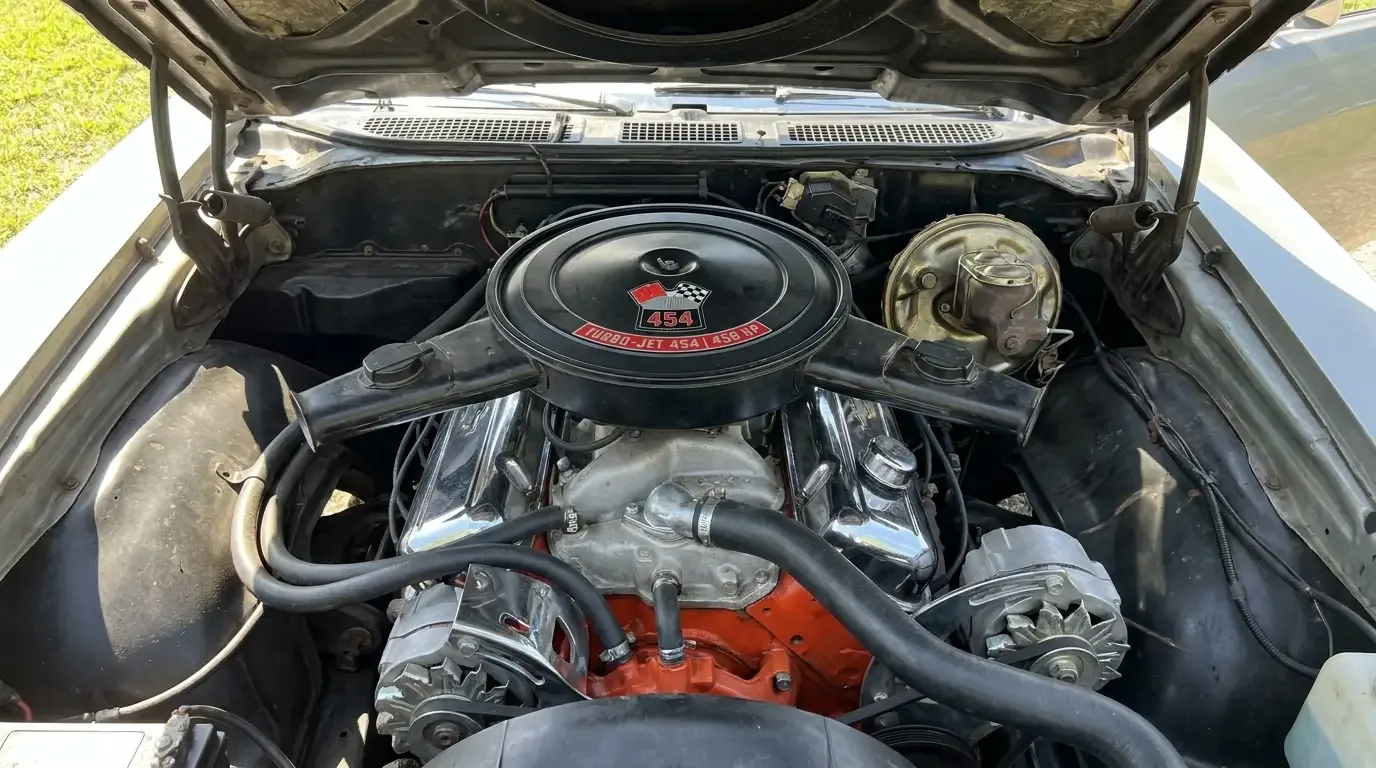
Where this gets expensive is when a seller tries to pass an LS5 block off as an LS6, or a modified LS5 as a numbers-matching LS6. Casting numbers on the block, the crank, and the heads need to line up with what an LS6 should carry for that build date, not just look impressive from across the shop. I've seen "LS6" cars where the only real LS6 part on the whole engine was the air cleaner decal. Check the hard parts before you check the paperwork's spelling.
If you're shopping this era specifically, you can shop 1970 big-block Chevelles and see how wide the price spread actually runs between a documented LS6 and a solid, honest LS5. That spread tells you more about the real market than any single auction result. For the broader arc of how this whole big-block program came together, the full Chevelle story is worth your time.
"The LS6's ninety extra horsepower on paper never told the whole story. Four-bolt mains and a forged crank are what let you actually use that number more than once without a rebuild bill."
Dan Reeves
Both engines earned their reputations honestly. The LS5 earned it by being a big-block you could live with. The LS6 earned it by being one you had to earn the right to drive hard. Know which one you're buying, verify the hard parts, and don't pay LS6 money for an LS5 with good marketing. If you want the next piece of this story, next: The 450-HP Myth gets into why that LS6 horsepower number itself needs some context most people skip past.
Sources and notes
- 1970 Chevelle SS 454 LS6 Identification, Specifications, and Guide - California Speed Shop
- 1970 Chevrolet Mid-Size Cars Fact Sheet - Over-Drive Magazine
- The 1970 LS6 Chevelle Was America's King Of The Streets - Heacock Classic
- LS6-Powered 1970 Chevrolet El Camino SS 454 - autoevolution
- Why The 1971 Chevy Corvette LS6 Is So Special - Trust Auto
- The Chevrolet 454 LS6 Was The Peak Of GM Big Block V8 Performance - DrivingLine
Related Reading
Have a
Chevrolet Chevelle
for Sale?
Reach thousands of serious classic car collectors across the US.
Sell It Here →
Are You a Classic Car Dealer?
List your full inventory and connect with targeted classic car buyers.
Join as a Dealer →

About the author
Dan Reeves
Performance engine builder from North Carolina's motorsports corridor, focused on swaps, forced induction and making real, repeatable power.
Related Listings - Chevrolet Chevelle




Comments
Be the first to comment on this article.