
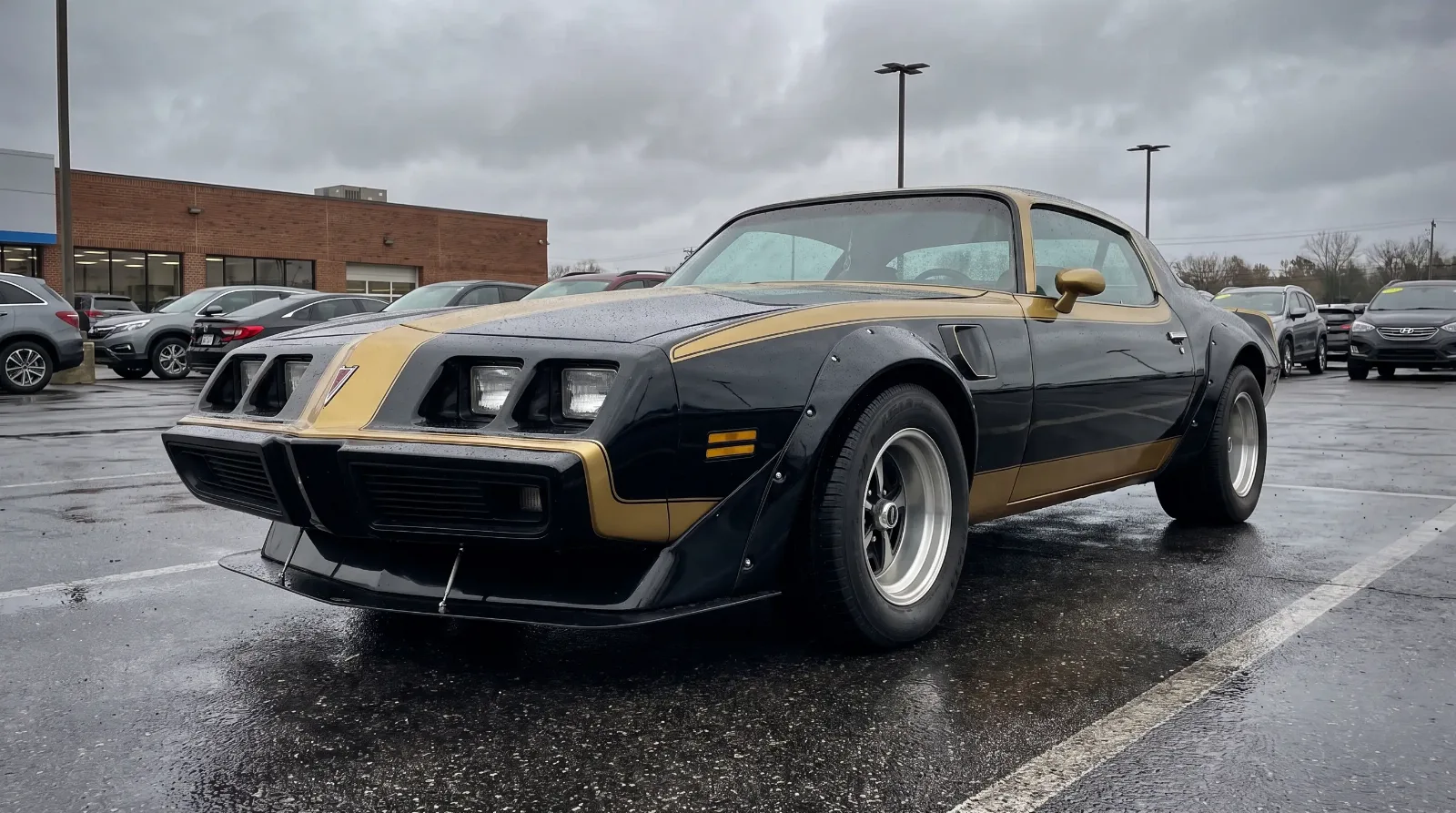
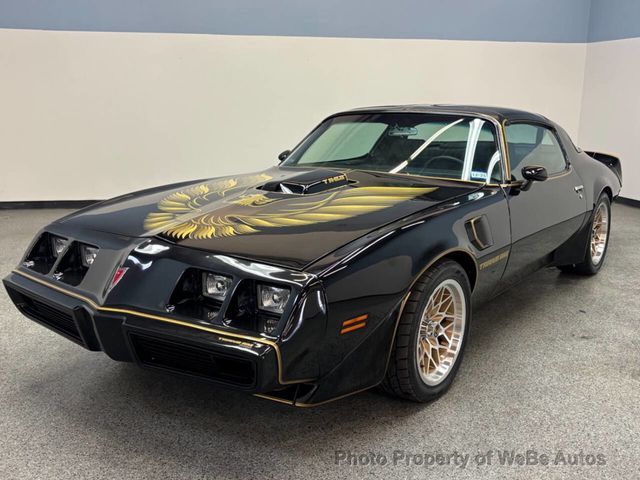
There is a photograph that circulates among Pontiac collectors of a dealership lot in 1980, rows of Trans Ams sitting under a flat gray sky, and one car near the end of the row wears a front air dam so deep it looks like it is trying to scoop the pavement itself. A salesman standing near it is grinning like he already knows this one will not sit on the lot long. That car is a macho trans am, and it belongs to a strange, overlooked chapter of the Trans Am's life, the years when the engines had gone quiet but the styling had not.
Car Features
6 min read
The Macho and Pro-Stock Specials
When horsepower ran out in 1980, Pontiac's designers pushed the Trans Am's looks harder than ever. The Macho and Pro-Stock specials are the overlooked proof.
A car built for a decade that had run out of horsepower
By 1980, Pontiac's engineers were fighting a battle they could not win outright. Emissions equipment and fuel economy mandates had hollowed out the big engines that once defined the Trans Am, and the division found itself selling a legend on considerably less muscle than the legend implied. What they still had, though, was a design department willing to keep pushing the visual language of the car even while the mechanical story stalled. The Macho T/A appearance package, built from 1977 through 1980 by Dennis and Kyle Mecham's Arizona-based DKM Design and Performance, answered a question nobody had quite asked out loud: if the car cannot go faster this year, can it at least look like it wants to.
The result leaned into everything the standard Trans Am already had and pushed it further. A deeper front air dam. Wider fender flares. Rear spoiler treatments that added more visual drama than aerodynamic benefit. It was a car built by people who understood that a buyer walking onto a lot in 1980 was shopping with their eyes as much as their right foot, because the right foot alone was not going to sell the story anymore.
Pro-Stock in name, showroom in practice
The Pro-Stock branding that showed up around specials of this era borrowed its name from drag racing's Pro Stock class, a category built around cars that looked closer to showroom stock than the purpose-built dragsters running above them. That borrowed name did real work for Pontiac's marketing, the same way the Trans Am name itself had borrowed prestige from a road racing series decades earlier. It told a buyer this car belonged in a conversation about performance heritage, even in a year when the numbers under the hood told a quieter story. Exact production figures for individual dealer-badged Pro-Stock specials are not well documented today, which is itself a sign of how far outside Pontiac's own factory records these appearance-package cars lived.
What mattered to the people who bought these cars new was rarely the dyno sheet. It was the way the car looked sitting in a driveway, the way a neighbor's head turned, the sense that owning one meant something even during a stretch when American performance cars generally had a lot to apologize for.
"A woman who bought a Macho-style Trans Am new told me she never once raced it, never cared what the engine made, and kept it twenty-two years because it was the only car she ever owned that people asked her about at gas stations. That is its own kind of horsepower, even if nobody measures it that way."
Nora Beckett
Why these specials get overlooked today
Collectors chasing the big-block, high-compression years tend to walk past the early 1980s specials without a second look, and it is easy to understand why. The numbers cannot compete with 1969 or 1973, and anyone shopping strictly by horsepower figure will find better cars from other model years. But that misses what these specials actually represent, which is a design team refusing to let a hard decade kill the car's spirit entirely. The flares, the air dam, the spoiler work, all of it came from people who still believed the Trans Am deserved to look like something worth wanting, regardless of what the emissions sticker under the hood said.
There is a quiet dignity in that, the same way there is dignity in someone keeping their posture straight through a difficult year. The car did not get faster. It got more determined to look like it belonged in the conversation anyway.
The people who kept believing in the car
What strikes me most, going back through owner accounts from this stretch of years, is how little bitterness shows up in them. People who bought these cars new were not naive about what they were getting. They read the same road tests everyone else did, understood the horsepower numbers were down from a decade earlier, and bought the car anyway because something about it still spoke to them. That is not a small thing. An entire industry had told them the muscle car era was over, and they went and ordered one anyway, air dam and all, because the alternative was letting the decade decide what they were allowed to want.
There is a version of this story that treats the early 1980s Trans Am as a punchline, a costume worn by a car that had lost the substance to back it up. I do not think that is fair to the people who actually lived with these cars, who drove them to work and to weddings and, in at least one case I heard about, to a hospital at two in the morning because it was the only car in the driveway with a full tank of gas. The car did its job. It just did a quieter version of the job than the one its ancestors did, and there is no shame in that.
Finding one now
Survivors from this stretch of the Trans Am's history are less common than the muscle-era cars simply because fewer people thought to save them at the time. A buyer today willing to look past the horsepower numbers will find a car with genuine period character and, often, a friendlier price than the earlier legends command. For the fuller picture of how the car got to this point, the Trans Am story covers the whole arc, and for what these cars felt like from the driver's seat during this era, a companion piece is worth reading alongside this one. If the mood strikes, there are usually classic Trans Ams for sale from this stretch of years, waiting for someone who understands what they actually are.
Sources and notes
Related Reading
Have a
Pontiac Firebird
for Sale?
Reach thousands of serious classic car collectors across the US.
Sell It Here →
Are You a Classic Car Dealer?
List your full inventory and connect with targeted classic car buyers.
Join as a Dealer →
#pontiac firebird
#muscle car history
#pontiac trans am
#1980 Trans Am
#Macho T/A
#Pro-Stock special edition

About the author
Nora Beckett
Automotive features writer and photographer who tells the human stories behind the cars, from show fields to cross-country road trips.
Related Listings - Pontiac Firebird




Comments
Be the first to comment on this article.