
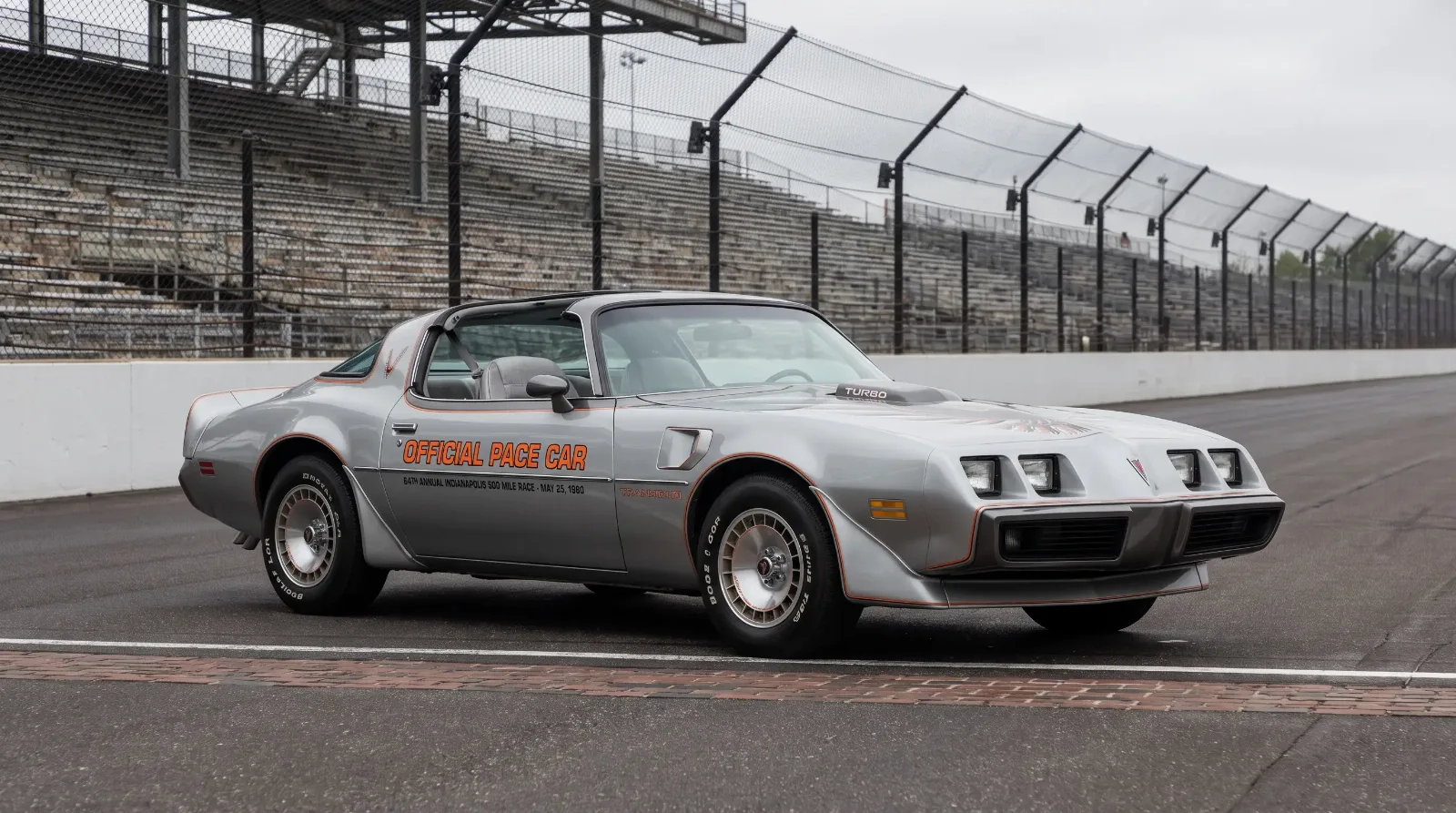
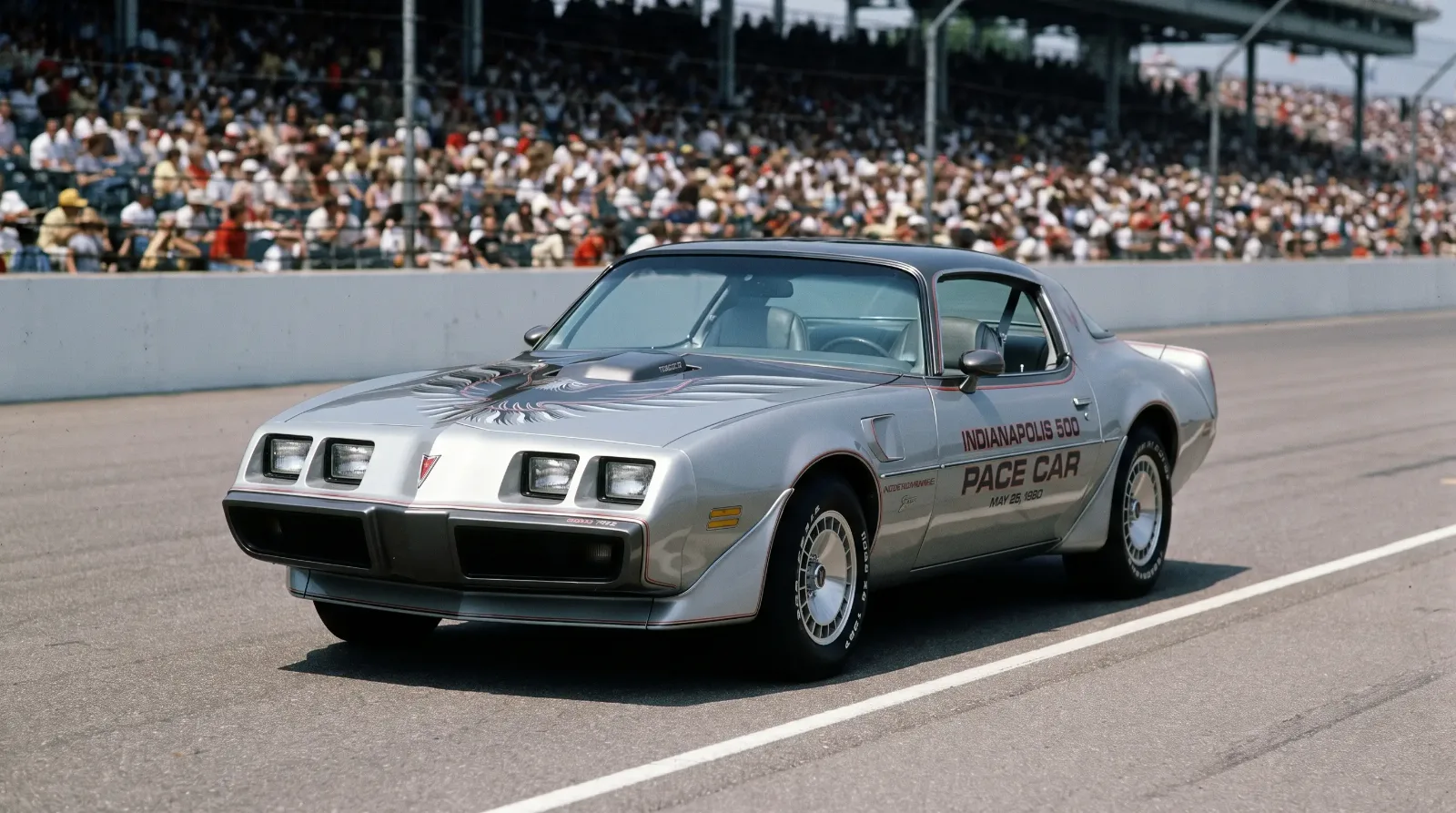
Ask a Pontiac dealer from 1980 what customers wanted most that spring, and plenty will tell you the same thing: the car from television. Millions of people had watched a silver and charcoal Trans Am lead the field around the Indianapolis Motor Speedway at the start of the 500, and within days of the broadcast, showrooms across the country were fielding calls asking for "that pace car." Pontiac had an answer ready, a replica edition built to look exactly like the real thing, and it turned one racing tradition into one of the most collected special editions the Trans Am legend ever produced.
Car Features
6 min read
The Trans Am Pace Cars
How a 1980 Indy 500 pace car appearance turned into one of the most collected Trans Am special editions, decals and all.
How a Trans Am ended up leading the field at Indianapolis
The Indianapolis 500 has used a pace car every year since the very first race in 1911, and by the late 1970s the honor had become a marketing opportunity Detroit fought over. For 1980, Pontiac won the assignment with the turbocharged Trans Am, a car built to showcase engineering ambition even as the rest of the industry retreated from performance. 1950 Indy 500 winner Johnnie Parsons Sr. drove the actual pace car that May, and the television cameras made sure every Trans Am fan in the country saw it happen. Pontiac moved fast to capitalize, building a run of dealer-available replicas finished to match the pace car's look almost exactly, right down to the graphics package.
What made the replica edition different from a standard Trans Am
The pace car replica arrived under option code Y85, layered onto the existing Trans Am body in a two-tone silver over charcoal gray finish, with "Pace Car" identification decals applied to the doors and a numbered dash plaque marking each car's place in the production run. Buyers got the turbocharged 301, the same engine covered in detail in the turbo Trans Am's own story, along with a specific interior trim scheme and, in most cases, the T-top roof option that had become a signature feature of special edition Trans Ams by this point in the decade. Production reached roughly 5,700 units for the model year, a number large enough that these weren't rare in period, but small enough that clean survivors carry real weight in the collector market today.
The interior carried its own version of the theme, with gray cloth or leather seating trimmed to coordinate with the exterior paint and a specific instrument cluster surround that differed slightly from a standard 1980 Trans Am. None of it changed how the car drove, but all of it mattered to buyers who wanted the full package rather than just the mechanical story underneath. Pontiac clearly understood that a pace car replica lives or dies on how convincingly it recreates the look people saw on television, and the attention paid to details like the seat fabric and dash trim reflects that.
| Detail | 1980 Trans Am Pace Car Edition |
|---|---|
| Option code | Y85 |
| Exterior finish | Two-tone silver over charcoal gray |
| Engine | Turbocharged 301 V8 |
| Identification | Door decals, numbered dash plaque |
| Approximate production | 5,700 units |
The decals customers peeled off and later regretted
Here's a detail that trips up a lot of buyers shopping these cars now. Many original owners had dealers remove the "Pace Car" door decals at the time of purchase, since not every buyer wanted to drive around advertising a promotional tie-in on a car they planned to keep for years. That was a perfectly reasonable choice in 1980 and a costly one in hindsight, because decal-delete cars are harder to authenticate today and typically bring less at sale than examples with the original graphics intact, even when the mechanical specification underneath is identical. If you're chasing a genuine pace car edition, ask early whether the decals are original, reproduction, or simply absent, and expect the answer to move the price meaningfully in either direction.
"Half the guys who bought these in 1980 pulled the decals off before they even left the dealership lot. Now their grandkids are trying to figure out if that hurts or helps when they go to sell the car."
Patrick Walsh
Why this edition still matters to collectors
The pace car edition sits at an interesting intersection in Trans Am history. It's tied to a genuine motorsport moment, one of the few times a Firebird-based car led the field at Indianapolis, and it's built around the same turbocharged engine that made 1980 and 1981 such a distinct chapter in Pontiac's story. That combination of racing pedigree and mechanical rarity is exactly what collectors look for, and it's part of why unrestored, decal-correct pace car editions have held their value more consistently than plenty of other late-1970s and early-1980s Trans Ams. The car photographed leading the pack at Indianapolis is long retired, but its replicas are still out there, parked in garages across the country, waiting for buyers who understand exactly what they're looking at.
There's also a broader pattern worth noticing here. Pace car editions across the entire American auto industry tend to follow a similar arc, a burst of dealer enthusiasm the year they're built, a period of quiet depreciation once the novelty wears off, and then a slow climb back up in value once a new generation of buyers discovers the racing story behind the graphics. The 1980 Trans Am followed that arc closely. Cars that sold for a modest premium over a standard Trans Am in period were, by the late 1990s, sometimes worth barely more than any other turbocharged Trans Am on the used market. It's only in the past couple of decades that the pace car connection has come back into focus, and prices have responded accordingly as buyers younger than the cars themselves have gotten interested in what actually happened at Indianapolis that May.
Pontiac's Indianapolis moment wasn't the only special edition built around motorsport and anniversary marketing during this stretch of Trans Am history, and if you want another angle on how the brand turned a milestone into a collectible package, that story covers the years just before this one, when Pontiac was already learning how much a strong visual identity could carry a special edition Trans Am.
Sources and notes
- 1980 Turbo Trans Am Indy 500 Pace Car, F-Body Warehouse Registry
- 1980 Pace Car, Pontiac Trans Am - IndyPaceCars.com
- Y85 Turbo Pace Car, Hitman's Pontiac Trans Am Site
- Indy Pace Car: 1980 Pontiac Trans Am Turbo, Barn Finds
- AutoHunter Spotlight: 1980 Pontiac Turbo Trans Am Pace Car, ClassicCars.com Journal
- Indianapolis 500 - Wikipedia
Related Reading
Have a
Pontiac Firebird
for Sale?
Reach thousands of serious classic car collectors across the US.
Sell It Here →
Are You a Classic Car Dealer?
List your full inventory and connect with targeted classic car buyers.
Join as a Dealer →
#pontiac firebird
#indianapolis 500
#Trans Am Pace Car
#1980 Trans Am
#Y84 option
#Pontiac collector cars

About the author
Patrick Walsh
Automotive journalist covering classic car shows, events, and the enthusiast community across North America.
Related Listings - Pontiac Firebird




Comments
Be the first to comment on this article.