
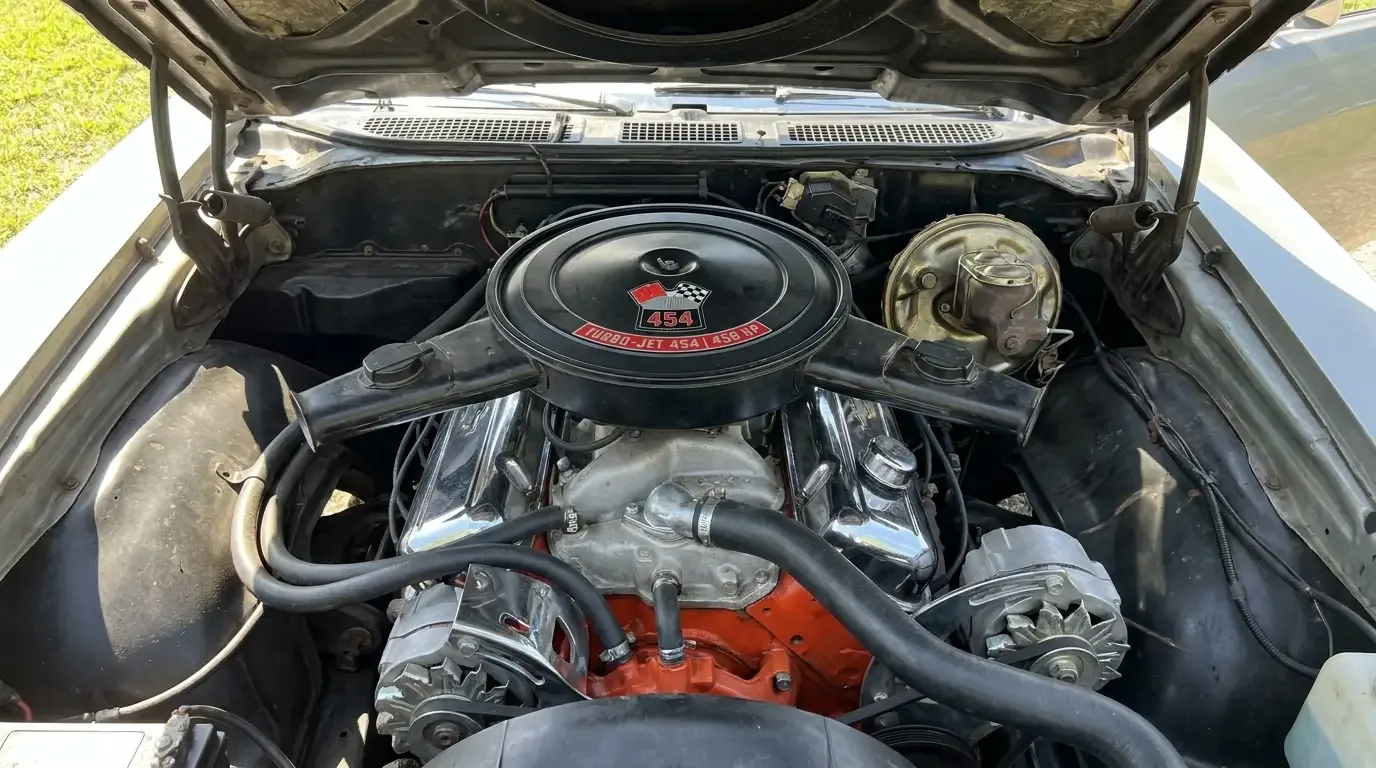
Every LS6 Chevelle that left the assembly line carried a badge that never mentioned LS6 at all. Pop the hood and the air cleaner decal read "Turbo-Jet 454." That's the name Chevrolet actually sold to the public, the name that went on fender emblems and dealer brochures, while the RPO code stayed buried in the order form and the factory paperwork. Understanding how that naming worked, and why it existed, explains a lot about how Chevrolet managed its big-block lineup through the muscle car era.
Car Features
6 min read
Turbo-Jet 454: How Chevrolet Marketed a Legend
The LS6 Chevelle never wore an LS6 badge. Here's how Chevrolet's Turbo-Jet 454 name masked the RPO codes underneath, and why that matters for buyers today.
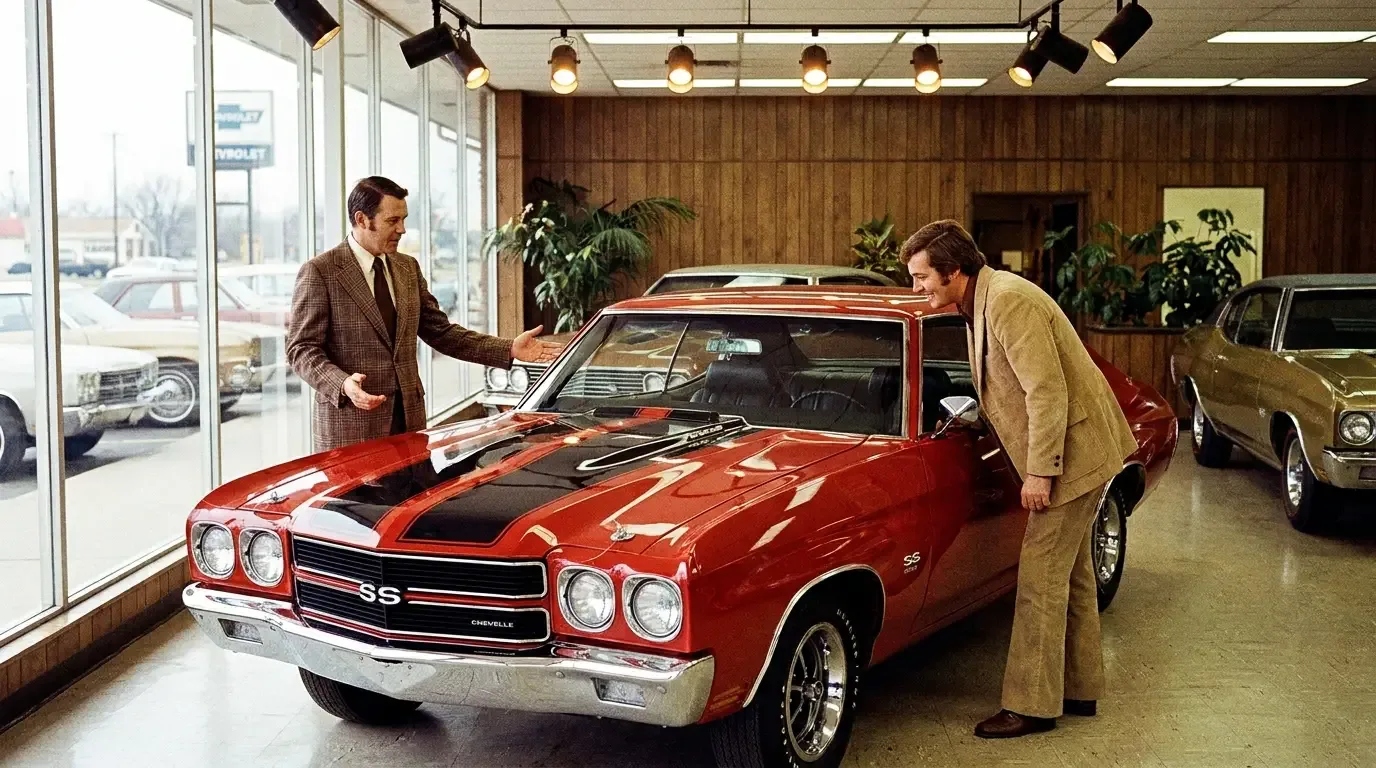
To follow the engine's full development before it earned that badge, read the LS6 legend.
Where the Turbo-Jet name started
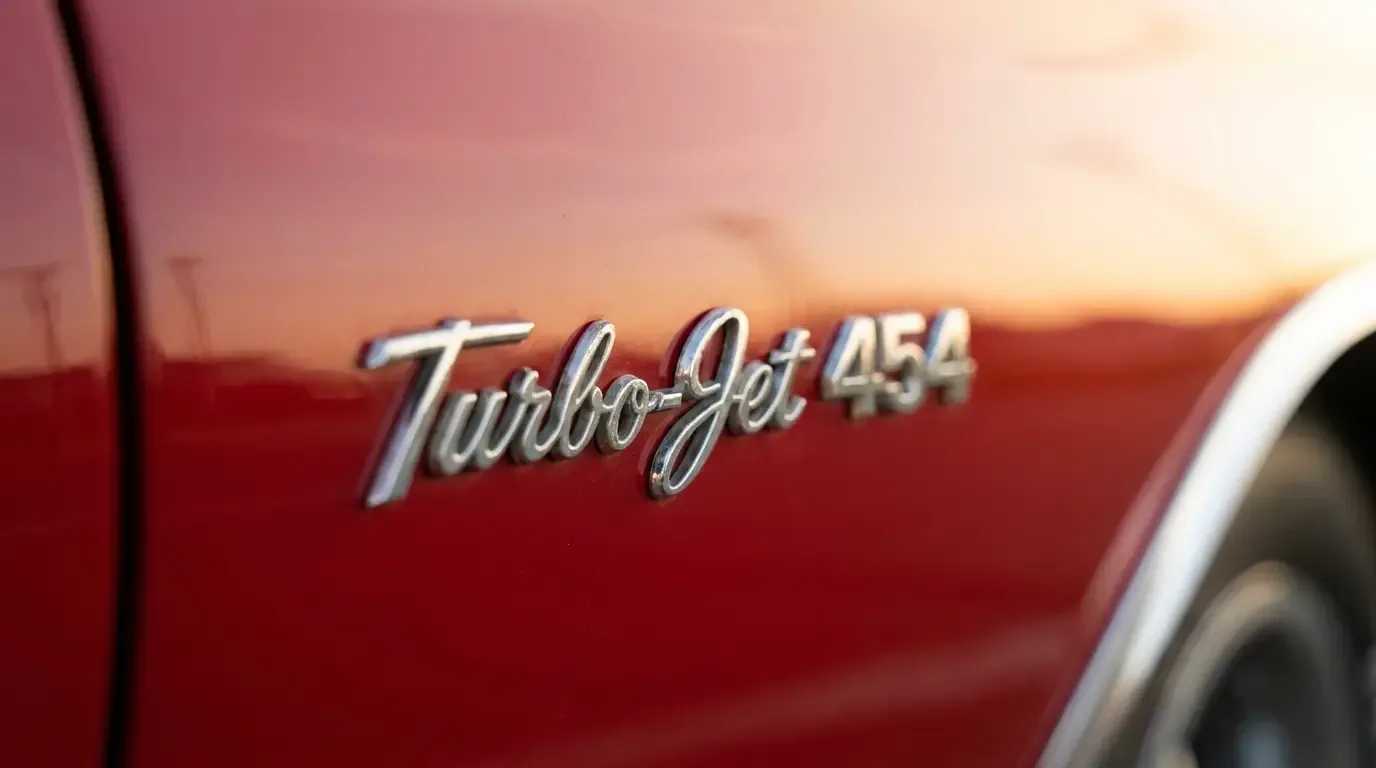
Turbo-Jet wasn't invented for the 454. Chevrolet had been using it as a family name for its big-block V8s since the mid-1960s, going back to the 396-cubic-inch engine's introduction. The name gave Chevrolet a consistent, jet-age marketing identity across an entire family of displacements as the big-block grew from 396 to 402 to 427 to, eventually, 454 cubic inches. Dealers could put "Turbo-Jet" on a fender badge and buyers understood it meant the top-tier V8 family, without needing to know the displacement or the internal engineering code.
That distinction between marketing name and engineering designation runs through the whole big-block story. RPO codes like LS5 and LS6 were option codes on the factory build sheet, part of the paperwork a dealer used to order a specific car and a document restorers rely on today to verify authenticity. "Turbo-Jet 454" was what the customer saw and what the salesman said out loud. A 1970 buyer walking into a Chevrolet showroom wasn't asking for an "LS6." They were asking about the Turbo-Jet 454, and the LS6 designation on the invoice was largely invisible to them unless they went looking for it.
How the badge tracked engine changes without saying so
The genius of the naming, from a marketing standpoint, is that it let Chevrolet update the underlying hardware year to year without confusing the sales floor. The Turbo-Jet 454 badge appeared on LS5-equipped cars and LS6-equipped cars alike in 1970, distinguishing them not by badge but by trim level, documentation, and, for anyone paying attention, the underhood decal specifying compression and rating. A buyer who wanted the more aggressive package needed to know to ask about the SS454 with the LS6 option specifically, not just "the Turbo-Jet."
This is where factory documentation earns its keep. The cowl tag, the broadcast sheet if it survived, and the parts catalog together tell you which engine actually left the plant in a given car, independent of what badge is bolted to the fender. Badges get swapped in the aftermarket and in later restorations more often than people admit, sometimes with good intentions and sometimes to make a lesser car look like something it isn't. The RPO code on the original invoice, cross-referenced against casting numbers on the block itself, is the record that actually settles the question.
🔧 Inspection Priorities
- Don't take a Turbo-Jet 454 fender badge as proof of which engine is underneath. The badge identifies the family, not the specific RPO code, and it can be reproduced or moved between cars far more easily than the documentation can be faked.
- Cross-reference the block's casting number against the correct code for the claimed engine. LS5 and LS6 blocks have documented differences, and a mismatch between the casting number and the seller's claim is worth resolving before any money changes hands.
- Ask for the original invoice or broadcast sheet whenever possible. Not every car has one surviving, but when it does, it settles the RPO question in a way no badge or decal ever can.
Why the marketing worked
"Turbo-Jet" did real work for Chevrolet beyond looking good on a fender. It let the company build a consistent brand identity around big-block performance across an entire decade of engine displacement changes, so a buyer's mental image of "the serious engine" stayed attached to the name even as the specific cubic inches climbed. That's a marketing decision with staying power. Fifty years later, "Turbo-Jet 454" still reads as a performance statement to anyone who knows the era, even to people who couldn't tell you what LS5 or LS6 actually stands for.
It also meant Chevrolet's engineering team had room to make running changes, compression adjustments, and emissions-driven revisions to the big-block family without needing a new advertising campaign every time a spec sheet number moved. The name was durable. The engineering underneath it kept evolving, sometimes in ways that meaningfully changed the driving experience from one model year to the next.
What this means for verifying a car today
Restoration shops and appraisers dealing with these cars have learned to treat the fender badge as decoration, not documentation. A correct restoration will absolutely include the right badge for the engine underneath, and getting that detail right matters for judged shows and concours-style events where every trim piece is checked against the period parts catalog. But the badge follows the documented engine, not the other way around. Any competent restorer sources the correct casting numbers and confirms the RPO code first, then fits the appropriate emblem, rather than starting from an emblem and assuming the engine underneath matches it.
That order of operations matters just as much for a buyer doing due diligence on a used car as it does for a restorer building one from parts. A pristine Turbo-Jet 454 badge on a clean fender tells you the car was, at some point, built or restored to look the part. It tells you nothing on its own about whether the numbers stamped into the block match what the factory invoice says should be there.
| Badge / marketing name | RPO code(s) it could cover | Where it appeared |
|---|---|---|
| Turbo-Jet 396/402 | L34, L35, L78, and related codes | Chevelle, full-size Chevrolet, other GM divisions' badge-engineered platforms |
| Turbo-Jet 454 | LS5, LS6 | 1970-71 Chevelle SS454, other 454-equipped Chevrolet models |
"The badge tells you the story Chevrolet wanted to sell. The build sheet tells you what actually left the factory. Both matter, but only one of them holds up under authentication."
Tom Ramirez
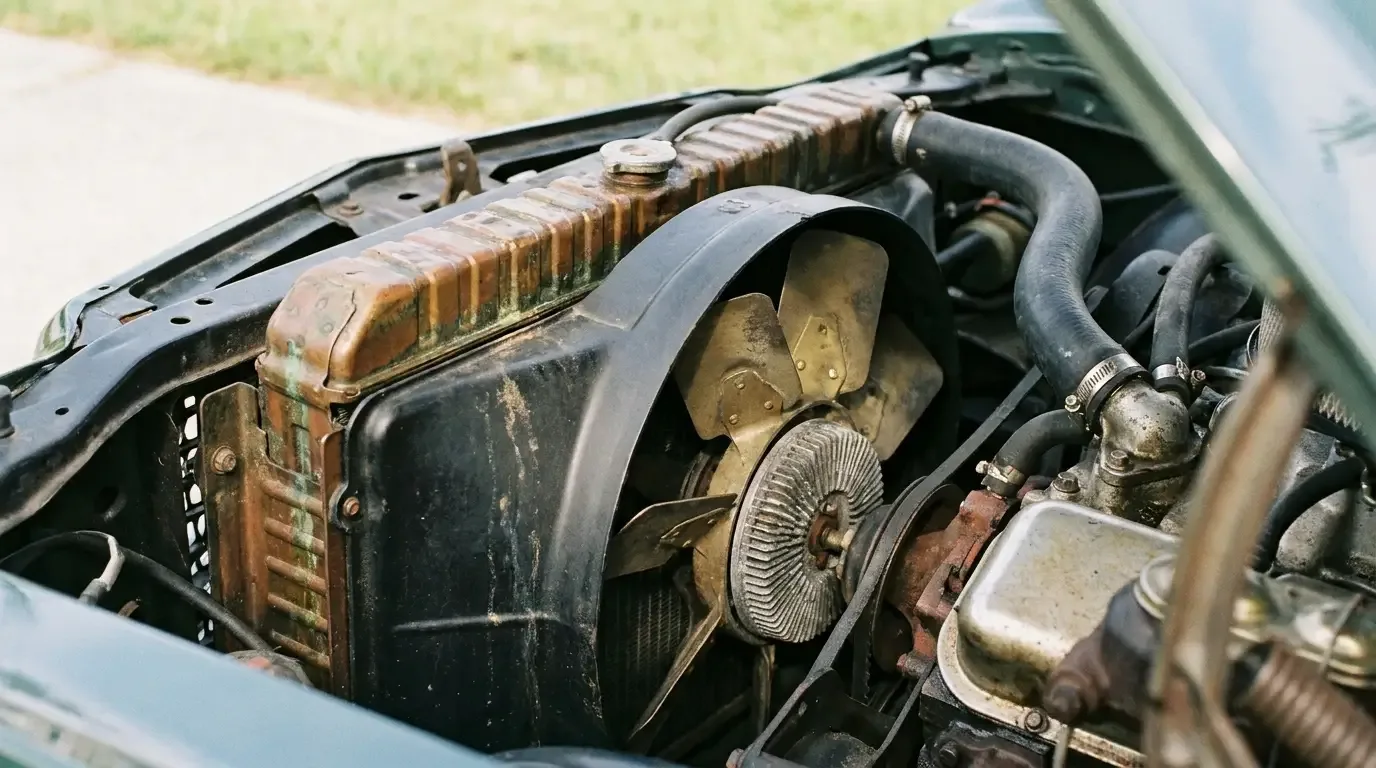
The naming story explains a lot about how these cars were sold, but the engineering behind the LS6's reputation for reliability, or lack of it, is a separate question worth its own scrutiny. Read next: Big-Block Cooling and Reliability Lore, Fact-Checked for a look at what's true and what's exaggerated in the cooling-system stories that follow these engines around.
Sources and notes
- Wikipedia - Chevrolet L78, part of the Mark IV Turbo-Jet 396 family
- Muscle Car Club - Chevy 396 and 402 big-block guide, Turbo-Jet naming and RPO codes
- Chevelle Stuff - LS3 vs. L34/L78 vs. LF6, RPO code comparison
- Team Chevelle forum - what is a "Turbo Jet," badge and marketing history
- California Speed Shop - 1970 Chevelle SS454 LS6 identification and specifications guide
Related Reading
Have a
Chevrolet Chevelle
for Sale?
Reach thousands of serious classic car collectors across the US.
Sell It Here →
Are You a Classic Car Dealer?
List your full inventory and connect with targeted classic car buyers.
Join as a Dealer →

About the author
Tom Ramirez
Corvette researcher and historian based in Bowling Green, Kentucky. Two decades documenting Corvette production history from original factory records.
Related Listings - Chevrolet Chevelle




Comments
Be the first to comment on this article.