A #2 Hemi Charger from 1969 isn't a #2 car once you factor in what happened to the market between 1971 and 1974. Value depends on more than condition. It depends on what the car represents, and the muscle Charger stopped representing raw performance almost as fast as it started. The question worth asking isn't whether the muscle Charger died. It's what killed it, and the honest answer is three things arriving at once, not one dramatic event.
Insurance surcharges hit first
By the late 1960s, insurers had built actuarial tables around horsepower and engine displacement, and high-output muscle cars carried surcharges that could add hundreds of dollars a year to a young driver's premium. A 1971 Charger R/T or Super Bee with a 440 or Hemi under the hood wasn't cheap to insure even before the car payment, and that math hit exactly the buyer demographic these cars were built for. Young, first-time performance car buyers priced out of coverage simply bought something else, or bought the same body with a smaller engine.
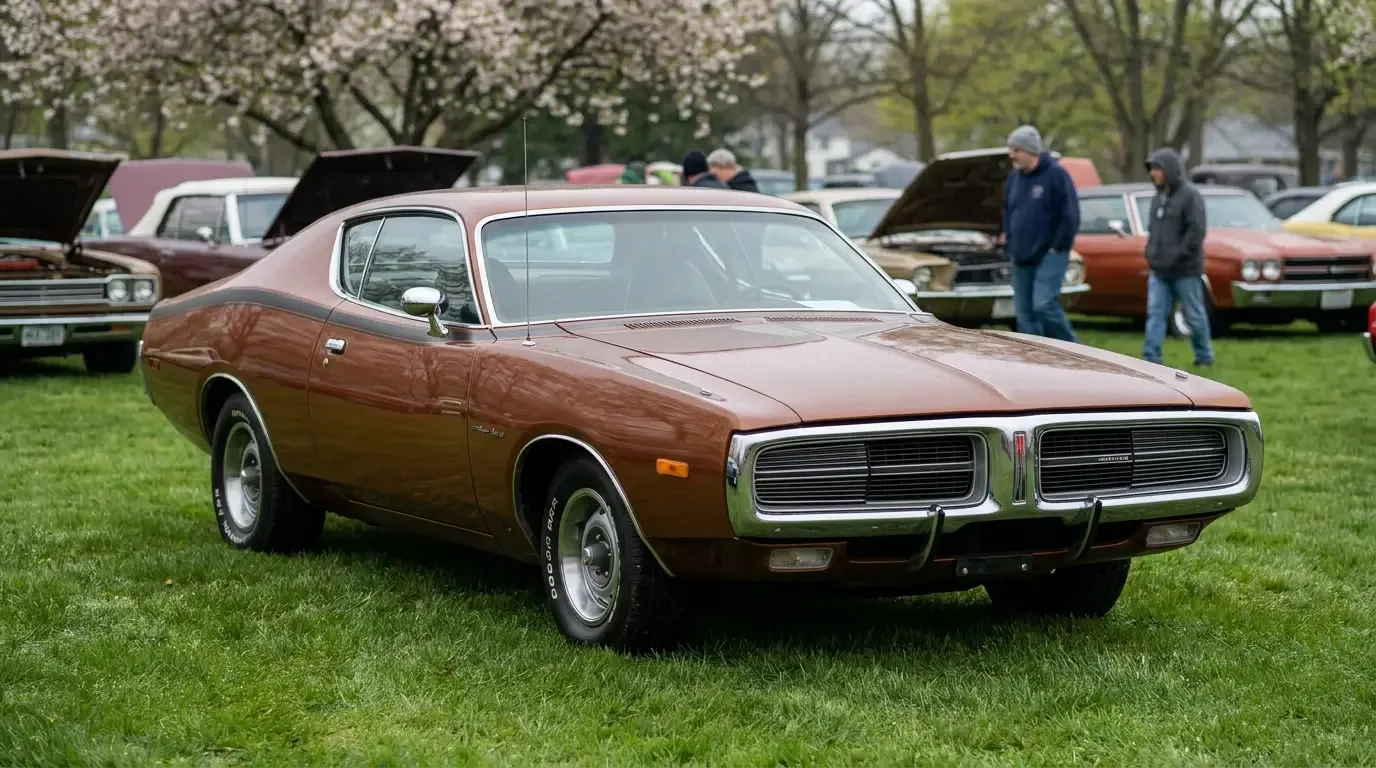
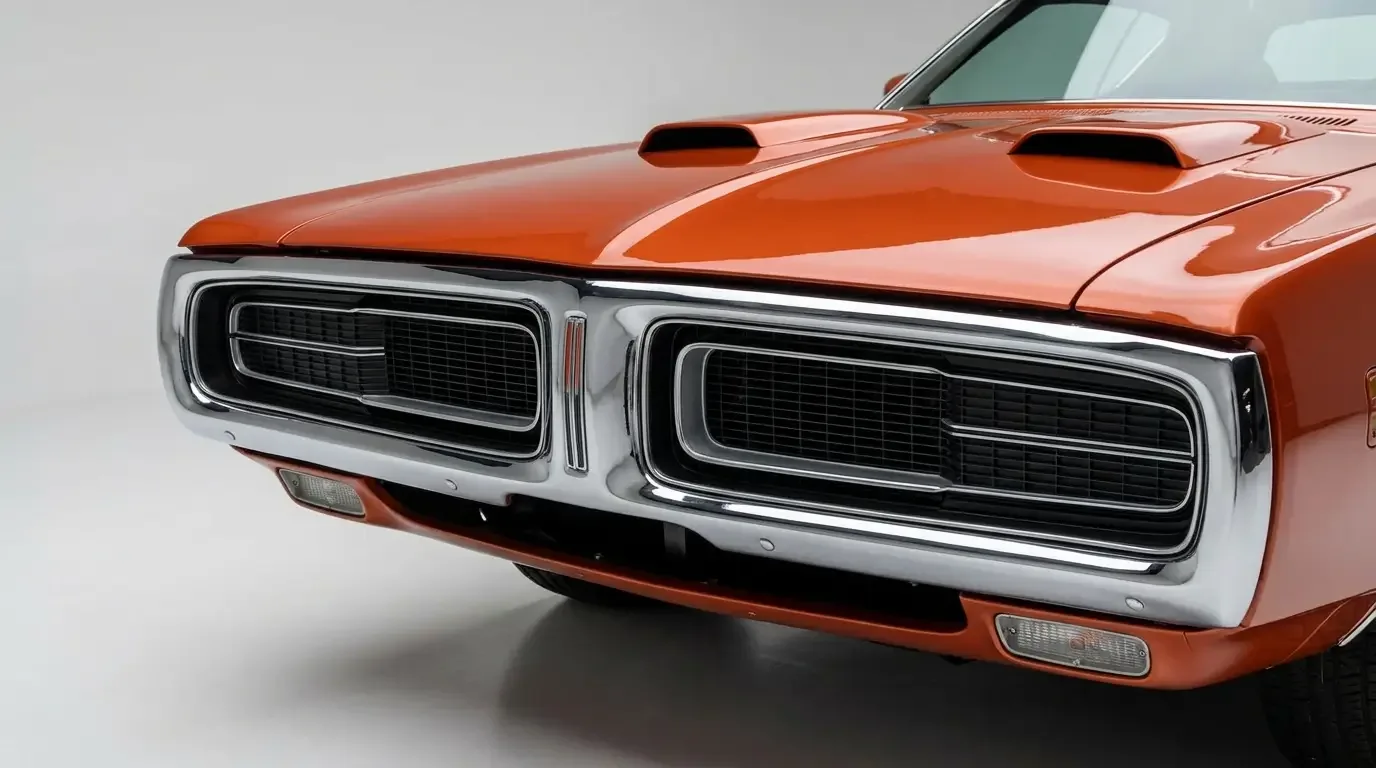
That surcharge structure is a big reason Hemi take rates on the Charger collapsed by 1971, down to just 63 Hemi R/Ts out of more than 50,000 Chargers built that year, well under one percent of production. It wasn't that people stopped wanting the engine. It's that the true cost of owning one, insurance included, stopped making sense against the marginal performance gain over a well-optioned 440.
Emissions rules changed what an engine could be
Starting with the 1970 model year and tightening through 1974, federal emissions standards forced manufacturers to lower compression ratios and retune engines for cleaner combustion rather than peak output. Dodge wasn't alone here. Every domestic manufacturer was working through the same regulatory pressure, but the effect on a car built around big-inch performance was more visible than on an economy sedan.
The industry also shifted its horsepower rating method from gross to net during this period, which makes year-to-year comparisons genuinely tricky. A 440 rated at a certain gross figure in 1970 and a lower net figure in 1972 isn't necessarily a weaker engine on paper alone, but buyers at the time read the smaller number on the window sticker and drew their own conclusions, fair or not. Perception mattered as much as the underlying mechanical reality.
"A #2 car with a thin paper trail isn't a #2 car when the check clears. It's a #3 with a good story, and the appraisal has to say so."
— Marcus Feld
The market itself was moving toward comfort
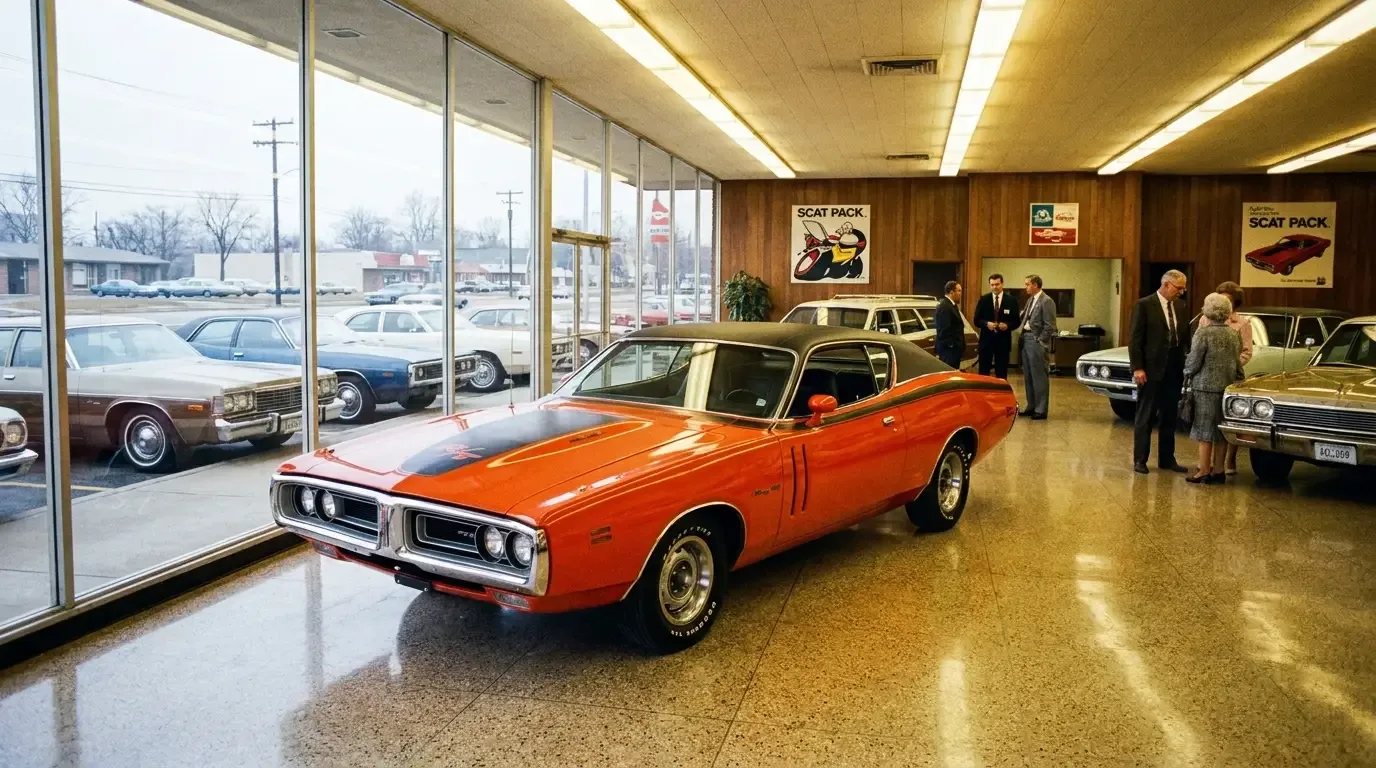
Look at what actually sold well by 1972 and 1973. The Charger SE, with its formal roofline, upright rear glass, and plusher interior, consistently outsold the performance trims. Dodge wasn't blind to that shift. Charger advertising through this period leaned harder into comfort and style than into quarter-mile numbers, because that's where the buyers were.
This wasn't unique to Dodge. Across the industry, the personal luxury coupe segment, cars like the Grand Prix and the Monte Carlo, was pulling buyers who might have bought a muscle car a few years earlier. The market didn't reject performance outright. It just found other things to want more, and manufacturers followed the money the way they always do.
| Factor | Approximate Timeline | Effect |
|---|---|---|
| Insurance surcharges | 1969 to 1973 | Priced out young performance buyers |
| Emissions regulation | 1970 to 1974 | Lowered compression, changed rating method |
| Market shift to luxury coupes | 1971 to 1974 | SE trims outsold R/T and Super Bee |
What this means for values today
Understanding why the muscle Charger declined matters directly for appraisal work. A documented, numbers-matching 1971 R/T or Super Bee survived a period when most of its siblings were traded in, converted to daily drivers, or simply used up. That survivorship bias is a real factor in current pricing, and it's why the gap between a well-documented Hemi or 440 Six Pack car and an undocumented one keeps widening rather than narrowing.
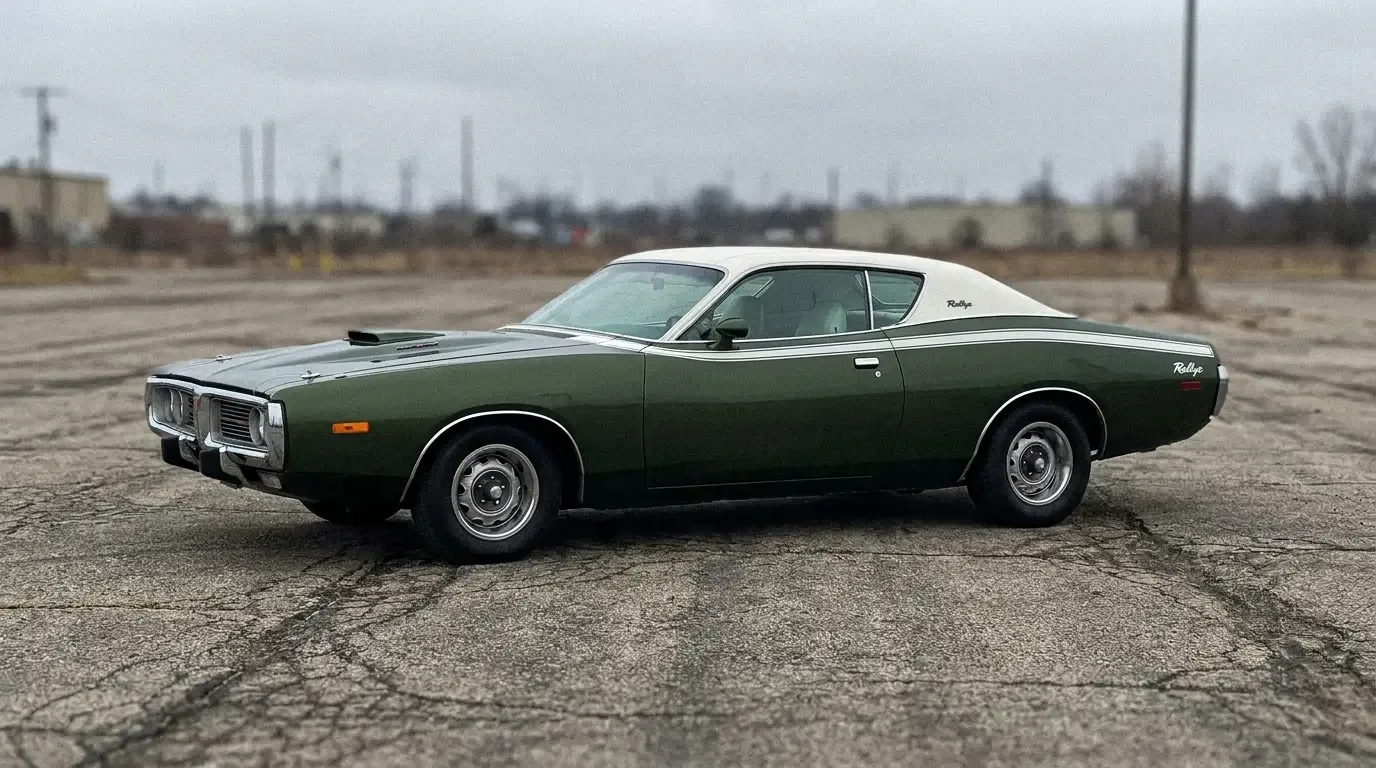
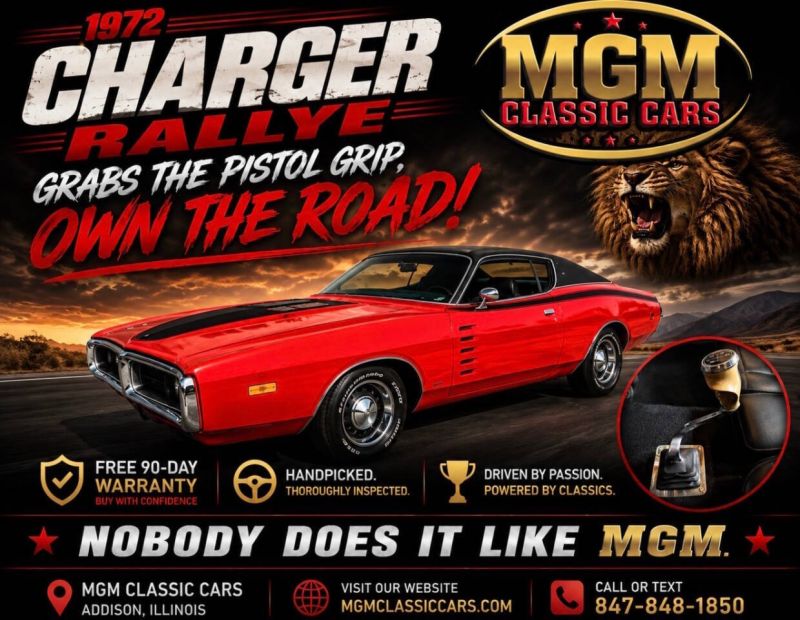
The 1972 model year, when the R/T name disappeared and Rallye took its place, is a clean marker of how far the shift had gone by then. 1972 dodge charger rallye models represent the compromise Dodge landed on, a performance-flavored trim without the insurance and emissions baggage of the outright muscle badges. For the full arc of how the Charger got from its muscle car peak to this point, the full write-up lays out the styling and mechanical changes year by year.
The safety regulation angle, often overlooked
Alongside insurance, emissions, and taste, federal safety mandates added their own weight to the equation. The 5 mph bumper requirements phased in for 1973 and 1974 forced heavier front and rear structures onto every domestic car, the Charger included, and that added mass worked against performance even on the engines that remained relatively strong on paper. A heavier car with a lower net-rated engine is a double hit on real-world acceleration, and buyers cross-shopping a 1974 Charger against a 1969 model felt that difference immediately, even if they couldn't articulate exactly why.
None of these regulations were aimed specifically at muscle cars. Safety and emissions rules applied across the entire industry regardless of engine size. But cars built around big-block performance had further to fall when regulations tightened, simply because they had more raw output to lose relative to a family sedan that was never fast to begin with.
Not a single killer, a convergence
People like a clean narrative, one villain, one moment where everything changed. That's not what happened here. Insurance, regulation, and shifting taste arrived on overlapping timelines and reinforced each other. By the time Dodge dropped the R/T badge, the decision had already been made by the market, not by any single policy or product plan. If you want the broader context on how the Charger nameplate got to this point in the first place, the story of the classic Charger covers the earlier generations that built the reputation this era eventually spent down.
Sources and notes
- DodgeGarage - Hemi Charger R/T for 1971 - confirmed just 63 Hemi R/Ts out of 50,000-plus 1971 Chargers.
- Wikipedia - Dodge Charger (B-body) - confirmed the gross-to-net rating change and declining early-1970s output.
- Wikipedia - Chrysler B/RB engine - confirmed the 1970-72 compression and horsepower reductions.
- Indie Auto - 1971-74 Charger analysis - background on the market shift toward SE luxury trims.
- autoevolution - 1971 Dodge Charger - context on the shrinking performance market and trim mix by the early 1970s.