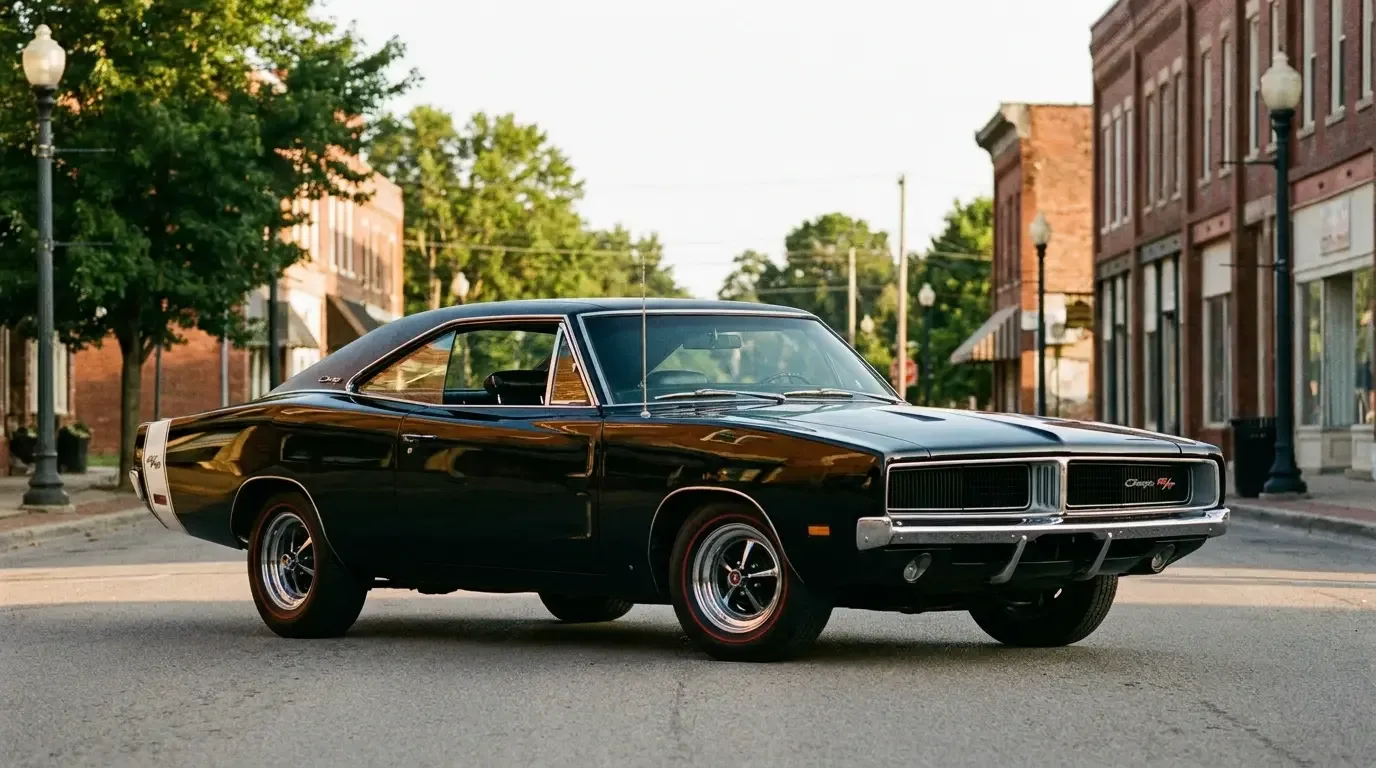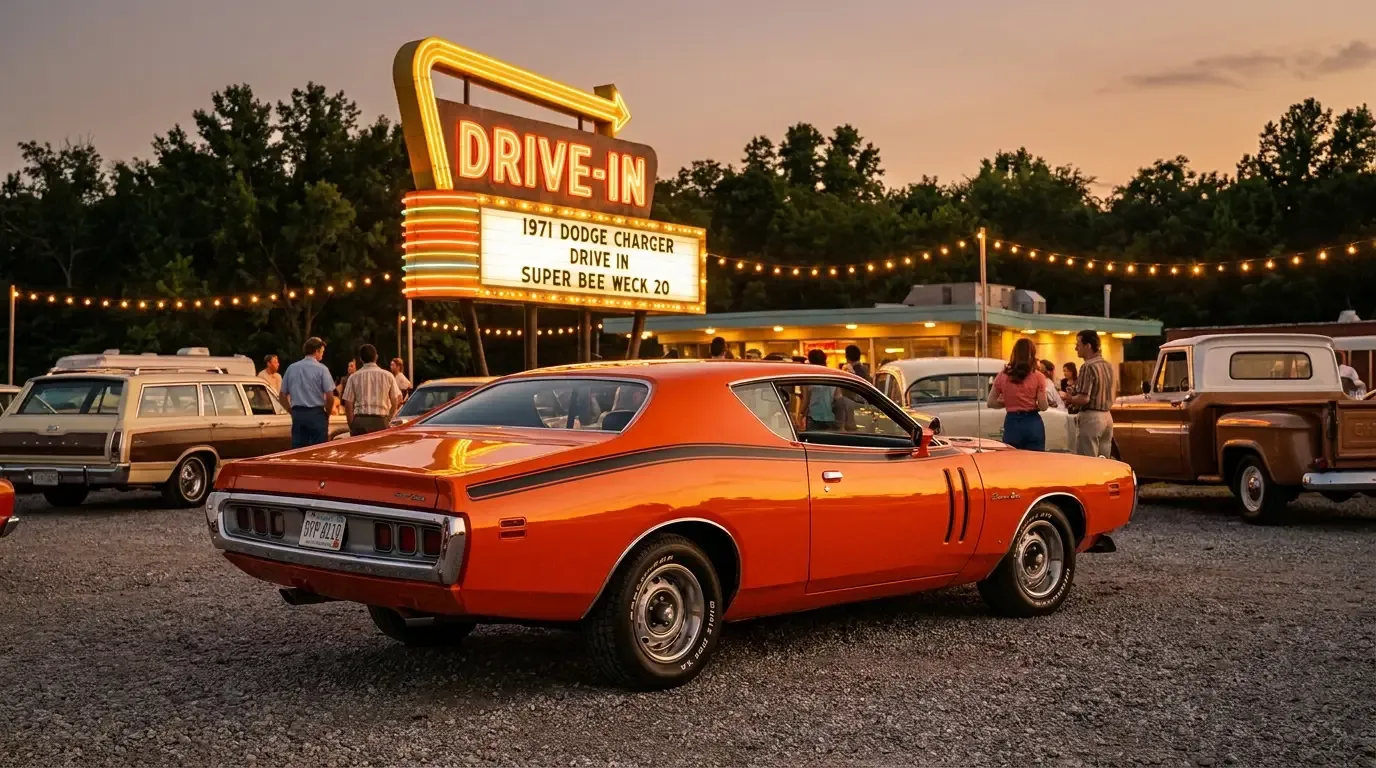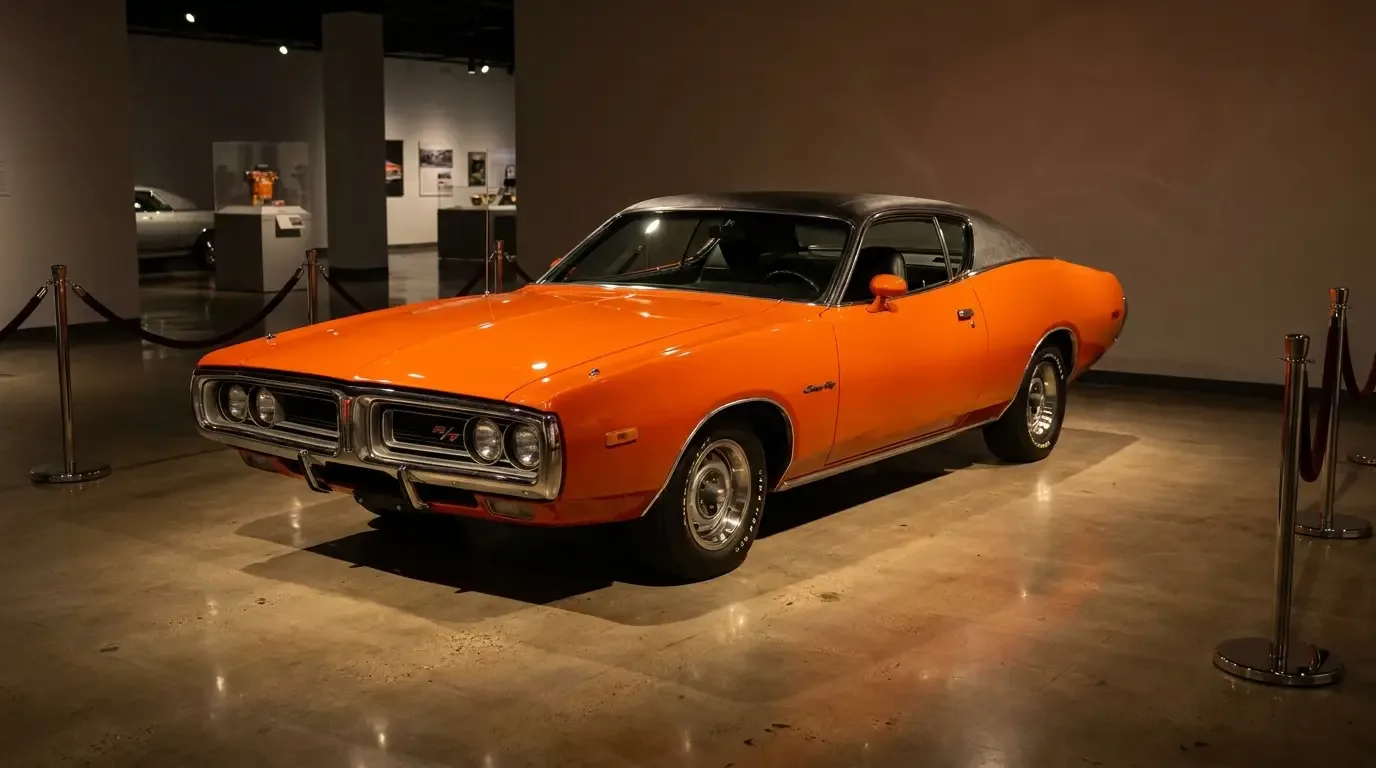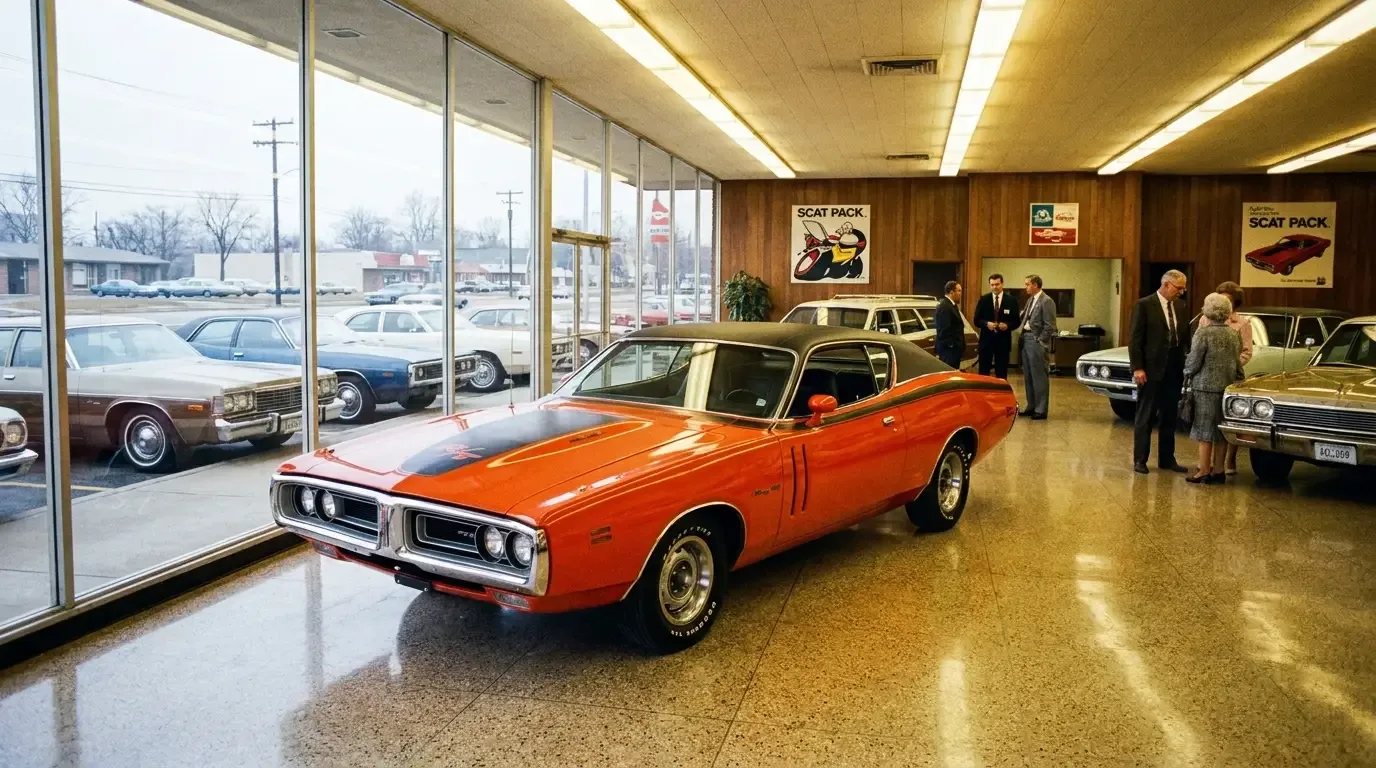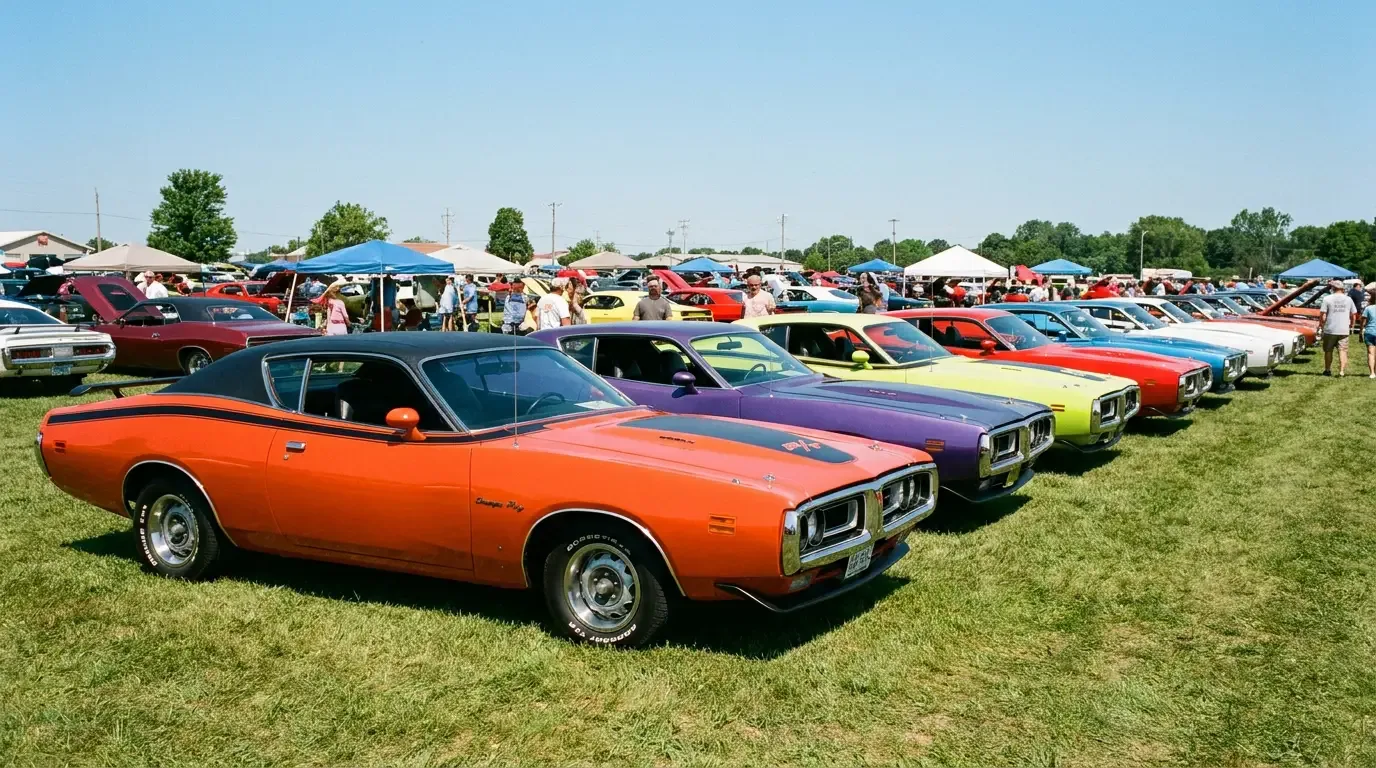
A man I met at a spring show in Pennsylvania bought his 1971 Charger new, off the lot, when he was twenty-three. He told me the salesman leaned on the hood and said the shape would either sell itself or scare people off, and there was no middle ground. Fifty-some years later he still had the car, and he still could not decide which one it had done. That is the honest place to start with the third-generation Charger. It arrived looking like nothing Dodge had built before, and it landed at the exact moment the muscle era it belonged to was quietly closing its books.
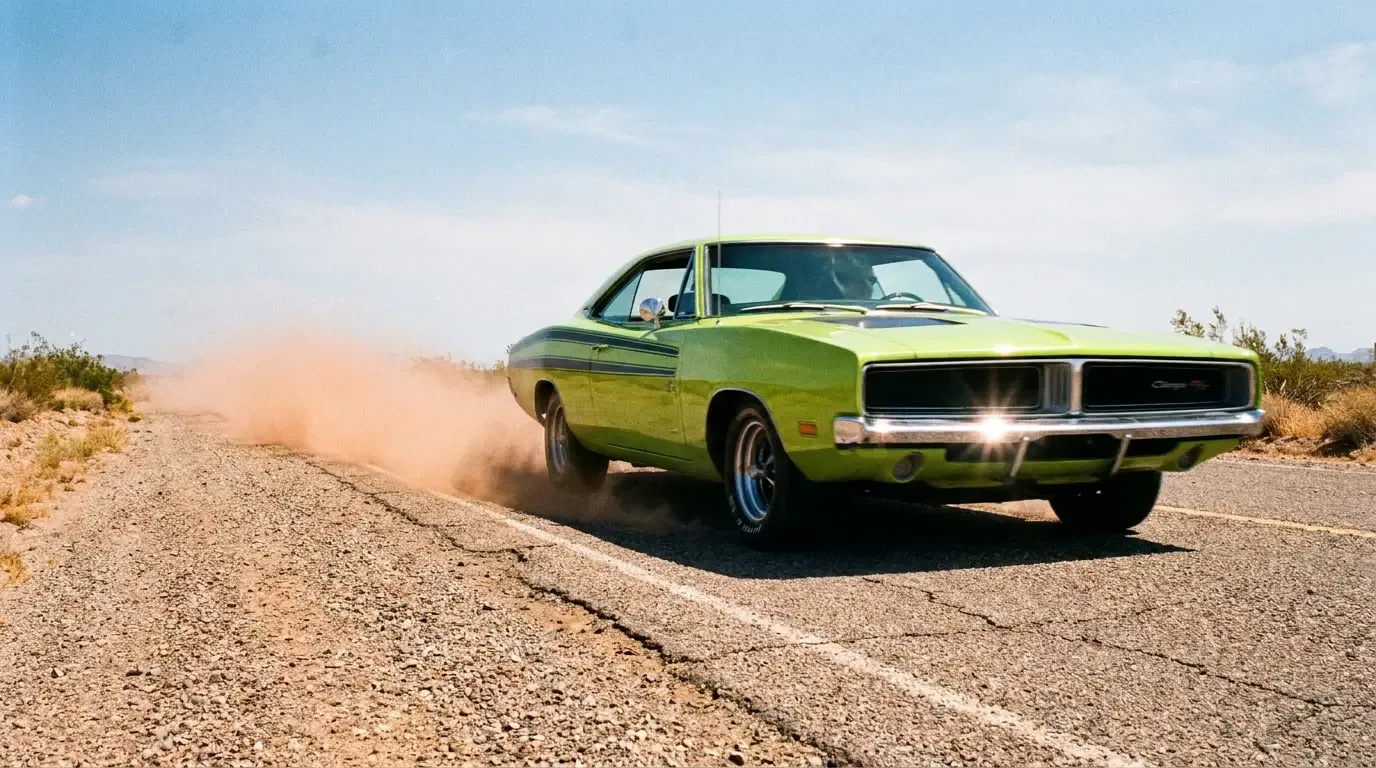
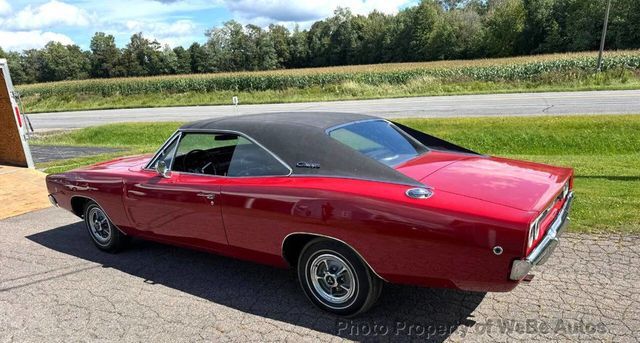
The 1968 through 1970 cars are the ones that hang on garage walls as posters. This generation is the one people argue about. It is bigger, softer around the edges, and it carried the Charger name into a country that was changing the rules on horsepower, insurance, and gasoline all at once. If you want the arc of the whole nameplate, from the fastback origins to the personal-luxury years, that runs through the full story of the model. What happened between 1971 and 1974 is the hinge in the middle of it.
A new body called the fuselage look
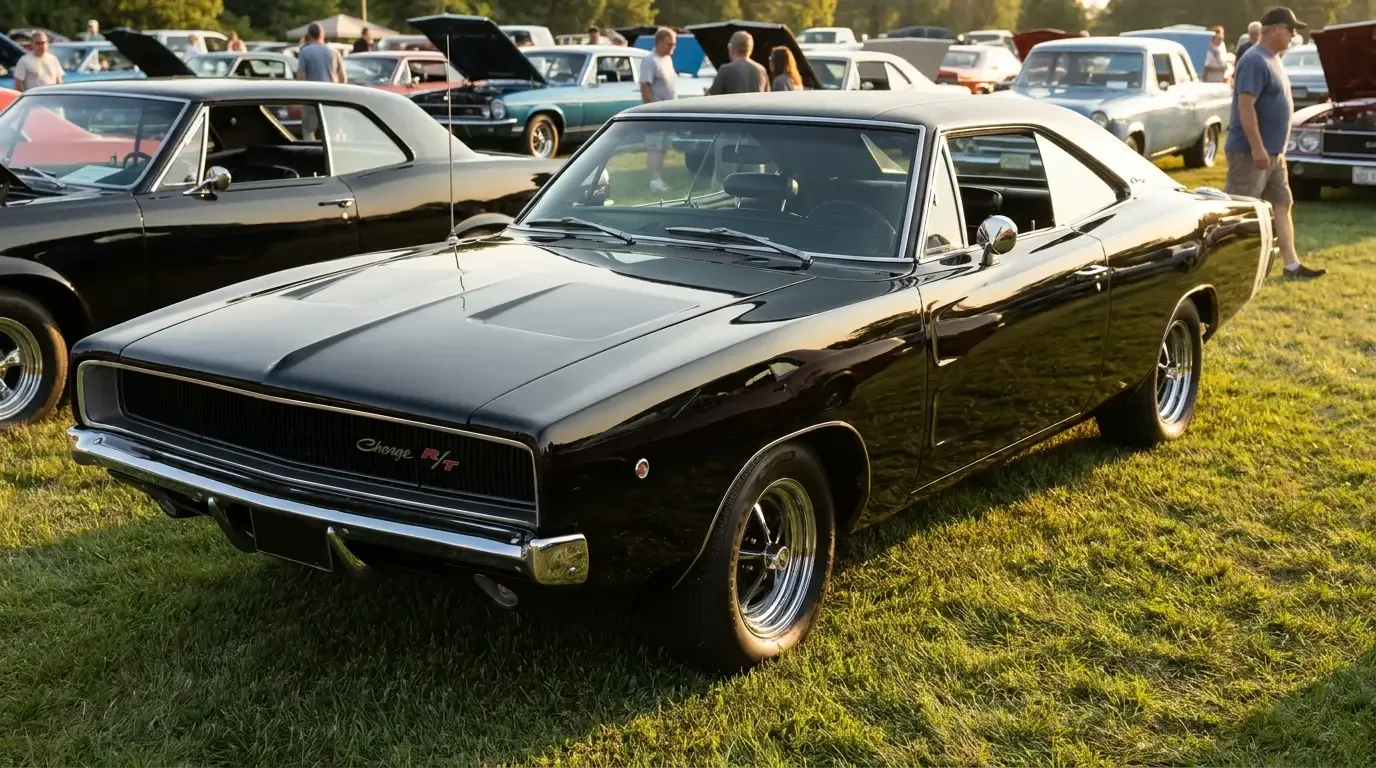
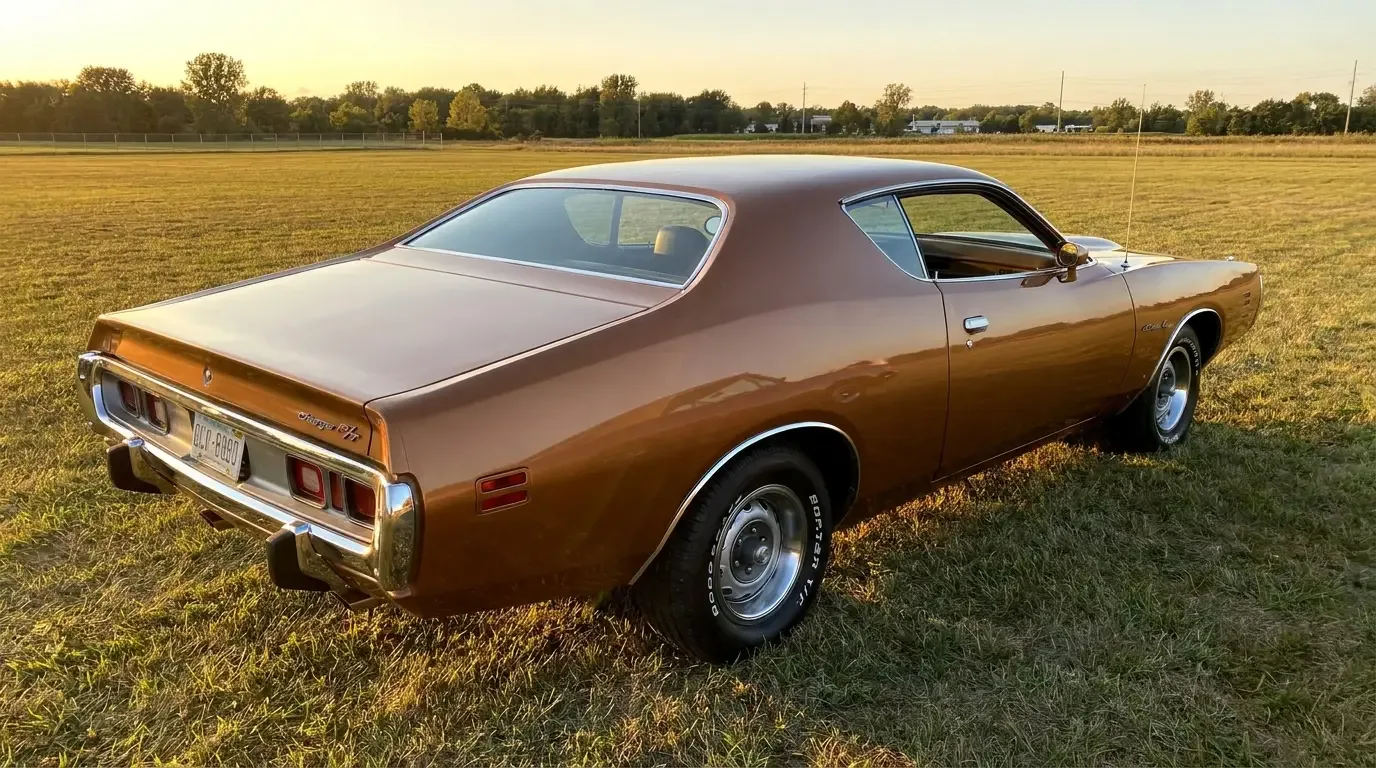
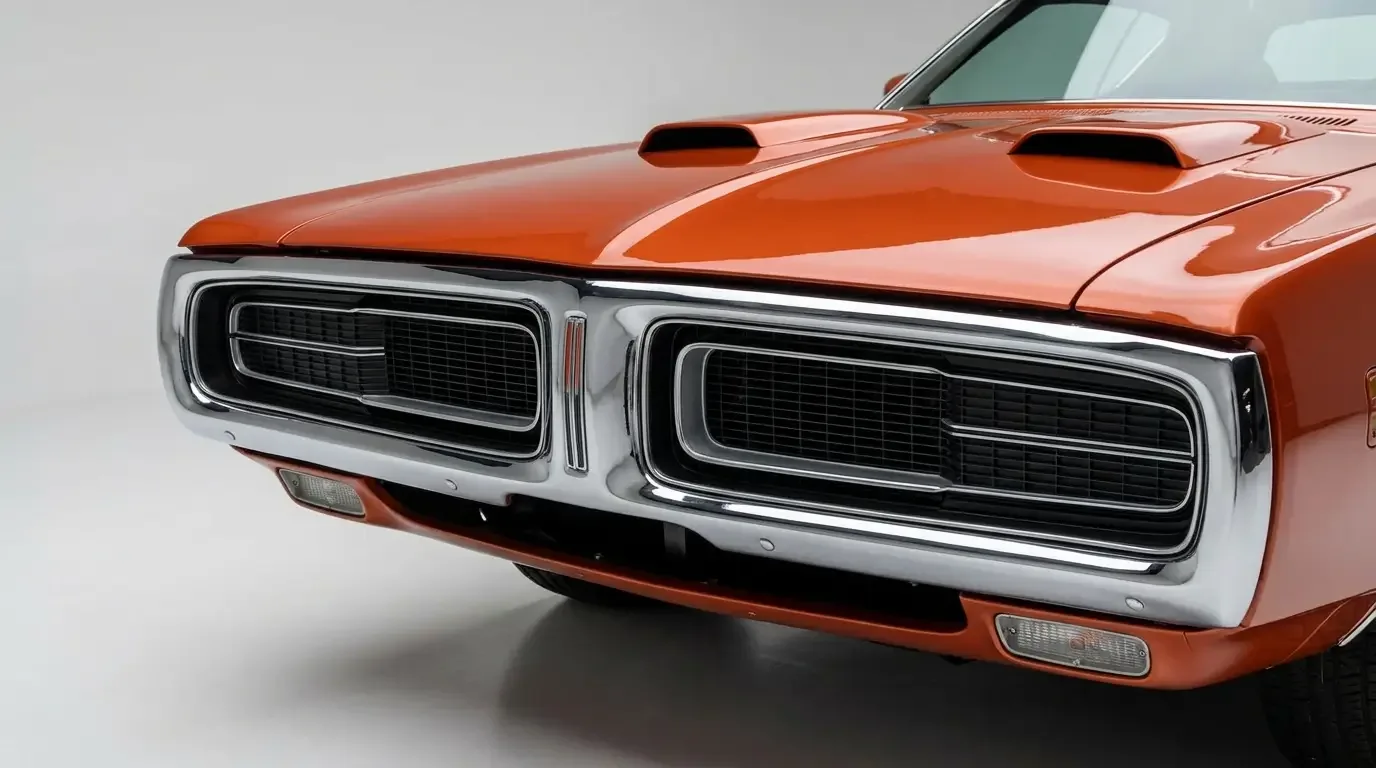
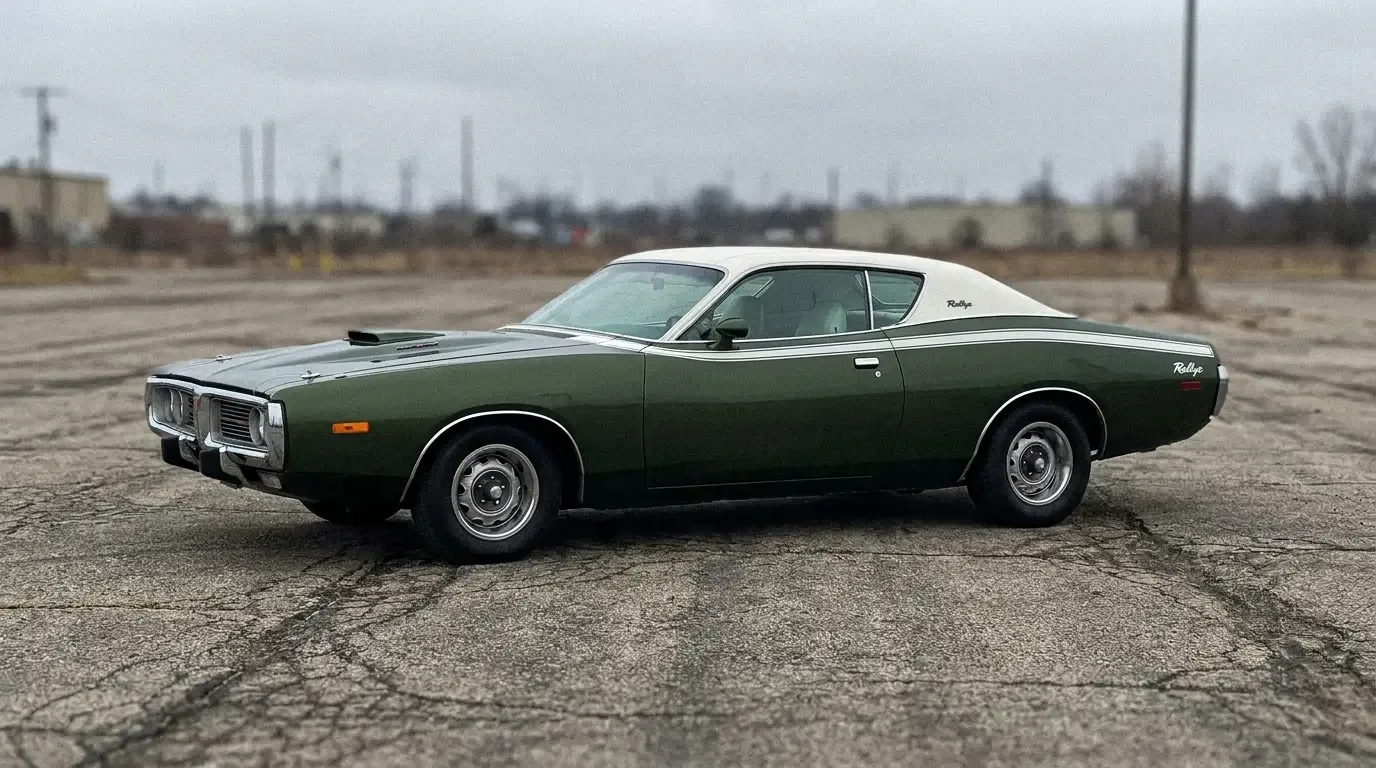
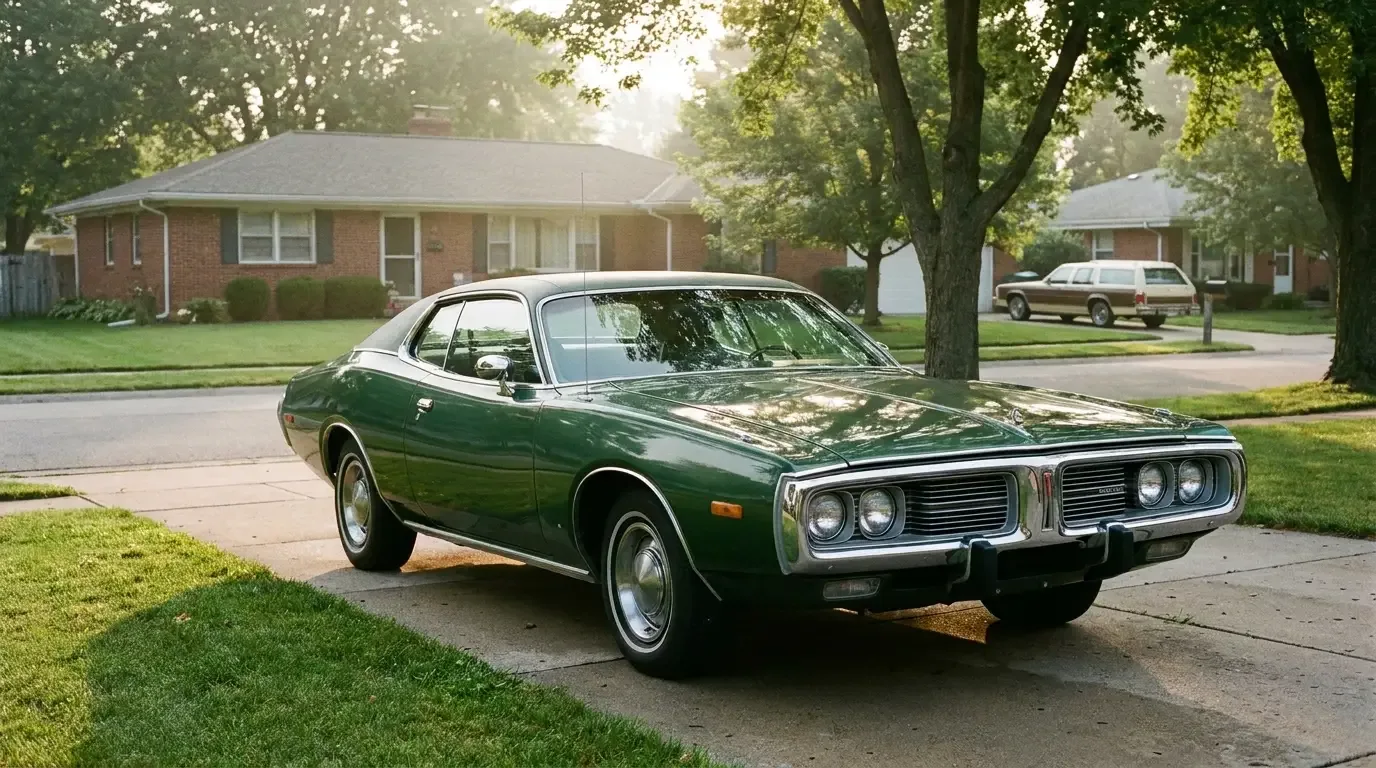
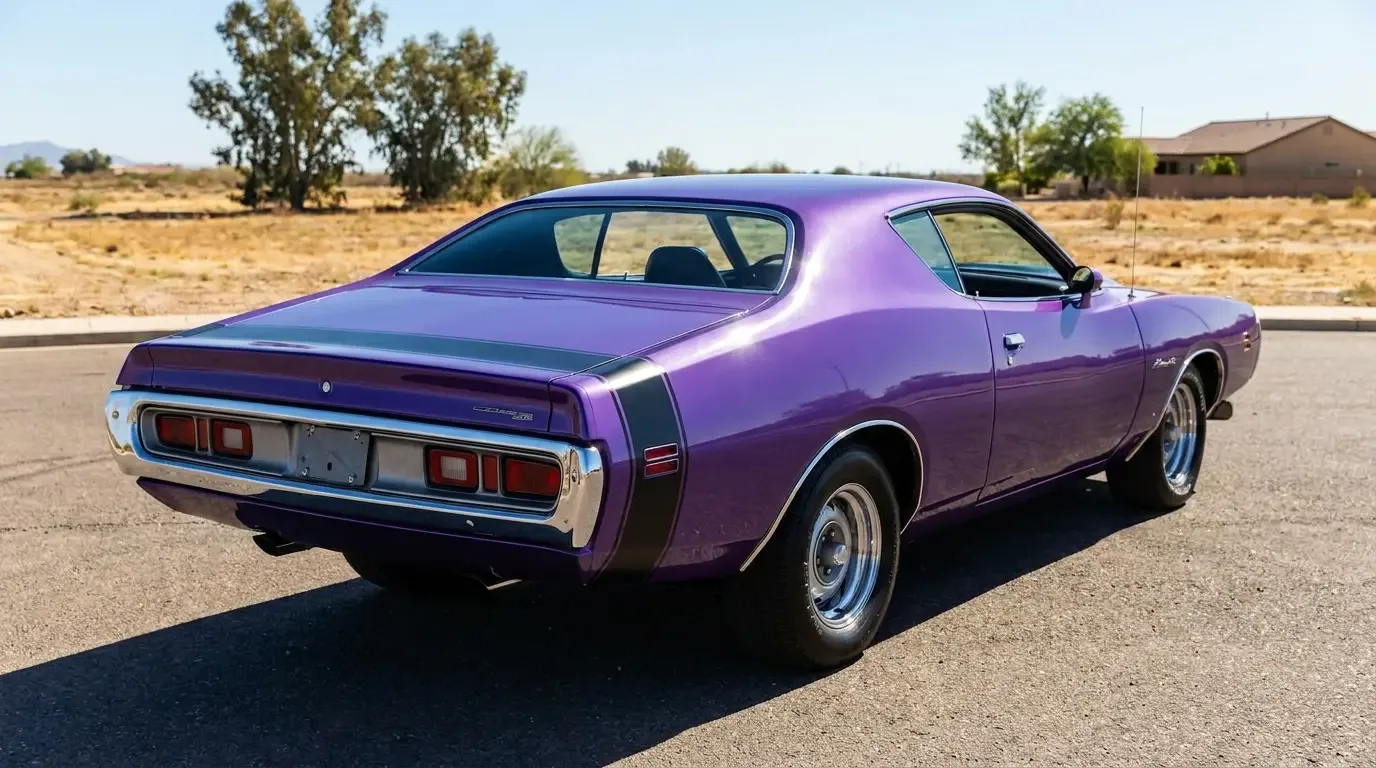
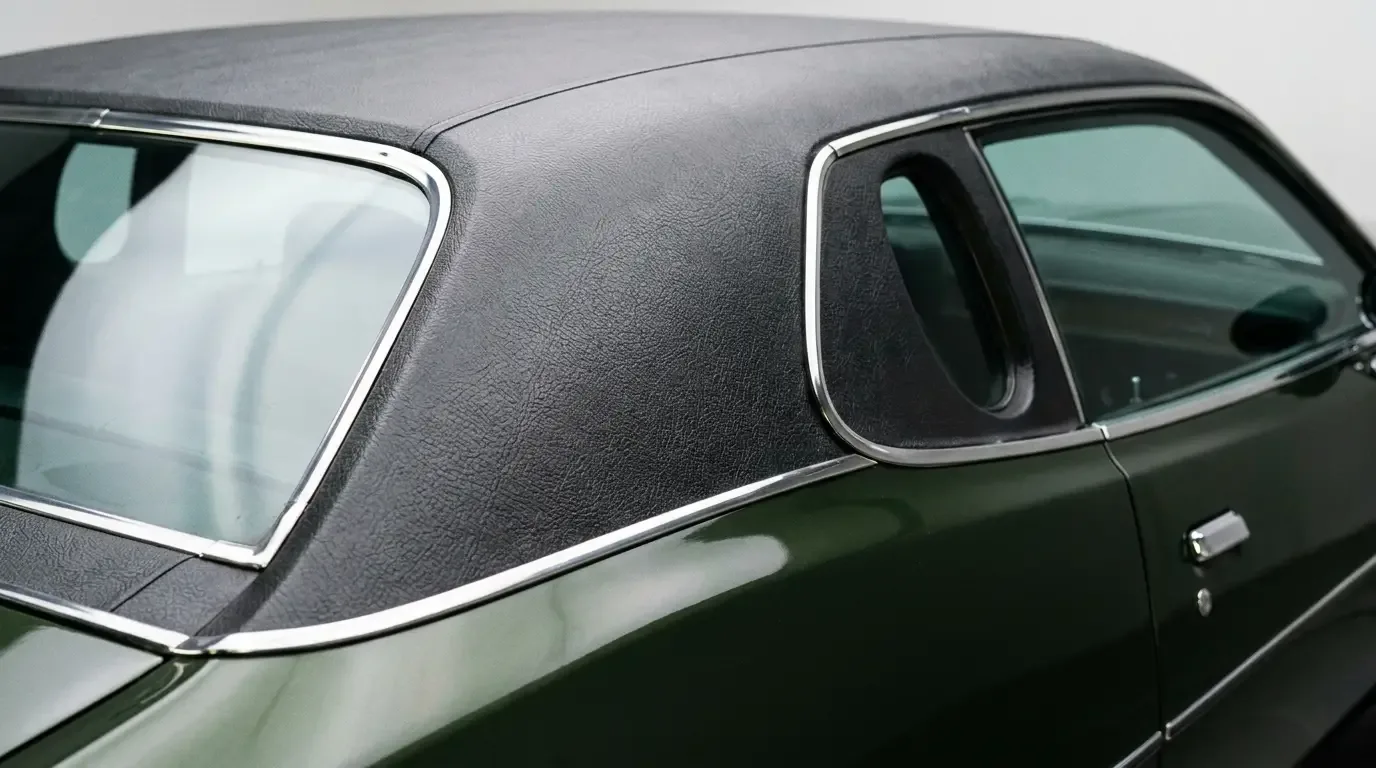
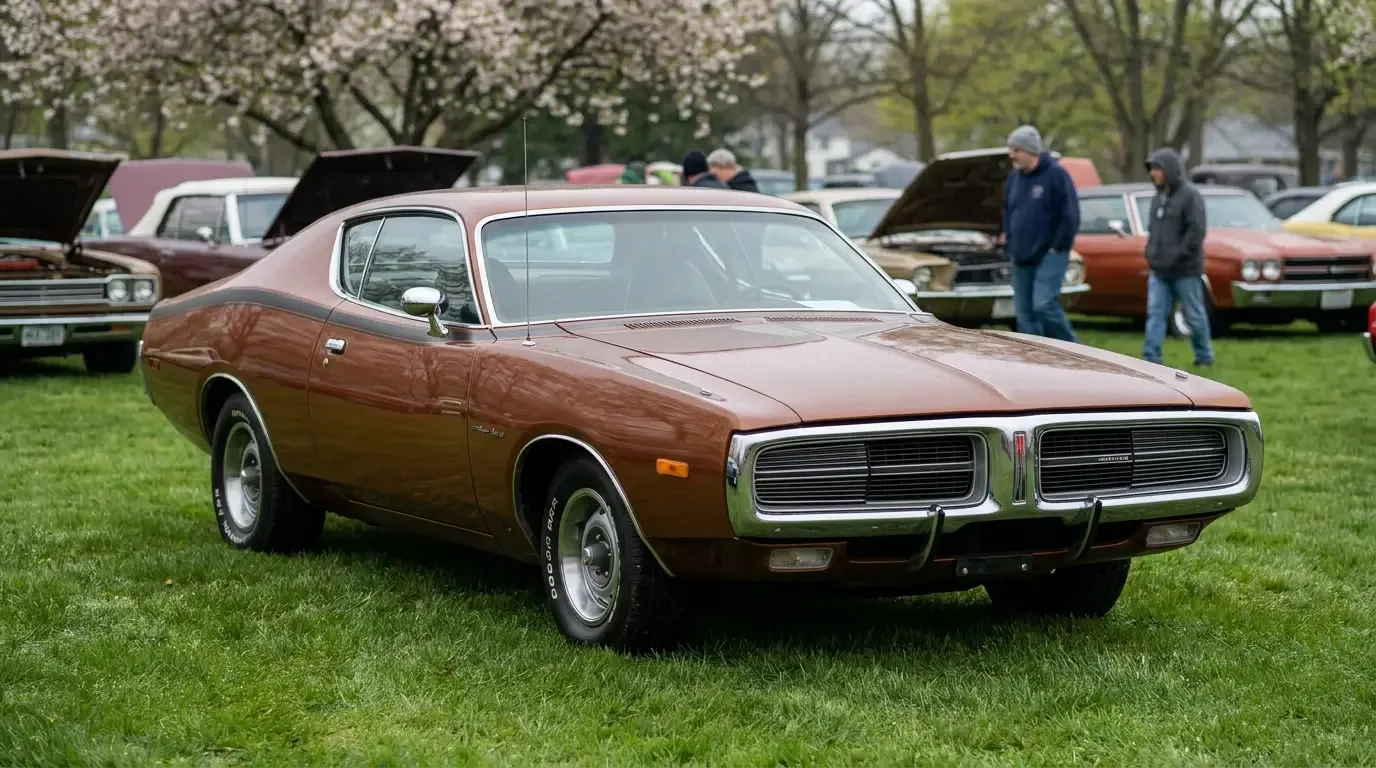
Dodge restyled the Charger on a fresh interpretation of the B-body for 1971, and the design language got a nickname that stuck: the fuselage look. The idea was to make the car resemble an aircraft body, rounded sides that tucked under, a single flowing surface from front fender to rear quarter, and glass that sat flush with the metal. Chrysler had already pushed the theme on its full-size cars. On the Charger it produced a semi-fastback roofline, a pronounced coke-bottle hip over the rear wheels, and hidden headlamps on the higher trims.
It was polarizing on day one and it still is. Stand next to a 1971 R/T and the car looks heavier than the 1970 it replaced, though the wheelbase actually shrank to 115 inches. The proportions play a trick on the eye. Where the earlier Charger was all crisp lines and razor edges, this one is muscle under a bathrobe, curved and a little imposing. Buyers who wanted the old sharpness were not sold. Buyers who wanted something that looked like nothing else on the boulevard were.
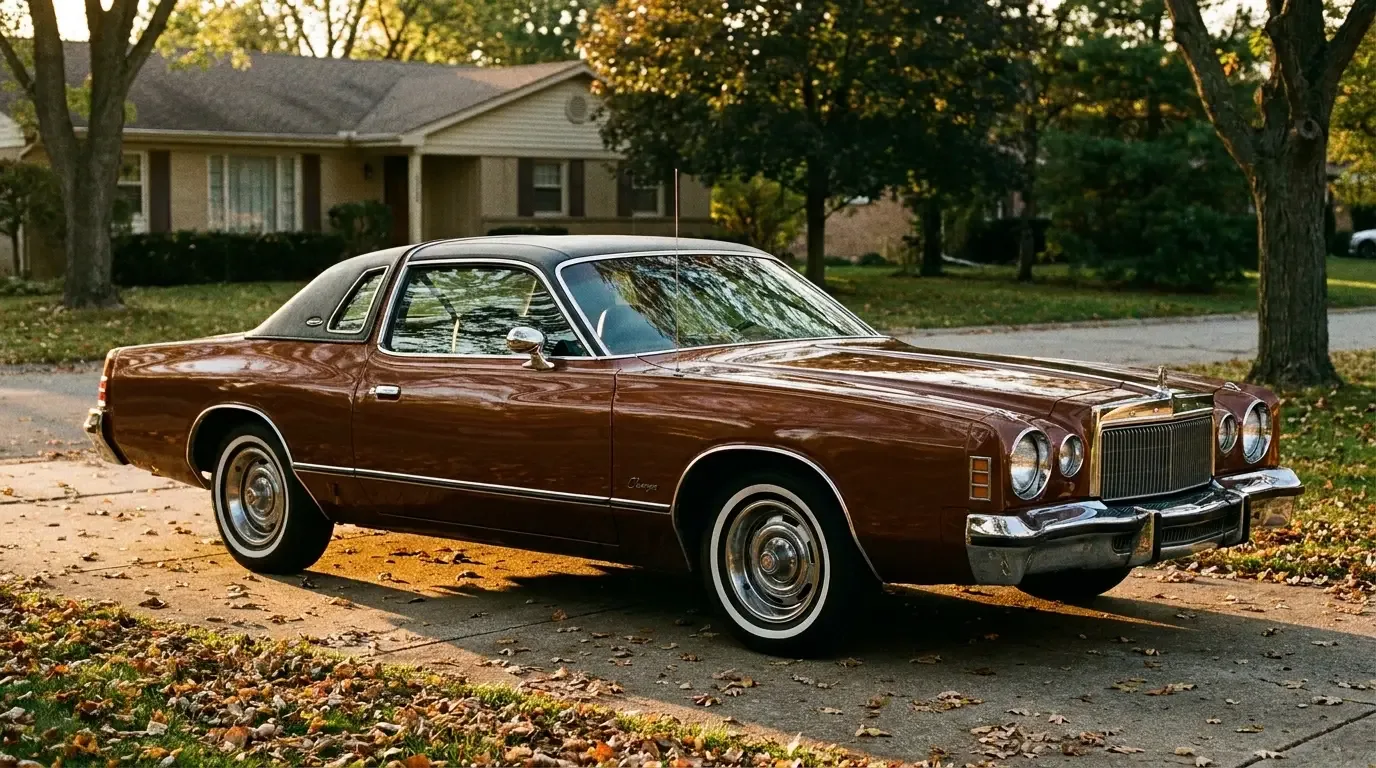
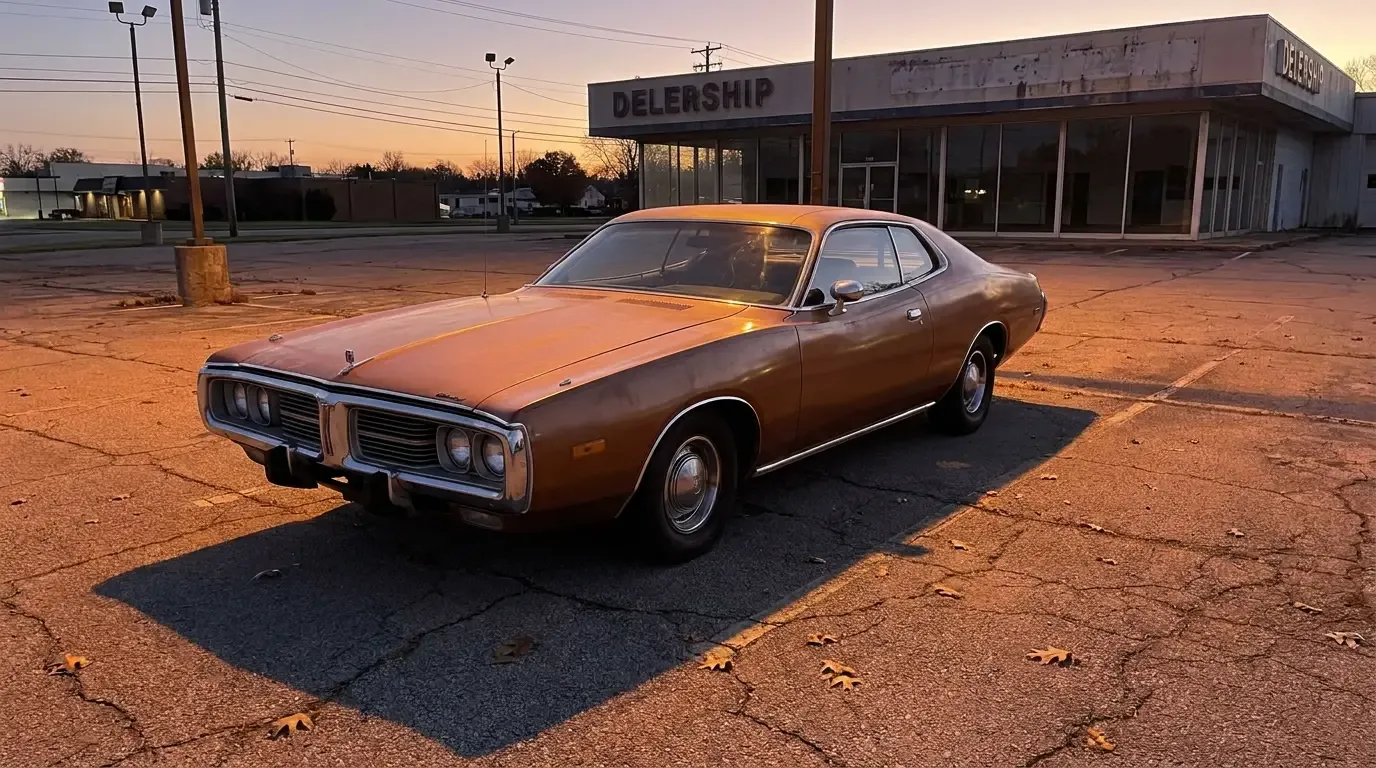
The 1971 cars are the purest expression of the design, with the split grille and the wide loop bumper. For 1972 the front end was revised, and over the following two years the Charger drifted steadily toward comfort and away from menace. If you are shopping, the year tells you a lot before you ever open the hood.
The engine lineup as the ceiling came down
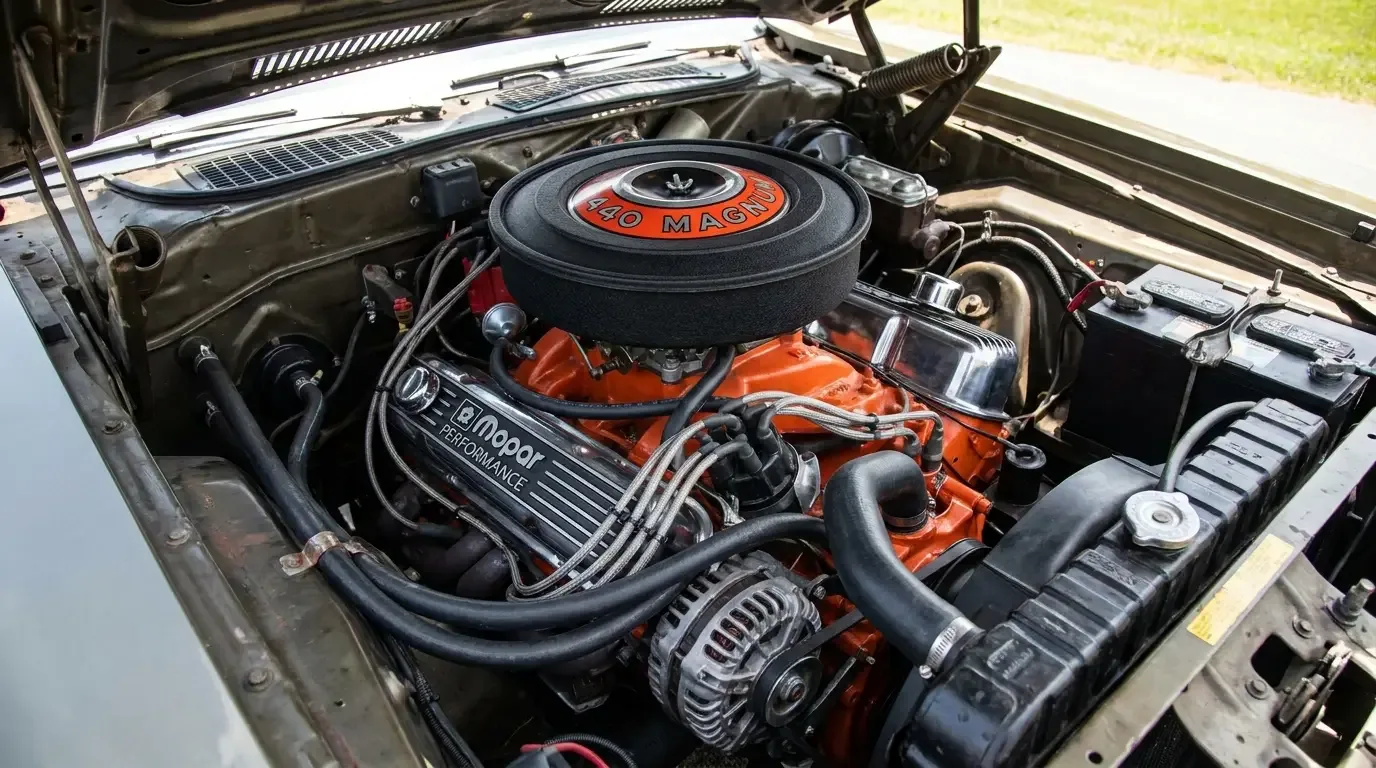
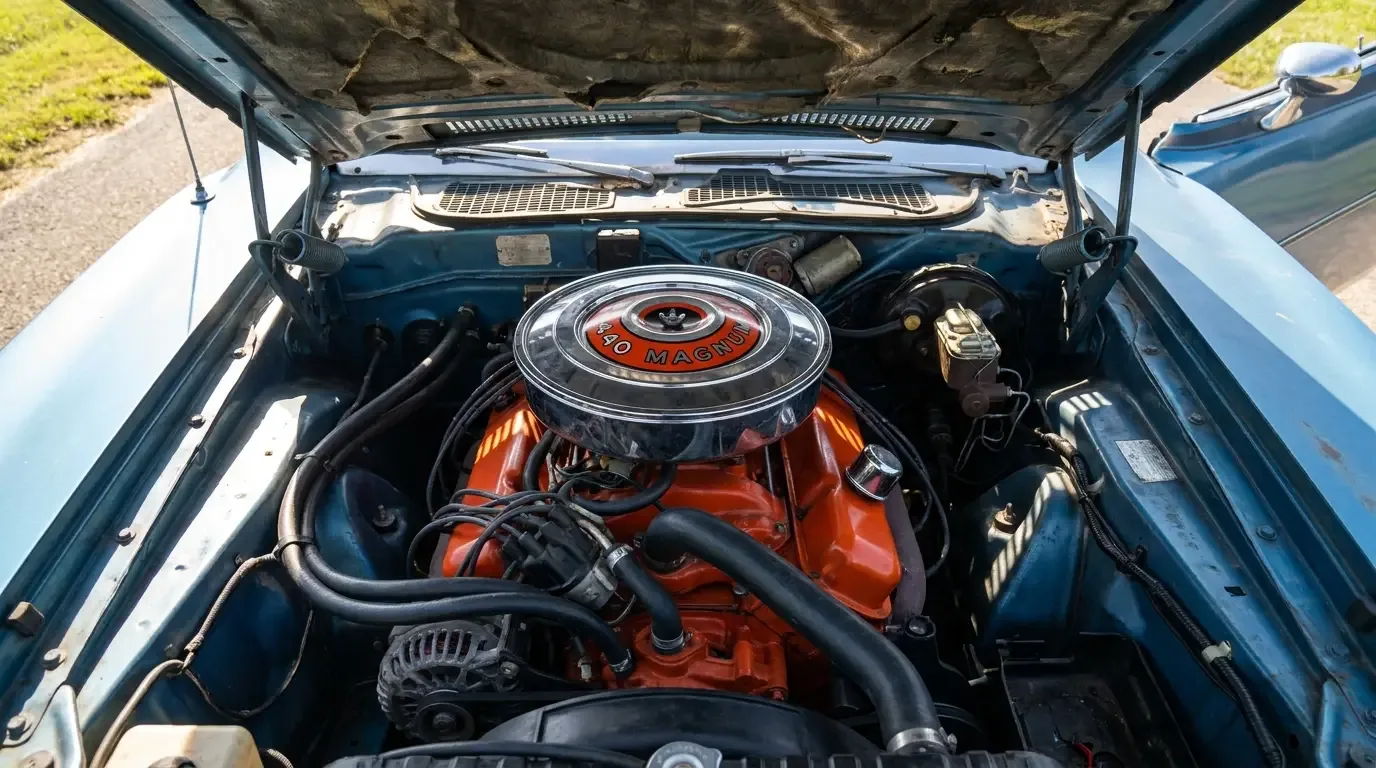
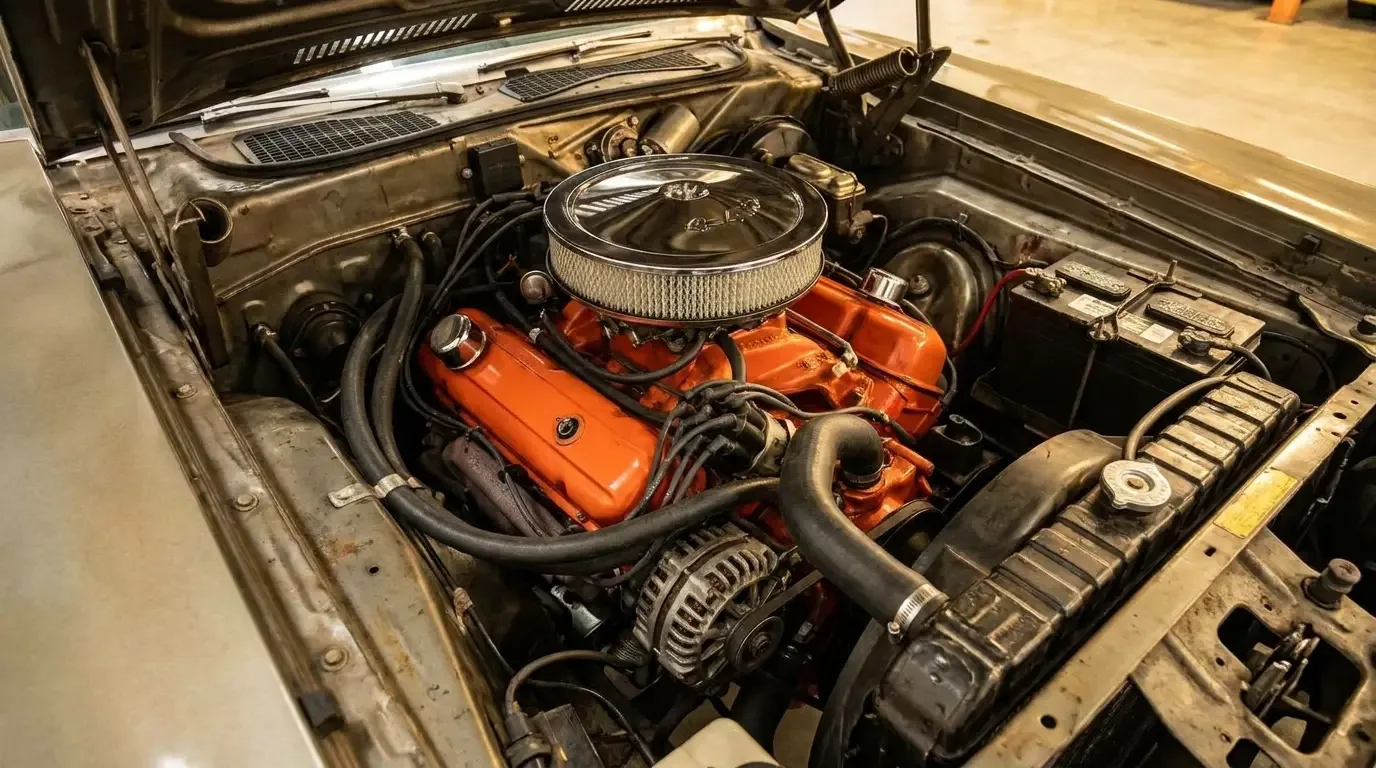
This is where the story turns, because the third-generation Charger lived through the single biggest change in how American cars advertised power. For 1971 you could still order the serious stuff. The 440 Magnum, the triple-two-barrel 440 Six Pack, and the 426 Hemi were all on the order form, at least early. The Hemi made a rated 425 hp gross and the 440 Six Pack was quoted at 385 hp gross, though production of the biggest engines was tiny and fell off fast.
Then came 1972, and two things happened at once. Chrysler dropped the Hemi and the Six Pack from the Charger catalog, and the whole industry switched from gross horsepower ratings to net ratings measured with the accessories attached. A 440 Magnum that read 370 hp gross in 1971 read 280 hp net in 1972. The engine had not been gutted overnight, but the number on the page collapsed, and to a buyer reading a brochure it looked like the muscle car had died in a single model year.
Compression ratios did come down for real, to run on lower-octane unleaded fuel as emissions rules tightened. By 1974 the top Charger engine was a 440 rated at 275 hp net, and the base cars ran the 318 and 360 small-blocks and the 225 slant-six on the cheapest trims. The car got no slower to sit in. It got a lot quieter on paper.
Super Bee, R/T, and the trims worth knowing
The performance branding shuffled during these years, and it matters for anyone chasing a specific car. The Super Bee, which had been its own Coronet-based model, moved onto the Charger body for 1971 as a Charger sub-model. So the 1971 Charger Super Bee is the only year that particular combination exists, which makes it a collector target out of proportion to how many were built.
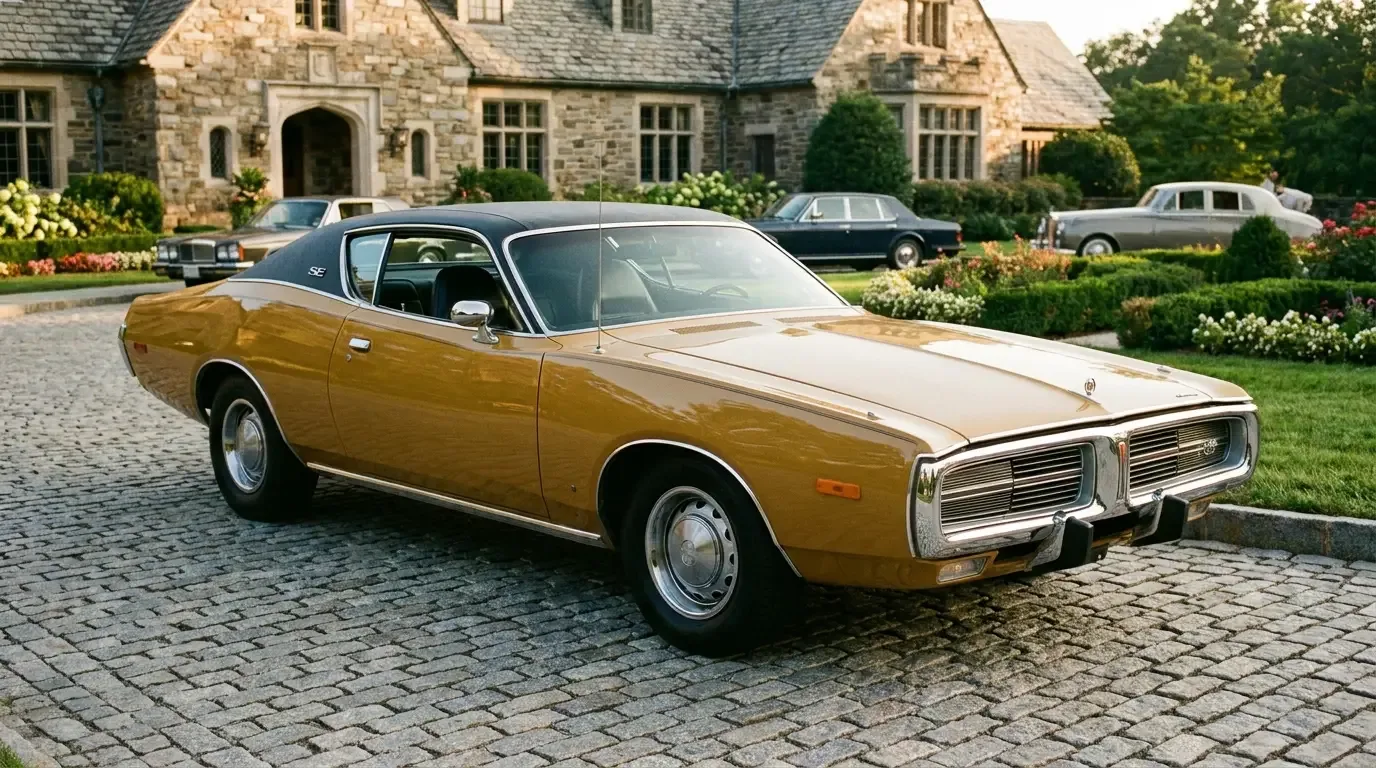
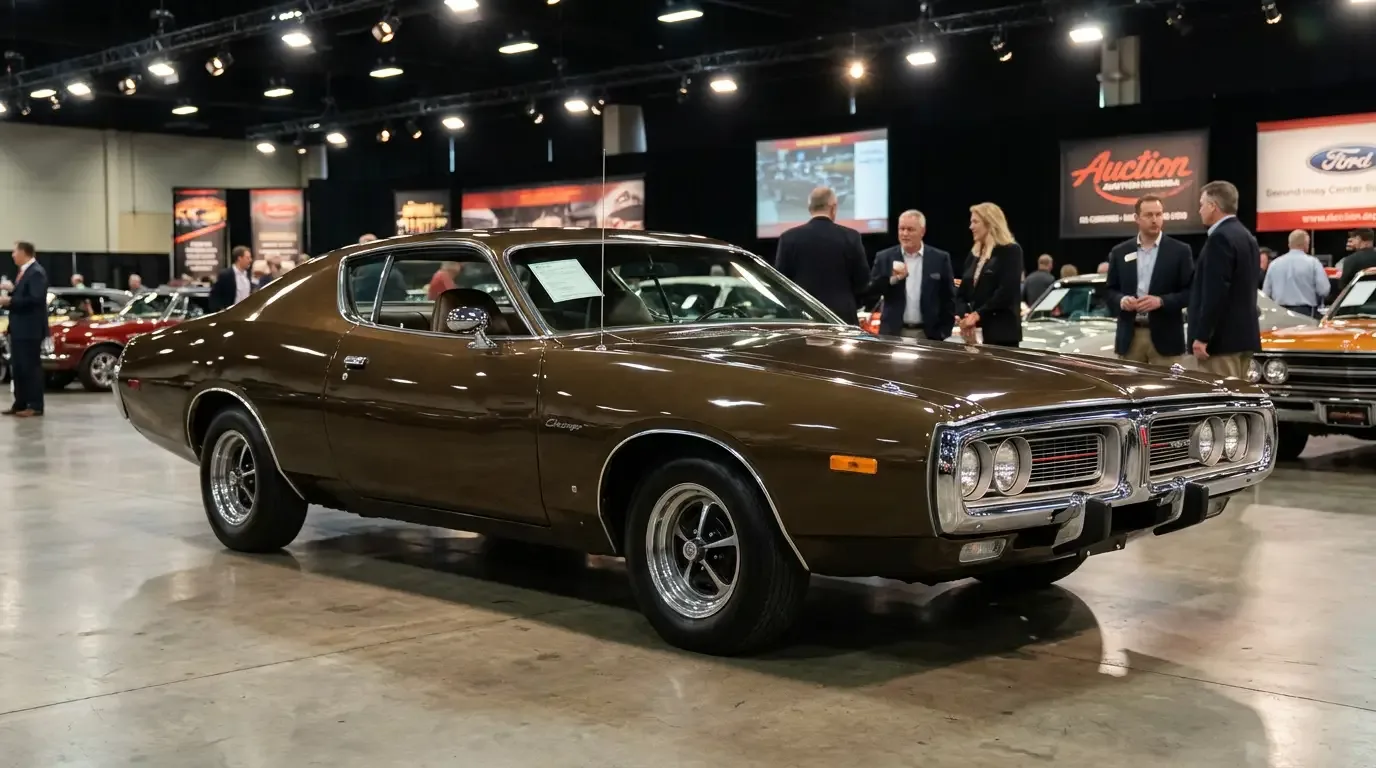
The R/T continued for 1971 as the top performance Charger, with the 440 standard and the Hemi optional. After 1971 the R/T name was dropped from the Charger line as the market for openly labeled muscle dried up. In its place the range leaned on the Charger SE, the Special Edition, which pointed the car toward the plush, hidden-headlamp, landau-roof direction it would fully commit to later. That drift is the beginning of the story told in the 1975 dodge charger generation, when the Charger stopped pretending to be a muscle car at all.
For 1971 there was also the base Charger, the Charger 500 as a mid-trim, and the SE. Sorting out which badge sat where in which year is half the work of buying one of these. The paperwork matters more here than on almost any other Mopar, because the visual differences between a loaded six-cylinder cruiser and a genuine big-block car can be small from ten feet away.
What these cars are like to live with
Drive a 440-powered 1971 or 1972 Charger and the character comes through immediately. It is a big, torque-rich, long-legged car that wants to move in a straight line and rumble while it does it. The fuselage body is heavy, and nobody bought one expecting it to change direction like a small car, but the low-end pull of a 440 makes the weight feel like ballast rather than a burden. On a two-lane road it is one of the more relaxing muscle-era cars to cover distance in.
The interiors of the SE cars in particular were genuinely comfortable for the period, with better seats and more sound deadening than the 1968 cars ever had. This is a car you can actually drive to the show rather than trailer, and a lot of owners do exactly that. The man in Pennsylvania drove his every year, water-pump failure outside Harrisburg included, and never saw a reason to stop.
"The 1971 Charger is the car that gets dismissed until you spend a weekend with one. Then the shape stops looking strange and starts looking like the last honest statement Dodge made before the whole muscle idea went quiet. It is not the poster car. It might be the more interesting one."
— Patrick Walsh
Values, survivors, and where the money sits
For a long time the 1971 to 1974 cars were the affordable way into a vintage Charger, and to some degree they still are. A driver-quality 318 or 360 car with honest paint and a clean floor can still be found for money that a 1969 R/T owner would laugh at. That is the entry point, and it is a real one. The catch is that the desirable cars have separated hard from the ordinary ones.
A documented 1971 Charger R/T with the 440, and especially a verified Six Pack or one of the very few Hemi cars, sits in a different universe of price. The 1971 Super Bee, being a one-year body-and-badge combination, carries a premium of its own. Everything below that, the SE cruisers and the small-block base cars, trades on condition and honesty rather than rarity. If you want to see what is actually changing hands and what people are asking, browsing current listings such as 1972 Dodge Chargers for sale gives you a truer read than any price guide.
Survivorship is the quiet issue. These cars were built at the end of the muscle boom, used hard, rusted in the usual Mopar places, and were rarely treasured the way the 1968 to 1970 cars were. Clean, unmolested examples are scarcer than the production numbers suggest, and rougher than they look at first glance.
| Spec | Detail (1971-1974 Charger) |
|---|---|
| Body style | Two-door hardtop, semi-fastback, B-body |
| Wheelbase | 115 in |
| Design nickname | Fuselage look |
| Top 1971 engine | 426 Hemi, 425 hp gross |
| Top 1974 engine | 440, 275 hp net |
| Base engines | 225 slant-six, 318 and 360 V8s |
| Key performance trims | R/T (1971), Super Bee (1971), SE |
| Big change for 1972 | Hemi and Six Pack dropped; net hp ratings adopted |
Buying one in 2026
The mistake buyers make with these cars is reading them like the earlier Chargers, chasing a number on a fender badge instead of looking at the metal and the paperwork. Rust is the real enemy, in the trunk floor, the rear frame rails, the lower quarters, and around the rear window where the flush glass traps water. A 440 that reads strong on the test drive is worth far less in a car that has been welded back together badly underneath.
Match the numbers if you are paying muscle-car money, and be honest about trim if you are not. A well-sorted 360 SE that drives beautifully is a better car to own than a tired big-block project with a famous engine code and a bent floor. Buy the condition first and the badge second, and the third-generation Charger rewards you with something few of its more famous siblings offer: a genuine muscle-era Mopar you can still afford to enjoy.
Sources and notes
- Muscle Car Facts - 1971 Charger - confirmed the 1971 engine chart: 440 Magnum 370 hp, 440 Six Pack 385 hp, 426 Hemi 425 hp gross.
- 71 Super Bee - 1971 Charger R/T & Super Bee specifications - confirmed the 426 Hemi 425 hp and 440 Six Pack 385 hp gross ratings and the 115-inch wheelbase.
- Silodrome - 1971 Charger R/T 440 Six Pack - confirmed the 440 Six Pack rating and the rarity of 1971 R/T Six Pack and Hemi cars.
- Automobile-Catalog - 1972 Charger SE 440 - confirmed the 1972 switch to SAE net and the 280 hp net figure for the 440.
- Automobile-Catalog - 1974 Charger SE 440 - confirmed the 1974 top engine, a 440 rated 275 hp net.
- Dodge Garage - Hemi Charger R/T for 1971 - confirmed the 426 Hemi as the top 1971 option and its removal from the catalog after 1971.