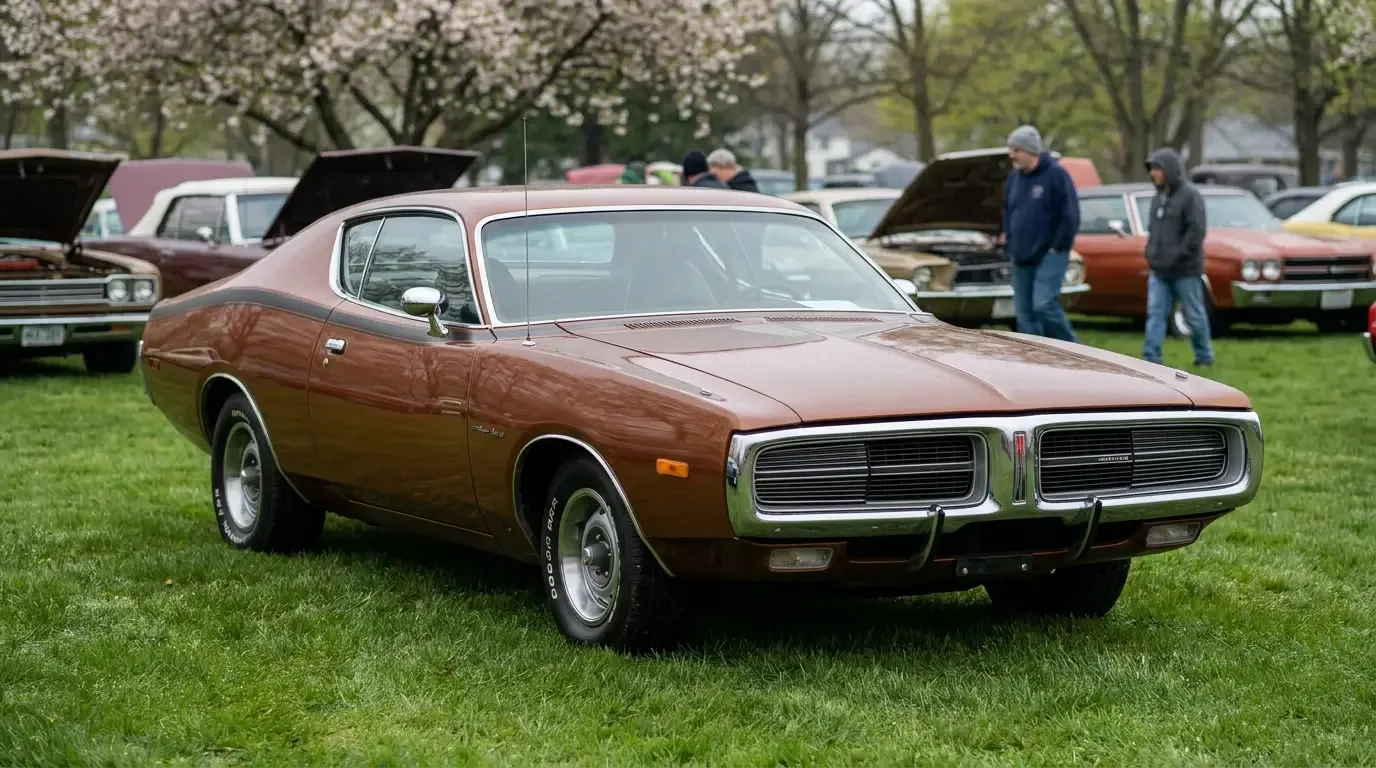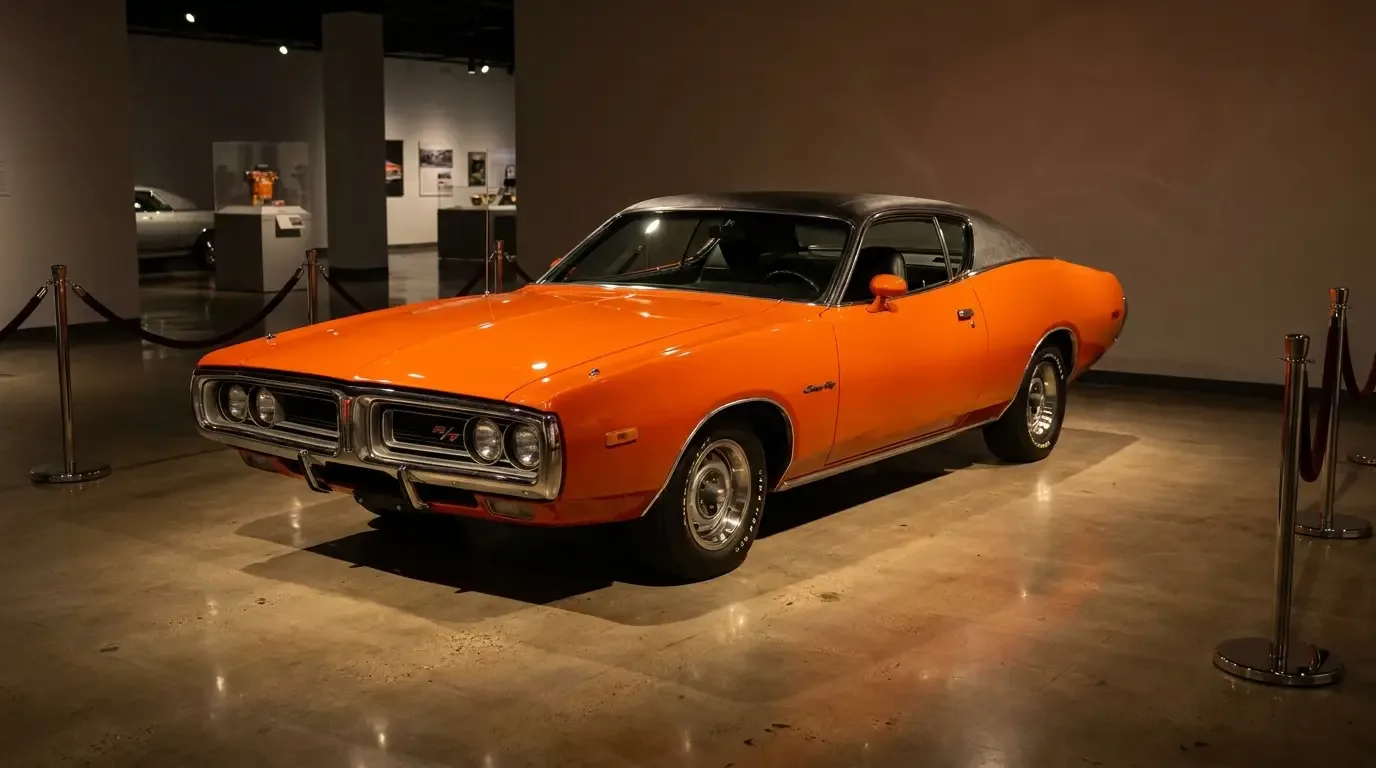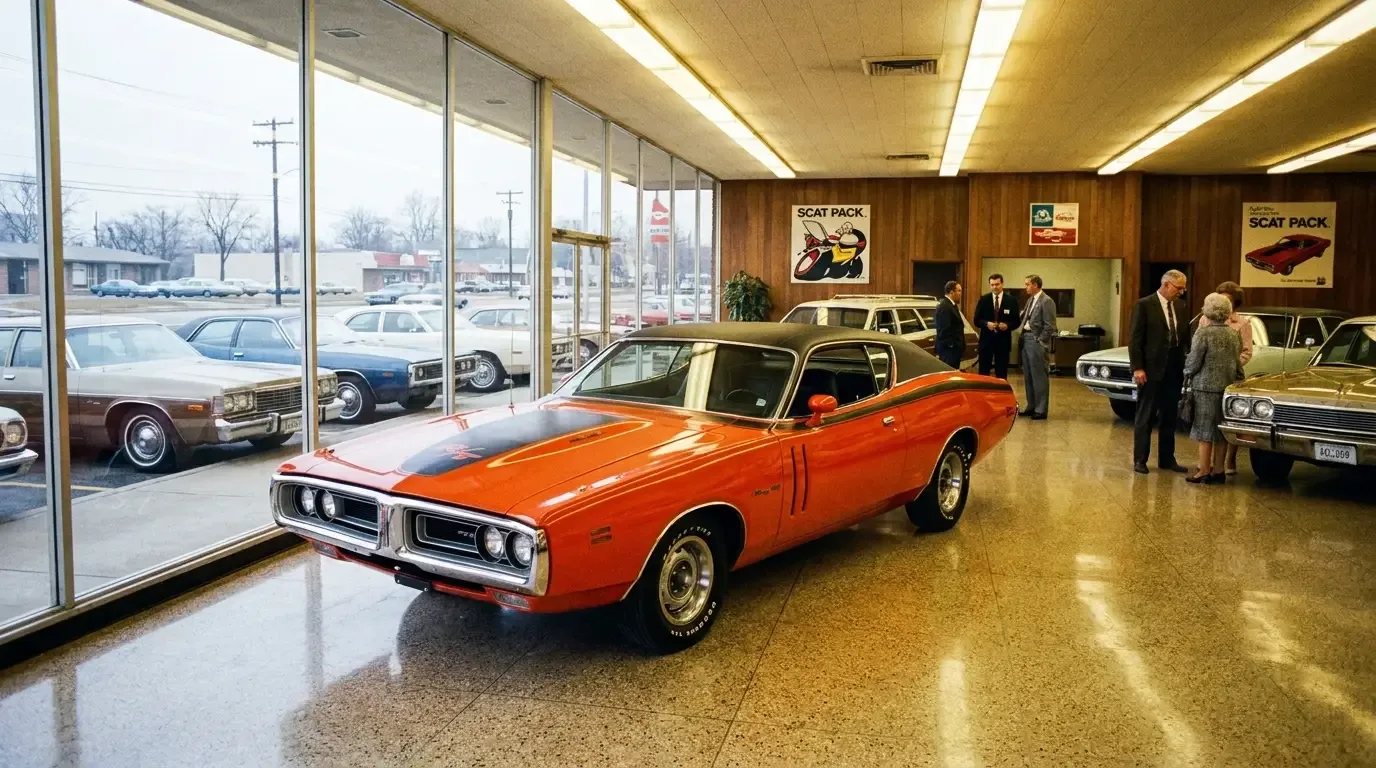
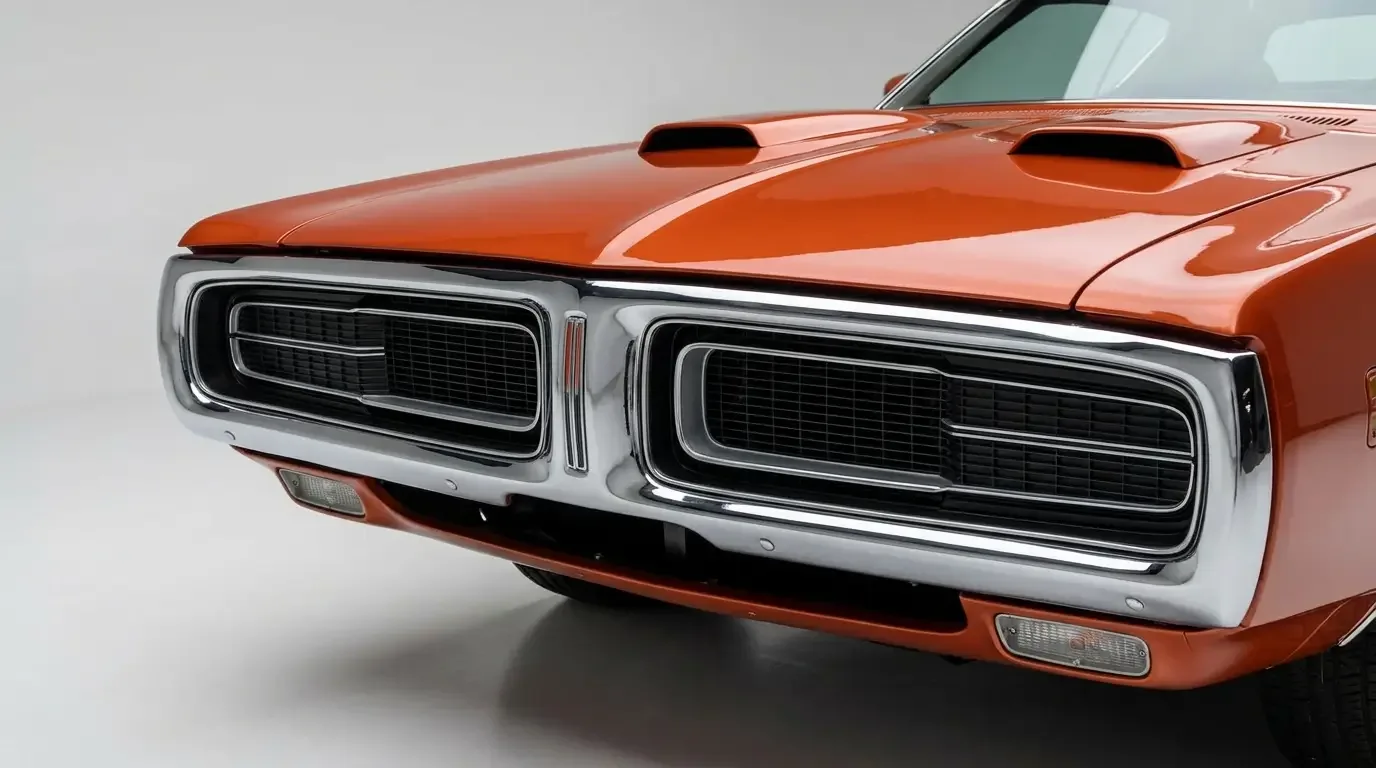
Ask ten people to describe a 1971 Charger's face and most of them will mention the split grille before anything else. Two separate loop-shaped openings, a divider running down the center of the nose, and a shape that reads more aggressive than the single wide grille Dodge used on the outgoing car. It's the single detail that tells you which model year you're looking at from thirty feet away, and I've caught plenty of sellers who didn't know it well enough to describe their own car accurately.
What the split grille actually looks like across the trims
The base Charger and Charger 500 shared the split grille with body-color surrounds and simple trim. The R/T and Super Bee versions picked up a blacked-out treatment on some cars, along with different surround chrome depending on options ordered. The Charger SE, the luxury trim, kept the same basic grille shape but paired it with different lower valance trim and its own formal roofline up top, which is a separate story I've covered in more detail elsewhere on the site.
What trips people up is assuming the grille shape changed dramatically year to year through the fuselage era. It didn't, not structurally. The core split-loop design carried through the 1971 to 1974 run with variations in surround trim, turn signal placement, and color treatment, but the basic architecture stayed the same. If someone's trying to sell you a "rare one-year-only grille casting," ask for documentation before you believe it.
Why this styling detail matters for buyers
The grille surround and its condition tell you a lot about a car before you even open the hood. Original chrome surrounds oxidize and pit over fifty years, and reproduction pieces exist but the fit isn't always perfect against original sheet metal. I've seen cars with aftermarket grille surrounds that don't sit flush, and it's usually the first sign that other trim on the car has been replaced with parts-store substitutes rather than correct originals.
Check the divider bar down the center of the grille closely. It's a stress point, and cars that have taken a front-end hit, even a minor parking lot bump, often show a slightly bent or misaligned divider that a quick glance misses. Stand directly in front of the car and sight down the center line. If the two grille halves don't look symmetrical, something's off.
"The paint looks right at fifteen feet. Under the hood there's a rebuilt carb on an engine that hasn't seen fresh oil in two years. Here's what to actually look at."
— Mike Sullivan
The semi-fastback roofline that goes with it
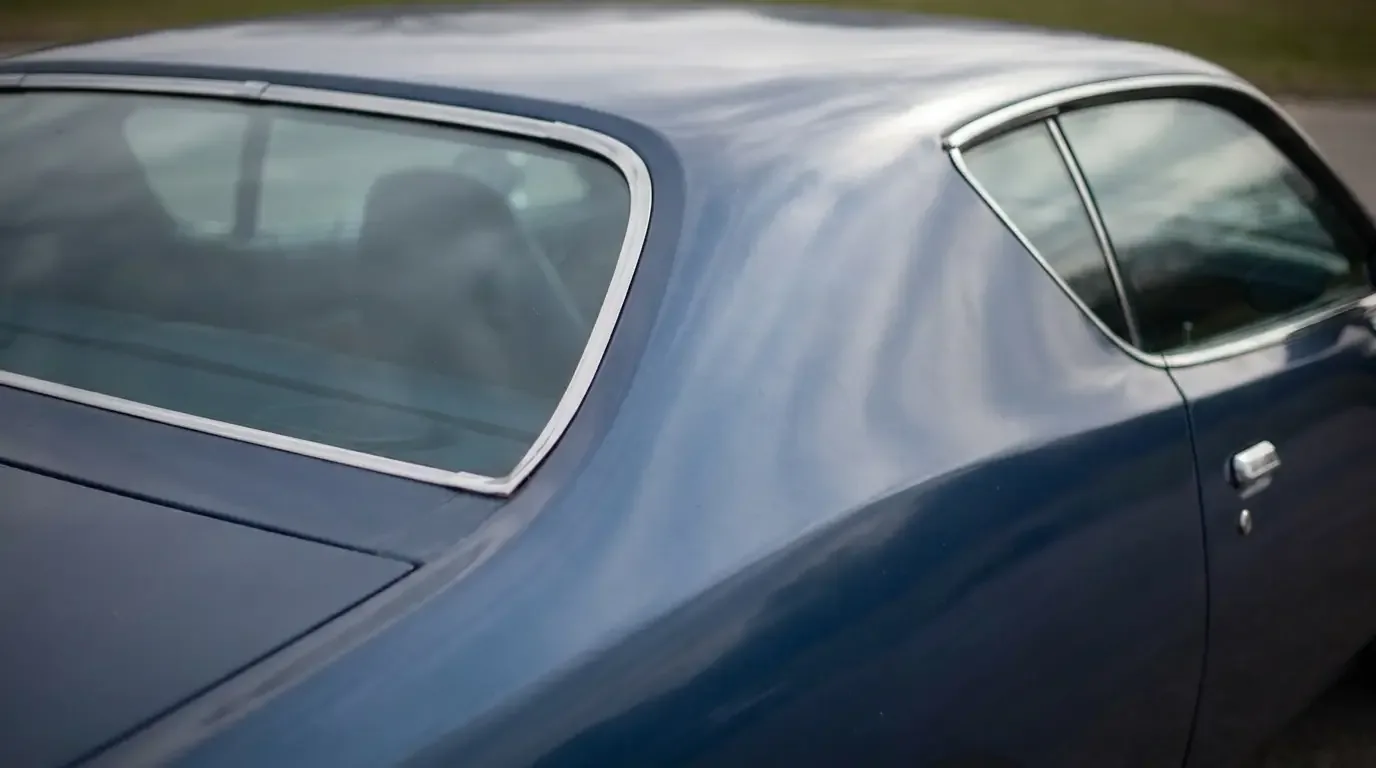
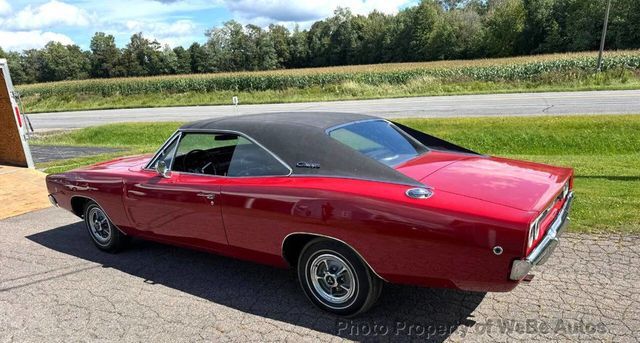
The grille doesn't work alone. It's paired with a semi-fastback roofline on the standard and R/T bodies, a low, tunneled rear window that gives the car its aggressive profile from the side. This is different from the SE's formal roof, which uses a more upright rear window and a smaller greenhouse overall. Buyers sometimes confuse the two, especially in older photos or faded listings, and end up disappointed when the car they show up to see isn't the fastback shape they pictured.
The semi-fastback glass is also a specific part to source if it's ever cracked or needs replacement. It's not interchangeable with the SE's rear glass, and NOS or good used pieces aren't as common as you'd hope for a car this popular. Check the rear window seal and glass condition closely before you buy, because replacing it correctly isn't a cheap or quick fix.
| Trim | Grille Treatment | Roofline |
|---|---|---|
| Charger / Charger 500 | Split grille, body-color surround | Semi-fastback |
| Charger R/T | Split grille, blacked-out available | Semi-fastback |
| Charger SE | Split grille, unique lower valance | Formal roof, upright glass |
How this fits the bigger picture
The split grille and the roofline it sits under are part of the larger fuselage redesign Dodge rolled out for 1971. If you want the full context on why Dodge went this direction and how radical the change was compared to the prior generation, read more here. It ties directly into the market pressures that eventually killed the muscle car versions of this body altogether, a topic I'd point you toward in the Why Charger Discontinued Muscle story if you want to understand where this design ultimately led.
Reproduction parts and what to expect
The good news for anyone restoring one of these is that reproduction grille surrounds and headlight door assemblies are available from a handful of Mopar-focused suppliers, since the 1971 Charger remains popular enough to justify the tooling costs. The bad news is fit and finish vary between suppliers, and I've seen reproduction pieces that need trimming or shimming to sit correctly against original sheet metal. Buy from a supplier with a track record specific to this model year, not a generic muscle car parts catalog that lists the part without much detail.
Original NOS grille surrounds do turn up occasionally at swap meets and in online listings, and they command a real premium over reproduction pieces, sometimes several times the price. Whether that premium is worth paying depends on how much originality matters for your specific build. A driver-quality car benefits less from NOS trim than a numbers-matching restoration aiming for judged shows, where original stampings and casting marks get scrutinized closely.
A face that still holds up
Fifty-some years on, the split grille still does its job. It gives the car a distinct identity that separates it instantly from every other B-body Dodge and Plymouth built on the same platform. That's not a small accomplishment for a piece of stamped sheet metal and some chrome trim, and it's a big part of why this specific model year still commands attention at car shows where a dozen other Mopars are parked in the same row.
I've watched people walk past a row of Coronets and Satellites without a second glance and then stop dead in front of a 1971 Charger specifically because of that grille. Whatever else changed on this body over the years, Dodge got the face right the first time, and every version of it since has been a variation on that original theme rather than an improvement over it.
Sources and notes
- Wikipedia - Dodge Charger (B-body) - confirmed the 1971 split grille, hidden-headlight option, and semi-fastback roofline.
- autoevolution - 1971 Dodge Charger - confirmed the dual-loop grille and trim-level front-end differences.
- Conceptcarz - 1971 Dodge Charger - confirmed the SE formal roof versus standard semi-fastback body distinction.
- Indie Auto - 1971-74 Charger design analysis - background on how the grille carried through the fuselage run with minor changes.
- Classics on Autotrader - Charger guide - context on how the 1971 face differed from earlier Chargers.