
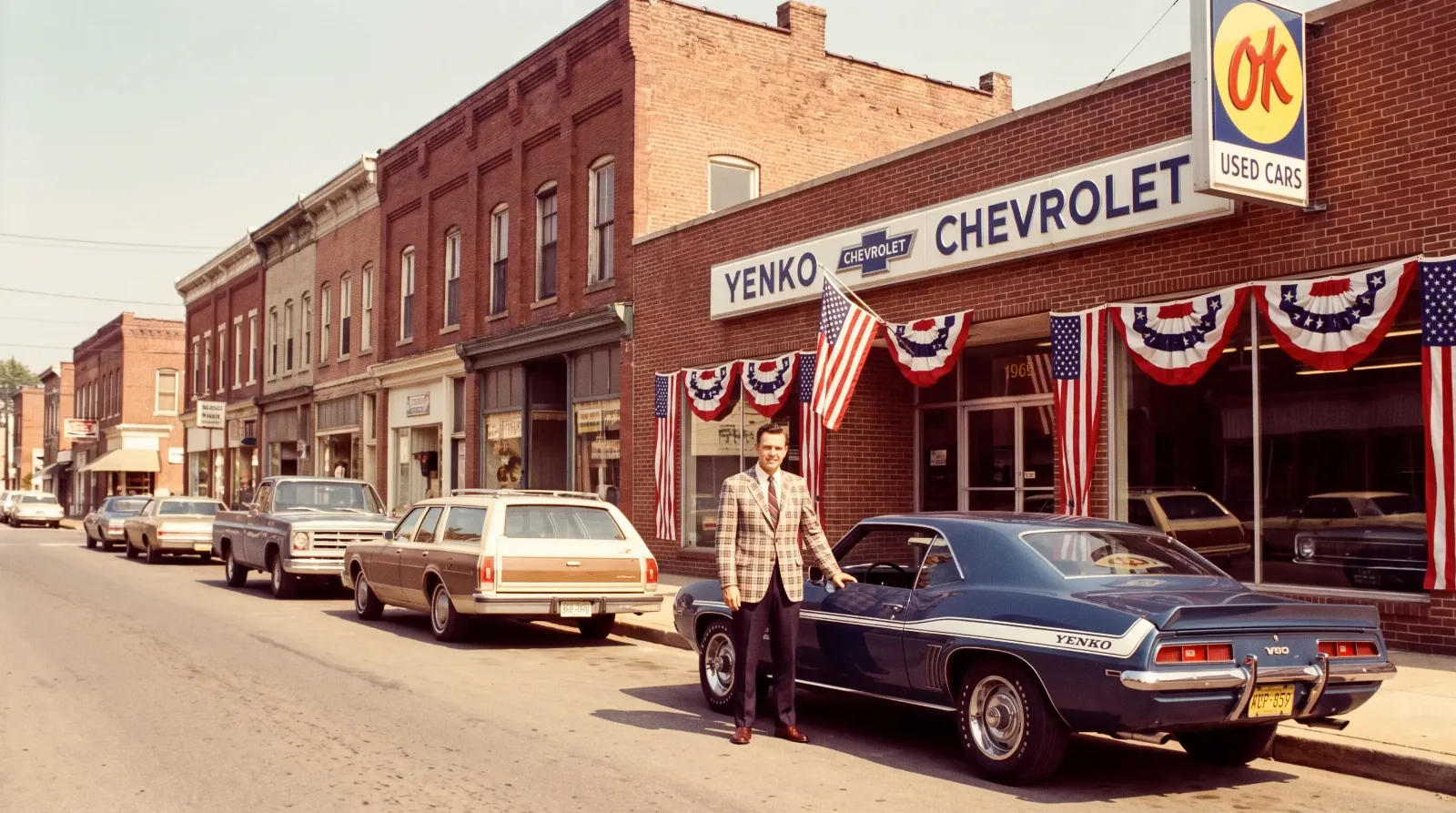
Don Yenko sold Chevrolets in Canonsburg, Pennsylvania, and by 1969 he had a problem that was actually an opportunity. Chevrolet would not put the 427 big block in a Nova on the regular order sheet, not through the Central Office Production Order system and not through any other channel. The compact platform was rated for the 396, full stop. Unlike his Camaros, which Chevrolet built at the factory with an L72 427 under COPO 9561, Yenko had no factory-order path open for the Nova. So he built the car himself, out of his own shop, and the 1969 Yenko Nova 427 is the result. Only 37 to 38 of these dealer-converted cars were built, making it rarer than the COPO Camaro most collectors know by name.
Car Features
6 min read
The 1969 Yenko Nova 427
How Don Yenko used the COPO order system to drop a 427 into a Nova, and why so few of these cars exist for collectors to chase today.
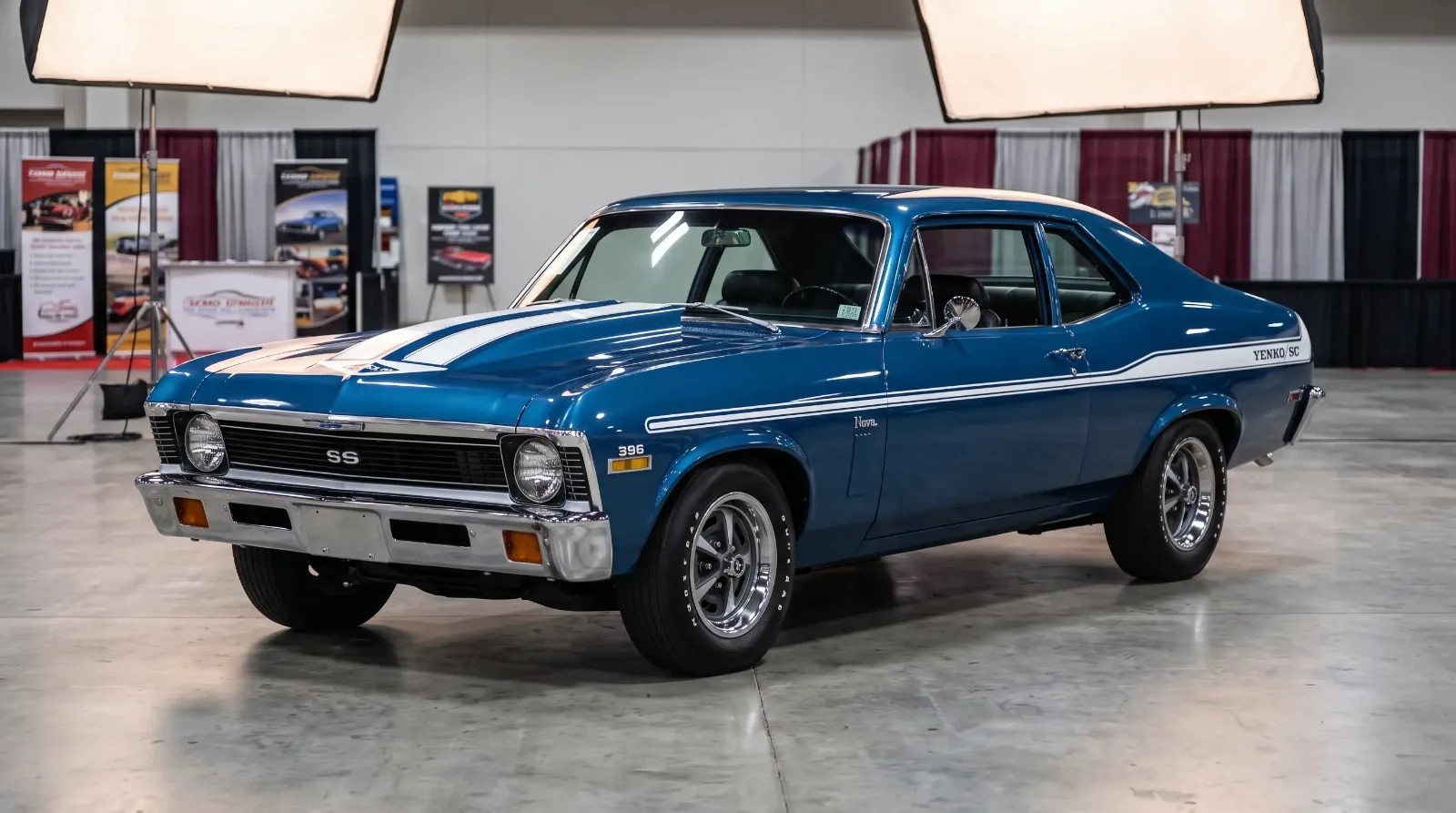
How Yenko put a 427 in a Nova
The path ran through the SS396 Nova, not a special factory order. Yenko ordered his stock as regular-production SS396 Novas, cars that already carried the reinforced front frame rails, 12-bolt rear axle, and Muncie four-speed or Turbo 400 automatic that a 396 installation needed. Once the cars reached Canonsburg, Yenko's shop pulled the 396 and installed an L72 427, the same solid-lifter big block that powered the Corvette L71 and the COPO Camaro, rated at 425 hp and backed by considerably more real-world torque than the number on paper suggests. Because Chevrolet never touched the engine swap, there was no factory badge, build-sheet notation, or COPO order tying the finished car to its 427 power. A Yenko Nova 427 left the factory looking almost exactly like the SS396 it started as, with none of the exterior cues that would tell a bystander what was actually under the hood until Yenko's own shop added them.
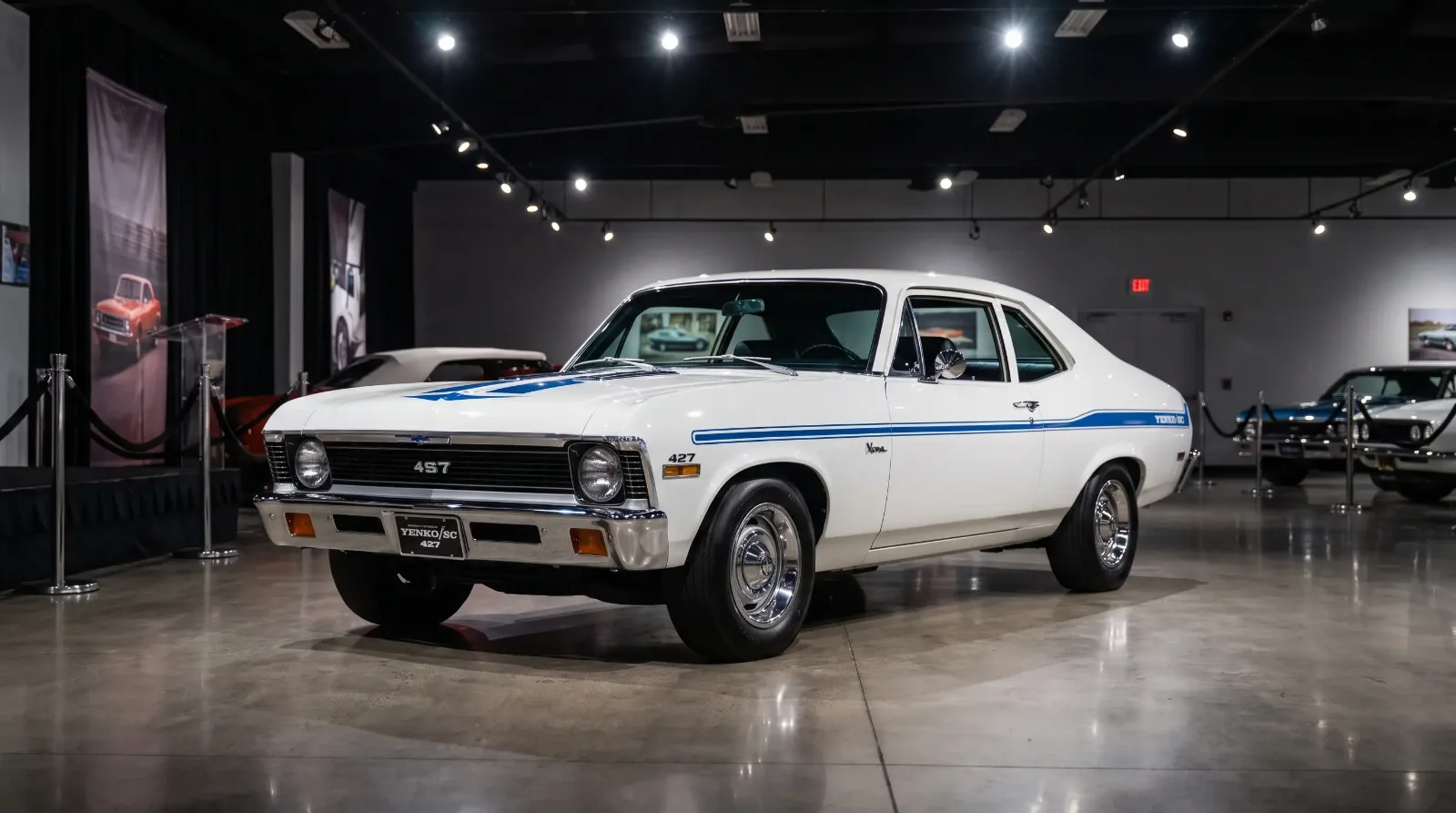
Yenko's shop finished the job with the Stinger graphics package, a functional cowl induction hood, styled wheels, and a set of badges that told the truth about the engine. Cars that went through Yenko Sportscar Inc. carried a warranty supplement and a level of dealer prep that a smaller shop's aftermarket 427 swap did not get. The result is that "Yenko Nova 427" describes a specific, documented dealer conversion, a distinction that matters enormously when a car comes up for sale today, since nothing in Chevrolet's own paperwork separates a genuine Yenko car from a well-done aftermarket 427 swap performed by someone else. For a look at the one true factory-authorized big block Nova program by comparison, another angle covers a different car built through a different dealership a year earlier, and the super-car Novas covers the dealer conversions Yenko built across these years.
Why so few were built
Production numbers on this car have been debated by Nova researchers for decades, and the honest answer is that nobody has a single factory document that settles the argument cleanly, because Chevrolet's own paperwork only ever recorded these cars as ordinary SS396 Novas. Since Yenko performed the conversion himself rather than through any factory order, the only records that exist come from his own dealership's books. The figure most consistently cited by the Yenko Sportscar Club and period researchers is 37 cars built in 1969, with some accounts putting the number at 38, and fewer than 10 are believed to survive today. Whatever the precise figure, this was never a car built for volume. A compact car with a 427 swapped into its engine bay by a single dealership was always going to stay a rarity rather than a product line.
That scarcity is the whole reason this car commands the attention it does today. A production run this thin means every surviving example carries a documentation burden that a more common muscle car does not. Buyers are not just checking whether the engine is original. They are checking whether the car was ever a genuine Yenko-converted 427 Nova at all.
What the numbers tell buyers today
I look at these cars the way I look at any thin-production muscle car: through the auction record, not through nostalgia. Verified Yenko Nova 427 sales are infrequent enough that each one moves the reference points for the next, and the market has already shown how far a fully documented example can run. A numbers-matching 1969 Yenko Nova 427, restored with its correct M21 four-speed and period Yenko/SC stripes, sold for $852,500 at Mecum's Kissimmee auction in January 2026, a record for the model that more than doubled the previous benchmark of $418,000 set in 2015. Cars with strong Yenko-specific documentation, meaning invoices or period photographs tying the vehicle to the Canonsburg dealership, have consistently brought a premium over 427-swapped Novas that lack that paper trail, even when the mechanical specification is identical. That premium is not sentiment. It is liquidity. A buyer with deep pockets wants to know that when they eventually sell, the next buyer will accept the same story without a fight.
The spread between a well-documented example and a car with gaps in its history is wide enough that it changes the conversation from "is this a good car" to "is this the car it claims to be." That is the question that should come before any number gets discussed.
"With a production run this small, the paperwork is worth more than the paint. I've watched two nearly identical Yenko Novas sell eighteen months apart for very different money, and the only real difference between them was which one had a Yenko invoice in the folder."
David Mercer
Where this car sits next to its siblings
The 1969 Yenko Nova 427 does not exist in isolation. It shares a family tree with the 1968 COPO 9738 Nova and the small-block Yenko Deuce that followed it in 1970, and collectors who focus on one usually end up learning the others just to keep the timeline straight. Looking at another angle on the 1968 factory COPO Nova program fills in details that the 427 story alone does not cover, particularly around how Chevrolet built one true factory-authorized big block Nova through a dealer order code while Yenko's later car took an entirely different, dealer-swapped route to the same idea. For a buyer trying to place a specific car in this family, that context is not optional reading. It is often the difference between a confident bid and an expensive guess.
| Spec | 1969 Yenko Nova 427 |
|---|---|
| Engine | 427 cu in L72 V8, solid lifter |
| Horsepower | 425 hp (factory L72 rating) |
| Transmission | Muncie 4-speed or Turbo 400 automatic |
| Rear axle | 12-bolt, heavy duty |
| Build type | Dealer conversion, Yenko Sportscar Inc. |
| Estimated production | 37-38 built; fewer than 10 known to survive |
Buyers actively shopping in this segment should expect to wait, since a documented car in this tier rarely sits on the open market for long once its paper trail checks out.
Sources and notes
Related Reading
Have a
Chevrolet Nova
for Sale?
Reach thousands of serious classic car collectors across the US.
Sell It Here →
Are You a Classic Car Dealer?
List your full inventory and connect with targeted classic car buyers.
Join as a Dealer →

About the author
David Mercer
Classic car market analyst with two decades of experience tracking collector car valuations, auction results, and investment trends.
Related Listings - Chevrolet Nova
Comments
Be the first to comment on this article.