
Ask ten people at a car show what a "Yenko Nova" is and you will get ten slightly different answers, and most of them will use the words Yenko and COPO like they describe the same car. They do not. The COPO Nova and the Yenko Nova are two different cars from two different model years, built two different ways, and mixing them up is exactly how a buyer ends up paying a premium for the wrong story.
Car Features
7 min read
Yenko vs COPO: What's the Difference
COPO and Yenko get used interchangeably by sellers, but one is a factory order code and the other is a dealer's name. Here is how to tell the difference and why it matters to the price.
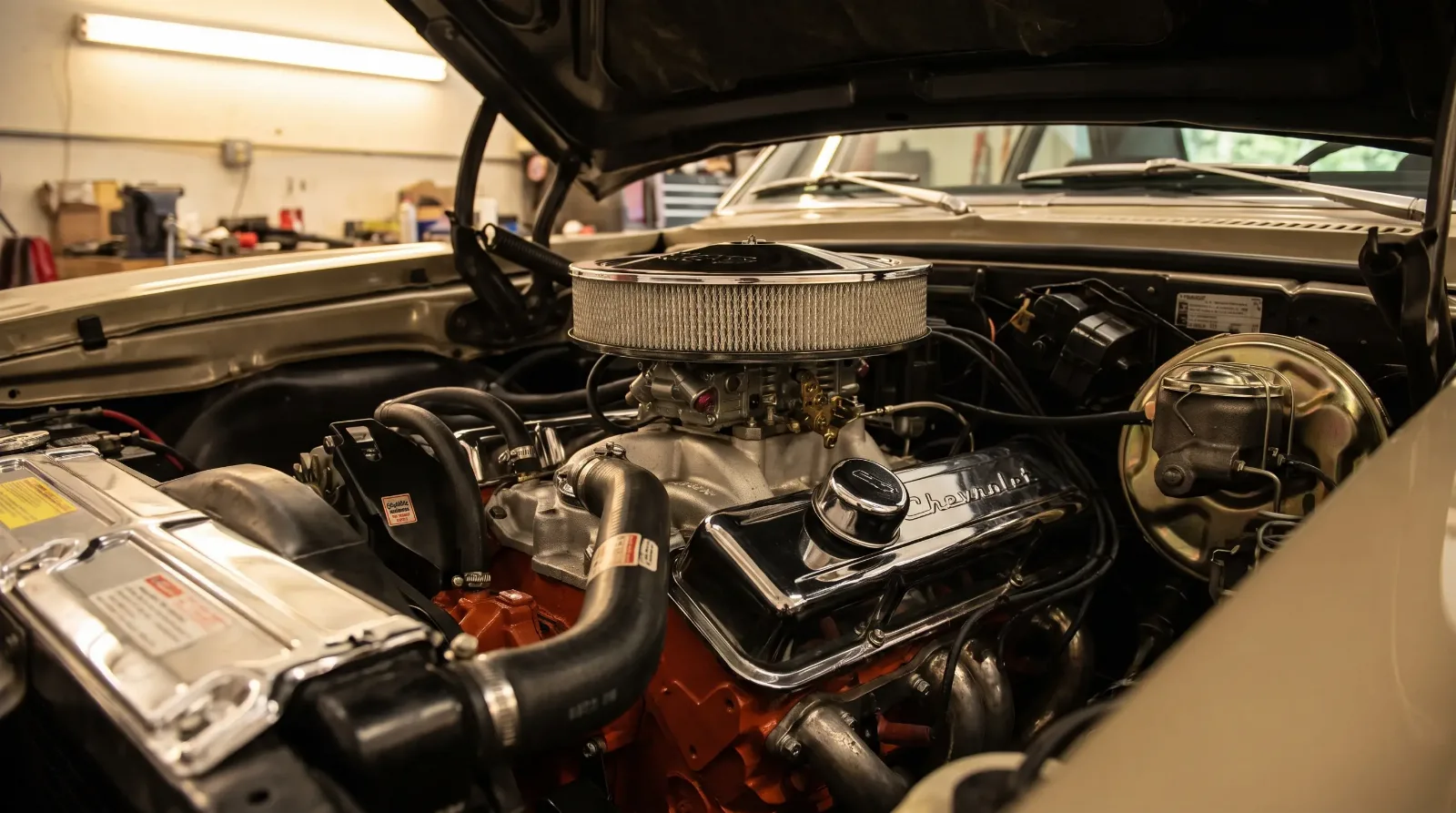
What COPO actually was
Central Office Production Order, COPO for short, was not a performance program. It was an internal General Motors paperwork system built to let dealers and fleet buyers special-order combinations that did not exist on the regular build sheet, things like specific paint for a taxi fleet or a heavy-duty package for a municipal truck order. It had nothing to do with muscle cars by design. Chevrolet's corporate policy at the time also kept big-block engines off the Nova's regular option sheet, and unlike the Camaro and Chevelle, the Nova was never given a factory COPO route to the 427.
The one factory COPO order the Nova did get came in 1968, not 1969, and it was not a 427 at all. Dealer Fred Gibb, working with Chevrolet engineer Vince Piggins, ordered fifty Novas under COPO 9738, each built with the L78 396 rated at 375 horsepower and paired exclusively with a Turbo Hydra-Matic 400 automatic, a combination aimed squarely at NHRA's Stock and Super Stock automatic classes. Those fifty cars were sold through Dick Harrell's Performance Center in Kansas City, and roughly a dozen documented examples are known to survive today. That is the real "COPO Nova": a factory-built car with its own production order number and no Yenko involvement in the original build.
Where Yenko enters the picture
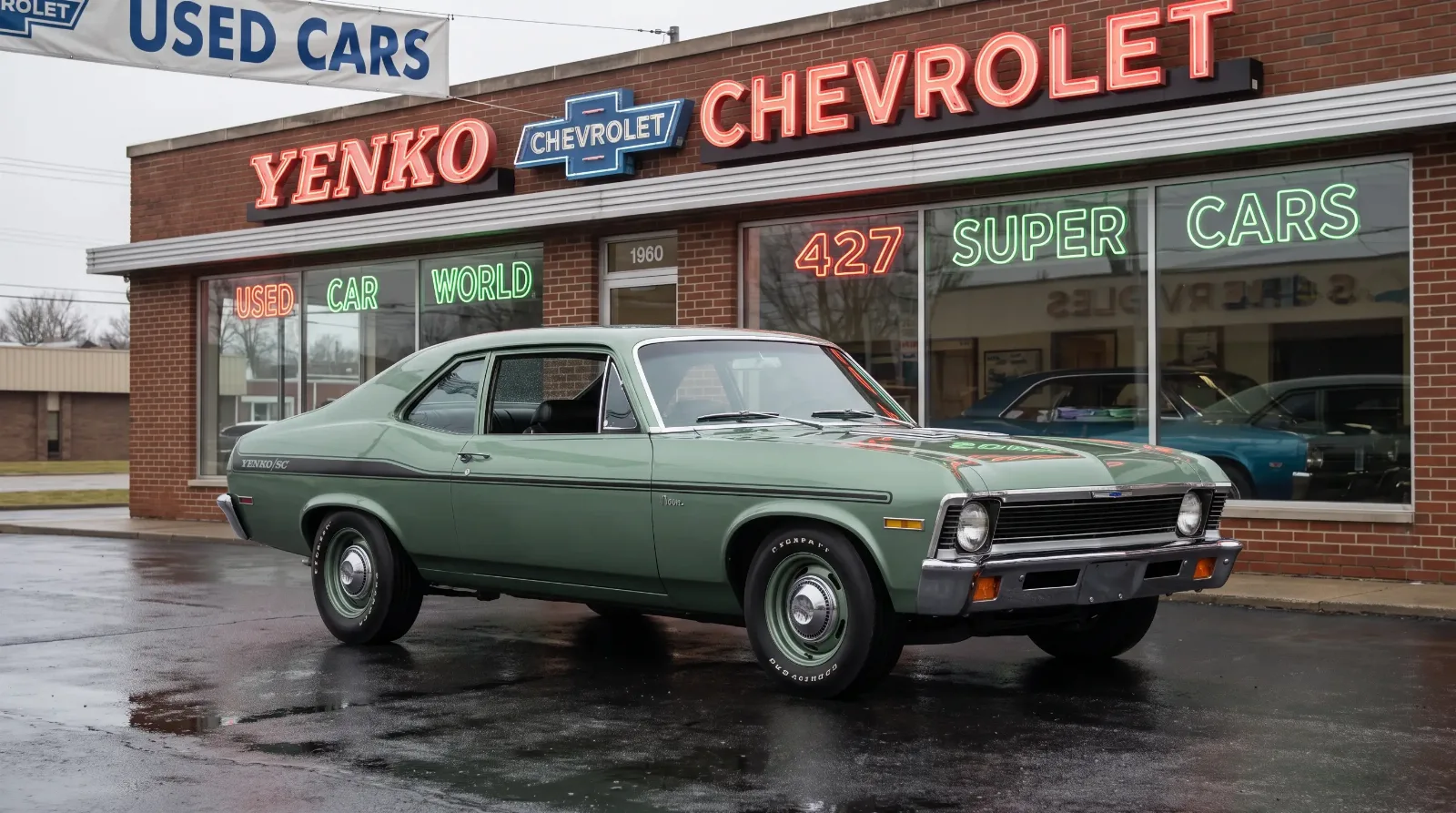
Don Yenko ran Yenko Chevrolet in Canonsburg, Pennsylvania, and had already built a reputation turning Corvairs, Camaros, and Chevelles into serious performance cars. For the Camaro and Chevelle, Chevrolet actually let him do it at the factory: COPO 9737, the Yenko Sports Car designation, put a factory-installed L72 427 into roughly 198 Camaros and 99 Chevelles built for his dealership network in 1969.
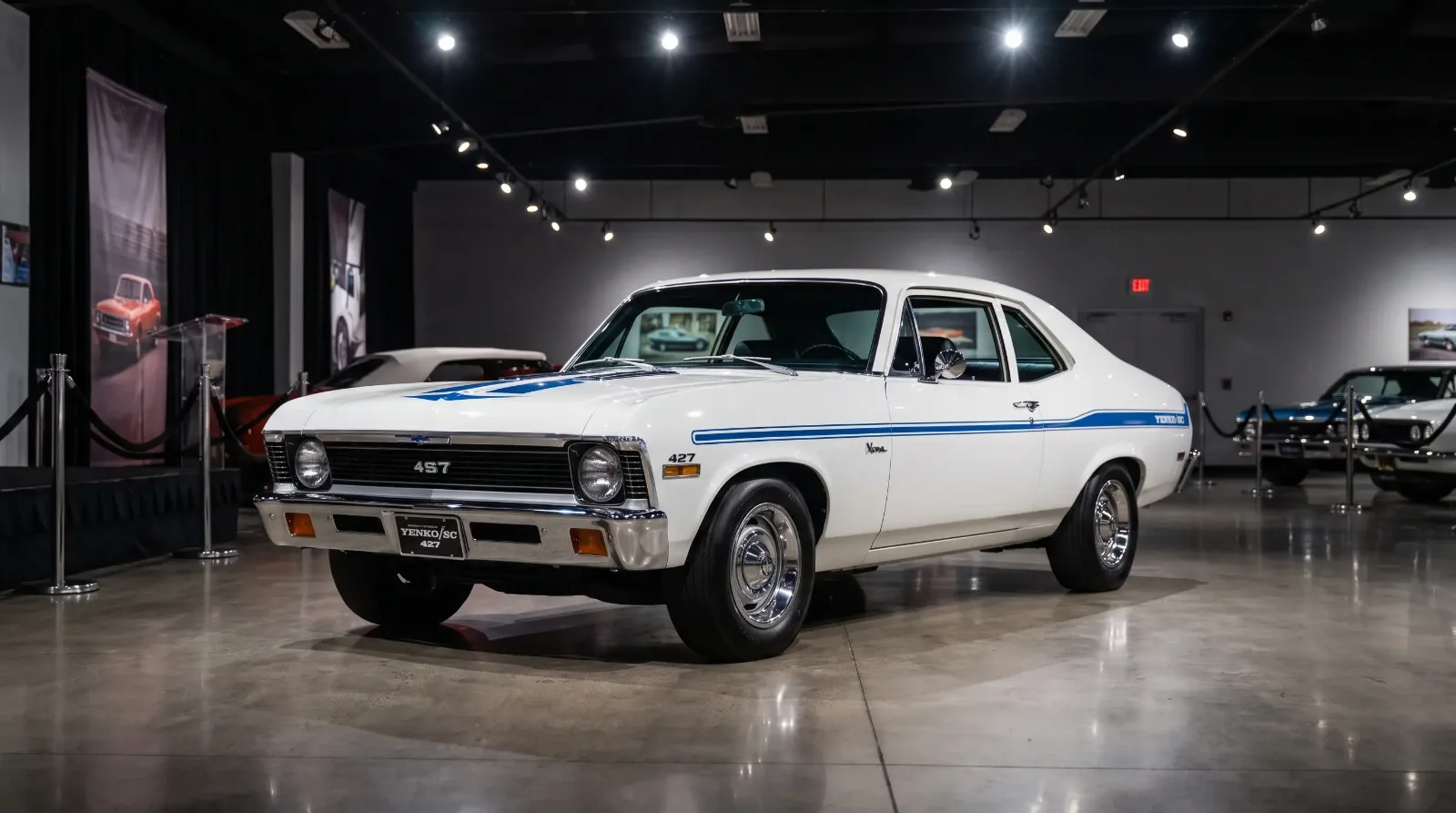
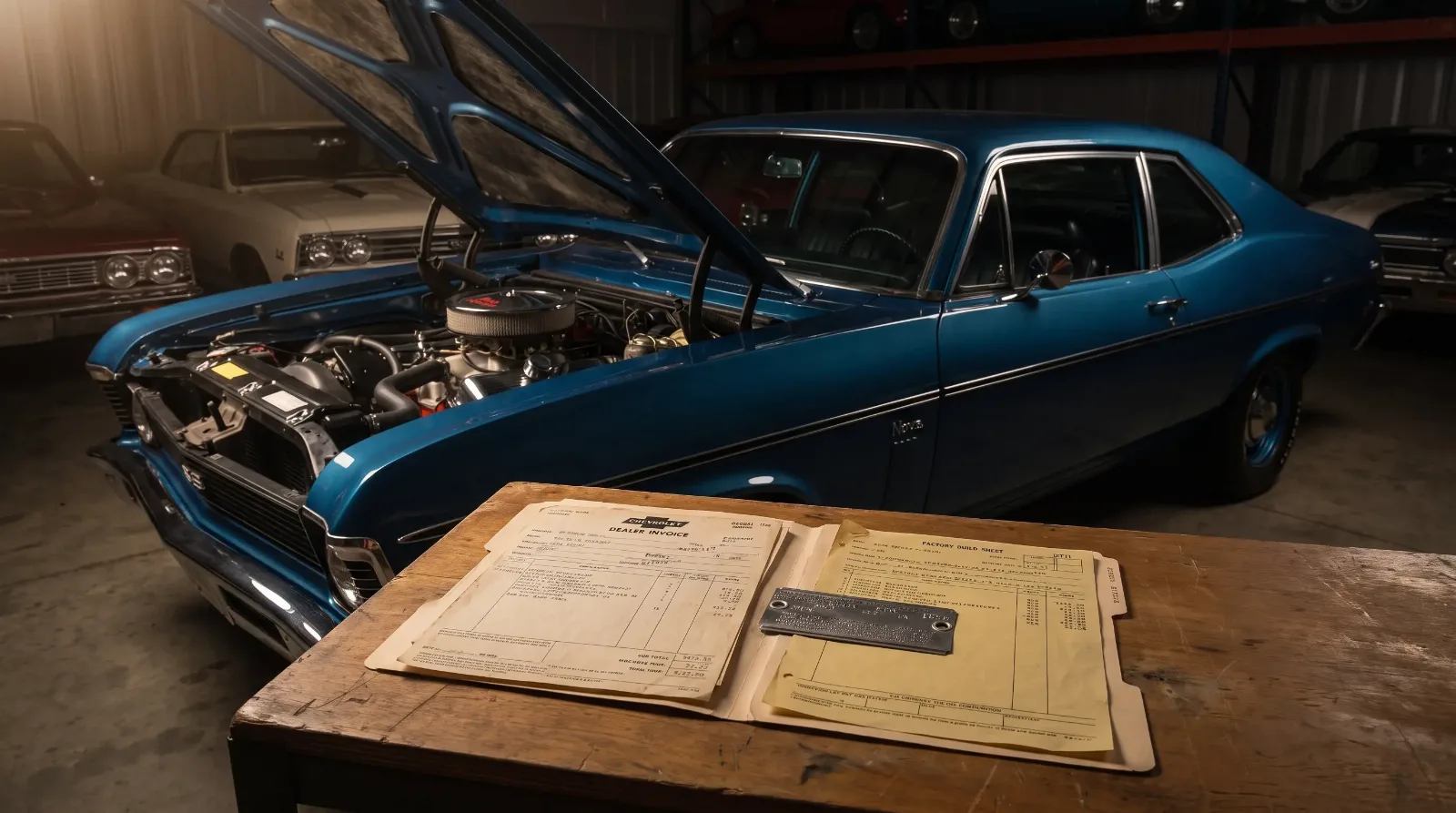
The Nova never got that same factory treatment. Chevrolet's policy on big-block weight in the light, short-wheelbase X-body held even for Yenko, and no COPO order put a 427 into a Nova on the assembly line in 1969. So Yenko built the car himself: he ordered standard 396-powered Novas through his own dealership, then swapped in the L72 427, rated at 425 horsepower, on his own shop floor. Those hand-built cars became the super-car Novas collectors chase today. By the end of the model year Yenko had converted somewhere around 37 to 38 of these cars, and fewer than ten are believed to survive with credible documentation today. Here is the part that trips up a lot of buyers: because these were dealer conversions rather than factory COPO orders, there is no COPO paperwork trail to check at all. The only documentation that exists is whatever Yenko's own dealership generated, invoices and shop records, a thinner and more fragile trail than the tank stickers and body tags that back a genuine factory COPO car.
That gap between marketing language and actual build method is exactly where a buyer needs to slow down. A "Yenko Nova" claim rests entirely on dealer paperwork, because there is no factory order number behind it the way there is for a COPO Camaro or Chevelle, or for Fred Gibb's 1968 COPO 9738 Nova.
Spec differences that matter to a buyer
These are not two versions of the same car. They are two different Novas from two different years, built through two entirely different processes, and confusing them is the single most common mistake in this corner of the hobby.
| Attribute | 1968 COPO 9738 Nova (Fred Gibb) | 1969 Yenko Nova (dealer conversion) |
|---|---|---|
| Engine | L78 396 V8, 375 hp, factory-installed | L72 427 V8, 425 hp, installed at Yenko's dealership |
| Build method | Factory order, built on the regular assembly line | Standard factory Nova, converted after delivery at Yenko Chevrolet |
| Transmission | Turbo Hydra-Matic 400 automatic only | Manual or automatic, depending on the individual car |
| Production | 50 cars, ordered for NHRA homologation | Approximately 37 to 38 cars |
| Documentation trail | COPO order number, sold through Dick Harrell's Performance Center | Yenko dealer invoice only, no factory COPO paperwork |
| Known survivors | Roughly a dozen documented | Fewer than ten confirmed |
The pricing gap between these two cars, and between a documented example of either and an undocumented clone, can run into six figures at auction, and that gap exists entirely because of paper and build history, not because one engine is inherently more desirable than the other. I go into the mechanics of how the COPO ordering system itself worked in a companion piece on the COPO process, which is worth reading before you take any seller's word for what "Yenko" or "COPO" means on a given car.
What this means for value today
I have watched this market long enough to say plainly: documentation is the product here, and the two cars need two different kinds of proof. A genuine COPO 9738 Nova is verified through its factory order number and its Dick Harrell Performance Center sale record. A genuine Yenko Nova is verified through Yenko's own dealer invoice, because no factory paperwork exists to fall back on. I have seen cars marketed as "Yenko Novas" at auction with nothing beyond a seller's assertion and a reproduction badge backing the claim, and buyers who paid a premium for what was, on the actual paper trail, an unverified 396-to-427 swap done by someone other than Yenko's shop.
My advice is unchanged from how I approach any documented muscle car: identify which car you are actually looking at first, a factory COPO build or a dealer conversion, then ask for the specific paperwork that car requires. Never let a stripe kit or a seller's story substitute for an invoice or an order number. If you want the fuller history of how the Nova nameplate got here in the first place, our Nova retrospective covers the model's arc from economy compact to accidental muscle car legend.
"The market has gotten sharper about this distinction over the last decade. Buyers used to pay a Yenko premium on a handshake. Now they want the invoice, and the cars that have one are worth every extra dollar. The ones that do not are still good cars, just not the car the price tag says they are."
David Mercer
The bottom line
COPO and Yenko describe two different cars in the Nova's history, not two labels for the same one. COPO 9738 is Fred Gibb's factory-built 396 automatic, ordered for drag-racing homologation in 1968. Yenko's 427 Nova is a dealer conversion built the following year, after Chevrolet declined to put the big block into the Nova at the factory the way it did for the Camaro and Chevelle. Treat them as the same thing and you risk overpaying for a story that does not match the car. Treat them as two separate questions, each with its own paper trail to check, and you can buy either car with confidence at a price that actually matches what you are getting.
Sources and notes
- GM Authority: Fred Gibb's 1968 Chevrolet COPO Nova SS to Be Auctioned by Mecum
- Street Muscle: Rare Rides, The 1968 Chevrolet COPO Nova SS 396
- Bonhams: Documented Double COPO, COPO 9737 Yenko Sports Car Chevelle
- Hot Cars: The Rarest Chevy Nova Ever Produced
- Autoevolution: Super Novas, A Look Back at Yenko's Insane Mini-Muscle Cars
- The Supercar Registry: Gibb '68 COPO Nova
Related Reading
Have a
Chevrolet Nova
for Sale?
Reach thousands of serious classic car collectors across the US.
Sell It Here →
Are You a Classic Car Dealer?
List your full inventory and connect with targeted classic car buyers.
Join as a Dealer →

About the author
David Mercer
Classic car market analyst with two decades of experience tracking collector car valuations, auction results, and investment trends.
Related Listings - Chevrolet Nova




Comments
Be the first to comment on this article.