
Picture the paddock at the Sarthe circuit in the late 1920s. A group of wealthy young Englishmen in oil-stained overalls, some of them titled, most of them rich enough not to need the prize money, standing around a row of big green cars they were about to drive flat out for twenty-four hours. They called themselves nothing in particular. The press called them the Bentley Boys, and the name stuck because it fit. This was a decade before Rolls-Royce owned the company, back when Bentley was a small, broke, ferociously fast independent firm that beat the world at the hardest race on the calendar.
History & Heritage
6 min read
Before the Merger: Bentley's Independent Racing Heritage and the Le Mans “Bentley Boys”
How the Bentley Boys won Le Mans five times from 1924 to 1930, the Blower that never won, and the racing heritage that shaped the marque.
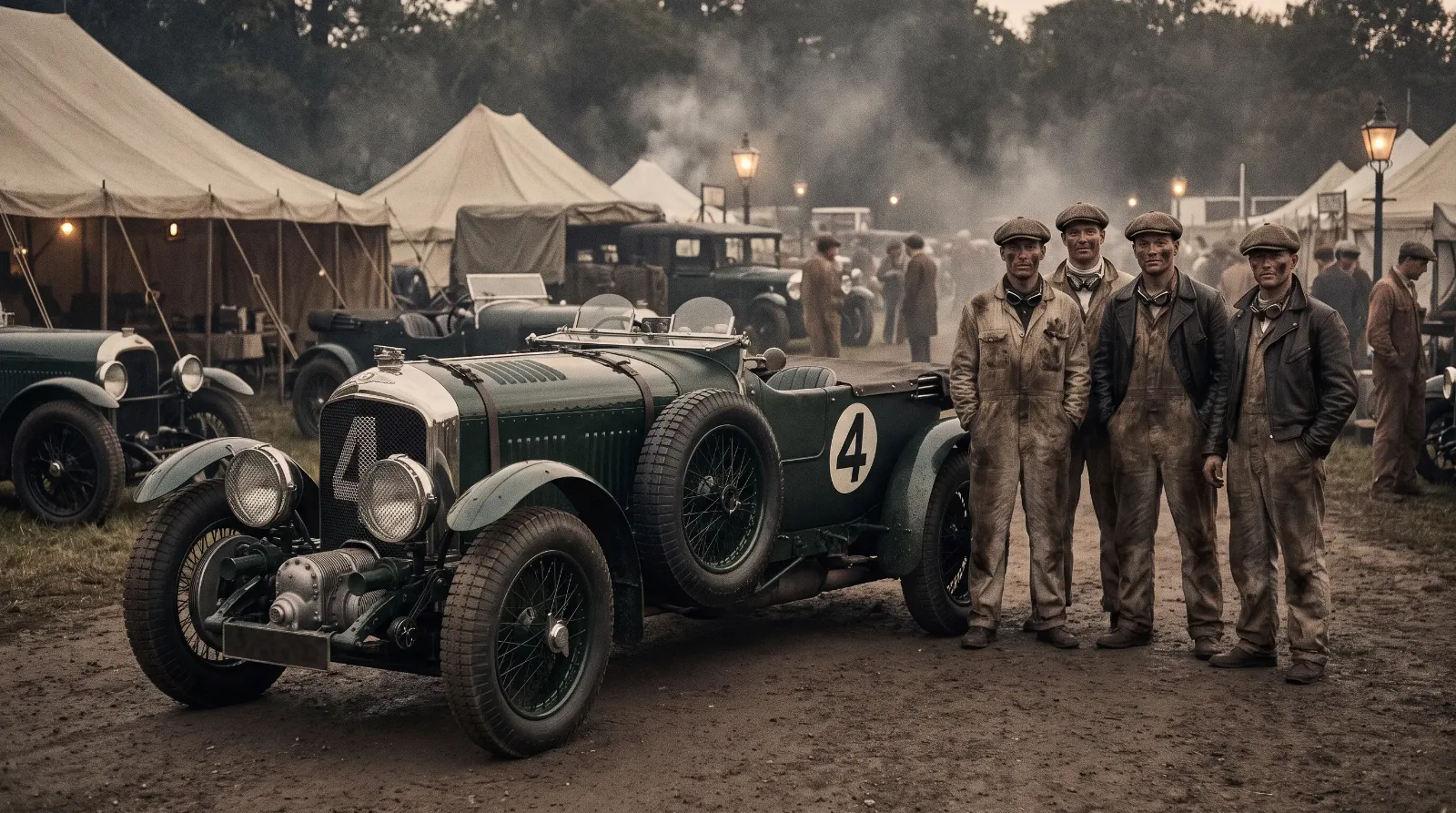
Understanding this era matters if you want to understand the marque at all. Long before the two names became corporate siblings, Bentley earned a racing reputation that Rolls-Royce never had and never wanted. That heritage still colors how people read the brand today, and it sits at the root of the badge-engineered rivalry that came later.
W.O. Bentley and a company built to race
Walter Owen Bentley founded the company in 1919. He was an engineer first, a racer by conviction, and he built cars around a simple idea: a big, unburstable engine that could run hard for hours without complaint. His first production car, the 3 Litre, went on sale in the early 1920s and it was quick, heavy, and built like a bank vault. Ettore Bugatti reportedly dismissed Bentleys as "the fastest lorries in the world." He meant it as an insult. Bentley owners took it as a compliment and put it on the wall.
The whole enterprise was chronically short of money. Racing is expensive, and W.O. spent on it anyway, because a win at Le Mans sold cars in a way advertising never could. What kept the doors open through most of the 1920s was Woolf Barnato, heir to a South African diamond fortune, who put his money into the firm in 1926 and became chairman. Barnato was also, as it turned out, one of the finest amateur drivers of his generation. That combination of a rich patron who could actually drive is rarer than it sounds.
Five wins at Le Mans
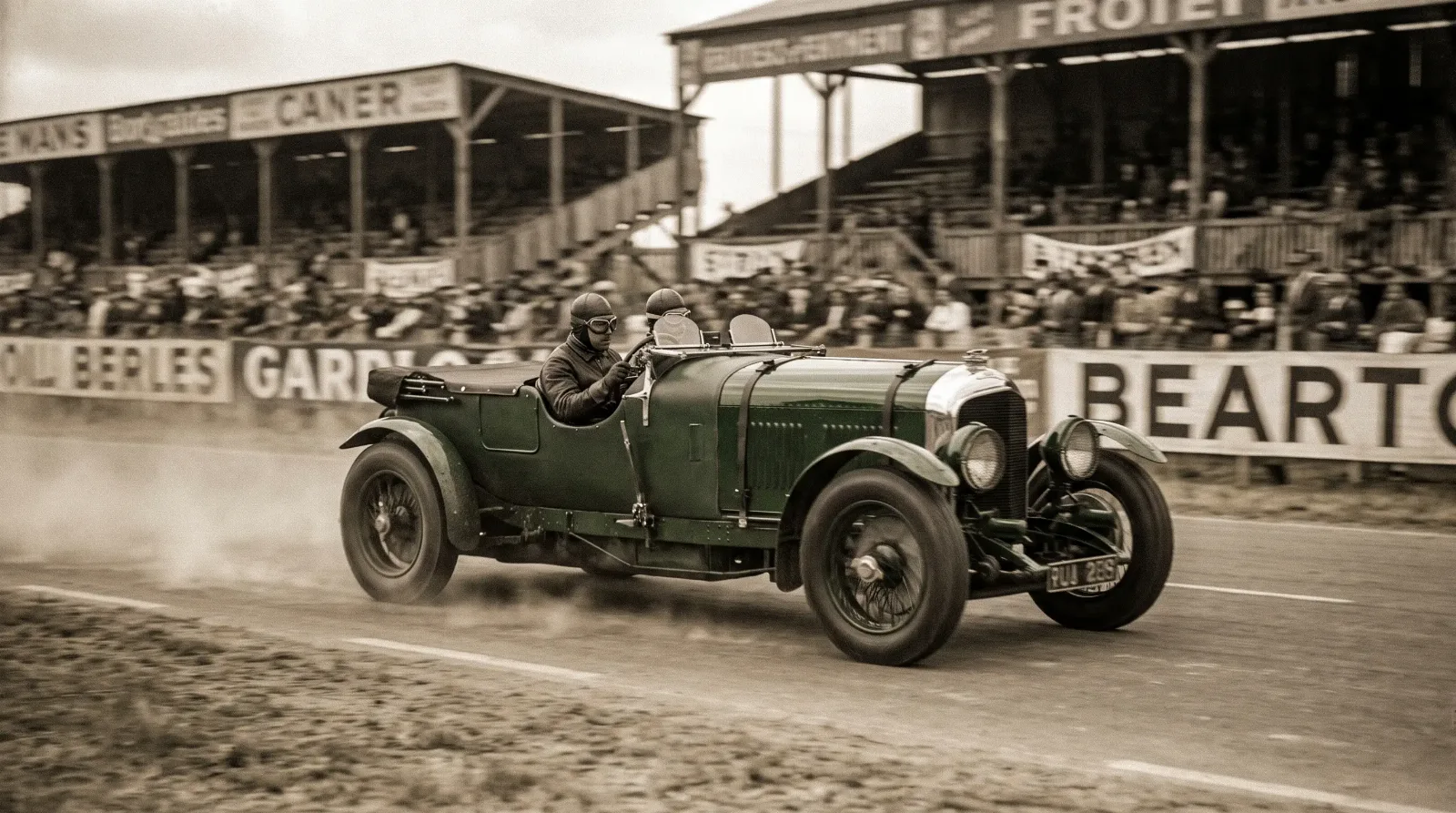
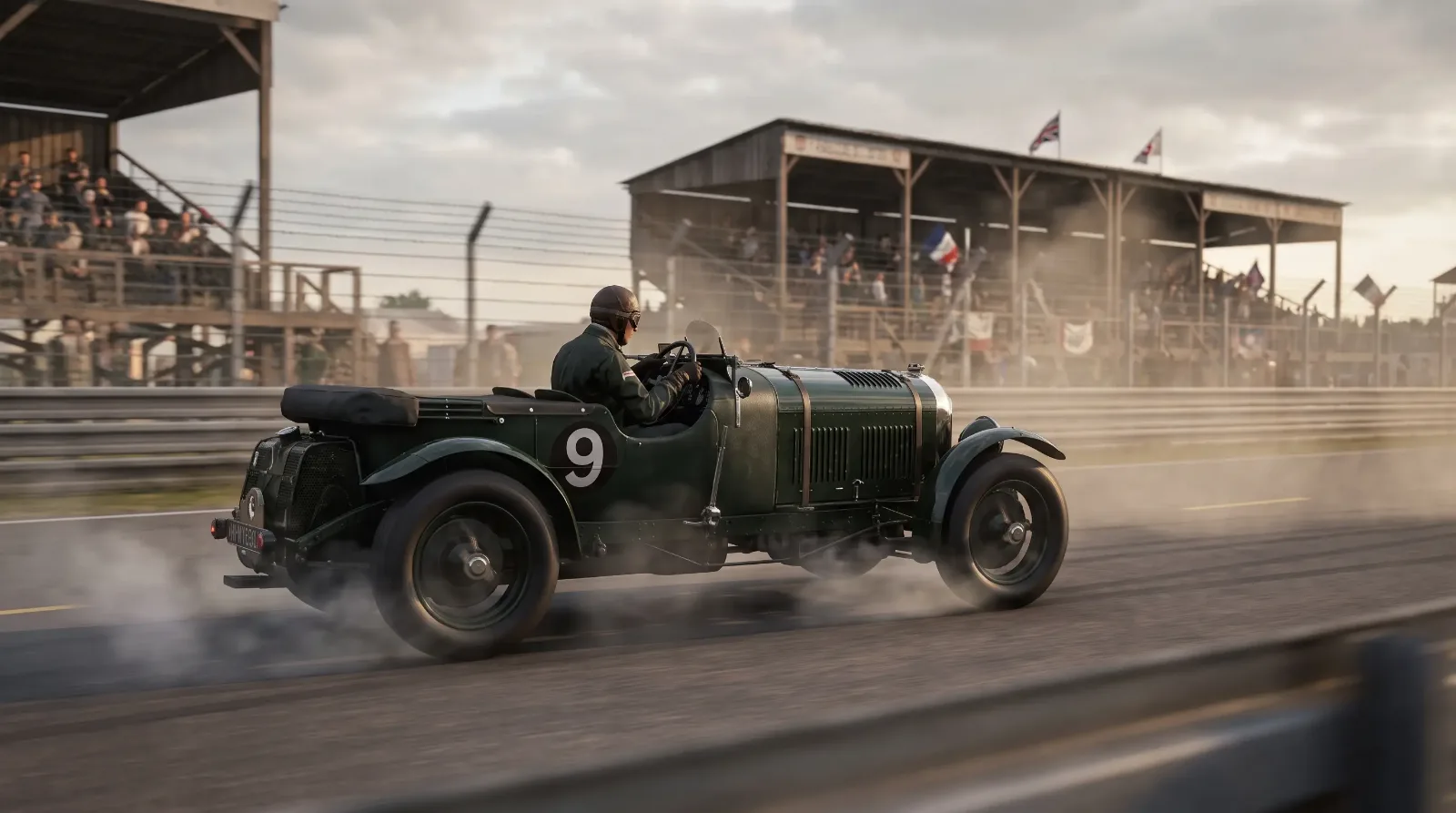
Bentley won the 24 Hours of Le Mans five times in seven years: 1924, then four straight from 1927 through 1930. For a company that size, against factory teams from across Europe, the record is close to absurd.
| Year | Winning car | Drivers |
|---|---|---|
| 1924 | 3 Litre | John Duff, Frank Clement |
| 1927 | 3 Litre ("Old Number 7") | J.D. Benjafield, Sammy Davis |
| 1928 | 4½ Litre | Woolf Barnato, Bernard Rubin |
| 1929 | Speed Six | Woolf Barnato, Tim Birkin |
| 1930 | Speed Six | Woolf Barnato, Glen Kidston |
The 1927 win is the one people still tell stories about. Late in the evening a pileup at the White House corner collected most of the leading cars, including two of the three works Bentleys. Sammy Davis, arriving on the scene, clouted the wreckage and bent up "Old Number 7," a 3 Litre, but kept it running. He nursed the damaged car through the night on a bent frame and misaligned wheels and brought it home to win. The survivors' dinner afterward became an annual tradition, and the crash entered Bentley folklore as proof the cars could take a beating and finish anyway.
Barnato is the other legend. He entered Le Mans three times, in 1928, 1929, and 1930, and won all three. Three starts, three victories. No one else at the top of that era can say the same.
The Blower that never won
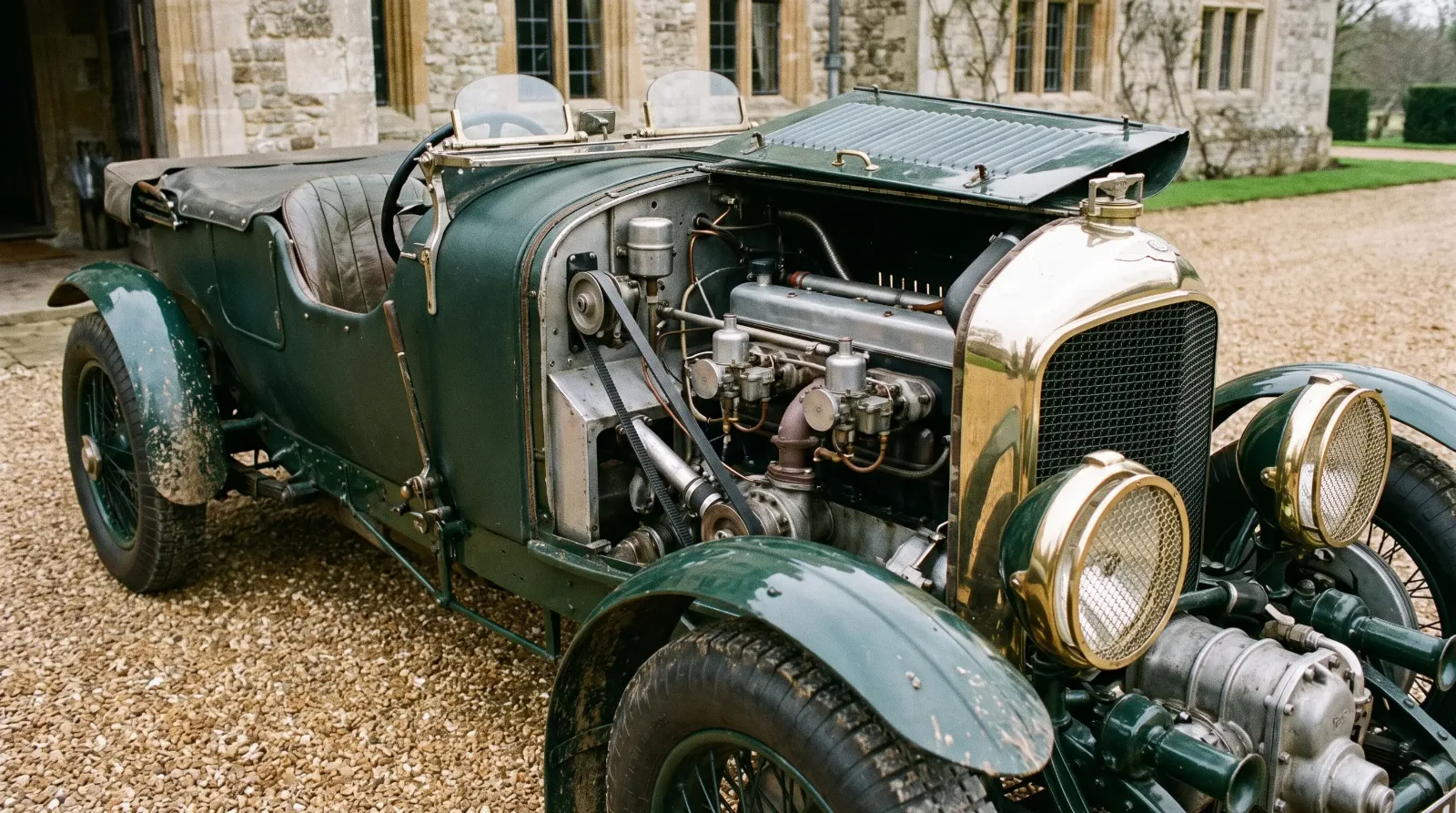
Here is the part that surprises people. The most famous Bentley of the whole period, the supercharged "Blower" 4½ Litre, never actually won Le Mans. Tim Birkin, one of the Bentley Boys and a genuine daredevil, believed forced induction was the future and pushed hard to bolt a supercharger onto the front of the 4½ Litre engine. W.O. Bentley disagreed. He thought the right way to more power was a bigger engine, which is exactly what the Speed Six was. The Blower project went ahead anyway, funded largely by the horse-racing heiress Dorothy Paget.
The Blowers were fast and fragile. They broke. The cars that actually won at the end of the decade were the big, unblown Speed Sixes, just as W.O. had argued. But the Blower, with its exposed supercharger sitting out front between the headlamps, looked like nothing else on earth, and it became the definitive image of a vintage Bentley. Sometimes the car people remember is not the car that won.
"The thing that gets me about the Bentley Boys is that they didn't have to do any of it. They had money and titles and better ways to spend a summer than sliding a two-ton car through the dark at Le Mans. They raced because they believed the car should prove itself, and that belief is the real inheritance, not the trophies."
Patrick Walsh
Why the racing years still matter
By 1931 the money finally ran out. The Depression killed the market for expensive sporting cars, Barnato's patience and fortune had limits, and the company went into receivership. Rolls-Royce bought it, and the Bentley that emerged in the following years was a quieter, more refined machine, sold as "the silent sports car." The flat-out Le Mans spirit went dormant for a long time.
But it never entirely left. When you read the whole arc of the two marques together, from independent racer to badge-engineered sibling, the racing decade is the piece that explains why Bentley always felt different from its owner. Rolls-Royce sold serenity. Bentley, in its bones, sold speed that could survive twenty-four hours. That distinction is worth carrying through the rest of the classic luxury car story, because it shaped every model that followed. If you want to see how it played out on the other side of the Atlantic, look next: How American Buyers Saw Rolls-Royce and Bentley Differently.
The overalls are long gone. The green cars survive, most of them accounted for, a few still driven hard by owners who understand what they are for. Every one of them is a piece of the same argument the Bentley Boys were making a hundred years ago, that a car earns its name on the track before it earns it anywhere else.
Related Reading
Have a
Classic Car
for Sale?
Reach thousands of serious classic car collectors across the US.
Sell It Here →
Are You a Classic Car Dealer?
List your full inventory and connect with targeted classic car buyers.
Join as a Dealer →

About the author
Patrick Walsh
Automotive journalist covering classic car shows, events, and the enthusiast community across North America.
More in History & Heritage
Comments
Be the first to comment on this article.