
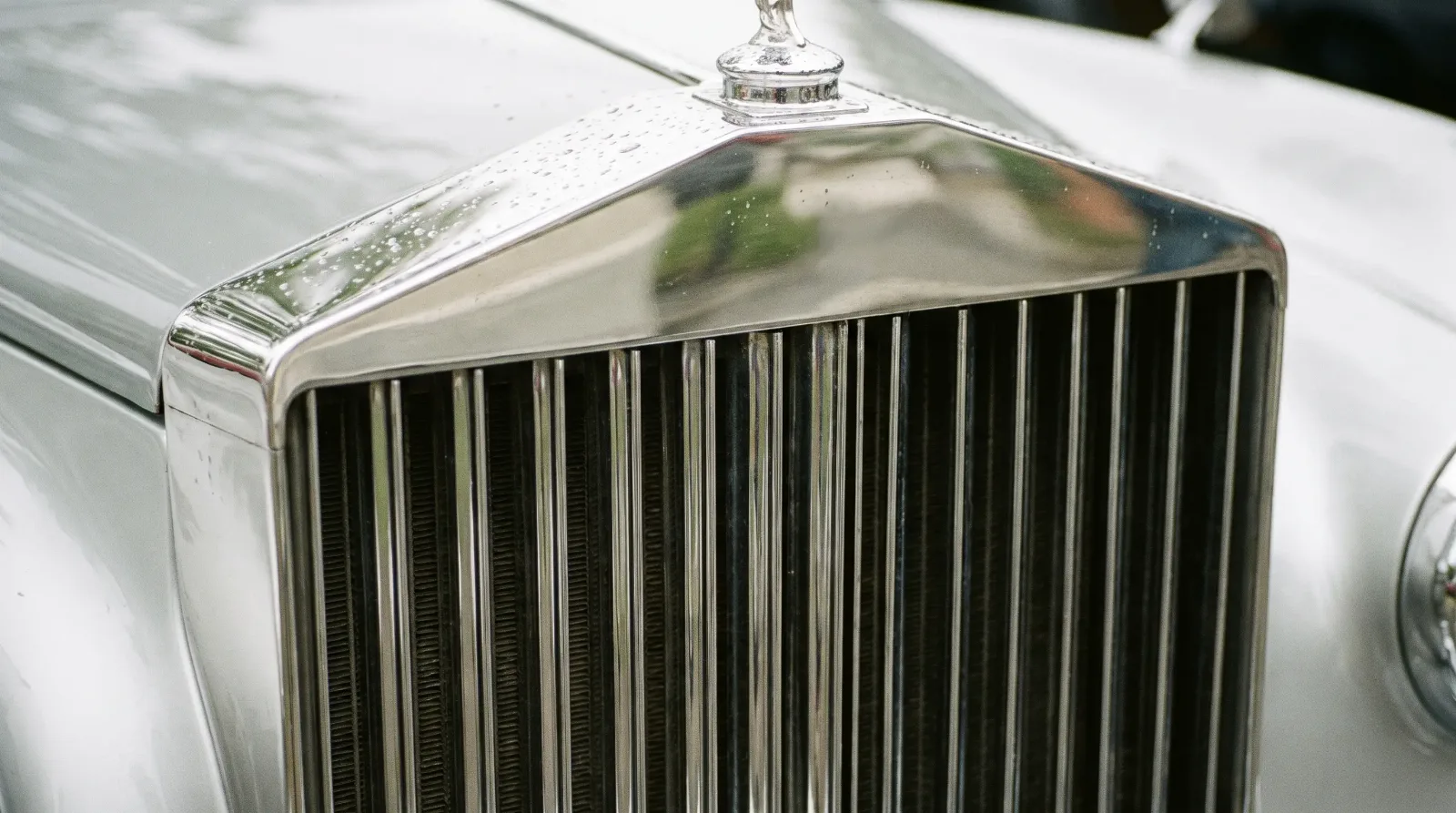
She has been leaning into the wind on the nose of a Rolls-Royce since 1911, robes streaming behind her, and in all that time she has never once ridden on a Bentley. Not before the two companies became corporate siblings, and not in the ninety years after. The Spirit of Ecstasy belongs to one marque and one only, and the reason is a story about a woman, a lord, a sculptor, and a company that understood the difference between an ornament and an identity.
History & Heritage
6 min read
The Spirit of Ecstasy: Why Rolls-Royce's Hood Ornament Never Graced a Bentley
The Spirit of Ecstasy story: the woman behind the Flying Lady, how it reached the grille in 1911, and why Rolls-Royce never put it on a Bentley.
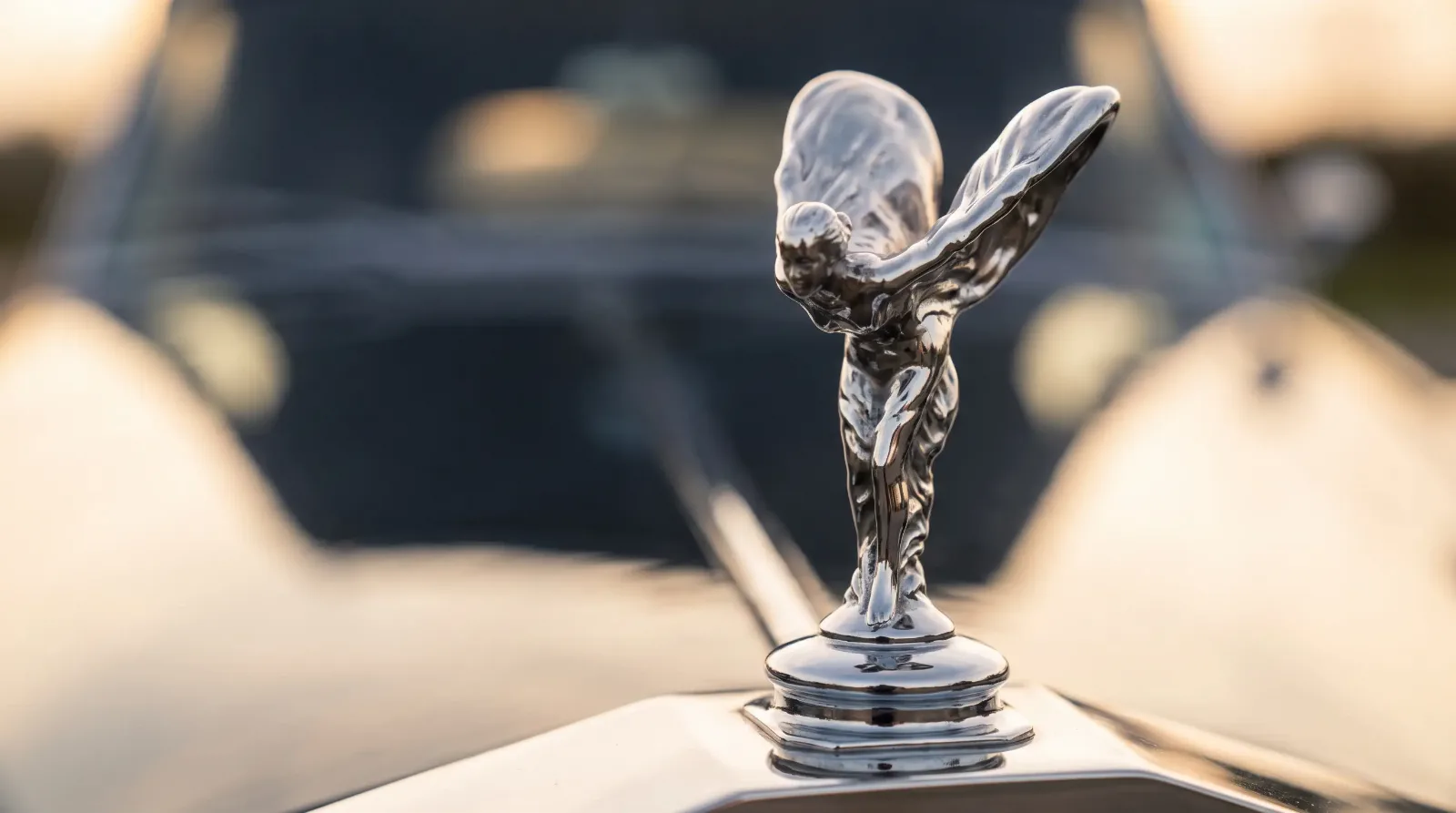
The little figure most people call the Flying Lady is the most recognised mascot in the history of the automobile, and the fact that it stayed on the Rolls-Royce grille alone, even after Rolls-Royce owned Bentley outright, tells you something about how carefully both names guarded what made them distinct. It is one of the quieter but more telling threads in the Rolls-Royce and Bentley sibling story.
The woman behind the figure
The person usually credited as the model was Eleanor Velasco Thornton, and hers is not a fairy tale. She worked as a secretary in London motoring circles and became the great love of John Scott Montagu, later Lord Montagu of Beaulieu, a pioneering motorist and magazine publisher. Their relationship stretched across years and social barriers, since he was married and she was not of his class, and it stayed largely hidden. Eleanor is widely believed to be the face and figure the sculptor drew from when the mascot took shape.
The story does not end gently. Eleanor died in 1915 when the ship she was travelling on was torpedoed during the First World War. By then the mascot she is said to have inspired was already fixed to the grilles of the finest cars in Britain, and it would go on to outlive everyone connected to its creation. Every time you see one, you are looking at a figure with a real person somewhere behind it.
How she got onto the grille
The company did not set out to create a mascot. It set out to stop a problem. In the early years of motoring, owners bolted all manner of personal ornaments to their radiator caps, some of them frankly undignified, and Rolls-Royce worried that these homemade figures cheapened the look of its cars. Claude Johnson, the managing director whose initials some say gave the firm its middle voice, commissioned the sculptor Charles Robinson Sykes to create a mascot worthy of the marque.
Sykes delivered a figure of a woman leaning forward, one finger to her lips in some early tellings, robes swept back as though caught in flight. It was patented and introduced in 1911, and it quickly became inseparable from the brand. The car and the mascot grew famous together, until you could not picture one without the other.
Sykes did not treat it as factory work he could walk away from. He kept a hand in the mascot for decades, and early examples were cast by the lost-wax method and signed, closer to a limited sculpture than a piece of trim. That care shows. The figure was never a stamped emblem bolted on at the end of the line. It was a small bronze, made to a standard that matched the car it crowned, and that is part of why it earned the loyalty it did rather than fading the way most radiator ornaments of the era eventually faded.
Why Bentley never wore her
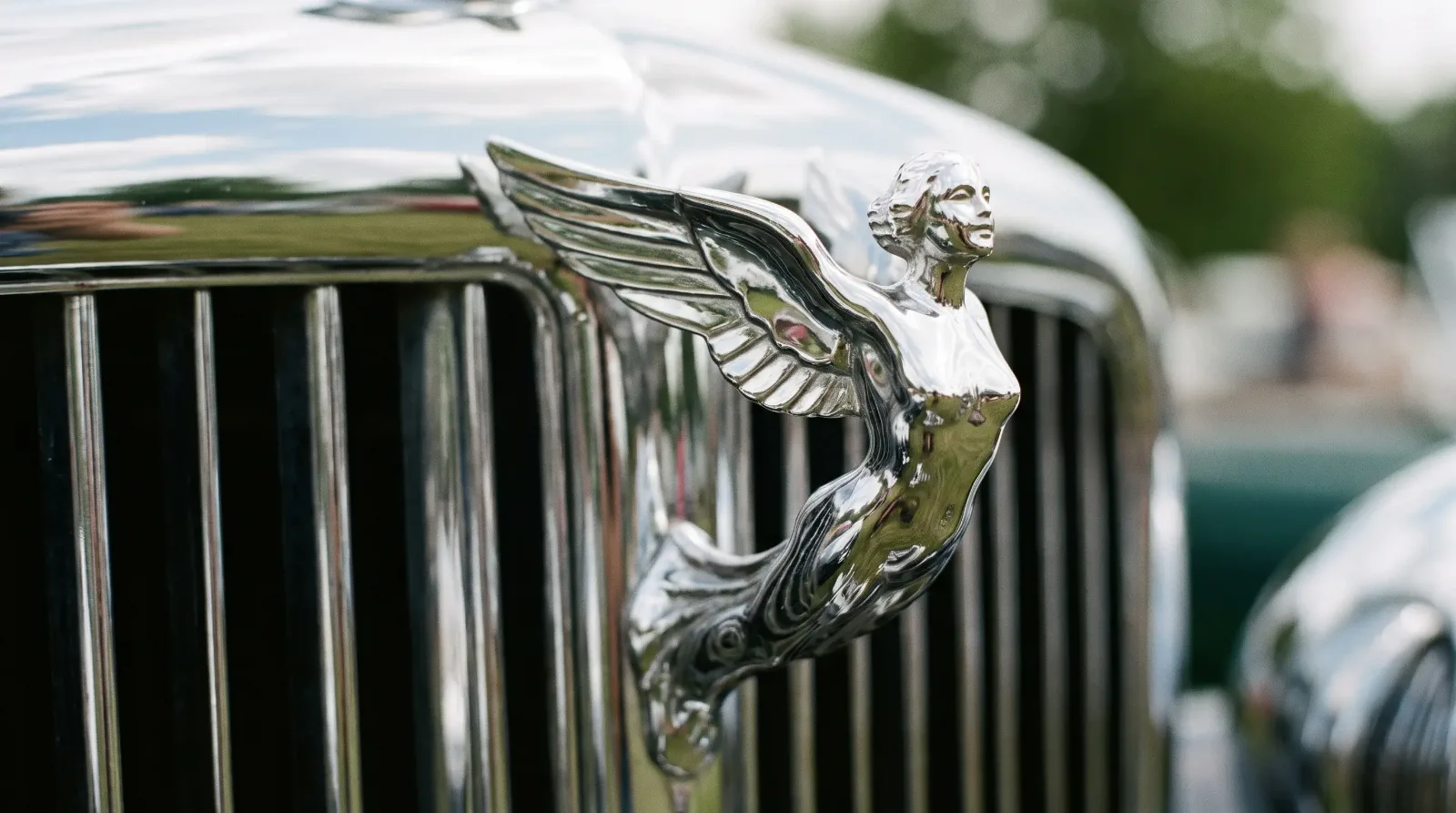
Here is the part that surprises people. Rolls-Royce bought Bentley in 1931, and from that point the two firms shared engines, chassis, factories, and eventually entire bodies. If ever there were a moment to slap the same mascot on both cars and save the trouble, that was it. It never happened. Bentley kept its own identity, marked by the winged-B badge, and the Spirit of Ecstasy stayed exclusively on the Rolls-Royce.
The reason comes back to what each badge was selling. Rolls-Royce was the formal car, the one you were driven in, and the figure on the nose was part of that presentation, a small piece of theatre that announced the marque before it arrived. Bentley was pitched at the owner who drove himself and preferred not to be announced. Putting the Flying Lady on a Bentley would have blurred the very distinction the company had spent decades building. So she stayed where she belonged.
"You could share an engine, a chassis, even the whole body between the two cars, and the factory did exactly that for years. But the mascot stayed put. That little figure was never just decoration. It was the flag of one marque, and you do not fly one company's flag over another."
Patrick Walsh
What the figure still means
Walk any concours lawn today and you will see the same thing that has been true for a century. The Rolls-Royces wear their Flying Lady, the Bentleys wear their winged-B, and nobody confuses the two even when the cars beneath them are nearly identical twins. The mascot did its job so well that it became shorthand for a whole idea of English luxury, the kind of image that lands on a car without a single word of explanation.
For collectors, the Spirit of Ecstasy is also a small authenticity check. The figures have changed subtly across the decades, in pose, in size, in the way they were mounted, and a mascot that does not match the car it sits on is a detail a careful buyer notices. She is the most public feature on the car, and she still separates the two badges as cleanly as she did in 1911.
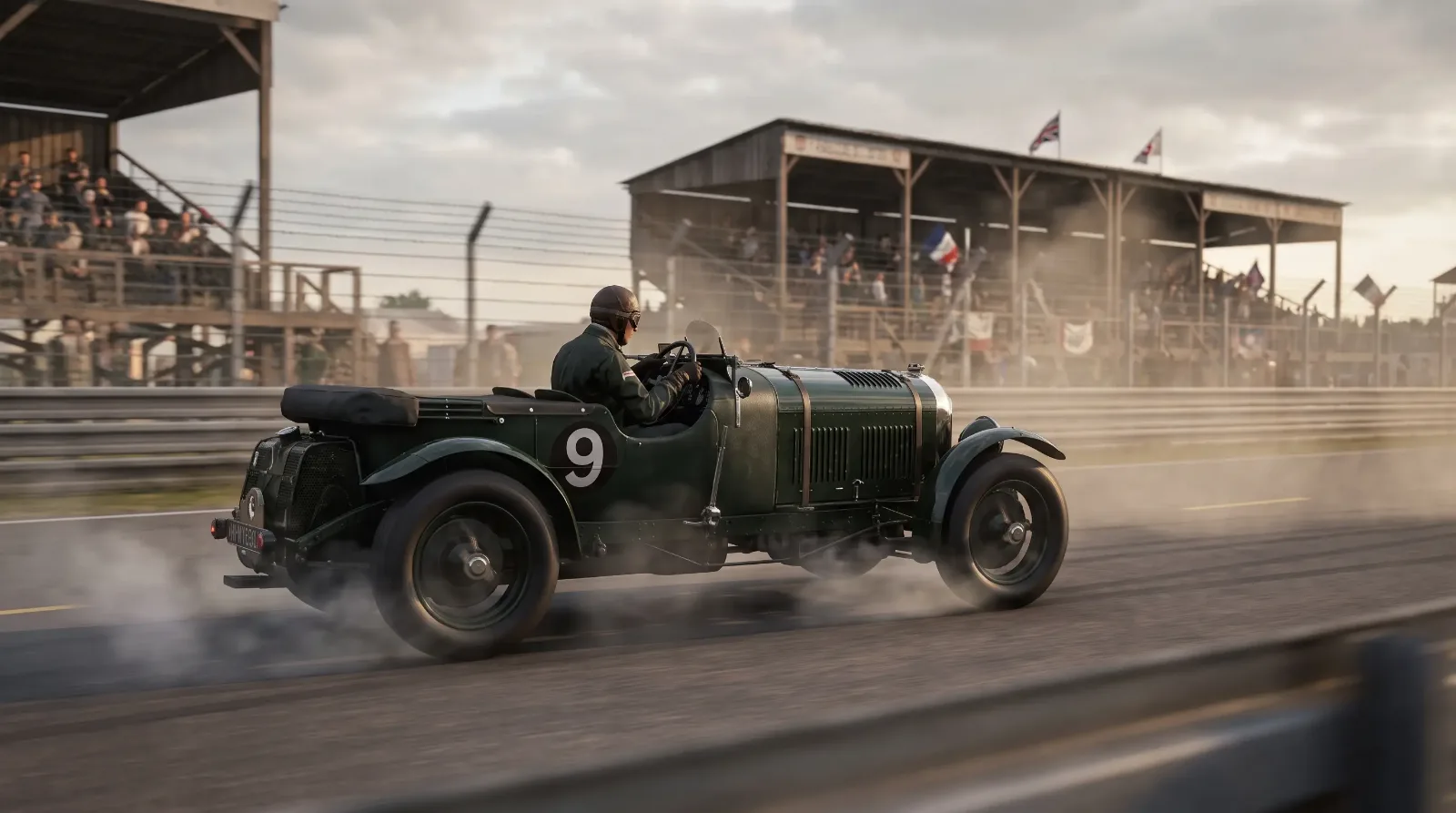
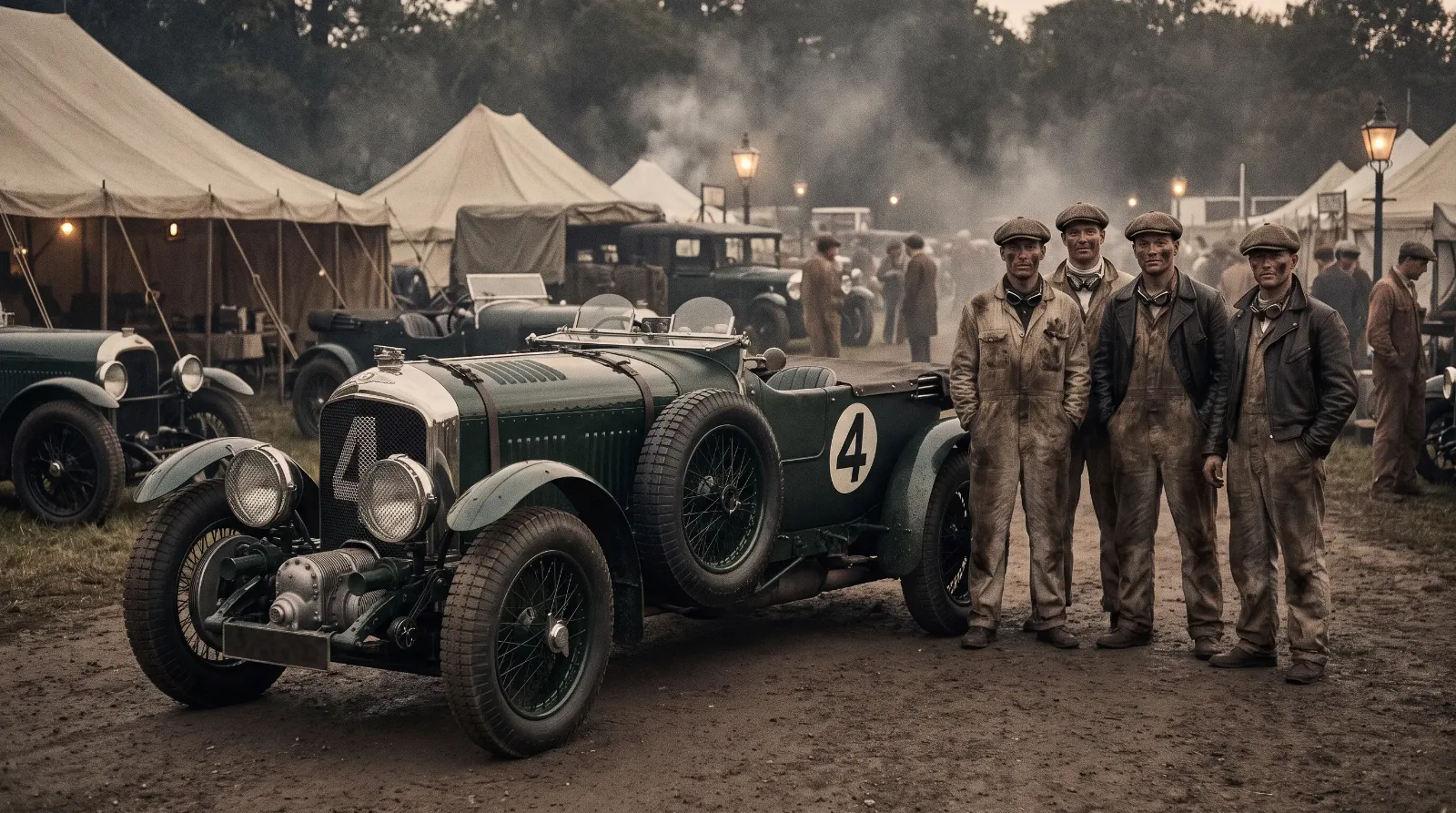
The reason Bentley never needed her is a story of its own, rooted in what the marque was before Rolls-Royce ever came calling. Read next: Before the Merger to understand the racing identity Bentley carried into the marriage.
Related Reading
Have a
Classic Car
for Sale?
Reach thousands of serious classic car collectors across the US.
Sell It Here →
Are You a Classic Car Dealer?
List your full inventory and connect with targeted classic car buyers.
Join as a Dealer →

About the author
Patrick Walsh
Automotive journalist covering classic car shows, events, and the enthusiast community across North America.
More in History & Heritage
Comments
Be the first to comment on this article.