
Here is the number that tells the story. In 1980 Cadillac still outsold Lincoln by a wide margin, the way it had for decades. By the end of the decade the gap had narrowed to the point where Lincoln, and one model in particular, was setting the terms of the argument. The Lincoln Town Car did not win the 1980s by being clever. It won by staying still while Cadillac chased fuel-economy targets, platform savings, and a compact-car buyer who never showed up. This is the decade the standard of the world handed away a lead it had held for two generations.
History & Heritage
6 min read
Cadillac's 1980s Badge-Engineering Decline vs Lincoln Town Car
How Cadillac's badge engineering and downsizing let the Lincoln Town Car quietly win the 1980s luxury sedan battle by staying still.
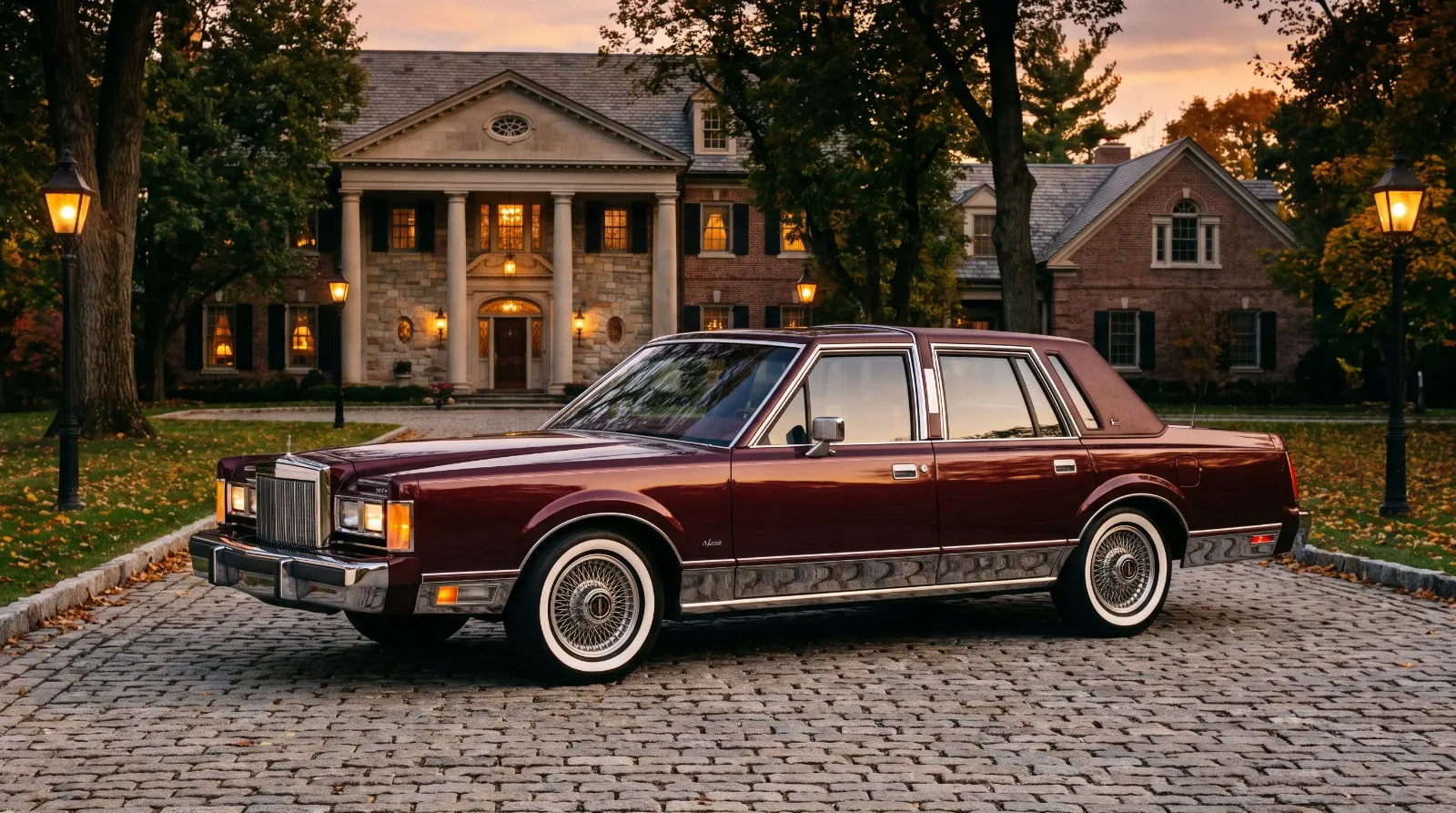
The badge-engineering problem at Cadillac has been told many times, and it feeds directly into the Cadillac-Lincoln rivalry, part of the Cadillac-Lincoln rivalry. What gets told less often is what Lincoln was doing on the other side of that story. The answer is almost nothing, and that turned out to be the smartest thing Ford's luxury division did all decade.
What Cadillac did to itself
Cadillac spent the early 1980s undermining the one thing a luxury badge sells, which is the promise that the car underneath is special. The 1982 Cimarron was a Chevrolet Cavalier from GM's J-body program, given a grille, more trim, and a much higher sticker. Buyers parked it next to a Cavalier and saw the same doors and roofline. Executives later admitted it was a mistake, but the damage was structural, not cosmetic.
The engines made it worse. The 1981 V8-6-4 tried cylinder deactivation before the electronics could control it and lasted barely a year in most cars. The aluminum HT4100 that replaced it for 1982 displaced only 4.1 liters and made roughly 135 horsepower in a heavy sedan, gutless by Cadillac standards and quick to earn a reputation for reliability trouble. When Cadillac downsized the de Ville and Fleetwood to a front-wheel-drive C-body for 1985, the flagships shrank until buyers struggled to tell a Cadillac from a Buick at a glance. Every one of these moves gave a traditional luxury buyer a reason to look elsewhere.
What Lincoln did instead
Lincoln made the Town Car its own model line for 1981, splitting it off from the larger Continental name, and then it held the formula steady. The car stayed body-on-frame and rear-wheel-drive on Ford's Panther platform, the same architecture under the Crown Victoria. It kept a 5.0-liter V8, a soft ride, a full six-passenger bench-and-column layout, and the size that traditional luxury buyers actually wanted. Where Cadillac read the decade as a mandate to shrink and modernize, Lincoln read it as a chance to be the last big American sedan standing.
That was not timidity so much as a correct reading of the customer. The buyer for this kind of car was older, valued space and quiet over efficiency, and had no interest in a compact with a luxury badge. By refusing to chase the same trends that were hollowing out Cadillac's lineup, the Town Car became the default choice for livery fleets, funeral homes, and buyers who simply wanted the traditional article. Consistency, in this segment, reads as confidence.
There was a hidden commercial logic to standing still. A single long-running platform meant amortized tooling, cheap and plentiful shared parts with the Ford and Mercury Panther cars, and a service network that already knew the car inside out. Fleet buyers care about total cost of ownership more than novelty, and the Town Car answered that question better every year it stayed the same. Cadillac, by contrast, was paying to develop new architectures that its own buyers greeted with suspicion. One brand was banking savings while the other spent money to lose ground.
"Cadillac spent the 1980s solving problems its buyers did not have, and Lincoln spent it selling the car those buyers already wanted. When one brand keeps changing the deal and the other keeps its word, the residual values tell you which strategy the market rewarded, and it was not the one with the engineering budget."
David Mercer
The head-to-head that decided the decade
Line the two approaches up and the divergence is stark. One brand kept adding variables. The other removed them.
| Dimension | Cadillac (1980s) | Lincoln Town Car (1980s) |
|---|---|---|
| Platform strategy | Downsized FWD C-body, shared J-body | Held body-on-frame RWD Panther |
| Signature engine | HT4100 4.1L V8, ~135 hp | 5.0L V8, traditional layout |
| Badge-engineering risk | High (Cimarron = Cavalier) | Low, kept a distinct big sedan |
| Buyer message | Smaller, cheaper to build | Same big car you already trust |
| Fleet and livery appeal | Weakened by downsizing | Became the segment default |
The point of the comparison is not that Lincoln built a better car in any engineering sense. The Panther Town Car was old-fashioned by design, and it did not pretend otherwise. The point is that Lincoln understood what it was selling and Cadillac, for most of the decade, did not. A luxury reputation is a promise that the thing you are buying is special and consistent. Cadillac broke both halves of that promise. Lincoln kept them.
What it means for collectors and buyers now
The values today still carry the verdict. Clean 1980s Town Cars are inexpensive and easy to live with, and they have a small but real following precisely because they represent the traditional American luxury sedan at its most honest. The badge-engineered Cadillacs of the same years sit at the bottom of the brand's collector hierarchy, cheap to buy and hard to sell, with the Cimarron collectible only as a famous failure. Scarcity means little when nobody is chasing the car.
If you are shopping either marque from this period, the guidance is simple. Buy the Town Car for what it is, an unpretentious body-on-frame cruiser with cheap parts and a known character. Buy the traditional rear-drive Cadillac Brougham for similar reasons, and steer clear of the downsized and rebadged experiments unless the story interests you more than the driving. The traditional formula ages far better than the decade's clever ideas did, and the market has been quietly proving it for thirty years.
The sales gap that opened in the 1980s did not close quickly, and the raw figures are worth seeing in full. That is next: Cadillac vs Lincoln Sales Figures, where the year-by-year numbers settle who actually came out ahead.
Related Reading
Have a
Classic Car
for Sale?
Reach thousands of serious classic car collectors across the US.
Sell It Here →
Are You a Classic Car Dealer?
List your full inventory and connect with targeted classic car buyers.
Join as a Dealer →

About the author
David Mercer
Classic car market analyst with two decades of experience tracking collector car valuations, auction results, and investment trends.
More in History & Heritage
Comments
Be the first to comment on this article.