
There is a photograph almost everyone has seen without knowing the make of the car in it. A president stands in an open back seat, waving, the long dark body of the limousine stretching ahead of him down a boulevard lined with people. For most of the twentieth century, that car was as likely to be a Lincoln as a Cadillac, and the two companies fought quietly but seriously for the honor of carrying the man in the back seat. Being the state car was not just a contract. It was the ultimate advertisement, a rolling claim that this marque was the most American of all.
History & Heritage
6 min read
Presidential Cars: Cadillac vs Lincoln as America's State Car
From FDR's Lincoln Sunshine Special to JFK's X-100 to Cadillac's modern Beast, how Cadillac and Lincoln fought to be America's presidential state car.
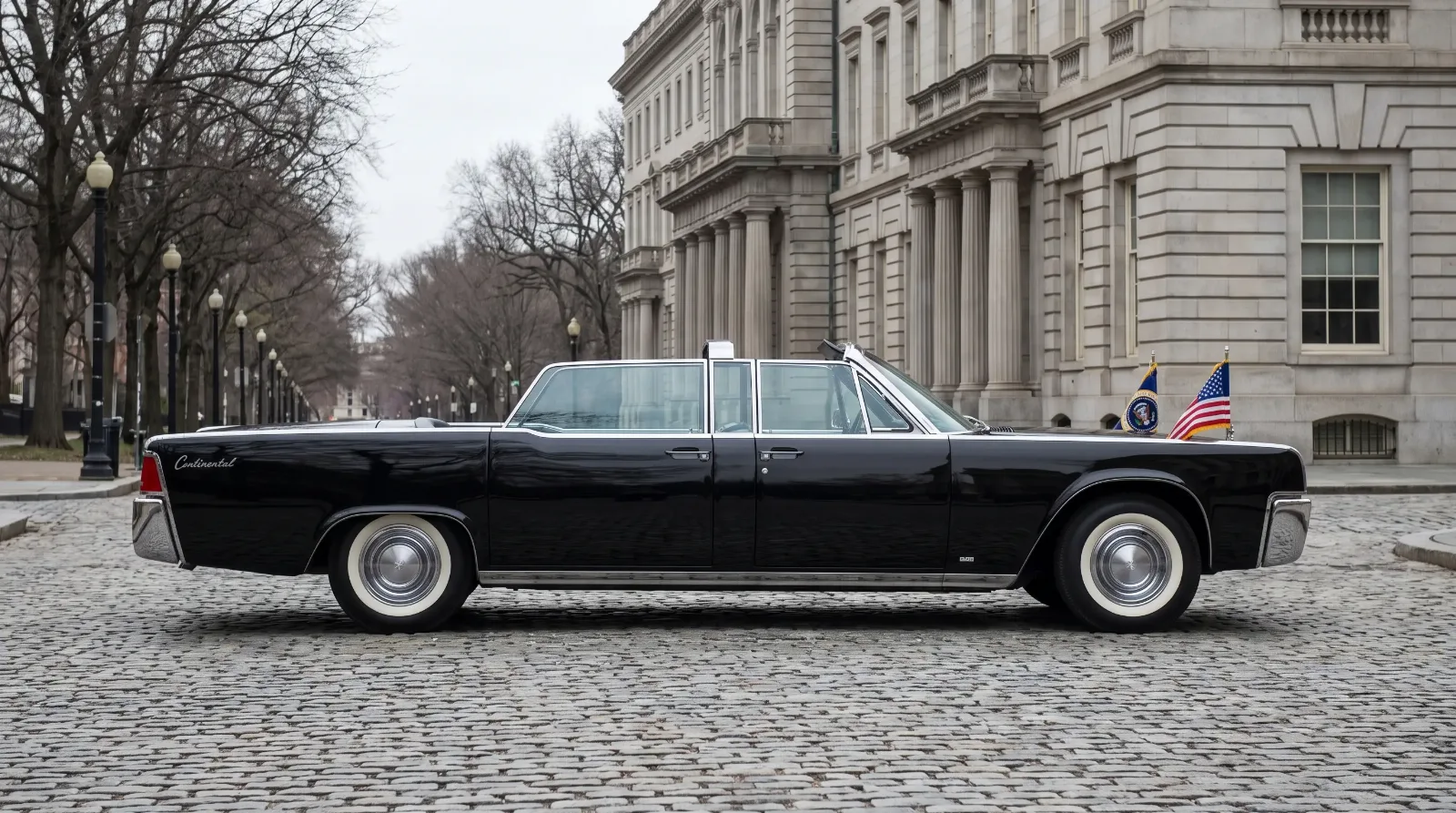
The competition ran for decades, and it swung back and forth. Understanding who carried which president, and when, tells you as much about the rivalry as any showroom comparison. It is a thread that runs right through the Cadillac vs Lincoln luxury war.
Lincoln's long run in the front seat of history
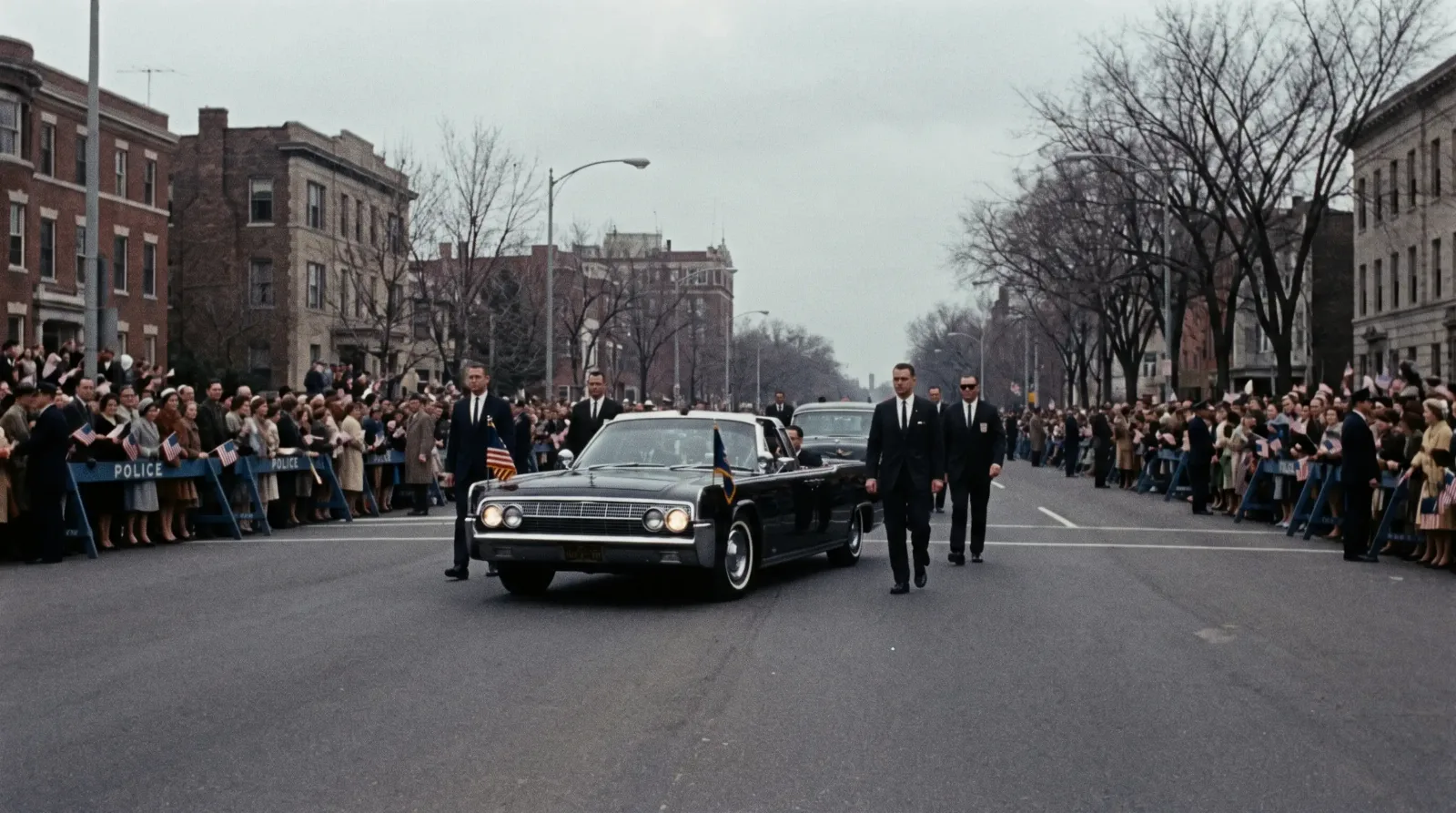
Lincoln has the more famous presidential associations, and for good reason. Franklin Roosevelt rode in a 1939 Lincoln Model K known as the Sunshine Special, a V12 that served through the war years and was armored as the conflict went on. It became one of the first cars closely identified with a sitting president, and it set a template for the state car as a purpose-built machine rather than a showroom model with flags on the fenders.
Then came the car that changed everything. John F. Kennedy's 1961 Lincoln Continental parade limousine, a specially built four-door convertible often referenced by its code X-100, was the car he rode in through Dallas in November 1963. The assassination bound the Lincoln name to one of the darkest days in American memory, and it is impossible to talk about presidential Lincolns without it. The car itself was later rebuilt with a permanent roof and heavy armor and remained in service for years afterward, a detail that surprises people who assume it was retired immediately.
Cadillac's steady presence and its modern takeover
Cadillac never conceded the field. Through the same decades, Cadillac supplied parade cars, funeral cars, and everyday limousines for presidents and their staffs, often working alongside Lincoln rather than replacing it. The two makes traded the spotlight depending on the administration and the specific vehicle, and it was common for a president to have access to both over the course of a term.
The mid-century fleet was more mixed than most people remember. A famous bubble-top parade car, a 1950 Lincoln Cosmopolitan convertible fitted with a clear removable roof, served across the Truman, Eisenhower, and Kennedy years and let crowds see the president in any weather. Cadillac supplied limousines to the same administrations, and the White House motor pool rarely committed to one marque exclusively. That is part of why the rivalry stayed alive for so long. Neither company could claim a clean monopoly, so both kept building, kept lobbying, and kept treating the next state car as a prize worth chasing. The competition was real precisely because the outcome was never settled for good.
The decisive shift came later. Over the closing decades of the twentieth century, Cadillac moved from sharing the role to owning it. The purpose-built armored state car, the heavily engineered machine now nicknamed the Beast, has been a Cadillac since the 1980s, and Lincoln's presence in that specific role faded. If the mid-century belonged to a genuine contest, the current century belongs, at least on the parade route, to Cadillac. The fuller sweep of how each marque climbed to that stage is part of the complete classic luxury car story.
Several things drove that handover, and not all of them were about the cars themselves. The state limousine had grown into a rolling fortress, a bespoke vehicle built to a security brief that had almost nothing to do with what any showroom sold. Building it took a manufacturer willing to absorb the cost and the engineering burden for the prestige alone. As Lincoln's parent company reshaped its priorities across the late twentieth century, Cadillac and General Motors stayed committed to that specialized work. The result is that the modern presidential car carries a Cadillac crest even though it shares almost nothing with a car a buyer could order. The badge is the point, and Cadillac fought to keep it there.
The state cars at a glance
| Car | Marque | Era / note |
|---|---|---|
| Sunshine Special | Lincoln | 1939 Model K V12, FDR, armored during WWII |
| Bubble Top parade car | Lincoln | 1950 Cosmopolitan, Truman, Eisenhower, Kennedy |
| X-100 parade car | Lincoln | 1961 Continental, JFK, Dallas 1963 |
| Modern armored limousine (the Beast) | Cadillac | Purpose-built state car, recent decades |
"For a long stretch, both companies could honestly claim to be the president's car, and that ambiguity was worth a fortune to each of them. What changed was not just engineering. It was who was willing to keep building a one-off machine to an impossible brief, and Cadillac stayed at that table."
Patrick Walsh
Why the state car mattered so much
No amount of magazine advertising could buy what a president in your back seat delivered. When a Lincoln carried Roosevelt through crowds or a Cadillac led a motorcade, the message was national, not commercial. It told ordinary buyers that this was the car the country itself had chosen, and that association filtered all the way down to the Fleetwood or the Continental sitting in a suburban driveway. The prestige was real, and both companies knew exactly what it was worth.
That is why the fight over presidential cars was never really about a handful of vehicles. It was about the story each marque got to tell for the next ten years. Lincoln owned the most powerful images of the mid-century, tragic and triumphant alike. Cadillac played the longer game and holds the role today. The rivalry did not end on the parade route, though, and it took some unflattering turns in the years that followed, which is where the trail leads to next: Cadillac's 1980s Badge-Engineering Decline vs Lincoln Town Car.
Related Reading
Have a
Classic Car
for Sale?
Reach thousands of serious classic car collectors across the US.
Sell It Here →
Are You a Classic Car Dealer?
List your full inventory and connect with targeted classic car buyers.
Join as a Dealer →

About the author
Patrick Walsh
Automotive journalist covering classic car shows, events, and the enthusiast community across North America.
More in History & Heritage
Comments
Be the first to comment on this article.