
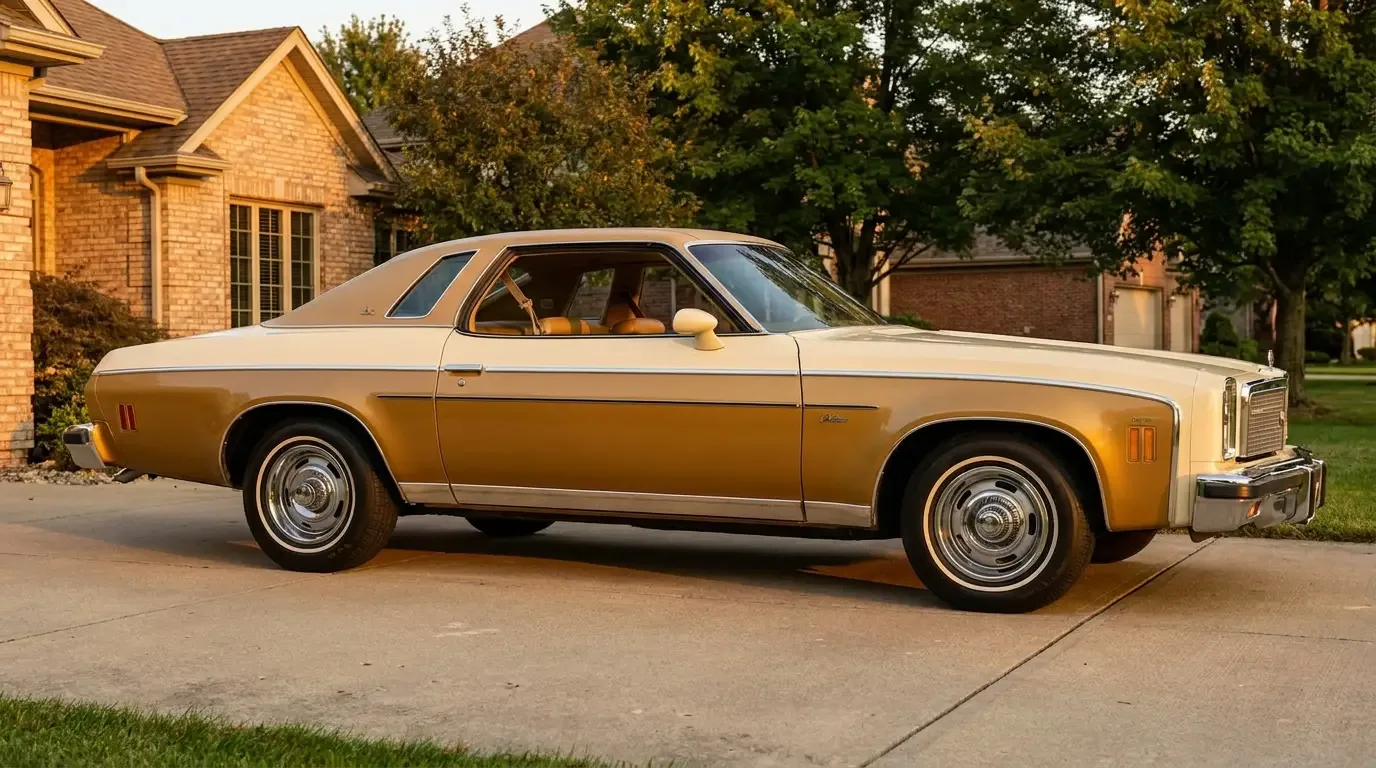
Her father used to park the '74 Malibu at the far end of every lot, away from the shopping carts, and she never understood why until she was old enough to notice the bumper up close. It stuck out nearly a foot past the grille, a slab of chrome-covered steel riding on hydraulic shock absorbers, built to take a five mile an hour hit without so much as a scratch. He wasn't protecting the car from other cars. He was protecting other cars from his. That bumper could shove a shopping cart across a parking lot without leaving a mark on itself, and he knew it.
History & Heritage
7 min read
The 5-MPH Bumper Story
How a federal safety rule reshaped the Colonnade Chevelle's face from 1973 on, and why owners still appreciate the bumpers period road testers hated.
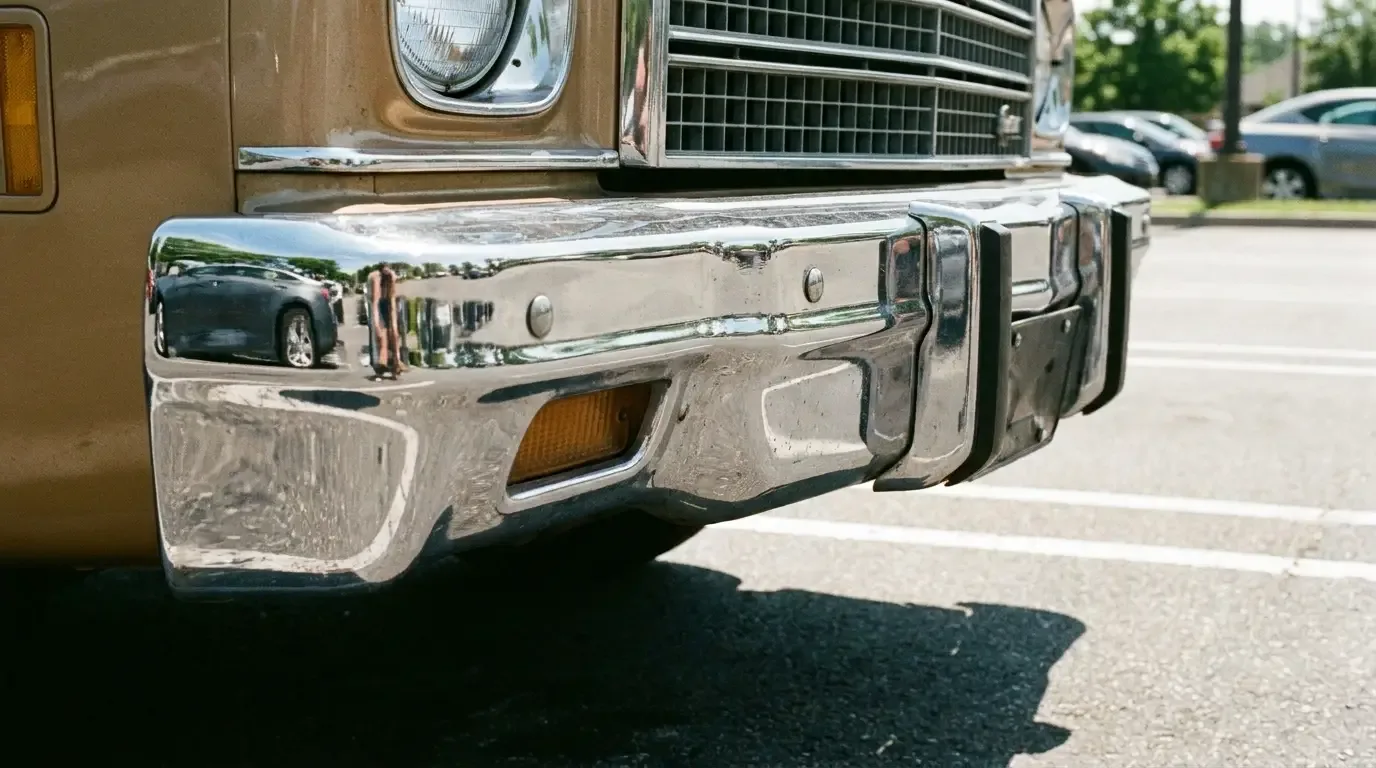
That bumper, and the ones like it on every Chevelle built from 1973 through the end of the Colonnade run, exists because of a single federal regulation that reshaped how American cars looked for the rest of the decade. It's one of the more overlooked chapters of the 1973-1977 Chevelle story, mostly because nobody thinks bumper standards are romantic. But the story behind them says a lot about the moment the muscle car era actually ended, and it isn't the story most people assume.
Where the rule came from
The regulation was NHTSA's Federal Motor Vehicle Safety Standard No. 215, "Exterior Protection," phased in starting with the 1973 model year. It required new cars to withstand a 5 mph front impact and a 2.5 mph rear impact against a perpendicular barrier without damage to safety-related equipment like headlamps and the fuel system. That rear-impact threshold rose to 4 mph for 1974, with tests performed at an angle as well as head-on, tightening the standard again just a year after it took effect. Insurance companies had been lobbying for something like this for years. Low-speed parking lot fender benders were generating repair bills that dwarfed the actual damage, because a 1960s bumper was often just a chrome strip bolted directly to the frame with almost no give in it. Hit a light pole at three miles an hour and you could crack a headlight bucket or bend a fender.
Detroit didn't have much lead time to solve the problem elegantly. The result, across nearly every domestic make, was a bumper built around a hydraulic or spring-loaded energy absorber, sized to meet the test, and it showed. Cars that had been sculpted with tight, low front ends through the muscle car years suddenly wore a chrome beam standing proud of the bodywork, sometimes by several inches. The Chevelle wasn't unique in this. It just happened to be transitioning from one of the most aggressively styled mid-size bodies GM had ever built into the softer Colonnade shape at exactly the same moment, so the contrast felt sharper than it did on cars that had already been styled with bulk in mind.
How the Chevelle absorbed the change year by year
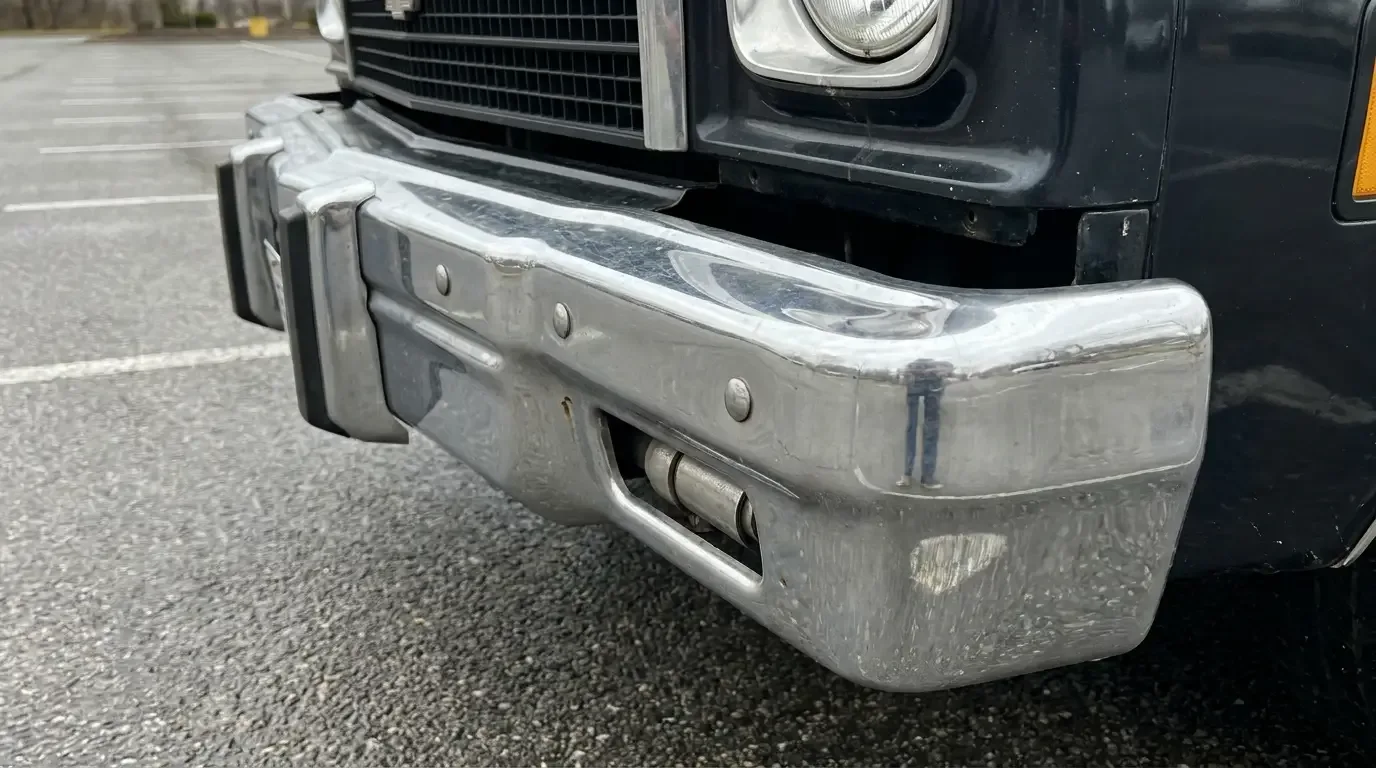
The 1973 front bumper sat on telescoping hydraulic units mounted behind the bumper face, designed to compress and rebound rather than transmit the impact straight to the frame rails. It worked. Owners of these cars will tell you they've bumped a curb or clipped a post at parking-lot speed and walked away without a mark, something almost nobody could say about a 1969 model. The tradeoff was weight and a look that Chevrolet's own designers weren't thrilled about. Public reaction wasn't kind either, at least not at first. Car magazines of the period ran plenty of complaints about bumpers that no longer matched the sleekness of the bodywork they were bolted to.
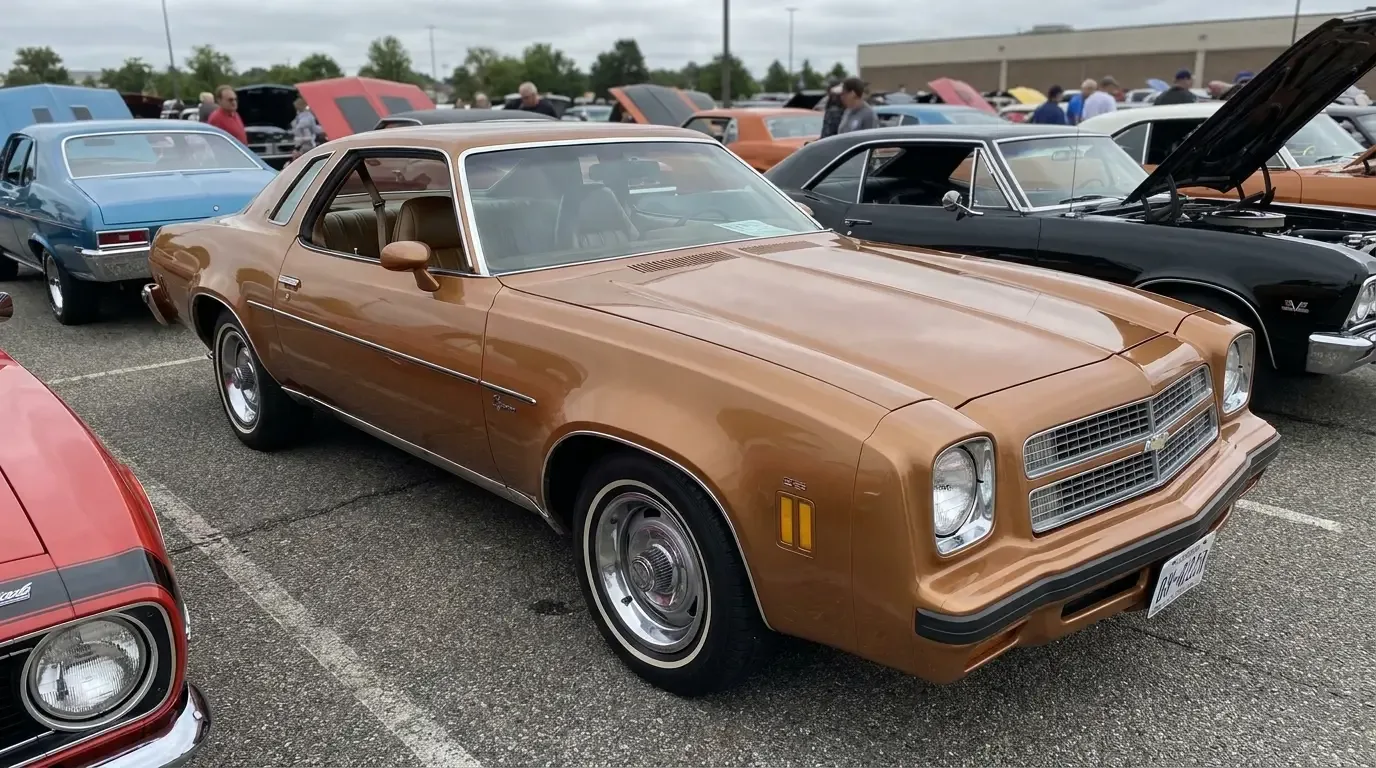
By 1974, the rear bumper caught up to the same requirement, and the whole car settled into the proportions people now associate with the Colonnade Chevelle: substantial chrome at both ends, body-color rubber strips or filler panels bridging the gap where possible, and a noticeably longer overall length than the 1972 model it replaced. The Laguna, and later the Laguna Type S-3, actually turned this into a styling advantage by wrapping the front bumper in a body-color polyurethane nose rather than leaving it as bare chrome, which is worth reading about on its own. That soft-nose treatment did more to disguise the bumper mandate than anything else in the Chevrolet lineup managed during these years, and it's part of why post-1973 Chevelles split so clearly into two camps among today's buyers: the ones who want the honest chrome-bumper look and the ones who prefer the Laguna's smoothed-over answer to the same rule.
| Model year | Front bumper standard | Rear bumper standard |
|---|---|---|
| 1972 and earlier | No federal 5 mph standard | No federal 5 mph standard |
| 1973 | 5 mph impact standard applies | 2.5 mph impact standard applies |
| 1974-1977 | 5 mph standard, angle impact tested | 4 mph standard, angle impact tested |
What it means for a Chevelle owner now
Fifty years on, the bumpers that annoyed period road testers have become one of the more practical features of owning one of these cars. A Colonnade Chevelle can survive the kind of low-speed contact that would send a modern car's plastic fascia to the body shop for a four-figure repair, and it can survive a lot of the incidental contact that happens at a crowded car show or a gas station without any repair at all. The hydraulic units themselves do fail over time. A bumper that sits noticeably crooked, or that sags at rest, usually means the shocks have lost their charge and need rebuilding or replacing, a straightforward job for anyone who's done basic suspension work.
For a buyer weighing which era of Chevelle to chase, the bumper years mark a real turning point, not just in looks but in what these cars were built to survive. Whether you land on the chrome-bumper honesty of a 1973 or 1974 model, or the softened Laguna approach that followed, the story is the same one that reshaped nearly every American car of the decade, and it's a chapter that only makes sense next to the Chevelle's complete history, where the muscle years and the comfort years sit side by side.
"Nobody sets out to fall in love with a bumper. But talk to enough owners of these cars and you'll hear the same thing, some version of 'I hit something once and it just bounced off.' That's not nostalgia talking. That's a genuinely well-engineered answer to a real problem, wearing a look that took people a few years to forgive."
Nora Beckett
The bumper story doesn't end with the base Chevelle line. It carries straight into how Chevrolet dressed up its top trim for the same years, which is where next: Malibu Classic picks up.
Sources and notes
- Wikipedia, "Bumper (car)": FMVSS 215 origin, 1973 front/rear mph thresholds, and the 1974 angle-impact tightening.
- Hagerty Media, "Two years that changed cars forever: 1974 (bumpers) and '75 (smog)": impact of the mandate on Detroit styling.
- Chicago Car Club, "The Big Ugly Bumper Mandate of '74": period reaction to the hydraulic-absorber bumper look.
- Carscoops, "50 Years Ago The NHTSA Tried To Make America's Cars Ugly": regulatory background and industry response.
- Curbside Classic, period Road & Track reprint on 5 mph impact bumpers: contemporary press reaction to the mandate.
- Wikipedia, "Chevrolet Chevelle": 1973-1977 Colonnade body and trim timeline.
Related Reading
Have a
Chevrolet Chevelle
for Sale?
Reach thousands of serious classic car collectors across the US.
Sell It Here →
Are You a Classic Car Dealer?
List your full inventory and connect with targeted classic car buyers.
Join as a Dealer →

About the author
Nora Beckett
Automotive features writer and photographer who tells the human stories behind the cars, from show fields to cross-country road trips.
Related Listings - Chevrolet Chevelle
More in History & Heritage
Comments
Be the first to comment on this article.