
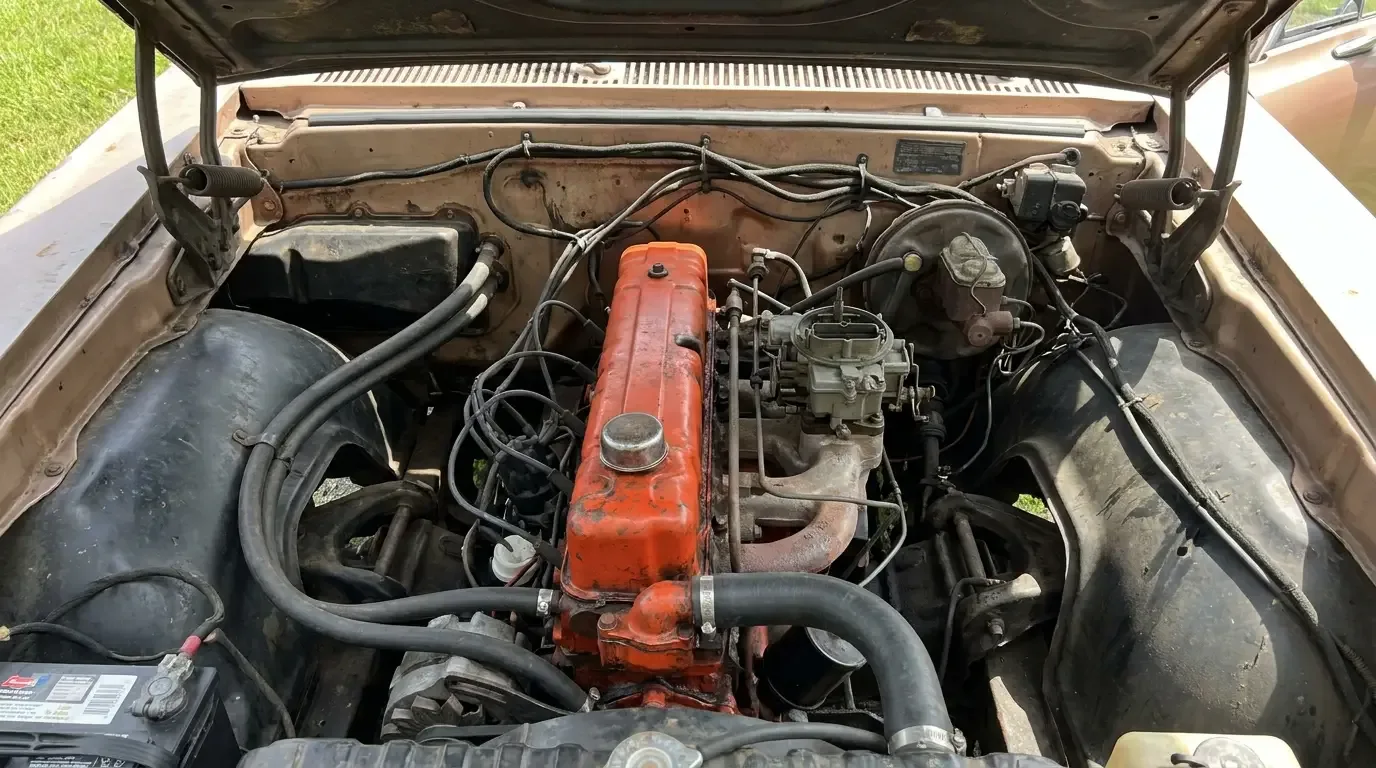
Everybody wants to talk about the big-block SS396 when the subject is a first-generation Chevelle. Fair enough, it's the headline engine. But most Chevelles that left the factory between 1964 and 1967 didn't have a big-block under the hood. They had a small-block, and for a lot of buyers back then, and a lot of owners now, the 283 and 327 V8s are the more honest story of what this car actually was on a daily basis.
History & Heritage
7 min read
The Early 283 and 327 V8s
Why the 283 and 327 small-block V8 options in the early Chevelle mattered, how they compare to the big-block, and what to check when buying one.
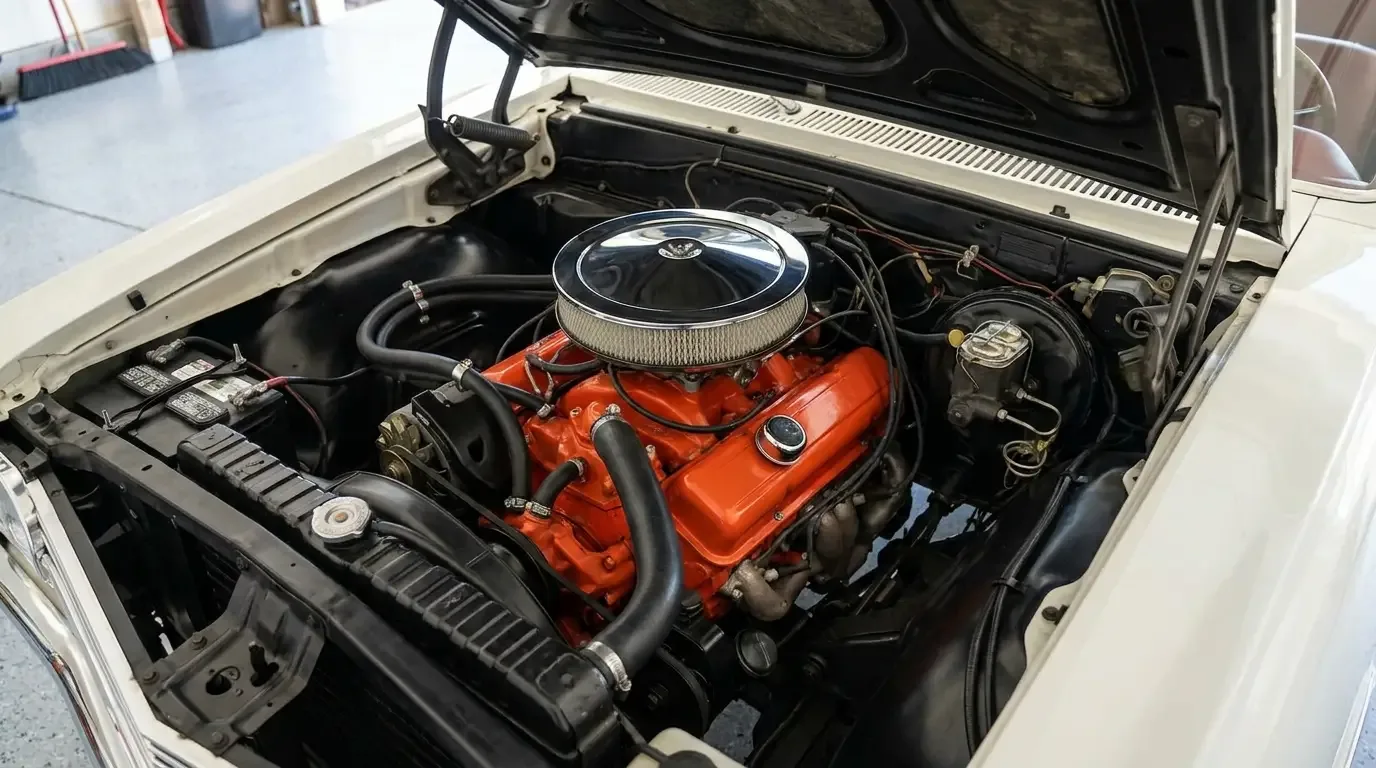
The numbers matter here more than the reputation. A 283 or 327 Chevelle isn't trying to be a drag strip weapon. It's trying to be a car with real power, reasonable weight over the front end, and none of the cooling and driveline headaches that come with stuffing a big-block into a mid-size body that wasn't originally drawn around one. That trade-off is worth understanding before you go chasing a car based on engine badge alone.
The 283: proven, not flashy
The 283 small-block wasn't new when the Chevelle launched in 1964, it had already been in Chevrolet's lineup for years and had a track record of being reliable and easy to service. In the Chevelle it came in multiple states of tune depending on carburetion, from a mild 195-hp two-barrel version aimed at everyday driving up to a 220-hp four-barrel setup with meaningfully more output. That four-barrel 283 was available through 1966 and then dropped from the Chevelle lineup for 1967, so a car built after that changeover won't have it as an option no matter what a seller claims.
What the 283 gives you is proven architecture. This engine had already worked out its problems in the Corvette and full-size Chevrolet applications before it ever went into a Chevelle, so buyers weren't taking a chance on something new. That's the whole point of putting a workhorse small-block in a family-oriented mid-size car. You want dependable, not experimental.
The 327 steps it up
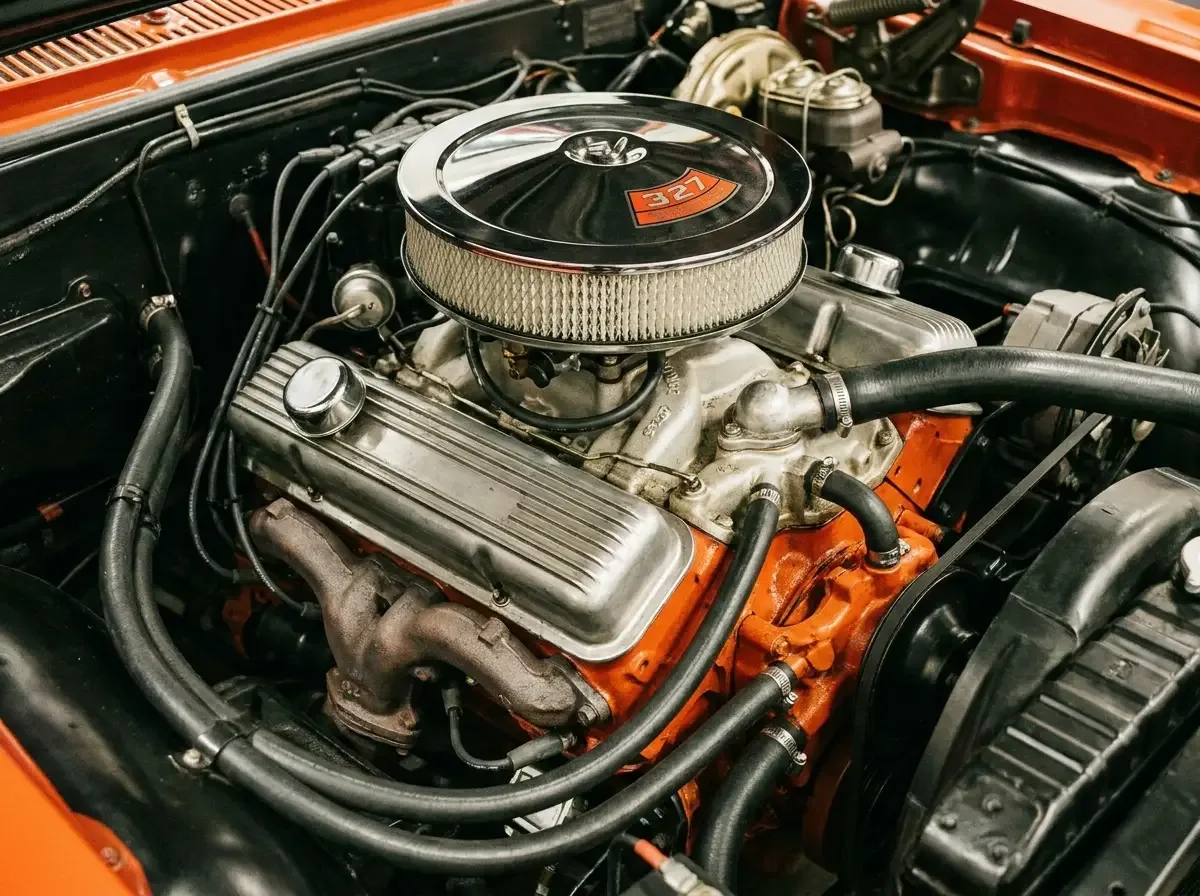
The 327 came into the Chevelle lineup as the small-block's power ceiling moved up, and it's the engine most enthusiasts point to when they talk about a genuinely quick early Chevelle that isn't a big-block car. The base L30 327 made 275 hp, and the genuine high-performance version, the L79, made 350 hp and 360 lb-ft of torque when it arrived in the Chevelle for 1965. It's listed on paper as a 1966 option too, but surviving production records show essentially none were actually built that year in the Chevelle, a gap enthusiasts still argue about. The L79 came back for 1967, but Chevrolet quietly relabeled that same engine at 325 hp, a marketing decision more than a mechanical one, since GM didn't want a small-block Chevelle option outrating its own entry-level 396 big-block on paper. Match the specific rating to the specific model year before you quote it, since the same engine wore different numbers depending on when it left the factory.
The real story with the 327 is weight distribution and balance. A small-block Chevelle carries less nose weight than a big-block car, and that shows up in how the car turns in and how the front end behaves under braking. It's not a subtle difference if you've driven both back to back.
| Engine | Character | Best for |
|---|---|---|
| 283 V8, base tune | Mild, reliable, easy to maintain | Daily driving, first-time classic owners |
| 283 V8, four-barrel | Noticeably stronger, still docile | Buyers who want more punch without complexity |
| 327 V8, base/mid tune | Solid mid-range power, balanced chassis feel | Weekend drivers who still want real performance |
| 327 V8, high-output | Genuine small-block muscle, revs hard | Buyers chasing performance without big-block weight |
Small-block versus big-block: the real trade-off
People assume bigger displacement always wins. On paper, sure, the 396 makes more peak power than any small-block Chevelle option from this era. But the small-block cars steer lighter, stop better proportionally, and don't ask as much of the cooling system or the front suspension components. If your plan is a car you drive regularly and enjoy on a back road, the 327 in particular is a legitimate performance option, not a consolation prize for buyers who couldn't get a big-block.
I've had both on the dyno enough times to know the small-block's numbers aren't embarrassing next to the big-block's, they're just different. Torque comes on differently, the redline behavior is different, and the whole character of the car changes with the weight sitting over the front wheels. That's not a knock on the 396. It's just honest math about what each engine actually gives you in the chassis it's sitting in.
"The 396 gets the magazine covers. The 327 is the engine that actually made most of these cars fun to drive every day. I'll take a well-sorted small-block with the right gearing over a tired big-block with a worn-out cooling system every time. The dyno sheet doesn't care about reputation, it cares about what's actually making power right now."
Dan Reeves
Buying and maintaining one now
Parts availability for the 283 and 327 is excellent, arguably better than for the big-block options, since these engines were used across so many GM platforms for so many years. That means rebuild costs are generally more predictable and the pool of knowledgeable mechanics who've worked on one is bigger. If you're looking at a Chevelle with one of these engines, the checks are the usual ones: verify the block casting numbers actually match what the seller claims, check for oil pressure issues that plague tired examples, and confirm the carburetor and intake combination match the factory tune being advertised rather than a mismatched aftermarket swap dressed up as original.
For the broader picture of how these engine choices fit into the Chevelle's early years overall, first-gen Chevelle history lays out the full context. And if the small-block story has you curious about the other end of the spectrum, the six-cylinder Chevelle story covers the base engine that most buyers actually drove home in.
What separates a good small-block from a tired one
A 283 or 327 that's been sitting or neglected doesn't announce itself the way a blown big-block does. It just runs a little softer than it should, idles a little rougher, and gives up power nobody notices until they drive a correctly tuned example back to back with it. Compression numbers across all eight cylinders should be close to each other, not just close to spec. A cylinder ten percent down from its neighbors is telling you something, whether that's a worn ring, a valve seating problem, or a head gasket starting to go, and no amount of carburetor tuning fixes a mechanical issue underneath it.
Oil pressure at idle is the other number I always check first before I touch a carburetor or timing. These small-blocks have known wear points in the cam bearings and the oil pump drive, and a tired engine will often still run fine on paper while quietly running low oil pressure that's setting up a bigger failure down the road. It's a five-minute check with a gauge, and it tells you more about the real condition of the engine than a test drive around the block ever will. Buy the car on what the numbers say, not on how good it sounds at idle in a quiet parking lot.
Sources and notes
- Hagerty: Your handy 1964-67 Chevrolet Chevelle buyer's guide
- Curbside Classic: 1966 220 HP 283 Chevrolet V8
- Speedway Motors: Chevy L79 327 Engine History, Specs, and Build Ideas
- Barn Finds: 350 HP 327, 1965 Chevrolet Chevelle L79
- Chevy Hardcore: Chevelle Engine Options 1967
- Team Chevelle forum: 1966 L79 production discussion
Related Reading
Have a
Chevrolet Chevelle
for Sale?
Reach thousands of serious classic car collectors across the US.
Sell It Here →
Are You a Classic Car Dealer?
List your full inventory and connect with targeted classic car buyers.
Join as a Dealer →

About the author
Dan Reeves
Performance engine builder from North Carolina's motorsports corridor, focused on swaps, forced induction and making real, repeatable power.
Related Listings - Chevrolet Chevelle
More in History & Heritage
Comments
Be the first to comment on this article.