
Ask around at a Chevelle show long enough and somebody will eventually tell you the 1964 Chevelle led the field at the Indianapolis 500. It's a good story. It's also not true, and it's worth setting straight, because the real story of the Chevelle on a racetrack is better than the myth, even if it never involved a pace lap at the Brickyard.
History & Heritage
6 min read
The Chevelle's Indy Pace Car Myth and Its Real Racing Legacy
The 1964 Indy 500 pace car was a Ford Mustang, not a Chevelle. Here's how the myth started, and the real NASCAR and USAC track history the Chevelle actually built.
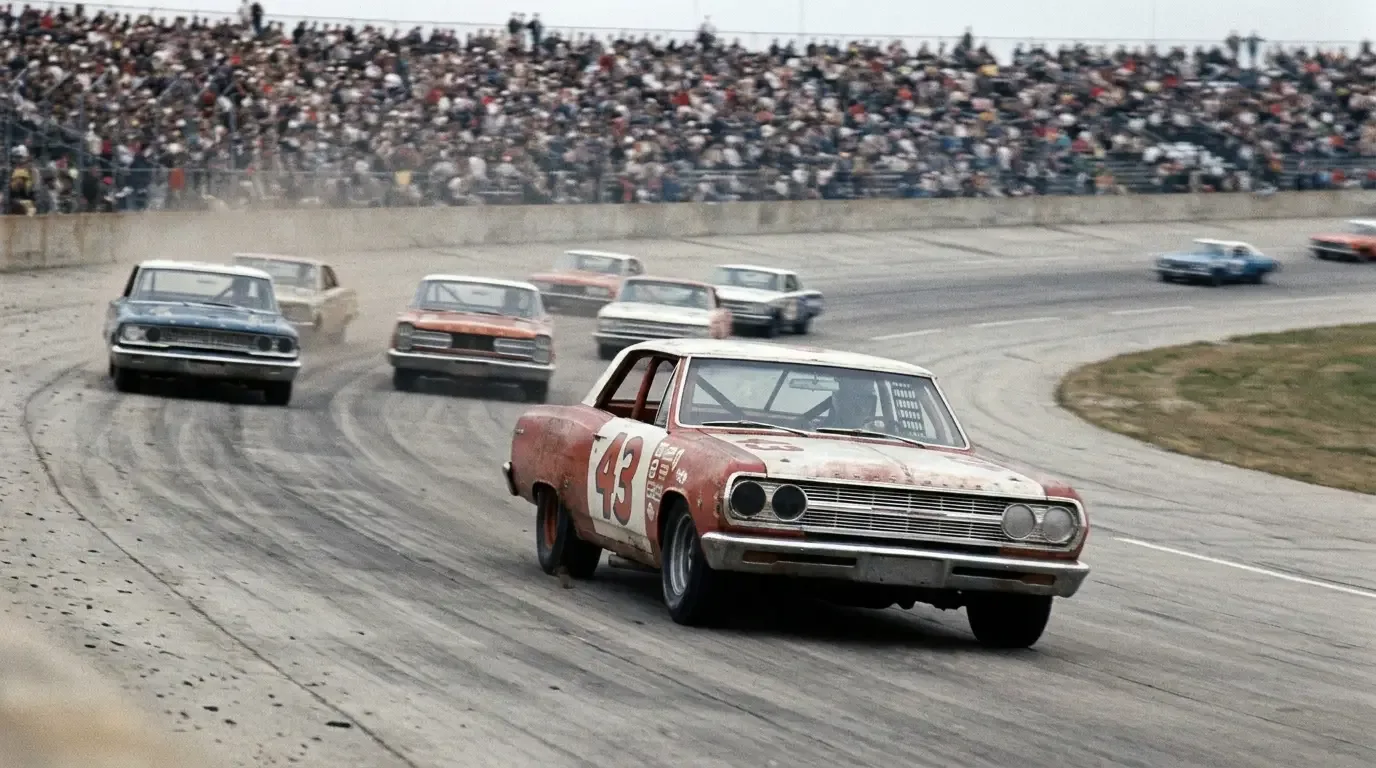
The 1964 Indianapolis 500 pace car was a Ford Mustang, driven by Benson Ford, grandson of Henry Ford, in the car's public debut month. No Chevrolet Chevelle has ever served as the official Indianapolis 500 pace car, in 1964 or any year since. For the broader picture of how the Chevelle came together in the first place, how the Chevelle began covers the platform decisions that led up to its 1964 launch. This is the story of what the Chevelle actually did on track, and where the pace car mix-up likely comes from.
What actually happened at Indianapolis in 1964
Ford used the brand-new Mustang, introduced to the public just weeks earlier, to pace the 1964 Indianapolis 500. The stock 260 cubic inch V8 wasn't fast enough to hold pace car speed, so Ford sent three Mustangs to Holman-Moody in North Carolina, where they were fitted with a detuned version of the early GT40's 289 cubic inch engine, pushing output to roughly 450 horsepower. Ford built about 225 Mustang pace car replicas, 35 convertibles and around 190 hardtops, and handed them out to dealers and race-week contest winners. It was one of the most effective product launches in Detroit history, and it belonged to Ford, not Chevrolet.
Chevrolet's own Indy pace car moments came later, and from different nameplates entirely. A Camaro RS/SS convertible paced the race in 1967, the third time Chevrolet had been chosen, and it came back again in 1969 with a Camaro Z28-striped pace car driven by three-time Indy winner Mauri Rose. The Corvette didn't get its first Indy pace car assignment until 1978, which is now the model most associated with Chevrolet's pace car duty. Chevrolet has supplied the Indy 500 pace car exclusively since 2002, almost always with a Corvette. The Chevelle simply was never part of that lineup.
Where the myth probably comes from
It's an easy mix-up to make. The Chevelle launched the same year the Mustang paced Indy, both cars were brand-new intermediate-class Detroit products competing for the same kind of buyer attention, and Chevrolet did put Camaros at the front of the Indy field within a few years of the Chevelle's debut. Fold those threads together at a show or in an old magazine clipping and it's not hard to see how "Chevrolet paced Indy around the time the Chevelle came out" turns into "the Chevelle paced Indy." The two things happened close together. They didn't happen to the same car.
The Chevelle's real track record
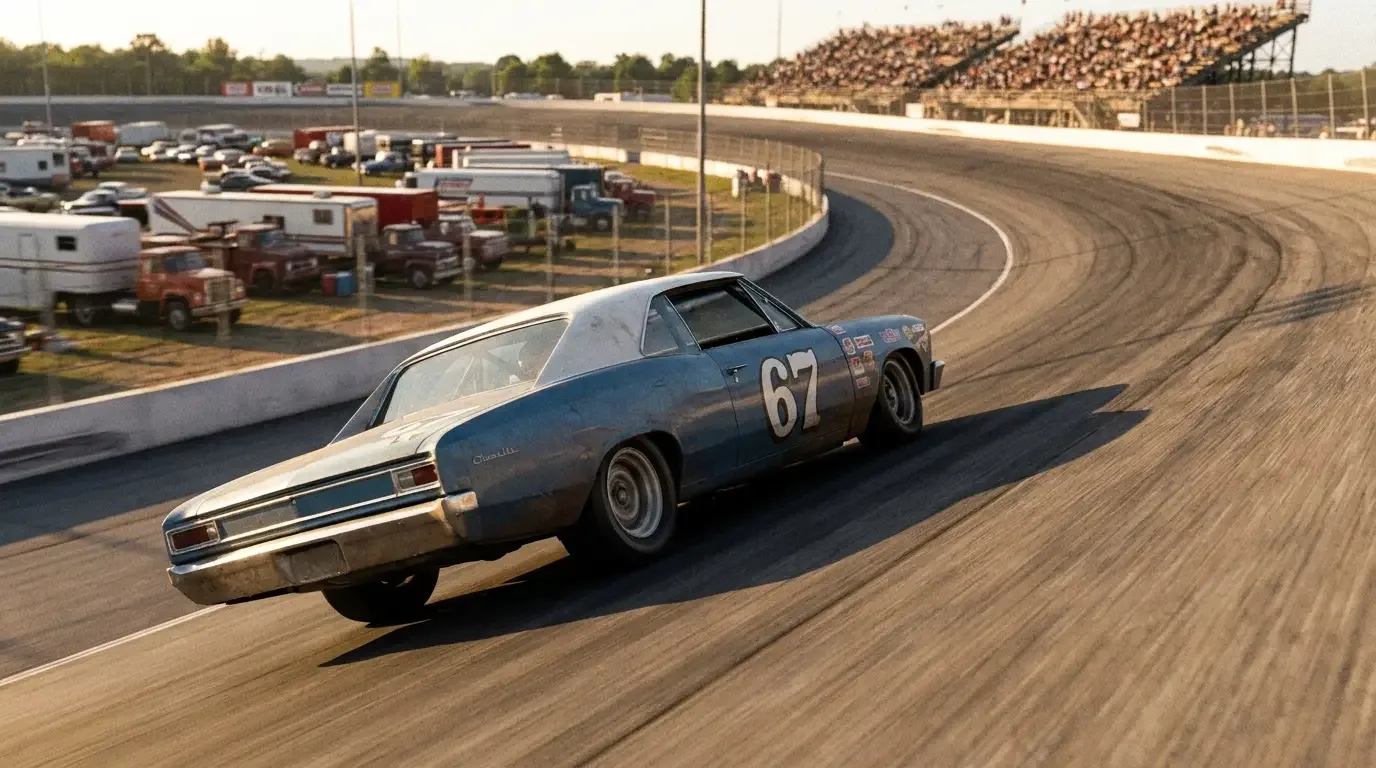
What the Chevelle actually did in motorsport doesn't need a borrowed Indy story to be worth telling. Bobby Allison scored the first three of his eventual 85 NASCAR Cup wins driving a small-block Chevelle for owner J.D. Bracken in the mid-1960s, building a reputation that would carry him through the rest of his career. The Chevelle ran in NASCAR's Grand National and Winston Cup series from 1964 through 1977, a run that outlasted most of the cars it raced against.
The single wildest Chevelle racing story belongs to Smokey Yunick's 1967 Daytona 500 entry, driven by Curtis Turner. The car became the first to break 180 mph in official Daytona qualifying, clocking 180.831 mph and taking the pole ahead of factory Ford and Chrysler entries. It was also, famously, not quite full-size: Yunick's Chevelle ran roughly seven-eighths scale, narrower and shorter than a stock car, a detail that drew protests from rival teams even after NASCAR let the car race. Turner's engine failed late in the race, and USAC star Mario Andretti, who'd taken over the car, drove the final laps to the win, his first in NASCAR Grand National competition.
| Year | Actual Indy 500 pace car | Chevrolet connection |
|---|---|---|
| 1964 | Ford Mustang | None (Chevelle's launch year) |
| 1967 | Chevrolet Camaro RS/SS convertible | Third Chevrolet pace car overall |
| 1969 | Chevrolet Camaro (Z28-style stripes) | Driven by three-time Indy champ Mauri Rose |
| 1978 | Chevrolet Corvette | Corvette's first Indy pace car assignment |
"I've heard the pace car story told as gospel at more than one show, and I get why it sticks. It's a good story. But the real Chevelle racing history doesn't need the borrowed shine. Curtis Turner put a seven-eighths-scale Chevelle on the Daytona pole ahead of the factory teams in 1967, and Mario Andretti drove it to the win after the engine let go under Turner. That's a better story than a pace lap, because it actually happened to this car."
Patrick Walsh
What this means for collectors
If you're chasing a documented piece of Chevelle motorsport history, look toward the real record instead of a pace car replica that never existed. NASCAR-associated Chevelles from the Allison and Yunick era, and cars with a genuine, paperwork-backed connection to Grand National racing, are where the actual collector premium sits. A car marketed as an "Indy pace car Chevelle" without a factory or dealer paper trail isn't just undocumented, it's describing something that never happened, and that's worth knowing before anyone pays a premium for the story.
The broader lesson holds either way. Chevrolet bet on the Chevelle early and loud in 1964, and it built its own performance reputation over the next thirteen years without any help from Indianapolis. For where the platform itself came from, next: The A-Body Origins covers the GM strategy that put the Chevelle on the road in the first place.
Sources and notes
- Wikipedia: Indianapolis 500 Pace Cars (full list by year)
- autoevolution: The 1964 Ford Mustang Indy 500 Pace Car
- Chevy Hardcore: Top 10 Indy 500 Chevy Pace Cars of All Time
- DailySportsCar: The Infamous and Incredible 1967 Smokey Yunick Chevrolet Chevelle
- Mac's Motor City Garage: The Truth About Smokey Yunick's 7/8-Scale Chevelle
- Stock Car Racing Wiki: Chevrolet Chevelle NASCAR History
Related Reading
Have a
Chevrolet Chevelle
for Sale?
Reach thousands of serious classic car collectors across the US.
Sell It Here →
Are You a Classic Car Dealer?
List your full inventory and connect with targeted classic car buyers.
Join as a Dealer →

About the author
Patrick Walsh
Automotive journalist covering classic car shows, events, and the enthusiast community across North America.
Related Listings - Chevrolet Chevelle
More in History & Heritage
Comments
Be the first to comment on this article.