
You don't get to the Chevelle without first understanding why General Motors needed a car like it at all. The A-body platform that underpins the first-generation Chevelle wasn't dreamed up in a vacuum. It was a corporate answer to a problem GM had built for itself, and once you see the problem, the Chevelle's whole shape and size and price point make a lot more sense.
History & Heritage
6 min read
The A-Body Origins: GM's Strategy Behind the Chevelle
The Chevelle wasn't built as a muscle car. It was GM's answer to a gap between compact and full-size, shared across four divisions.
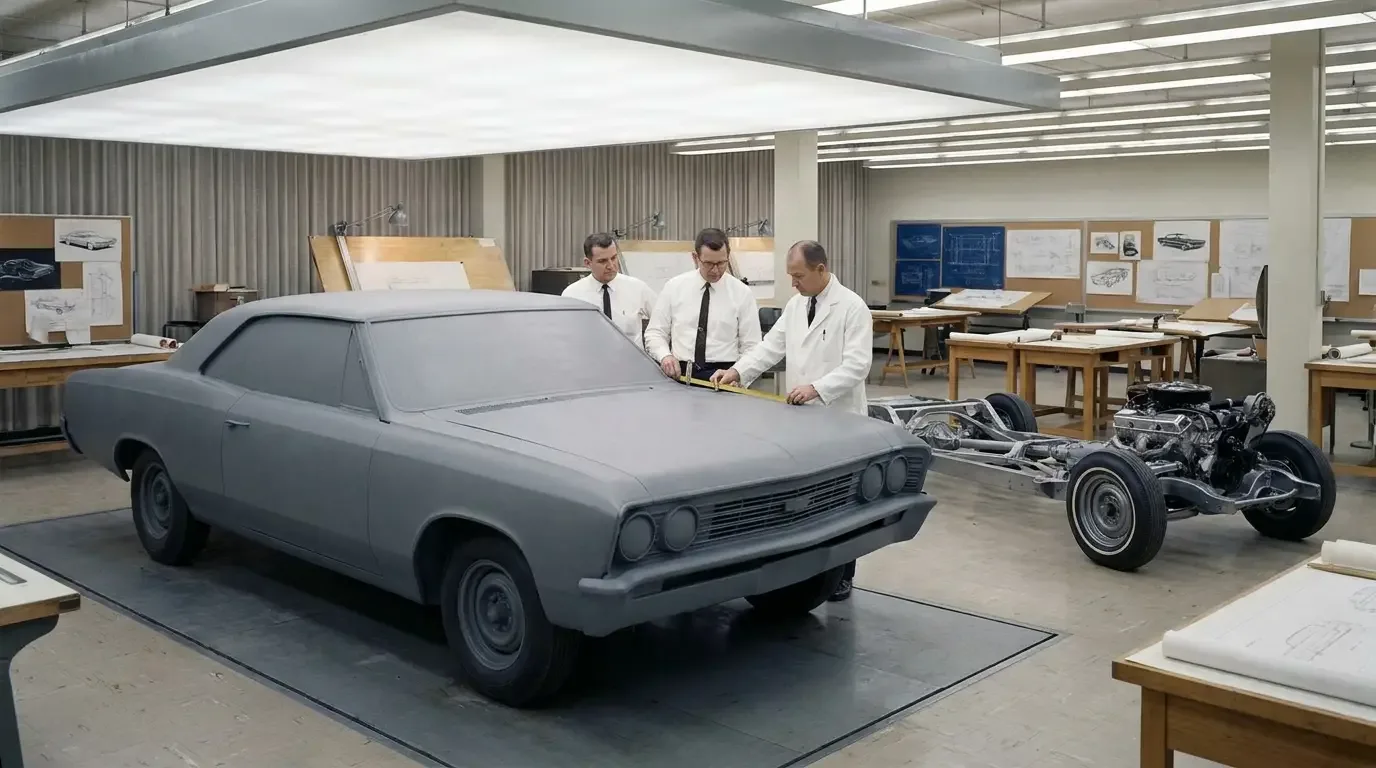
This is the strategy story, not the specs story. For the model-by-model breakdown of what the Chevelle actually was once it hit showrooms, the A-body's early years covers that ground directly. Here, the focus is on why GM built this platform in the first place, and what it was competing against.
The problem GM created for itself
Through the late 1950s and into the early 1960s, GM's full-size cars kept getting bigger, heavier, and more expensive. That growth wasn't reckless, it followed what buyers seemed to want at the time, chrome and length and presence. But it left a gap in the middle of the lineup. Between the compact Chevy II and Corvair on one end and the full-size Impala and Bel Air on the other, there was a wide stretch of the market where a lot of buyers actually lived: people who wanted more room and more car than a compact, without paying full-size money or hauling around full-size weight.
Ford had already spotted this gap and moved on it with the Fairlane, an intermediate-sized car that undercut the full-size Galaxie on price while offering meaningfully more interior space than a Falcon. Chevrolet dealers were losing sales to that car, and GM's Chevrolet division needed an answer that could hit the same segment without cannibalizing its own full-size lineup too badly.
The A-body answer
GM's solution was the A-body platform, shared across Chevrolet, Pontiac, Oldsmobile, and Buick, each division getting its own version: Chevelle, Tempest, Cutlass, and Special or Skylark depending on trim. Sharing the platform across four divisions was itself the strategy. It spread tooling and engineering costs across a much larger production run than any single division could justify alone, which is exactly how GM had always made its multi-brand structure pay for itself.
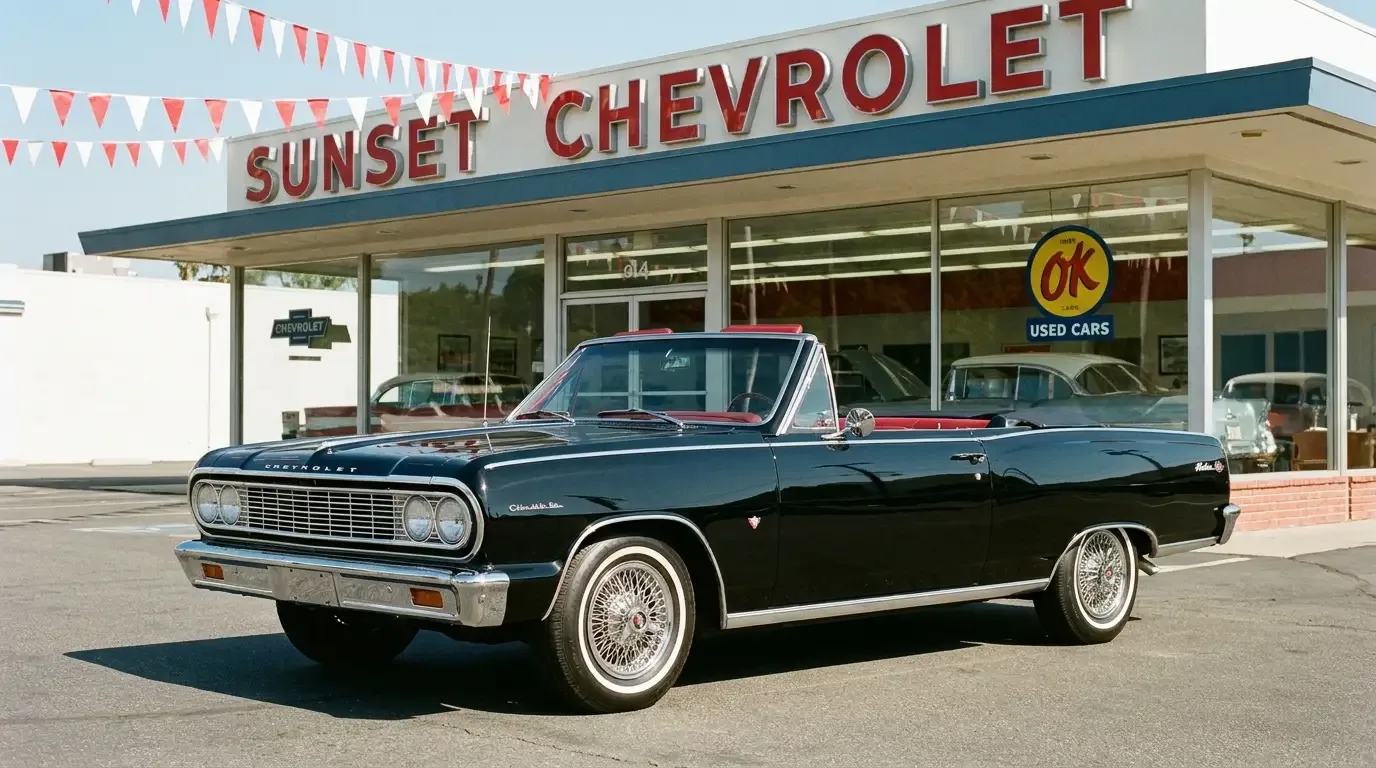
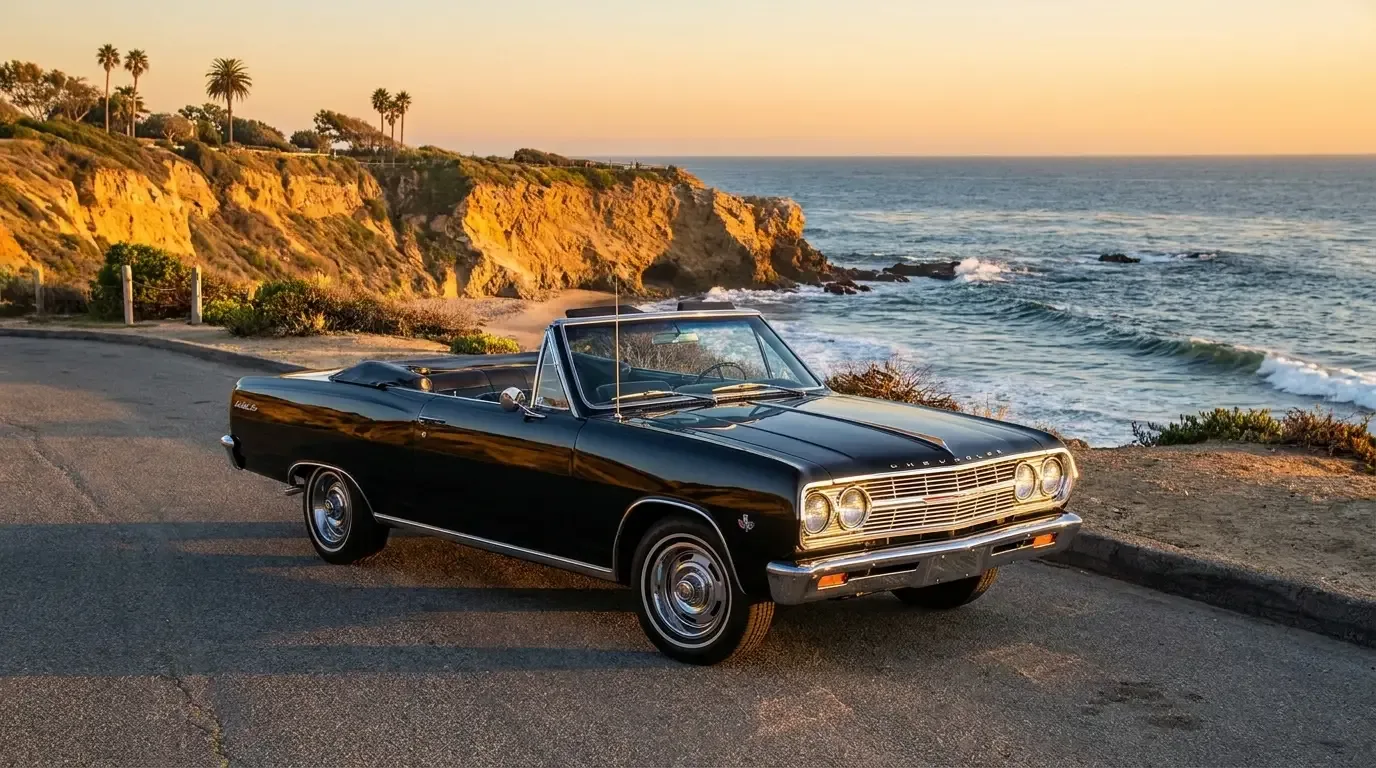
For Chevrolet specifically, the Chevelle needed to slot in below the full-size cars on price and size, above the Chevy II on room and trim options, and it needed to do all of that while still leaving room for Chevrolet to sell a performance version once the market showed appetite for one. The initial 1964 lineup, the 300, 300 Deluxe, and Malibu trims, was built around exactly that positioning: a car for the buyer who wanted more than a compact without stepping up to full-size payments.
What the engineers actually had to solve
Sizing a new platform correctly is harder than it sounds from the outside. GM's engineers weren't just shrinking a full-size car, and they weren't just stretching a Chevy II. The A-body needed its own full perimeter frame, its own suspension geometry, and its own set of engine bay dimensions that could accommodate everything from a base six-cylinder up through a small-block V8, without the packaging compromises that come from trying to force a full-size drivetrain into a compact-sized engine bay. That perimeter-frame, body-on-frame layout was itself a change of direction for GM's intermediates, replacing the unibody construction and rear transaxle used by the compact senior Tempest/Y-body cars that came before it, and it borrowed the coil-spring four-link rear suspension GM had already proven on its full-size Pontiacs and Oldsmobiles.
That's a real engineering problem, not just a styling one. Get the wheelbase wrong and the car rides poorly loaded with four adults. Get the engine bay too tight and you can't offer the V8 options that eventually made the Chevelle's performance reputation possible. GM's engineers had to thread a needle between a car light enough to be genuinely more efficient than a full-size model and a car structurally capable of handling a small-block V8 without flexing or overheating. The fact that the same basic chassis could carry a 194 cubic inch six and, within a couple of years, a 396 cubic inch big-block, says the engineering solved that problem about as well as it could have been solved for the era.
| GM division | A-body nameplate | Segment role |
|---|---|---|
| Chevrolet | Chevelle | Volume intermediate |
| Pontiac | Tempest | Performance-leaning intermediate |
| Oldsmobile | Cutlass / F-85 | Upmarket intermediate |
| Buick | Special / Skylark | Premium intermediate |
Why this mattered beyond one model year
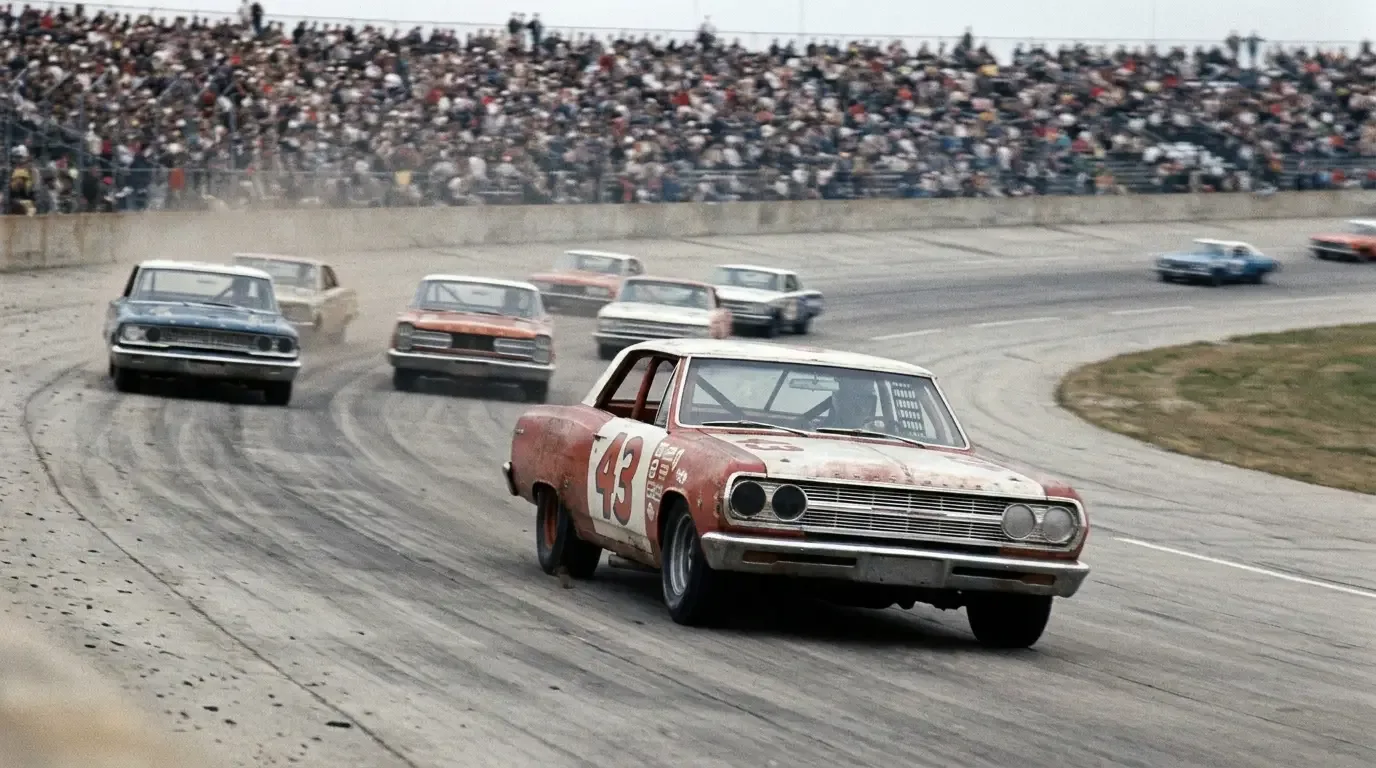
The genius of the A-body strategy, if you want to call it that, was flexibility built in from the start. A platform sized right for a family sedan is also, with the right engine and suspension tuning, sized right for a performance car. GM didn't fully exploit that until the SS396 arrived and the muscle car era took off, but the bones were there from 1964 onward specifically because the platform had been engineered to serve multiple roles across multiple divisions and multiple buyer types.
That's a very different origin story than a lot of muscle car histories tell. The Chevelle wasn't conceived as a performance car looking for an engine. It was conceived as a corporate answer to a market gap, and the performance version came later, once Chevrolet realized what the platform could support. Understanding that order of operations changes how you read every SS396 story that follows, because the muscle car was an evolution of a mainstream strategy, not the original point of the exercise.
"Every intermediate GM built in 1964 came out of the same conference room decision, and that's easy to forget once you're standing in front of an SS396 at a show forty years later. The Chevelle didn't start as a muscle car. It started as a spreadsheet problem, and somebody solved it well enough that the spreadsheet answer turned into one of the most collected American cars ever built."
Patrick Walsh
The strategy's long shadow
Every major decision made about the first-generation Chevelle, its size, its price ladder, its shared engineering with three other GM nameplates, traces back to this original strategic problem: how does GM capture the buyer sitting between compact and full-size without wrecking the profitability of either. The Chevelle succeeded at that job well enough that it outlasted most of its A-body siblings, and it's worth remembering that success started as a business decision, not a styling exercise.
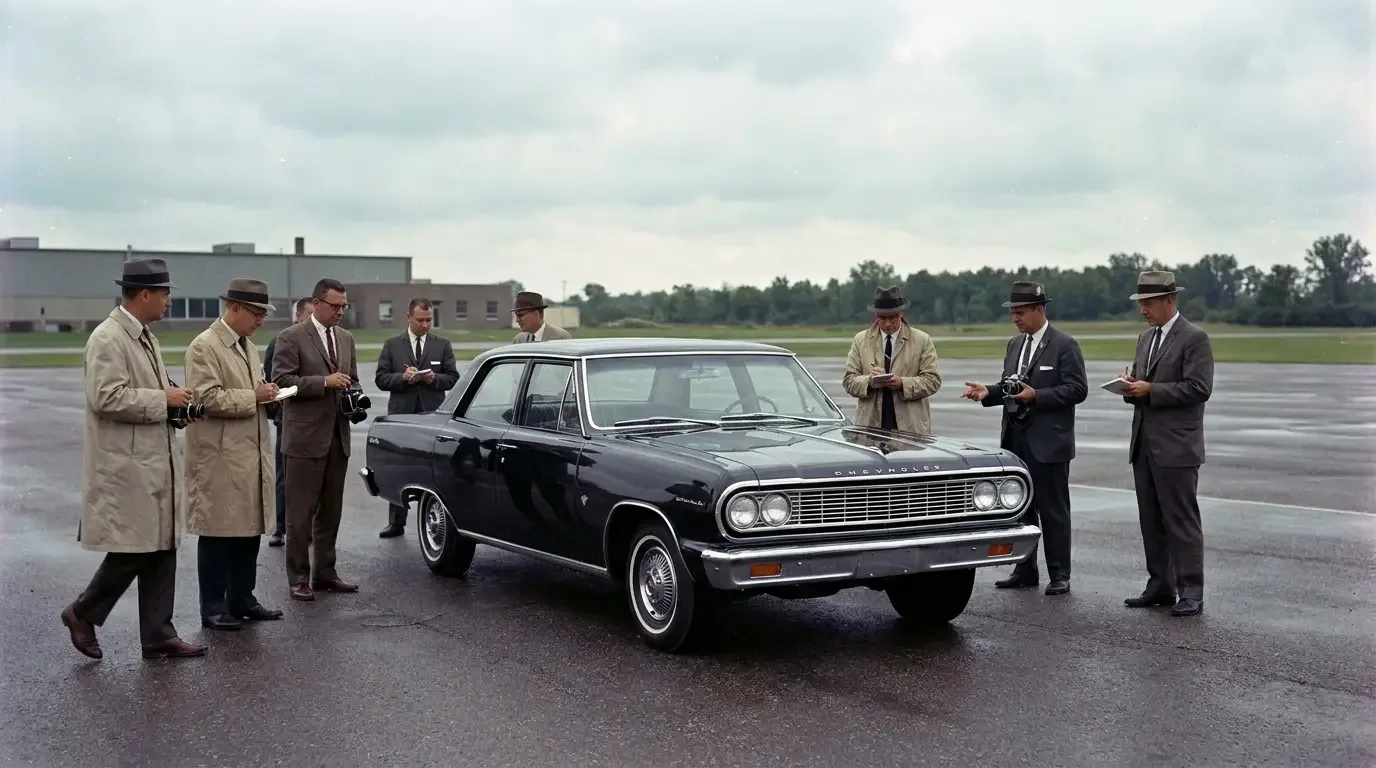
For the full arc of how that decision played out across the whole first generation, the Chevelle's complete history picks up where this leaves off. And for how Chevrolet actually introduced this new strategy to the public and the press, next: The 1964 Press Launch Story covers the rollout itself.
Sources and notes
Related Reading
Have a
Chevrolet Chevelle
for Sale?
Reach thousands of serious classic car collectors across the US.
Sell It Here →
Are You a Classic Car Dealer?
List your full inventory and connect with targeted classic car buyers.
Join as a Dealer →

About the author
Patrick Walsh
Automotive journalist covering classic car shows, events, and the enthusiast community across North America.
Related Listings - Chevrolet Chevelle
More in History & Heritage
Comments (1)
R
Roy Sandoval
1 month ago
Good reminder that the first year of a new generation often has problems that were sorted by year two or three. Worth considering when choosing between years.