
The exterior graphics get most of the attention when people talk about the SS package, but the build sheet tells a more interesting story once you get inside the car. The SS interior wasn't one fixed spec across eight model years. It was a moving target tied to RPO codes, and the documentation shows exactly what changed and when, which matters if you're trying to verify whether a car in front of you actually left the factory the way it's being sold.
History & Heritage
6 min read
SS Interior and Trim Character
What the build sheets actually show about Chevelle SS bucket seats, gauge packages, consoles, and trim, year by year.
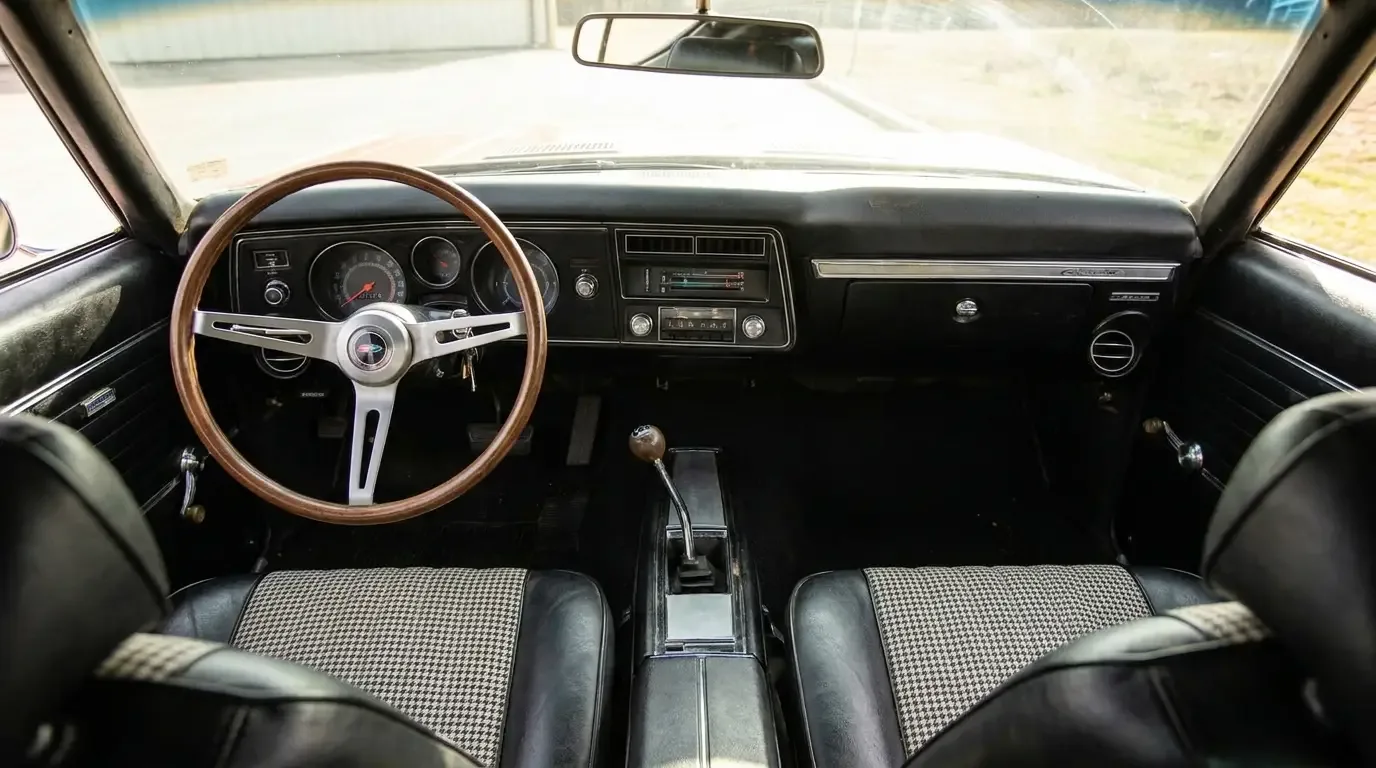
Most of what buyers assume about SS interiors turns out to be half right. The bucket seats were real and consistent. The console wasn't always standard. The gauge package depended on which options were stacked on top of the SS code itself, not on the SS designation alone. Sorting out which details are factory-documented and which are assumption takes a look at the build sheets rather than the folklore.
Bucket seats and the console question
Front bucket seats came standard with the SS package across its run, paired with a center console when the car was ordered with an automatic or a floor-shifted manual. That console housed the shifter, and depending on the model year, an optional gauge cluster or a simple storage compartment. Cars ordered with a column-shift transmission and the SS package could be built with a bench seat in some early years, which surprises people who assume every SS came with buckets and a console as a fixed pair. The documentation shows otherwise, RPO codes for seating and console were separate line items that happened to be ordered together most of the time, not a locked package.
The upholstery patterns themselves shifted by model year. Early SS interiors used a simpler vinyl pattern, while the 1968-1969 cars introduced houndstooth cloth inserts on certain trim levels, a detail that shows up correctly in factory photography from the period but gets reproduced incorrectly often enough in aftermarket upholstery kits that it's worth checking a sample against period documentation before ordering a full interior kit.
The instrument panel and the Rally gauge question
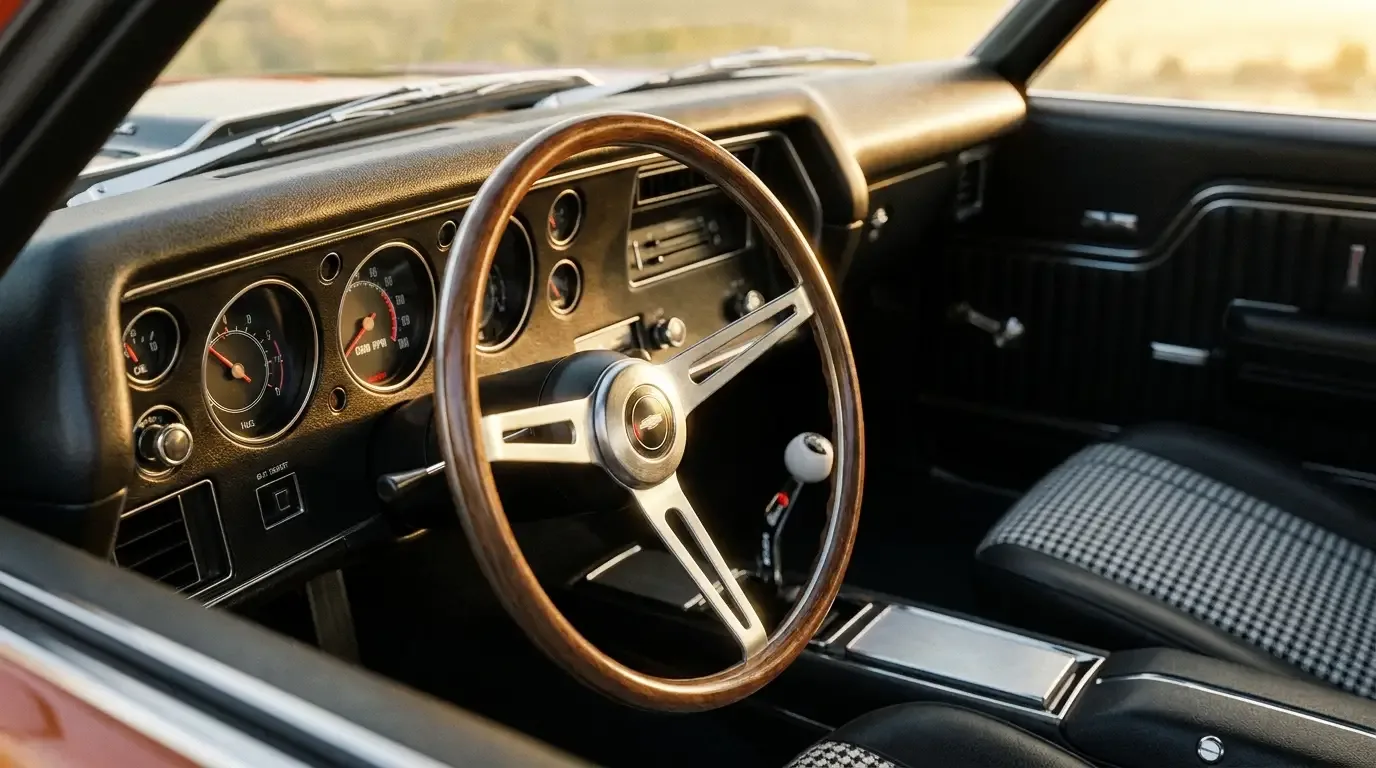
This is where the record gets more specific and more useful. The SS package by itself did not guarantee a full instrument cluster with tachometer and auxiliary gauges. That came through a separate RPO, commonly paired with SS orders but not bundled into the SS code automatically. A base SS car could leave the factory with idiot lights for oil pressure and temperature and a simple speedometer, while the same body style ordered with the gauge option got a genuine tach, oil pressure, temperature, and amp gauges in a purpose-built cluster face.
People assume every real SS396 or SS454 came with the full gauge package because that's the car everyone remembers from photographs and shows. The base setup on an SS-optioned car was still a plain speedometer and fuel gauge with no tach, water temp, or amp gauge, and the full instrument package was its own RPO (U14) layered on top. I won't guess at exact take rates without a source in front of me, but the option existed as a separate line, and cars without it are not somehow less authentic. They're just optioned differently, which is exactly the kind of detail a tank sticker or original invoice settles instantly and an assumption never does.
The steering wheel and shifter details that get overlooked
The deluxe steering wheel, a simulated walnut-rimmed wheel offered as an option through most of the SS run, is one of the more commonly misidentified parts on a restored car. Reproduction wheels have closed the gap in recent years, but early reproductions used a different rim diameter and spoke casting than the factory part, which is a detail worth checking with calipers rather than eyes if the wheel is presented as original.
Shifter details tell their own story. A console-shift automatic used a different shift quadrant plate depending on the transmission, and cars that have had a transmission swapped, which happens more often on driver-quality SS cars than people admit, sometimes carry a shift plate that doesn't match the case in front of it. It's a small detail, but small details are usually where the truth about a car's history actually lives.
Reading the interior against the build sheet
| Feature | What the documentation shows |
|---|---|
| Bucket seats | Standard with SS package across the run |
| Center console | Common with automatic/floor-shift orders, not automatically bundled with every SS build |
| Rally gauge cluster with tach | Separate RPO, frequently paired with SS orders but not guaranteed by the SS code alone |
| Houndstooth cloth inserts | Introduced on certain 1968-1969 trim combinations, not present on earlier SS interiors |
| Deluxe walnut-rim steering wheel | Optional across most SS years, distinct rim casting from base wheel |
Anyone chasing full documentation on a specific car should start with the SS heritage, which lays out how the package evolved year to year before narrowing down to interior-specific codes.
"The build sheet doesn't care what the car looks like in a magazine photo from 1968. It records what actually left the plant on that specific chassis, and that's the only document that settles an argument about originality. I've seen plenty of restorations built to match the picture in someone's head instead of the paperwork for that car, and they're both nice cars, but only one of them is correct."
Tom Ramirez
What this means for buyers
An SS interior missing the full gauge package or wearing a bench seat instead of buckets isn't automatically a red flag. It can be exactly how the car left the factory. The mistake is assuming every SS Chevelle came identically equipped inside, when the RPO structure allowed for real variation year to year and order to order. Anyone shopping a car being sold as fully documented should ask to see the build sheet or tank sticker before taking the interior spec on faith, and anyone restoring a car should match the documentation for that specific VIN rather than a composite memory of what SS interiors are supposed to look like.
The wheels tell a similar story of options stacked on options, and the next: The SS Wheels Story covers how Rally wheels, SS wheels, and Magnum 500s fit into the same documentation puzzle.
Sources and notes
- Chevelle gauge and instrument cluster options by year, chevellestuff.net
- RPO U14 discussion, Team Chevelle
- Special Instrumentation Package RPO reference, NovaResource
- How to identify an SS Chevelle, chevellestuff.net
- Chevelle RPO options by model year, chevellestuff.net
- Chevrolet Chevelle, Wikipedia
Related Reading
Have a
Chevrolet Chevelle
for Sale?
Reach thousands of serious classic car collectors across the US.
Sell It Here →
Are You a Classic Car Dealer?
List your full inventory and connect with targeted classic car buyers.
Join as a Dealer →

About the author
Tom Ramirez
Corvette researcher and historian based in Bowling Green, Kentucky. Two decades documenting Corvette production history from original factory records.
Related Listings - Chevrolet Chevelle
More in History & Heritage
Comments (1)
N
Norm Delgado
2 months ago
The pricing history in this article is useful context. Easy to forget how recently some of these values moved.