
I've pulled more wrong wheels off SS Chevelles than I can count. Somebody bolts on a set of Magnum 500s because they look right in a magazine photo, and the car never had them from the factory. Wheels are one of the easiest things to get wrong on a restoration and one of the easiest things to fake on a car somebody's trying to sell you as more original than it is. So let's go through what Chevrolet actually put under these cars, year by year, and what shows up on the used-parts circuit that doesn't belong there.
History & Heritage
6 min read
The SS Wheels Story: Rally, SS, Magnum 500
Rally wheels, the dedicated SS wheel, and Magnum 500s on the Chevelle SS, what's actually factory-correct and what gets faked.
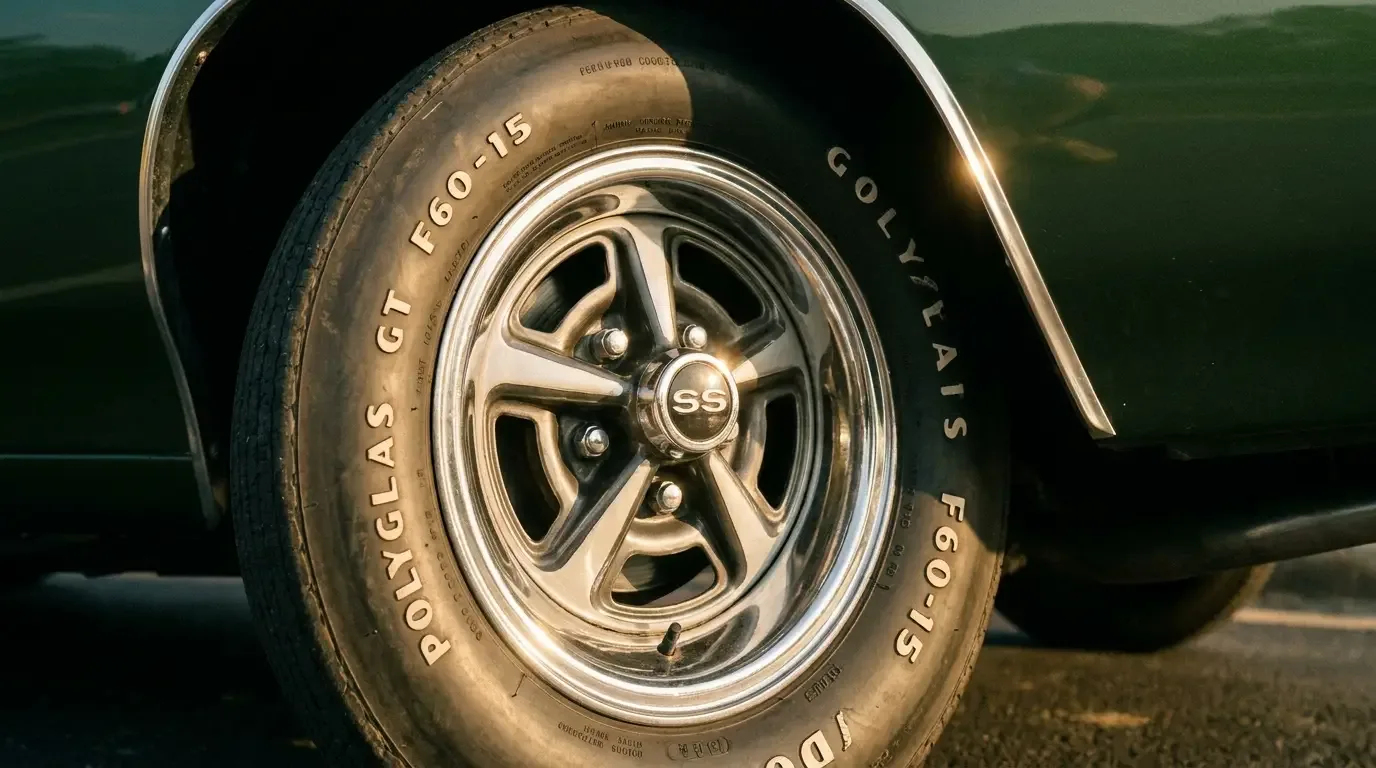
Three wheel styles matter for the SS Chevelle story: the Rally wheel, the dedicated SS wheel, and the Magnum 500. People use these names loosely, sometimes interchangeably, and that's exactly where the confusion starts.
Rally wheels: the one people assume was standard, and mostly wasn't
The Rally wheel is a stamped steel wheel with a distinctive trim ring and a center cap, and it's not SS-exclusive. Chevrolet used it across other performance models too, which is exactly why it's the wheel you see in period photos of plenty of Chevelles that were never optioned SS. In 1967, the slotted Rally-style wheel was standard equipment, but only paired with the J52 front disc brake option, not on every SS. By 1968 the Rally wheel on an SS car was an option, not standard equipment. Fourteen and fifteen-inch versions exist depending on the model year and brake package, and the trim ring profile changed enough between years that a ring off a 1968 car won't sit right on a 1970 hub without somebody noticing.
If you're checking a car for correctness, the center cap is the first place I look. Original caps have specific casting marks and a particular depth to the SS lettering. Reproduction caps have gotten better over the last decade, but the early repro stuff is thinner-gauge and sits a hair proud of the wheel face. Not a huge deal on a driver. A big deal if somebody's charging concours money for a set that isn't.
The dedicated SS wheel and where it actually applied
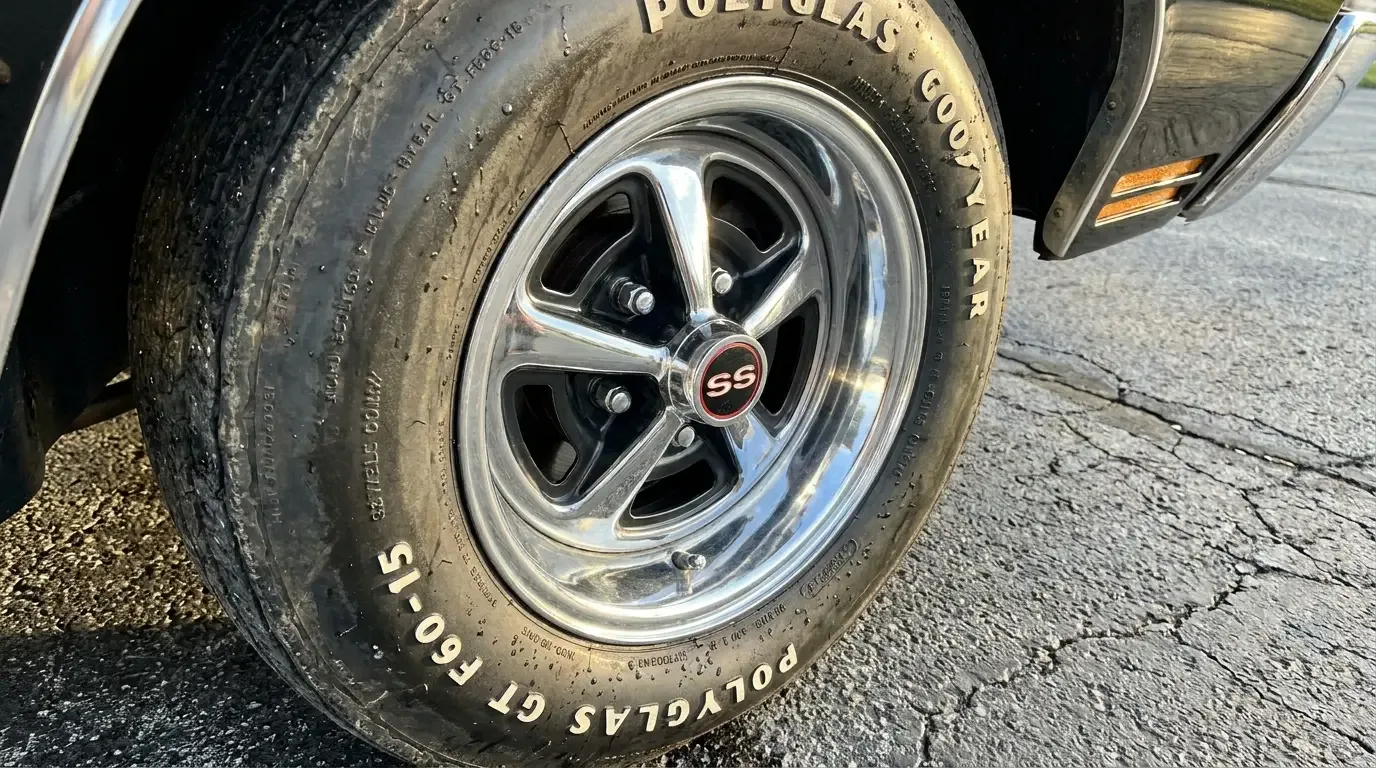
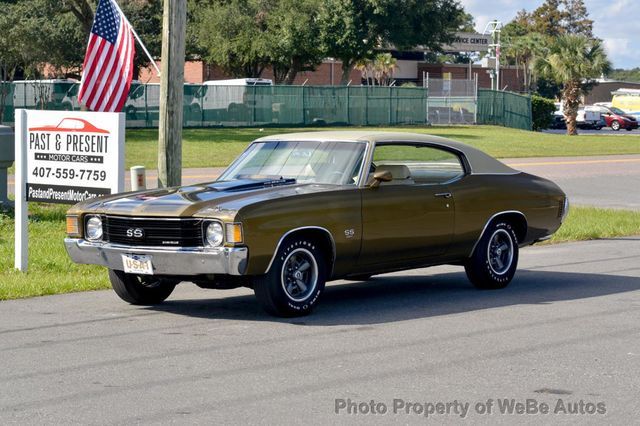
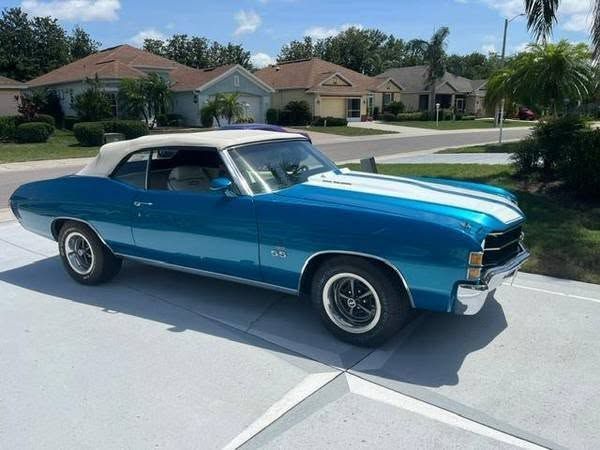
Chevrolet also offered a wheel styled specifically for the SS package, a chrome-styled steel wheel with a five-spoke look distinct from the plain Rally trim ring. For 1969 and 1970, this SS-specific wheel, coded YA and then AO, was standard equipment on the SS396 and later SS454, not an extra-cost option. For 1971 and 1972 the SS package moved to a similarly styled 15-inch wheel coded AU. So for the years most people picture when they hear "Chevelle SS," the factory-standard wheel wasn't the Rally wheel at all, it was this SS-specific piece.
The mistake I see most is backwards from what people expect: buyers assume a Rally wheel is the "safe" correct choice for any SS Chevelle, when for 1969 through 1972 the factory-specific SS wheel is the one that actually shipped standard, and a genuine Rally wheel on those years would have been the less common ordered option, not the norm. If you're restoring to exact factory spec rather than just building a good-looking driver, that distinction is worth chasing down before you order parts.
Magnum 500s: the wheel everyone wants that wasn't standard
Here's the one that trips people up the most. The Magnum 500 name belongs to Motor Wheel Corporation's five-spoke chrome steel wheel, and it's one of the most recognizable wheels of the muscle car era, most famously on Fords and Mopars of the period. It shows up constantly on restored SS Chevelles at shows and in sale listings too, but a lot of what's being called a "Magnum 500" on a Chevelle is really the factory SS-specific wheel described above, which was styled to look similar. A genuine Motor Wheel Magnum 500 bolted onto a Chevelle is, more often than not, an aftermarket or dealer-added wheel rather than something that came stamped on the SS Equipment RPO. It bolts up, it looks period-right, and it is not the same part as the wheel that actually left the factory on most 1969-1972 SS cars.
None of that stops sellers from bolting a set of Magnum 500s or Magnum 500 lookalikes on a car because they photograph well and ask a premium for "correct SS wheels." If a seller tells you Magnum 500s are the factory SS wheel, that's your sign to slow down and ask what else they're getting loose with the facts on.
Bolt pattern, brake package, and what actually fits
Disc brake cars and drum brake cars don't always share the same wheel offset, and a wheel that bolts up fine on a drum-brake SS can rub the caliper on a disc-brake car without a spacer or the right backspacing. This trips up a lot of guys doing a wheel swap who assume bolt pattern is the only thing that matters. It isn't. Backspacing and hub clearance matter just as much, and ignoring that is how you end up with a wheel that looks right sitting in the driveway and then chews itself up the first time you turn the wheel hard with the brakes on.
| Wheel | SS-specific? | Common trouble spot |
|---|---|---|
| Rally wheel | No, used across multiple Chevrolet models; optional (not standard) on SS cars | Trim ring and center cap mismatches between model years |
| SS-specific wheel (YA/AO/AU codes) | Yes, standard equipment on 1969-1972 SS cars | Often mistaken for a Rally wheel or a genuine Magnum 500 |
| Magnum 500 | No, a Motor Wheel Corporation product mainly associated with Ford and Mopar; on a Chevelle it's usually an aftermarket or dealer add | Frequently misrepresented as "the" correct factory SS wheel |
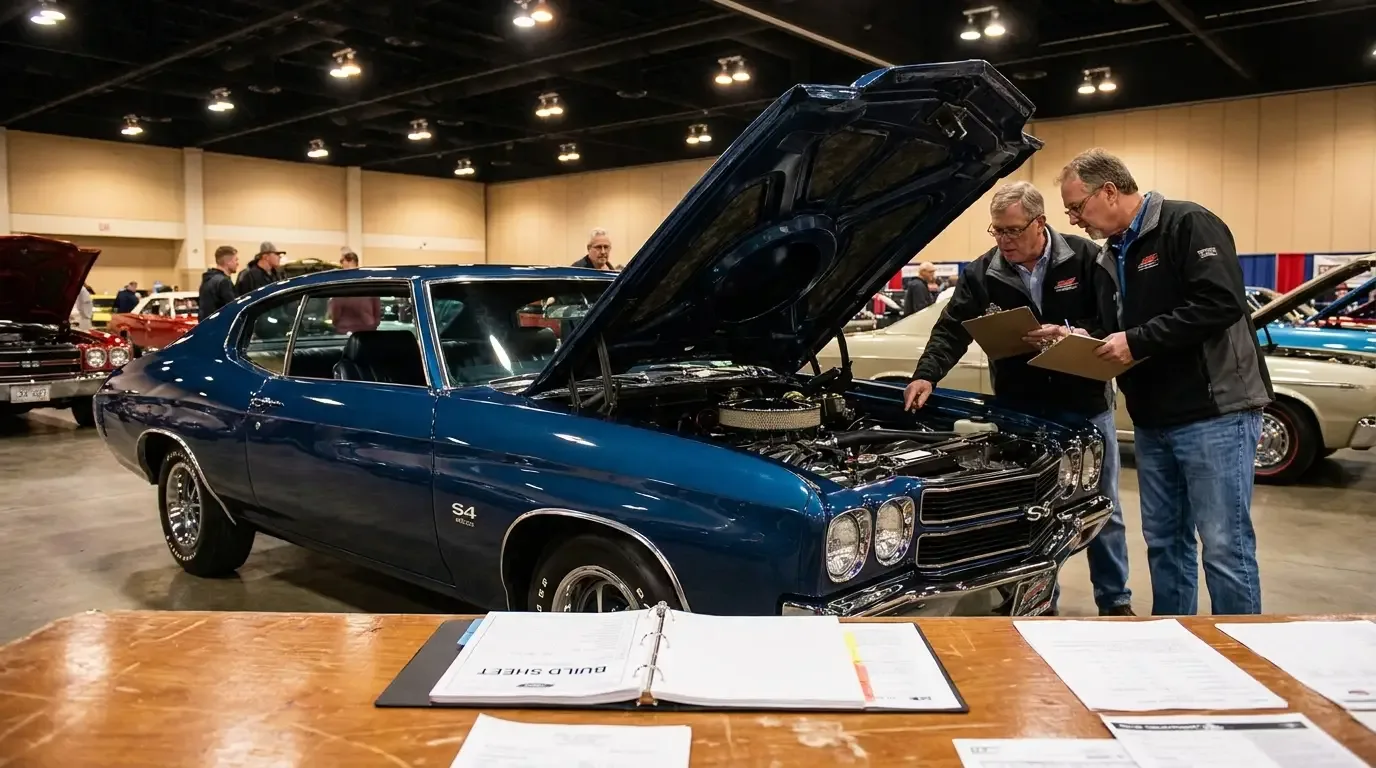
"I don't care how good a set of Magnum 500s looks on a car. If the build sheet calls for the factory SS wheel and the seller's charging extra for 'correct wheels' that aren't what left the plant, that's a conversation you need to have before you write a check, not after."
Mike Sullivan
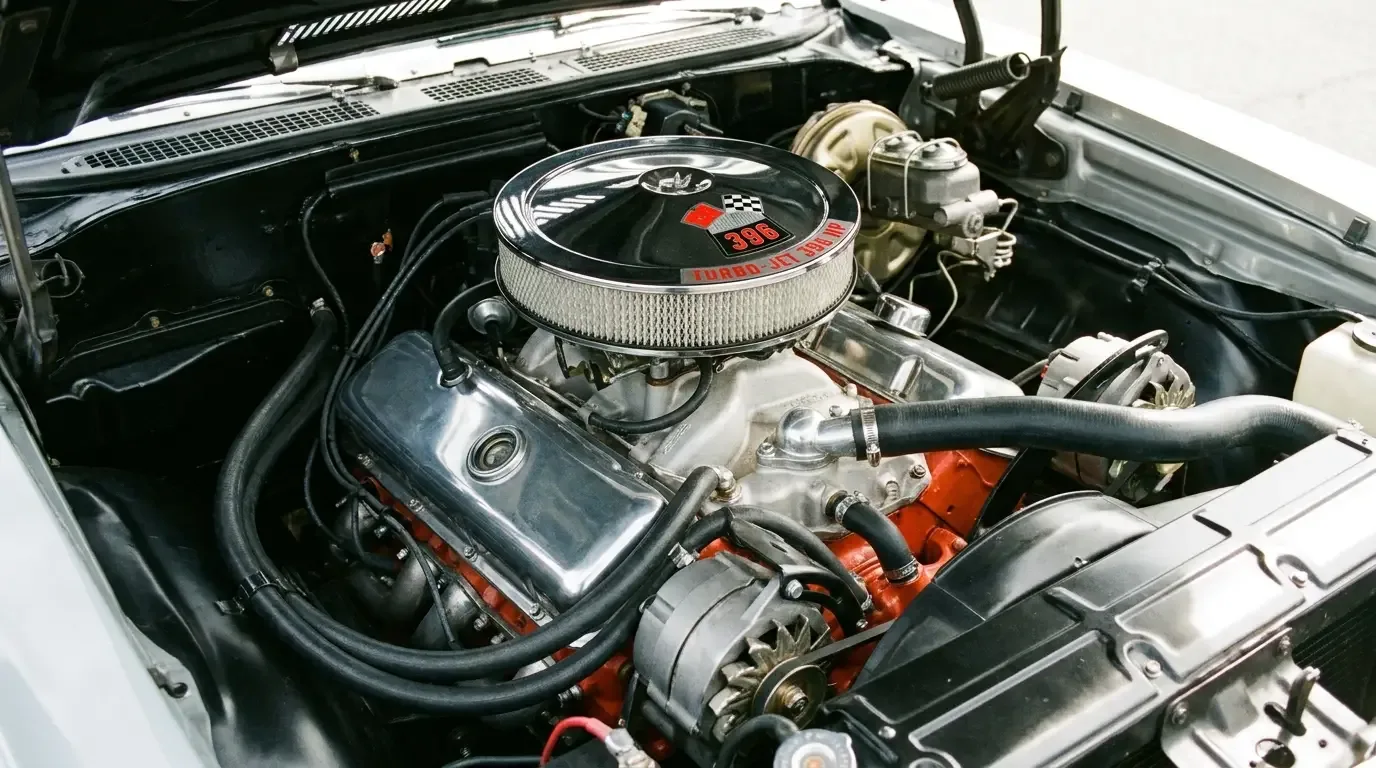
Wheels are one piece of a bigger marketing puzzle Chevrolet ran on these cars, and the engine badging tells a parallel story about how the company sold performance to a buyer standing in a showroom. For the full SS story, the wheel and stripe details only make sense next to the actual model-year history behind them, and the next: SS and Turbo-Jet piece picks up that thread from the engine side.
Sources and notes
Related Reading
Have a
Chevrolet Chevelle
for Sale?
Reach thousands of serious classic car collectors across the US.
Sell It Here →
Are You a Classic Car Dealer?
List your full inventory and connect with targeted classic car buyers.
Join as a Dealer →

About the author
Mike Sullivan
Detroit-area muscle car enthusiast and restoration specialist with three decades of hands-on experience working on American iron.
Related Listings - Chevrolet Chevelle
More in History & Heritage
Comments
Be the first to comment on this article.