
The word Colonnade gets attached to this whole generation of Chevelle for a reason, and it has everything to do with the coupe. The 1973-1977 body style abandoned the true pillarless hardtop that had defined mid-size Chevrolets through the 1960s, replacing it with fixed B-pillars and a fixed rear-quarter window frame that read, from certain angles, like a row of columns holding up the roof. That styling decision shaped the coupe far more dramatically than it shaped the four-door sedan, and it is the reason the two body styles get talked about so differently today.
History & Heritage
6 min read
Colonnade Coupe vs Sedan
Why the 1973-77 Chevelle coupe changed so much more than the sedan, and what that means for collectors shopping either body style today.
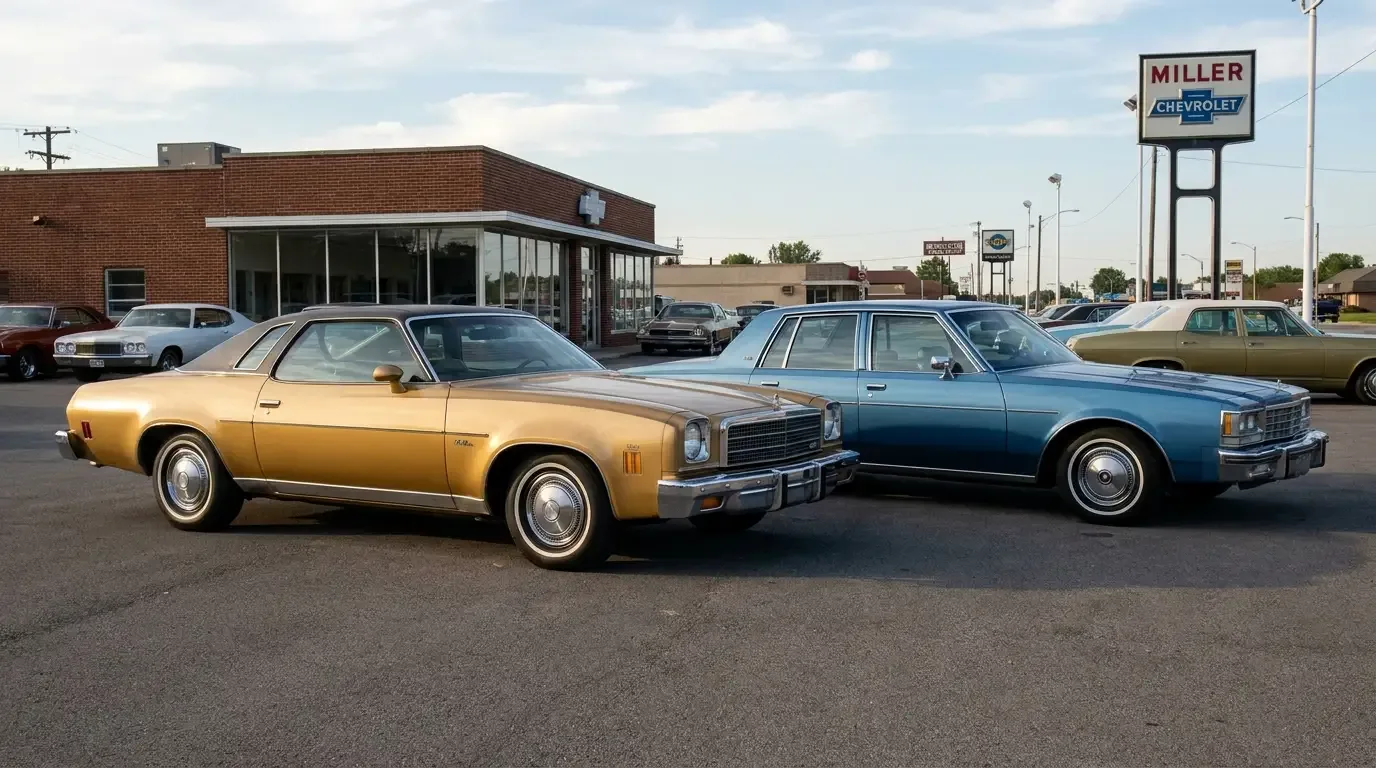
Neither one is the wrong car to own. But they were never really competing for the same buyer, and the differences run deeper than door count.
Why the coupe changed so much more
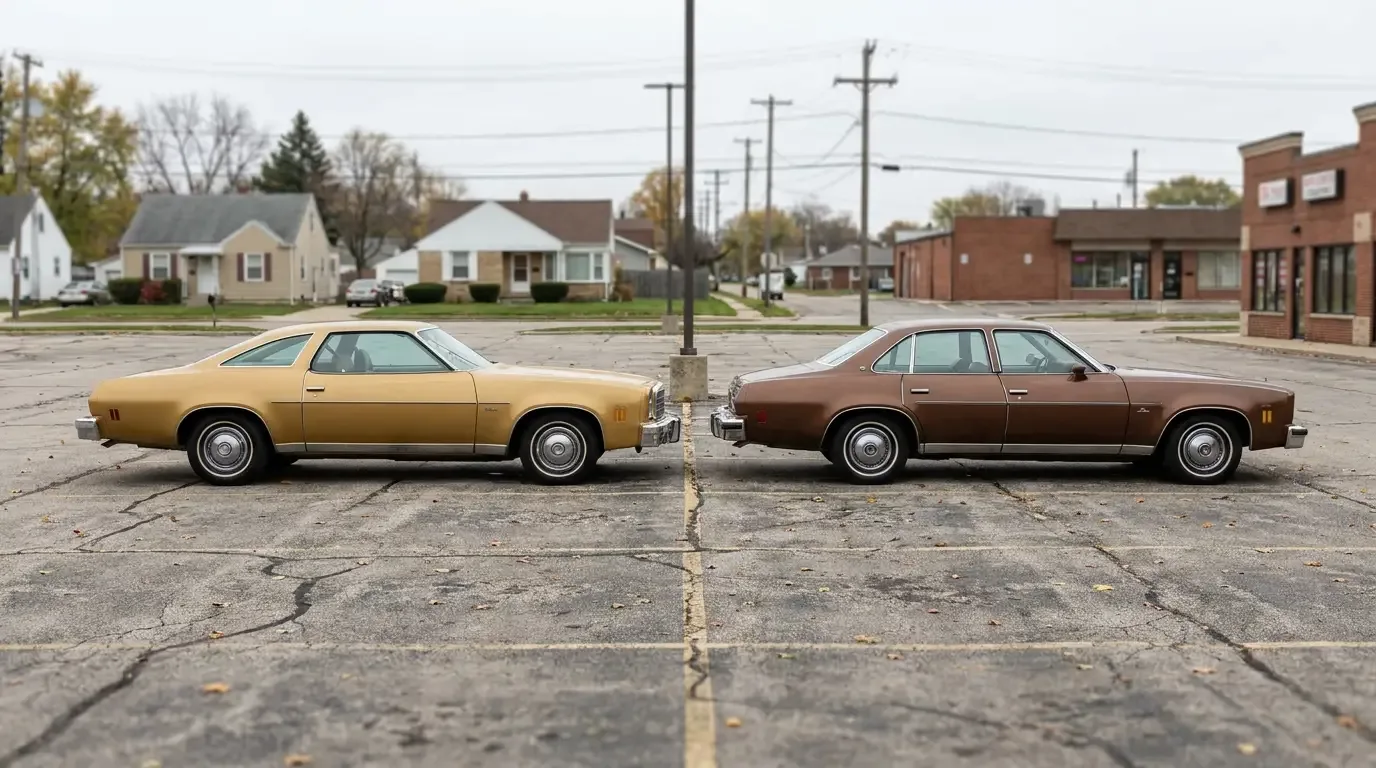
Upcoming federal rollover standards, ones that ultimately never took full effect in the form GM was designing around, pushed Chevrolet and every other domestic automaker away from the true hardtop body style for the 1973 model year. The old two-door Chevelle hardtop had no B-pillar at all, with both windows able to roll fully down for an open, uninterrupted greenhouse. The Colonnade coupe kept that low, sporty roofline in profile but added a fixed pillar and a fixed rear-quarter glass panel that could not roll down, changing both the look and the sound of the cabin at speed. The four-door sedan, which had always used a proper B-pillar for structural reasons, changed far less in concept. It got the new sheet metal and the new frame underneath, but the fundamental idea of a pillared four-door cabin didn't require the same reinvention the coupe did.
That's the real story behind the "Colonnade" name. It wasn't marketing language Chevrolet invented to describe the whole car. It described a structural compromise the coupe had to make that the sedan barely noticed.
How they drive and live differently
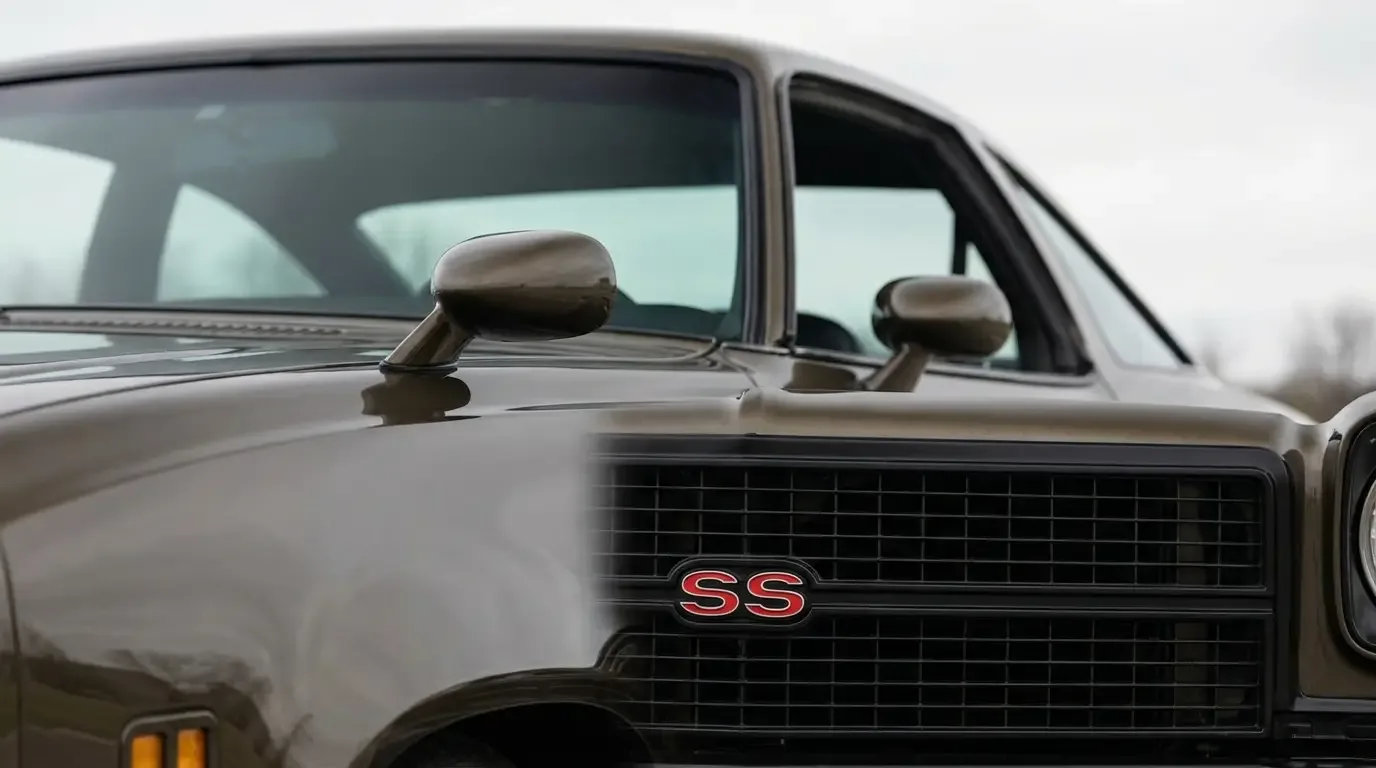
The coupe's fixed rear glass changed the driving experience in ways owners still notice today. Wind noise at highway speed is different from an old-style hardtop, since the fixed pillar and frame add rigidity but also add a wind-noise source the true hardtop never had around that same window seam. Rear visibility took a hit too, with a thicker C-pillar area than the previous generation's slim hardtop roofline. In exchange, the coupe kept the lower, more aggressive roofline that made it the body style Chevrolet used for the SS package and the sportier Laguna and Laguna S-3 trims.
The sedan is the practical answer for anyone who actually needs to move four adults regularly. Rear seat access is straightforward through full-size rear doors rather than folding a coupe's front seat forward, and the more upright greenhouse gives genuinely better rear headroom and visibility. It never got the SS package and rarely got the Laguna's sportier options, since Chevrolet aimed the sedan squarely at family buyers rather than anyone chasing a performance image.
Wagons and the third body style nobody argues about
The coupe-versus-sedan debate leaves out the Colonnade wagon entirely, and that's worth noting even in a coupe-and-sedan comparison, because the wagon shared the sedan's basic pillar structure and greenhouse logic rather than the coupe's. Chevrolet never tried to build a sporty wagon variant during these years, so the wagon simply inherited the practical, upright approach the sedan had already settled on. That reinforces the real split in this generation of Chevelle: it isn't a three-way argument between coupe, sedan, and wagon so much as a two-way one between the coupe's compromised sporty roofline and the sedan-and-wagon approach that barely changed shape for 1973 at all.
What that means for collectors now
The coupe dominates the collector market, and it isn't close. Surviving SS and Laguna S-3 cars are almost entirely two-doors, since Chevrolet built the sportier trims on the coupe body far more heavily than on the sedan, and enthusiasts gravitated toward the lower roofline from new. A four-door Colonnade Chevelle in original condition is genuinely uncommon at shows today, not because fewer were built, since sedan production numbers were substantial through the mid-1970s, but because far fewer were preserved once daily-driver family sedans stopped being interesting to anyone but the family that owned them.
That scarcity cuts an odd way on price. A well-preserved original sedan can actually command real interest from buyers specifically looking for something unusual, even though a comparable coupe in the same trim would sell for more in absolute dollars. If you want a Colonnade Chevelle nobody else at the show is going to have, the sedan is the harder car to find in good original shape, not the easier one.
Restoration shops see this scarcity from a different angle. A shop that has rebuilt a dozen coupe interiors and sourced coupe-specific trim over the years may never have handled a correct sedan headliner or rear door panel set, simply because so few sedans come through in restorable condition. That knowledge gap adds real time to a sedan restoration that a coupe project rarely faces, even when the underlying mechanical work is identical.
| Trait | Colonnade coupe | Colonnade sedan |
|---|---|---|
| Rear quarter glass | Fixed, cannot roll down | Fully functional in rear doors |
| Available on SS/Laguna S-3 | Yes, primary body style | Rarely to not offered |
| Rear seat access | Fold-forward front seat | Full-size rear doors |
| Collector market presence today | Common at shows and auctions | Uncommon in original condition |
"People assume the sedan was the compromise car and the coupe was the real Chevelle. It's almost backward. The sedan barely had to change for 1973. The coupe gave up its true hardtop windows to get that same roofline. Both are correct Chevelles. They just paid different prices to get there."
Tom Ramirez
Body style is only one axis of what changed once Chevrolet redesigned the Chevelle for 1973, a shift covered in full across the Chevelle's later era. Comfort, not sportiness, was where a lot of that era's real innovation actually landed, and next: Forgotten Chevelle Comfort Options of the Colonnade Years covers the options buyers today tend to overlook entirely.
Sources and notes
- Chevrolet Chevelle, Wikipedia
- 1973-1977 Chevrolet Chevelle Base: Specs, History, Guide, MotoGallery
- The Rise of the Colonnade Hardtops: A Mid-Sized Revolution
- Evaluation of FMVSS No. 216a, Roof Crush, NHTSA
- Colonnade Muscle? 1973 Chevrolet Chevelle SS, Barn Finds
- Chevrolet changed gears with '73 Chevelles, Old Cars Weekly
Related Reading
Have a
Chevrolet Chevelle
for Sale?
Reach thousands of serious classic car collectors across the US.
Sell It Here →
Are You a Classic Car Dealer?
List your full inventory and connect with targeted classic car buyers.
Join as a Dealer →

About the author
Tom Ramirez
Corvette researcher and historian based in Bowling Green, Kentucky. Two decades documenting Corvette production history from original factory records.
Related Listings - Chevrolet Chevelle
More in History & Heritage
Comments (1)
G
Gary Tompkins
2 months ago
First-generation cars before they got heavy and complicated. Makes for a different ownership experience than what came later.