
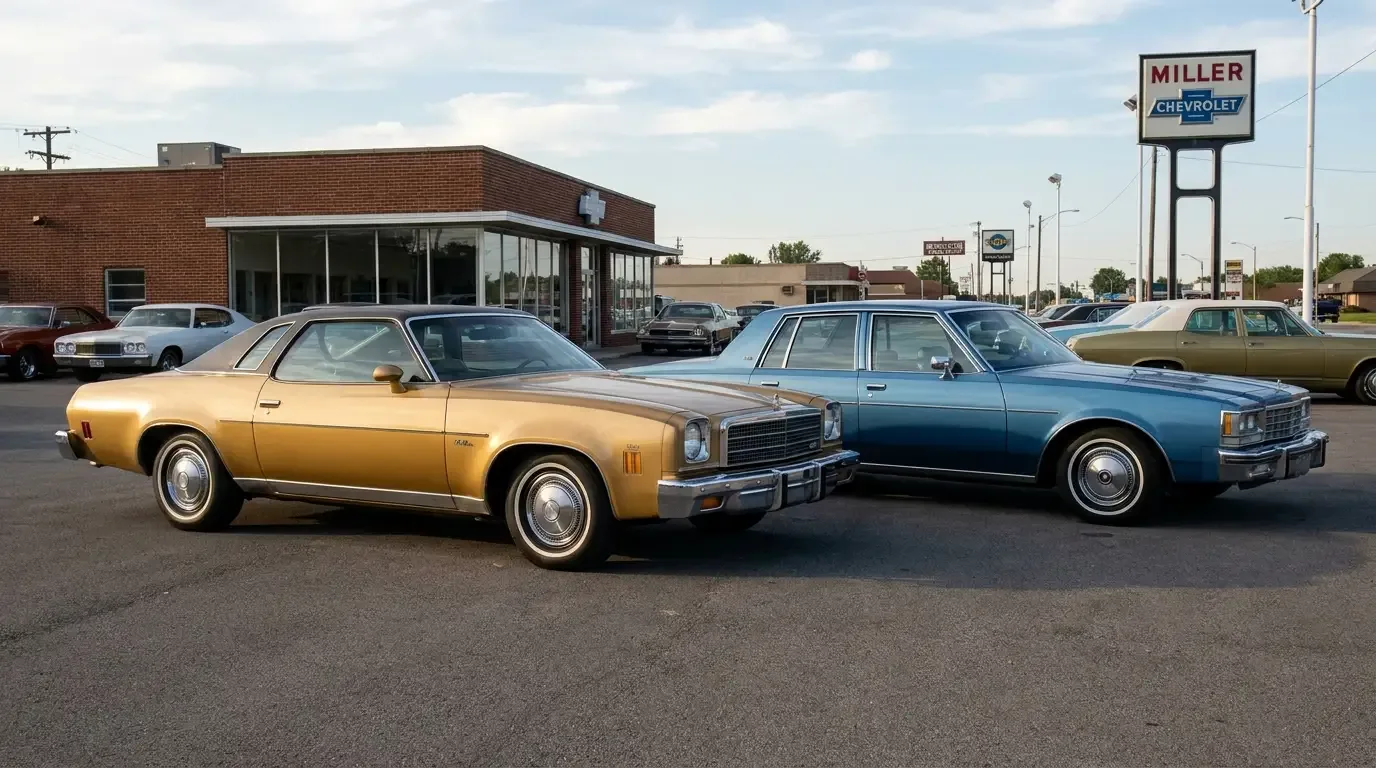
Chevrolet sold the Laguna Type S-3 and the Malibu Classic out of the same showroom, off the same Colonnade platform, for overlapping model years in the mid-1970s, and the two cars could not have been aimed at more different buyers. One had a sport suspension, a pointed aero nose, and a name meant to recall Chevrolet's road-racing history. The other had a vinyl roof, a plusher interior, and a name meant to recall nothing more exciting than a comfortable ride home. Both were still, underneath the trim, the same car.
History & Heritage
6 min read
Laguna S-3 vs Malibu Classic: Two Takes on the Same Platform
How the sport-image Laguna S-3 and the plush Malibu Classic split the same Colonnade Chevelle platform, and what each costs today.
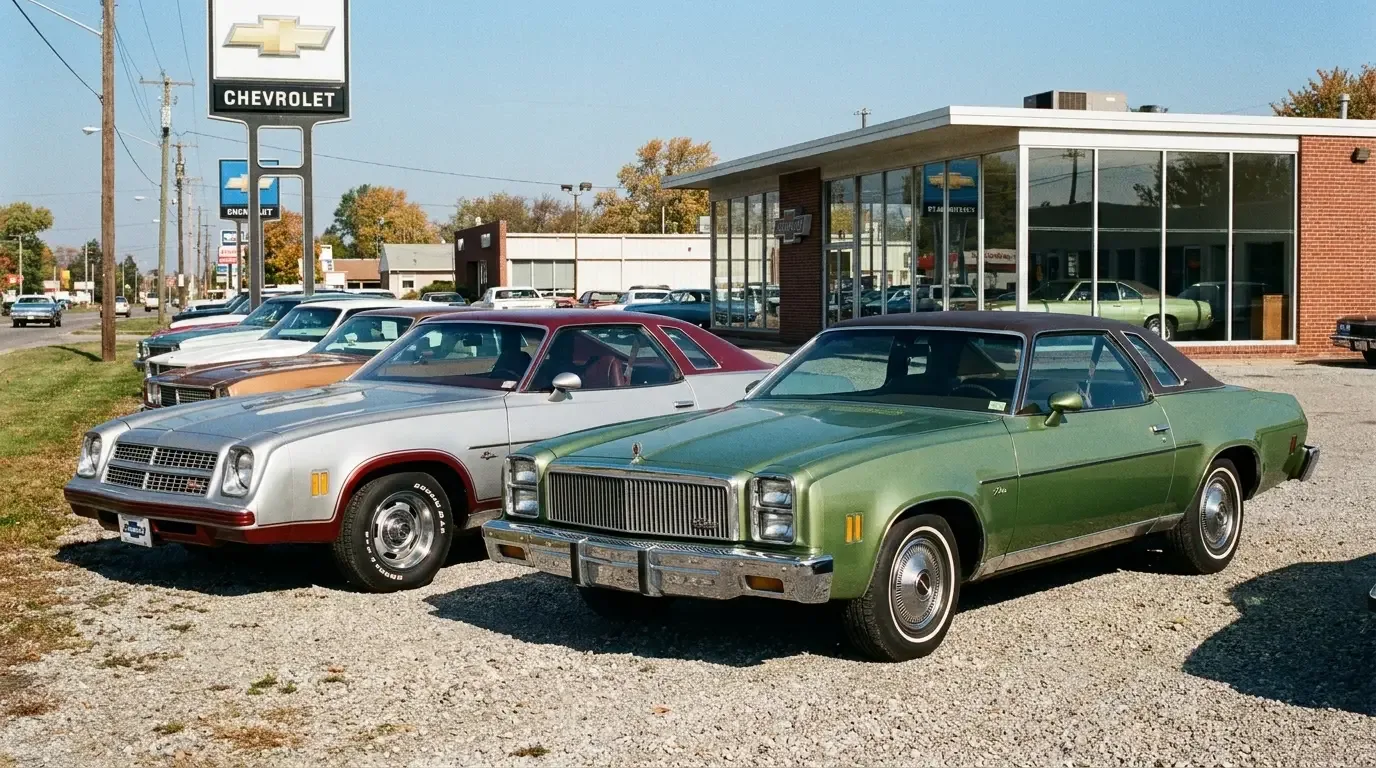
I get asked fairly often which one is the "real" Colonnade Chevelle to own. There isn't a right answer, but there is a clear one once you're honest about what each car was actually built to do.
Two trims, one platform
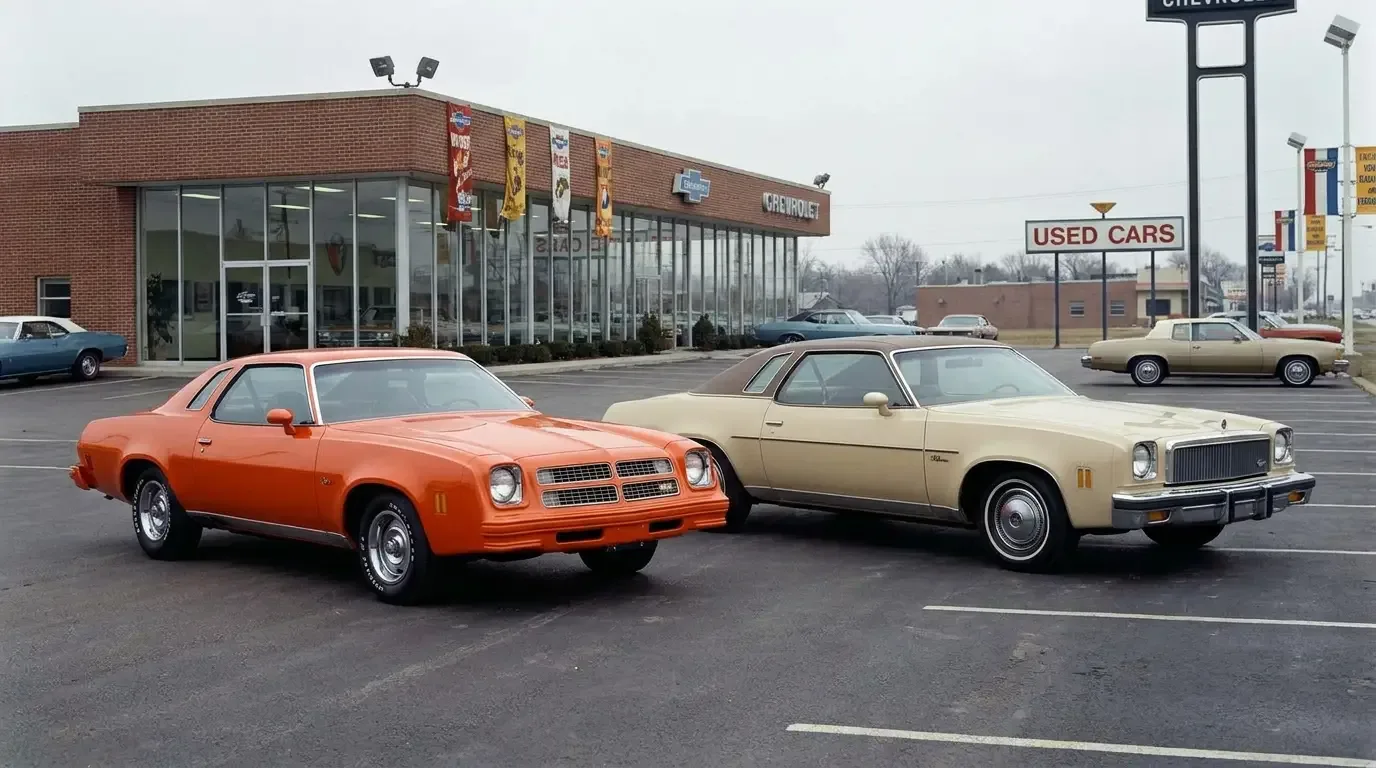
The Laguna Type S-3 ran from 1974 through 1976, positioned as the performance-image flagship of the Chevelle line once the original SS package had been dropped after 1973. Every S-3 year got a firmer F41-type suspension tune with a front stabilizer bar, but the pointed, aerodynamic urethane nose that people picture didn't arrive until 1975; the 1974 S-3 wore a more conventional urethane-covered front end. Styling details across all three years were meant to signal that this was the sporting Chevelle even as available horsepower kept shrinking year over year through the mid-1970s. The Malibu Classic, introduced for 1974 as the top Malibu trim and continued through the end of Colonnade production in 1977, went the opposite direction: more sound insulation, plusher upholstery, available swivel bucket seats, and styling cues borrowed from Chevrolet's full-size personal-luxury cars rather than anything with a competition pedigree.
Both were built on the same A-body chassis, shared much of the same engine lineup depending on model year, and could be ordered with many of the same options once you got past the trim-specific packages. The difference was almost entirely about what Chevrolet wanted the buyer thinking about when they walked up to the car in the showroom.
Where they actually differ
The suspension is the most meaningful mechanical difference. Laguna S-3 buyers got a sport-tuned setup with stiffer springs and shocks, quicker steering response, and, depending on the year, wider wheels than the standard Chevelle rode on. It was still a mid-1970s American mid-size, not a sports sedan, but it noticeably tightened up the vague, overboosted steering feel that period road testers complained about on the standard car. The Malibu Classic kept the softer standard tune, prioritizing isolation over response, which is exactly what its target buyer wanted.
Interior trim tells the rest of the story. The Malibu Classic offered more upholstery choices, more chrome and woodgrain trim inside, and eventually the swivel bucket seat option that let a driver rotate the seat outward toward the open door, a comfort feature aimed squarely at buyers who wanted a Chevelle that felt like a smaller Caprice. The Laguna S-3 kept its interior simpler and sportier, with less brightwork and a dash layout meant to look purposeful rather than plush.
Engines were rarely the dividing line
People assume the Laguna S-3 automatically got the bigger engine and the Malibu Classic settled for whatever was left over, but the option sheet didn't work that cleanly. Both trims could be ordered with the same small-block and big-block choices in a given model year, and a well-optioned Malibu Classic with a 350 or even a 400 under the hood wasn't unusual. What Chevrolet reserved for the S-3 was the image package around whatever engine the buyer chose: the suspension, the nose, the wheels, and the badging that told the world this Chevelle was supposed to be the sporting one. A Malibu Classic buyer who wanted real power could still check the same engine box on the order form. They just weren't buying the car to be seen as a performance Chevelle, and Chevrolet's marketing never pretended otherwise.
That overlap is exactly why judging either car by engine displacement alone misses the point. The S-3 and the Malibu Classic are a study in how a single manufacturer split one platform into two personalities using suspension tuning, trim, and marketing rather than fundamentally different hardware underneath.
What each one costs to buy today
The collector market has sorted the two cars in a way that matches their original positioning, more or less. Laguna S-3 cars, especially those with a big-block or documented sport options, tend to bring a premium over an equivalent Malibu Classic, since the performance-image cars have a smaller surviving population and a more defined enthusiast following. Recent asking prices on driver-quality S-3s with small-block power have run roughly $18,000-$33,000, with well-documented big-block cars, sunroof cars, and rarer color and option combinations pushing into the $40,000s. A comparable Malibu Classic in similar condition often asks meaningfully less, roughly $11,000-$20,000 for a solid driver, since it was built and sold in far greater numbers and doesn't carry the same performance-adjacent following. These are current asking-price ranges from the private and dealer market, not confirmed auction hammer prices, and both cars remain well off the values of small-block and big-block Chevelle SS models from earlier years.
Parts availability favors neither car dramatically, since both used mostly shared A-body components, but Laguna-specific nose panels and S-3 trim pieces are harder to source than standard Malibu Classic trim, simply because fewer were made and fewer have survived intact.
| Trait | Laguna Type S-3 | Malibu Classic |
|---|---|---|
| Years offered | 1974-1976 | 1974-1977 |
| Market positioning | Performance-image sport trim | Personal-luxury comfort trim |
| Suspension tune | Firmer, sport-oriented | Standard, isolation-focused |
| Interior emphasis | Simpler, driver-focused | Plush, available swivel buckets |
"Buyers act like these were two different cars fighting for the same customer. They weren't. Chevrolet was selling the same platform to two different people who never would have cross-shopped each other in the first place, and both trims did exactly what they were built to do."
Tom Ramirez
Either trim slots into the broader arc of the Colonnade and Laguna years, and buyers weighing one against the other should start by browsing what's actually available among Colonnade Chevelles for sale before deciding which trim fits the way they actually want to drive the car. Body style matters here too, and that comparison runs deeper than trim level, which is where next: Colonnade Coupe vs Sedan picks up.
Sources and notes
Related Reading
Have a
Chevrolet Chevelle
for Sale?
Reach thousands of serious classic car collectors across the US.
Sell It Here →
Are You a Classic Car Dealer?
List your full inventory and connect with targeted classic car buyers.
Join as a Dealer →

About the author
Tom Ramirez
Corvette researcher and historian based in Bowling Green, Kentucky. Two decades documenting Corvette production history from original factory records.
Related Listings - Chevrolet Chevelle
More in History & Heritage
Comments (1)
K
Kurt Ecklund
2 weeks ago
Been in the hobby thirty years. The quality of information available now compared to the mid-90s is remarkable. This is a good example.