
Every enthusiast knows the SS454 option sheet by heart, but far fewer can tell you what a buyer could check off if they walked into a Chevrolet showroom in 1975 wanting a comfortable car to drive to work, not a car to race. That second list is longer than most people remember, and it says as much about where Chevrolet's engineering attention actually went during the Colonnade years as any performance option ever did.
History & Heritage
6 min read
Forgotten Chevelle Comfort Options of the Colonnade Years
Six-way power seats, swivel buckets, tilt wheel and cruise control: the comfort options Colonnade Chevelle buyers actually chose.
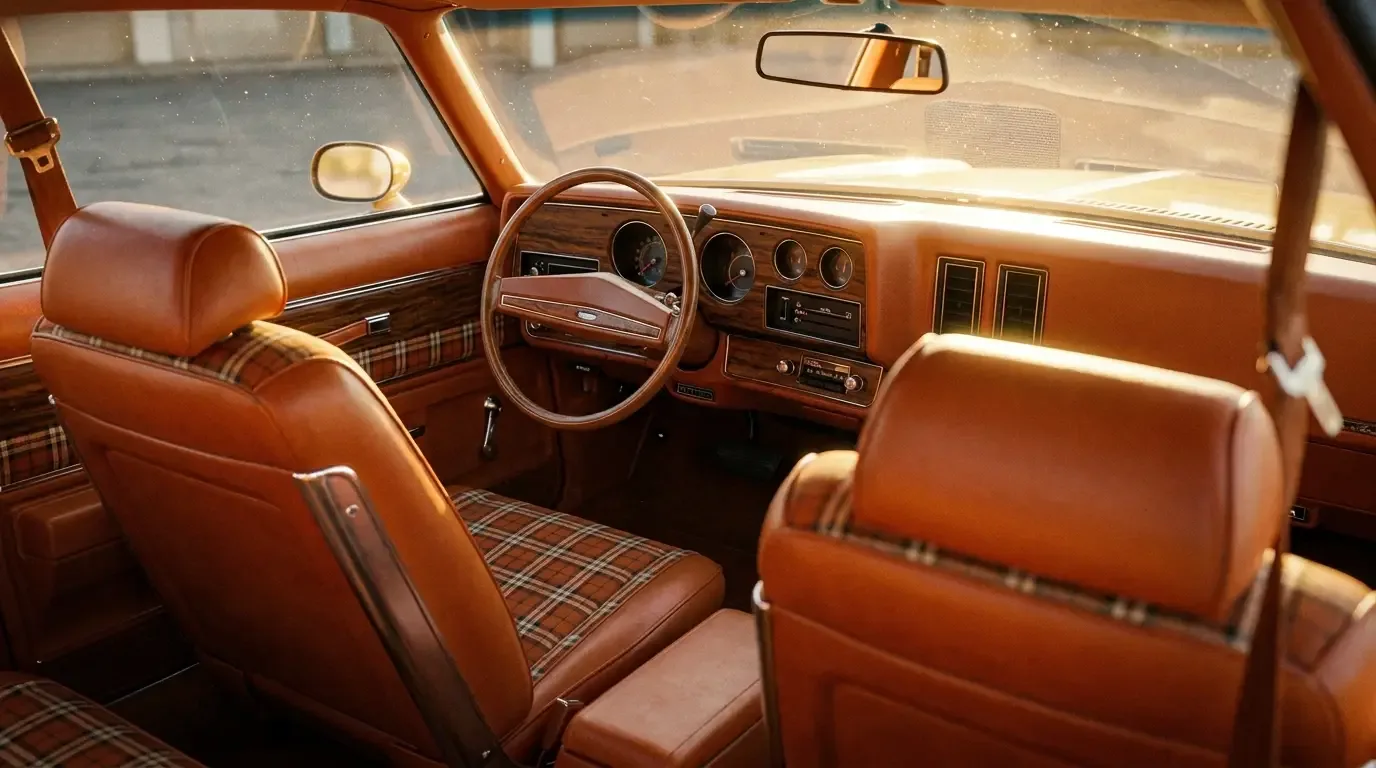
The horsepower story of this era gets told constantly, usually as a decline. The comfort story rarely gets told at all, even though Chevrolet was adding real convenience engineering to the Chevelle line at almost the exact same rate performance was falling off the spec sheet.
Climate and seating options nobody talks about
Six-way power seats reached the Chevelle option sheet in the Colonnade years, letting the driver adjust seat height and tilt along with fore-and-aft travel, a feature that had mostly lived on full-size Chevrolets and Cadillacs in prior years. Combined with the swivel bucket seat option available on Malibu Classic and Laguna trims, which rotated the seat outward toward the open door to make entry and exit easier, Chevrolet was clearly chasing a customer who cared more about how the car felt to live with day to day than how quickly it left a stoplight.
Air conditioning takes rates climbed steadily across these years as well, moving from something closer to a rare option in the early 1970s to a genuinely common factory-installed feature by the mid-decade Chevelles, particularly on Malibu Classic and Laguna trims aimed at buyers trading up from a base Chevelle or a full-size car. A factory air Chevelle from this era, properly serviced, still cools acceptably today, which is more than can be said for some later factory air systems from the same period.
Convenience features that quietly became standard equipment territory
Tilt steering wheels and cruise control, both once exotic options reserved for top-line full-size Chevrolets, showed up regularly on Colonnade Chevelle order sheets by the mid-1970s. Neither was standard equipment, but neither was rare by 1975 or 1976 either, especially on Malibu Classic trim where Chevrolet clearly expected buyers to check nearly every comfort box available. Rear window defoggers, intermittent wipers on later years, and a genuinely improved climate control interface compared to the 1968-72 Chevelle all point the same direction: Chevrolet's engineering budget during these years went disproportionately toward comfort and convenience rather than horsepower, which was shrinking under emissions regulation regardless of what the engineers wanted to do about it.
Sound insulation is the option nobody thinks to ask about but that shaped the whole driving experience more than almost anything on the option sheet. The Colonnade body's revised structure allowed for more sound-deadening material in the floor pan, doors, and firewall than the previous generation, and higher trim levels added even more. Period road testers consistently praised how quiet these cars were at highway speed, a trait that had almost nothing to do with any single option and everything to do with Chevrolet treating cabin quiet as a real engineering priority for this generation.
Audio and instrumentation quietly improved too
The radio and gauge options on a Colonnade Chevelle moved forward steadily across these years in ways that rarely get discussed alongside the bigger comfort features. AM/FM stereo with dash-mounted speakers became a common option rather than a rare one, a real step up from the AM-only radios that had dominated the previous Chevelle generation, and a rear-seat speaker option let buyers fill the cabin with sound instead of relying on a single dash-mounted unit. Gauge packages on higher trims added oil pressure and temperature readouts beyond the idiot-light setups that came standard on base cars, a small but real concession to buyers who wanted to actually monitor what the engine was doing rather than just find out when something had already failed.
None of this shows up in performance specifications, and none of it moves a car's value the way a documented big-block does. But it is exactly the kind of detail that separates a Chevelle built to be driven and enjoyed from one built down to a price, and Chevrolet clearly understood which kind of buyer it wanted to keep happy through the mid-1970s.
Why these options get overlooked today
Collectors chase horsepower and rarity, and a car loaded with comfort options rather than a big-block and a 4-speed doesn't photograph as dramatically for a magazine feature. But original-owner history and window sticker documentation on a heavily optioned Malibu Classic or Laguna often reveals a buyer who paid real money for tilt wheel, cruise, power seats, and air conditioning on a car that otherwise looks unremarkable from the outside. That documentation matters for authenticity and value in a way a lot of buyers underrate, since a correctly optioned comfort car is genuinely harder to find intact today than a base car stripped of everything but a big engine.
Parts for these comfort features are also getting scarcer than performance parts in some cases. Reproduction speed parts and engine components for popular Chevelle engines are a healthy business. Original swivel-bucket mechanisms, correct tilt-wheel columns, and factory air conditioning components in usable condition are a much thinner market, and a car missing or lacking these pieces is often harder to restore correctly than one missing a carburetor.
"Nobody restores a Chevelle because it had cruise control. But the buyers who ordered these cars new weren't shopping for a magazine cover. They wanted a quiet, comfortable car with real convenience features, and Chevrolet gave them exactly that while the horsepower numbers were falling apart around them."
Tom Ramirez
These comfort features are an underappreciated thread running through the 1973-1977 Chevelle story, and they round out a picture that the classic Chevelle story only has room to summarize at a higher level. For where this comfort-focused shift actually started, next: The 1973 Colonnade Redesign covers the ground-up change that made all of it possible.
Sources and notes
- Chevrolet Chevelle, Wikipedia
- 1973-1977 Chevelle, Cutlass, LeMans, and all A-body swivel bucket seats, GM Sports
- 1973-1977 Chevrolet Chevelle Base: Specs, History, Guide, MotoGallery
- 1973-1977 Chevrolet Chevelle, HowStuffWorks
- 1976 Malibu Classic options thread, Team Chevelle
- Chevelle/Malibu accessories and parts reference, Ecklers
Related Reading
Have a
Chevrolet Chevelle
for Sale?
Reach thousands of serious classic car collectors across the US.
Sell It Here →
Are You a Classic Car Dealer?
List your full inventory and connect with targeted classic car buyers.
Join as a Dealer →
#Colonnade Chevelle
#Malibu Classic
#1970s Chevrolet
#Chevelle options
#classic car comfort features

About the author
Tom Ramirez
Corvette researcher and historian based in Bowling Green, Kentucky. Two decades documenting Corvette production history from original factory records.
Related Listings - Chevrolet Chevelle
More in History & Heritage
Comments
Be the first to comment on this article.