
A two-tone C10 catches your eye at a show for a reason. It wasn't an accident and it wasn't cheap to build that way. Painting a truck in two colors meant extra time in the paint shop, extra masking, and on some trim packages it was tied straight to how much a buyer was willing to spend. If you're looking at a truck with a painted roof or a contrasting lower panel and wondering whether that's how it left the factory, here's what actually went on the order sheet and what to check before you take a seller's word for it.
History & Heritage
7 min read
Factory Two-Tone Paint Schemes on Classic C10s
Which C10 trim levels got factory two-tone paint, how the color breaks were laid out by generation, and how to tell a genuine factory scheme from a later repaint.
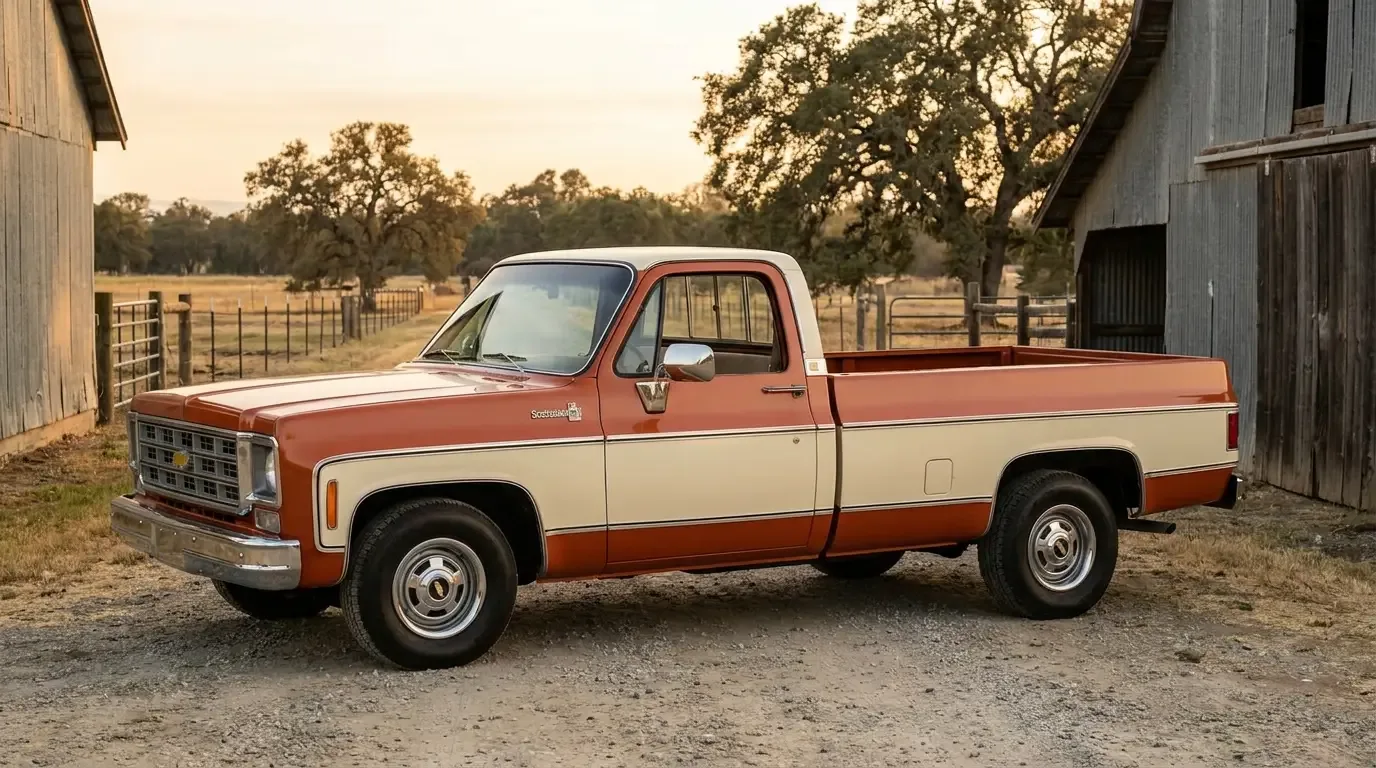
How Chevrolet split colors on a two-tone truck
Two-tone on a C10 usually meant one of two layouts. The first is a painted roof, cab back panel, or upper cab section in a contrasting color against the main body color, common on Custom and Custom Deluxe cab trucks where the roof cap was treated almost like a vinyl top would be on a car. The second is a lower-body accent, where a stripe or panel low on the doors and rocker area gets the second color, often tied to the fancier trim packages once Chevrolet started dressing up half-tons for buyers who weren't hauling anything heavier than a family and a boat trailer. Which layout you got depended on the generation and the trim level ordered, not just a random dealer choice.
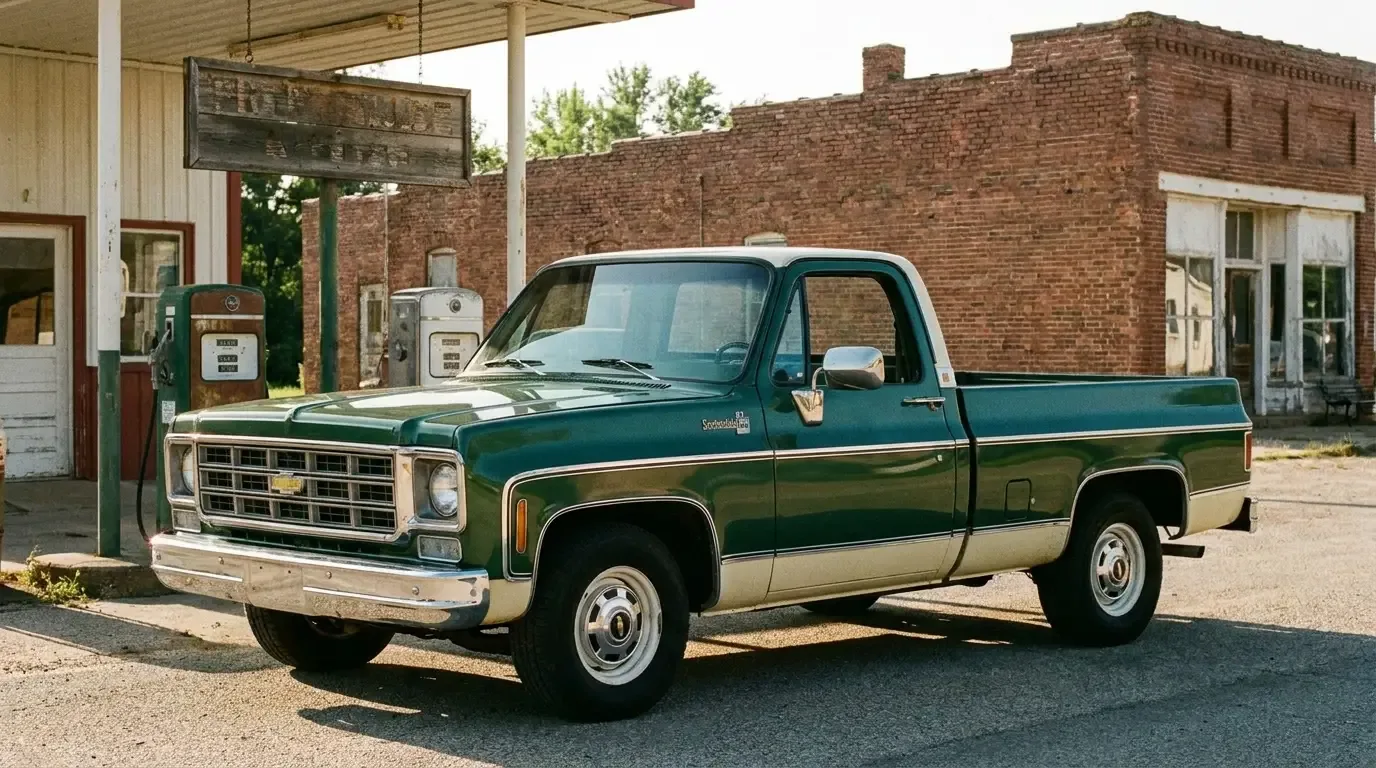
Two-tone schemes by generation
| Generation | Years | Common two-tone layout | Where it showed up |
|---|---|---|---|
| First-gen C10 | 1960-1966 | Painted roof over contrasting cab body | Custom cab and up, more common toward the mid-1960s |
| Second-gen C10 | 1967-1972 | Roof color plus lower body accent stripe | Custom, Custom Sport Truck (CST) |
| Third-gen C10 (square body) | 1973-1987 | Wide lower-body two-tone with molding break, later simplified to a stripe-only scheme | Scottsdale, Cheyenne, Silverado trim tiers |
The C10 generations run through a lot of trim and styling changes underneath this, and if you want the full year-by-year picture of what changed and when, the C10 generations page walks through every one of them.
Which trim levels got which paint
This is where two-tone stops being cosmetic and starts being a real clue about what truck you're looking at. Base work trucks almost never left the factory two-tone. Adding a second color cost money, and buyers ordering the cheapest half-ton weren't paying extra for it. As you move up the trim ladder, two-tone becomes more common, and by the top trims on the square body trucks, a factory two-tone paint scheme is almost expected rather than an upgrade. I've put together a full breakdown of which trim levels got which paint, since the two subjects overlap more than people think. A two-tone truck wearing base-trim badges is either a truck that had trim swapped somewhere along the way, or one where the two-tone was a genuine dealer-added option rather than a factory production item, and those two things are worth different amounts of money.
Spotting a factory two-tone versus a repaint
Start with the trim tag, not the paint. The cowl tag or door tag on most C10s carries a paint code, and on trucks built with a factory two-tone, that code often reflects a two-tone combination rather than a single color. Cross-reference what the tag says against what's actually on the truck. Next, look underneath. Factory paint breaks usually line up with a body seam, a stainless or chrome molding strip, or a stamped crease in the sheet metal, because that gives the paint shop a clean masking line and hides any overspray. A repaint done later for looks alone often ignores those lines because whoever did it was going for effect, not matching a factory jig. Check inside the door jambs and under the hood lip too. Factory work usually shows evidence of the second color carrying into edges and seams that a quick backyard repaint would skip.
What two-tone means for value
A documented factory two-tone in good condition brings a real premium over the same truck in a single factory color, especially on the trim levels where two-tone was standard or common. But "documented" is doing a lot of work in that sentence. A truck repainted two-tone decades after it left the factory, no matter how good the work looks, isn't the same thing as one that rolled off the line that way, and the honest sellers will tell you which one you're looking at. Buyers who care about originality should always ask for the trim tag decode before paying a premium for the paint scheme alone. Buyers who just like the look and don't care about factory correctness have more room to negotiate, because a well-executed non-factory two-tone still looks good, it just shouldn't carry the same price tag as the real thing.
Condition of the paint break matters too, separate from whether it's factory. A crisp, clean line that's held up for decades tells you the truck spent most of its life garaged or at least covered. A two-tone line gone chalky, chipped, or bridged with touch-up paint on one side isn't a deal breaker, but it's a repaint bill you should be pricing into your offer, not something to gloss over because the overall color combination looks sharp from ten feet away.
"I've seen guys pay top dollar for a two-tone truck that never left the factory looking that way. The paint looked great. The trim tag told a different story. Read the tag before you fall in love with the color."
Robert Halloran
Buying a two-tone truck the right way
Two-tone paint is one of the easiest details to fake and one of the easiest to verify if you actually take the time. Pull the trim tag, match the code against a decoder for that model year, and look at where the paint break actually sits on the body. Do that before you get attached to how sharp the truck looks parked in the sun, and you'll know whether you're paying for factory history or just a good paint job.
Sources and notes
- Decoding your Chevrolet trim (body) tag, including paint code format
- Square Body Paint Schemes: Original GM C10 Color Swatches, Street Trucks Magazine
- The Squarebody Wasn't Supposed to Last 15 Years, Fesler USA
- Chevrolet C10 & Squarebody Trim Levels Identified, First Place Auto Parts
- Chevrolet C/K third generation (1973-1987 square body) overview, Wikipedia
Related Reading
Have a
Chevrolet C10
for Sale?
Reach thousands of serious classic car collectors across the US.
Sell It Here →
Are You a Classic Car Dealer?
List your full inventory and connect with targeted classic car buyers.
Join as a Dealer →

About the author
Robert Halloran
Texas-based classic truck enthusiast with decades of experience buying, restoring, and writing about American pickups from the 1940s through the 1980s.
Related Listings - Chevrolet C10
More in History & Heritage
Comments
Be the first to comment on this article.