
Half the confusion I see with C10 buyers comes down to badges. Somebody shows me a truck and calls it a "Cheyenne" like that means something specific, and half the time they can't tell me what actually came with that package versus a base truck with the wrong emblems bolted on. Trim levels on these trucks weren't just marketing fluff. They came with real differences in trim, seats, sound insulation, and sometimes even what engine you could order. Here's how the ladder actually worked, generation by generation.
History & Heritage
7 min read
Custom Deluxe, Cheyenne, and Big 10: C10 Trim Levels Explained
A straight breakdown of C10 trim levels from base work trucks through Custom Deluxe, Scottsdale, Cheyenne, Silverado, and the Big 10, and what each one actually came with.
Base trucks: work trim with no frills
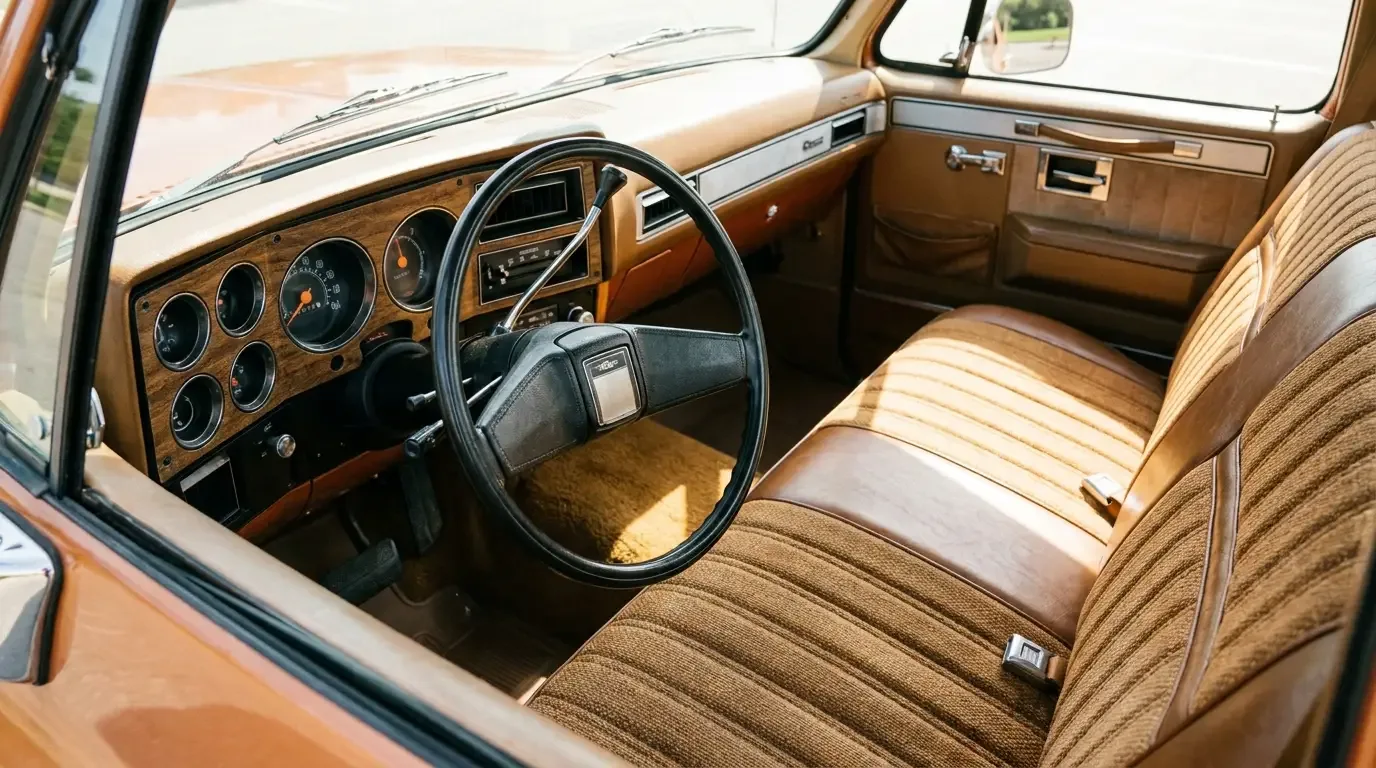
Every C10 generation had a base truck sitting at the bottom of the order form, and it's easy to spot once you know what's missing. Rubber floor mats instead of anything carpeted. A single bench seat with minimal padding. Painted bumpers and grille trim instead of chrome. No bright trim around the windows. These were ordered by fleet buyers, farms, and anybody who needed a truck to do a job and didn't care what it looked like doing it. That's not a knock on them. A clean base truck is often the most honest survivor you'll find, because nobody bothered dressing one up later to chase a bigger sale price.
Custom and Custom Deluxe: the first step up
Custom, and later Custom Deluxe once Chevrolet split the naming further, added the stuff a family buyer actually wanted: more chrome trim, a nicer interior door panel, better seat material, and usually a bit more sound deadening so the cab wasn't just a metal box amplifying the engine. This is where Chevrolet's half-ton legacy really starts to show, the shift from pure work tool to something you'd actually want to drive home after work instead of just to the job site. Custom Deluxe cabs are common enough that they're not rare, but they're a real step up from a stripped base truck and worth more when everything is original.
CST, Cheyenne, and Scottsdale: the square body ladder
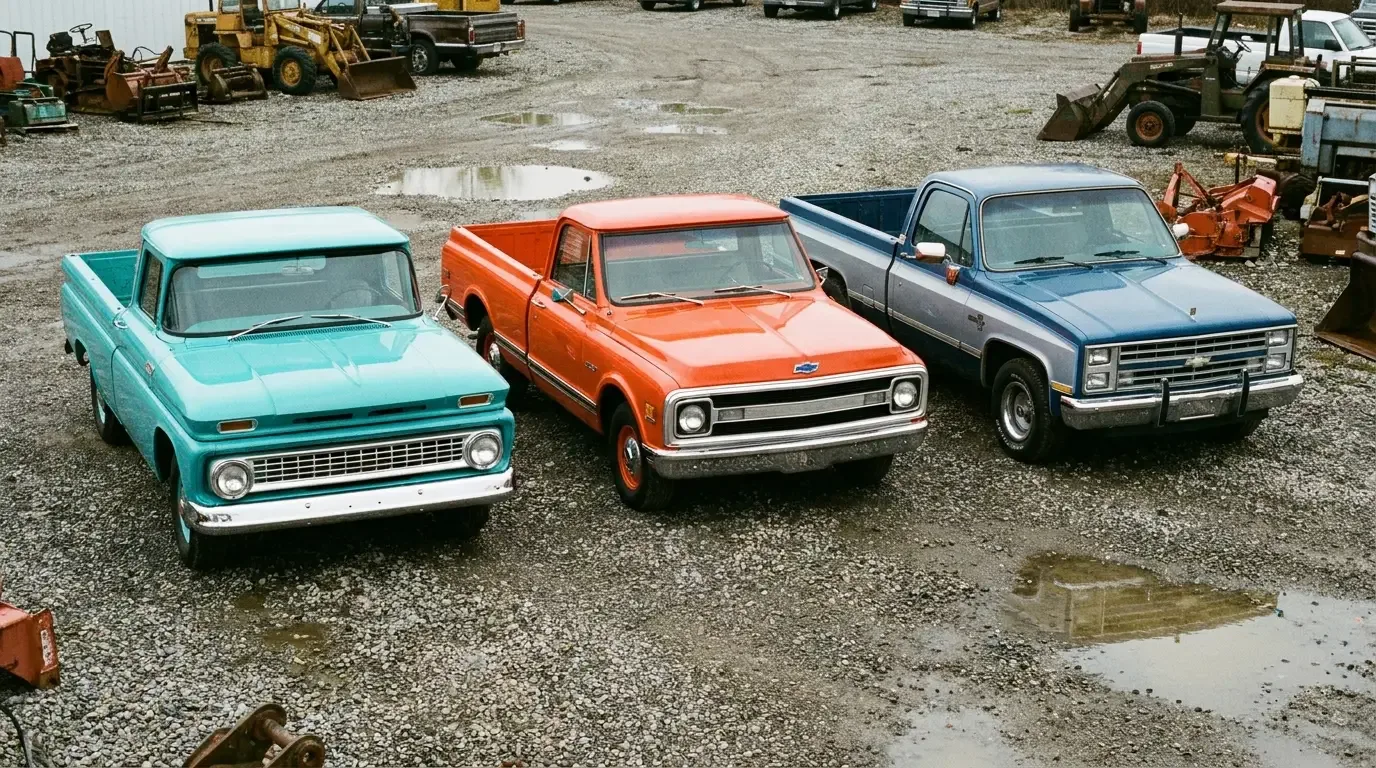
By the second-gen trucks, Chevrolet added Custom Sport Truck, or CST, as a genuinely sporty package with bucket seat options and brighter trim, aimed at buyers cross-shopping a truck against a personal car. When the square body trucks landed for 1973, the naming got reorganized into a clearer ladder that stuck around for most of that generation's long run.
| Trim level | Approx. position | Notable features |
|---|---|---|
| Custom (base-plus) | Entry to mid | Basic upgrade over work-trim base truck |
| Custom Deluxe | Mid | Better seat trim, added chrome, more sound insulation |
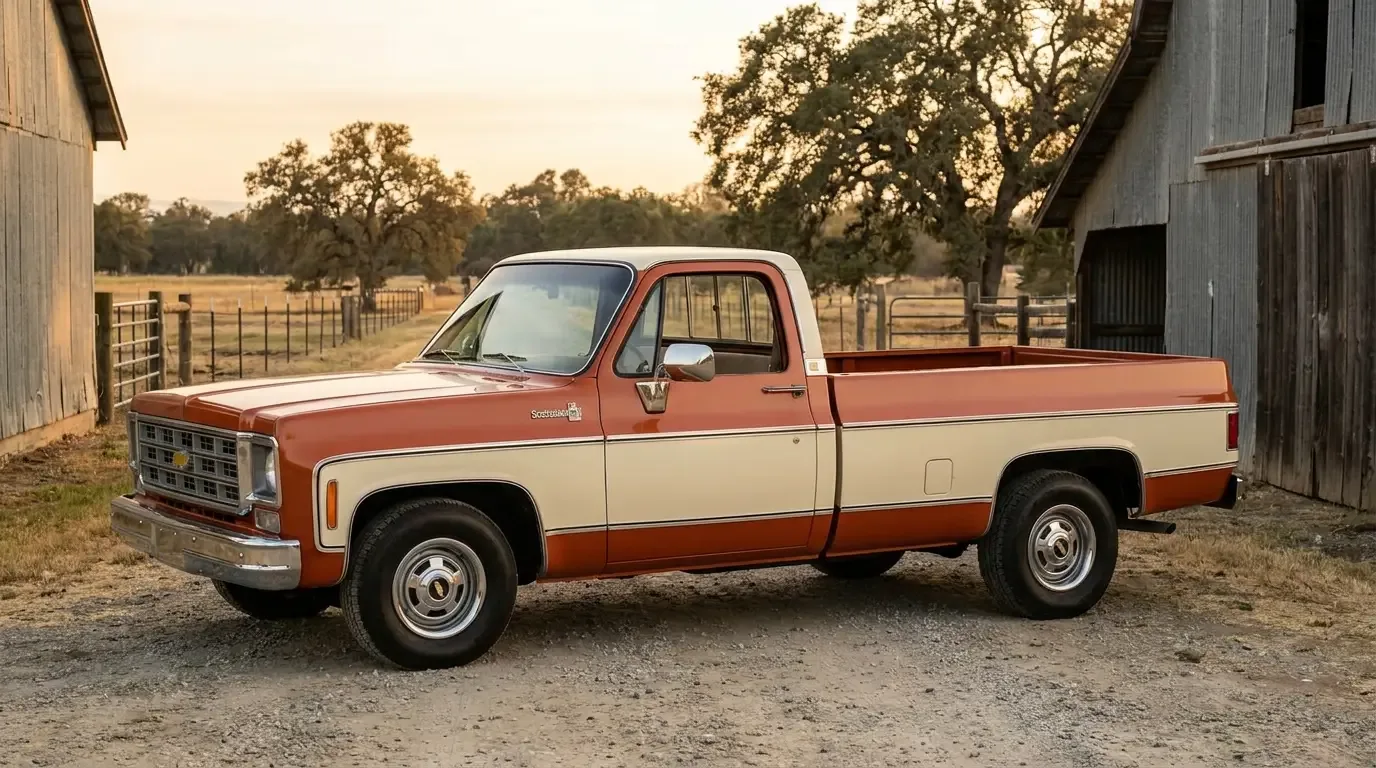
| Scottsdale | Mid-upper | Bright trim package, upgraded interior over Custom Deluxe |
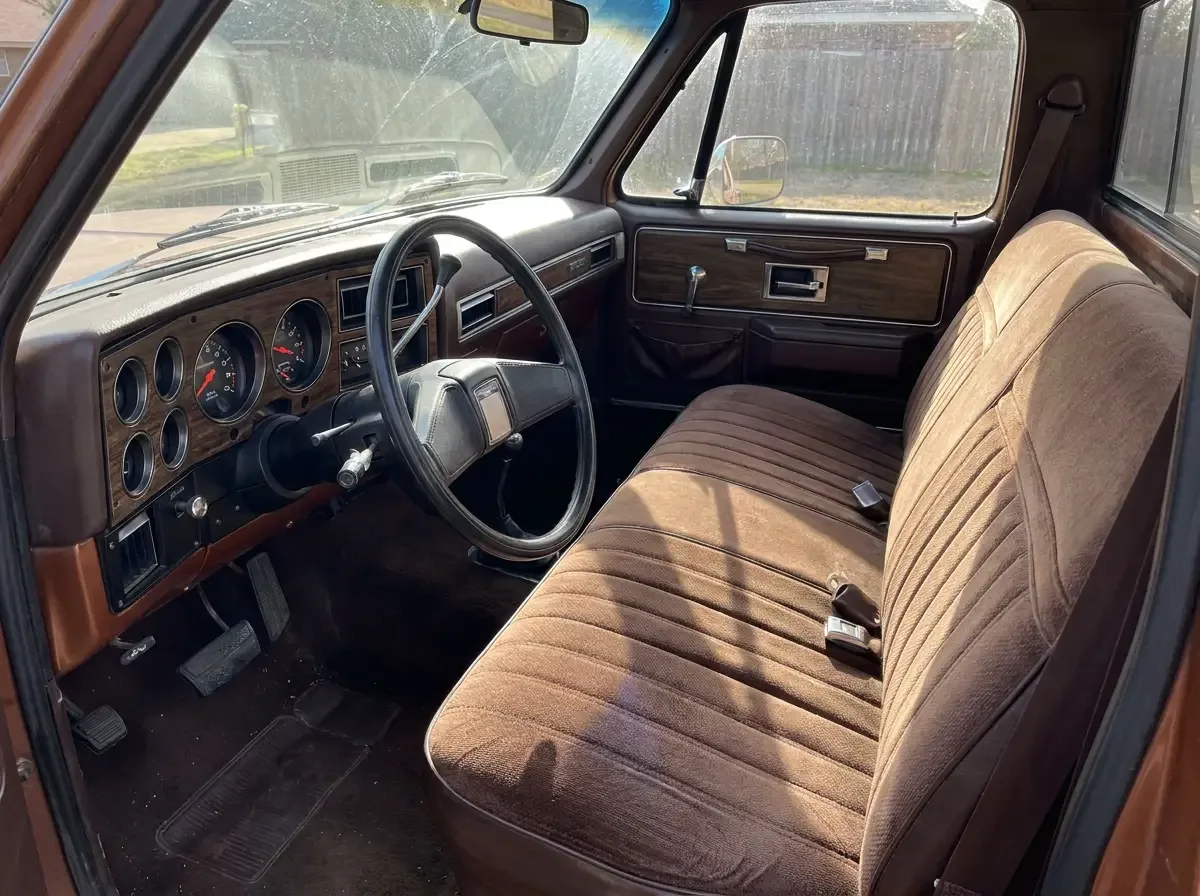
| Cheyenne | Upper | Woodgrain dash trim, upgraded gauges, nicer upholstery |
| Silverado | Top | Full carpet, deluxe interior trim, top-tier badging |
None of that ladder is complicated once you've seen a few of each in person. Cheyenne and Silverado trucks get mistaken for each other constantly because both wear a lot of chrome, but the interior trim level and dash treatment give it away fast if you know what to look at. If you want the full timeline of when each of these names showed up and what changed underneath them, the C10 generation guide covers it year by year.
Big 10 and Big Dooley: the heavy-half oddballs
Somewhere in the middle of the square body run, Chevrolet introduced the Big 10, a half-ton truck built with some of the heavier-duty running gear normally reserved for the 3/4-ton C20, aimed at buyers who wanted extra payload capacity without stepping all the way up to a three-quarter-ton. It's not a trim level in the same sense as Cheyenne or Scottsdale since it could be paired with different appearance packages, but it's a distinction worth knowing because a Big 10 badge tells you something about the frame and suspension underneath, not just the interior. These aren't common finds today, and a lot of casual buyers walk right past the badge without knowing what it means.
What that means on the ground is a Big 10 rides on stiffer springs and usually a heavier rear axle than a standard half-ton wearing the same Cheyenne or Scottsdale trim badges. Two trucks can sit side by side at a show looking nearly identical from the interior, and one of them can carry meaningfully more payload because of what's under the frame rails. If you're planning to actually use the truck for hauling rather than just showing it, that badge is worth more to your daily use than another coat of chrome trim ever will be.
Reading a trim tag instead of guessing from badges
Badges get swapped constantly. A body shop doing a resto job will sometimes bolt on whatever trim emblems look good rather than sourcing the correct ones for what the truck actually was, and a truck that's changed hands a few times can pick up a Cheyenne badge it never earned. The reliable way around this is the trim tag itself, usually mounted on the door or door jamb, which carries a coded reference to the original trim level, paint, and options. Learning to read that tag against a decoder for the specific model year takes the guesswork out of the equation entirely. It's a five-minute check that saves you from paying a premium for a trim level the truck never actually had.
Why trim level matters when you're buying one today
Trim level affects value, sure, but it also affects what engine came in a given truck, since some drivetrain options were tied to specific packages rather than available across the whole lineup. Before you assume a truck is numbers-matching or original, it's worth knowing what engine came with which trim in the first place, because a mismatch there tells you something got swapped somewhere in the truck's life. None of that makes a re-powered truck worthless. It just means you're buying a different kind of truck than the one that left the factory, and you should know that going in rather than finding out later.
"A guy tried to sell me a base truck with Cheyenne emblems stuck on the fenders once, like I wouldn't notice the bench seat and the rubber floor. Badges lie. The interior trim and the tag don't."
Mike Sullivan
The short version
Base means work truck, plain and simple. Custom and Custom Deluxe step it up for a family buyer. Scottsdale, Cheyenne, and Silverado build a real ladder of interior and trim upgrades on the square body trucks. Big 10 tells you about the running gear, not the upholstery. Learn that order and you'll stop getting fooled by a set of bolted-on emblems and start actually knowing what truck is sitting in front of you.
Sources and notes
- Chevrolet C10 & Squarebody Trim Levels Identified, First Place Auto Parts
- The Squarebody Wasn't Supposed to Last 15 Years, Fesler USA
- 1967-1972 Chevrolet C/K Base: 2nd-Gen Specs & Guide, MotoGallery
- Chevrolet C/K third generation (1973-1987 square body) overview, Wikipedia
- Chevrolet C/K first generation (1960-1966) overview, Wikipedia
Related Reading
Have a
Chevrolet C10
for Sale?
Reach thousands of serious classic car collectors across the US.
Sell It Here →
Are You a Classic Car Dealer?
List your full inventory and connect with targeted classic car buyers.
Join as a Dealer →

About the author
Mike Sullivan
Detroit-area muscle car enthusiast and restoration specialist with three decades of hands-on experience working on American iron.
Related Listings - Chevrolet C10
More in History & Heritage
Comments
Be the first to comment on this article.