
I get asked about Stepside beds more than almost anything else on a C10, usually by somebody who thinks they've stumbled onto a rare truck because it has the stepped fenders instead of smooth sides. Sometimes that's true. Most of the time it just means somebody at the dealership ordered the cheaper bed back when nobody was thinking about future collector value. Before you price a truck off which bed sits behind the cab, you need to know what these two options actually were on the order form, and how the split between them moved across three decades of production.
History & Heritage
6 min read
Stepside vs Fleetside: C10 Bed Production Numbers and History
How the split between Stepside and Fleetside beds shifted across three C10 generations, and what the production numbers actually mean for buyers chasing a stepped-bed truck today.
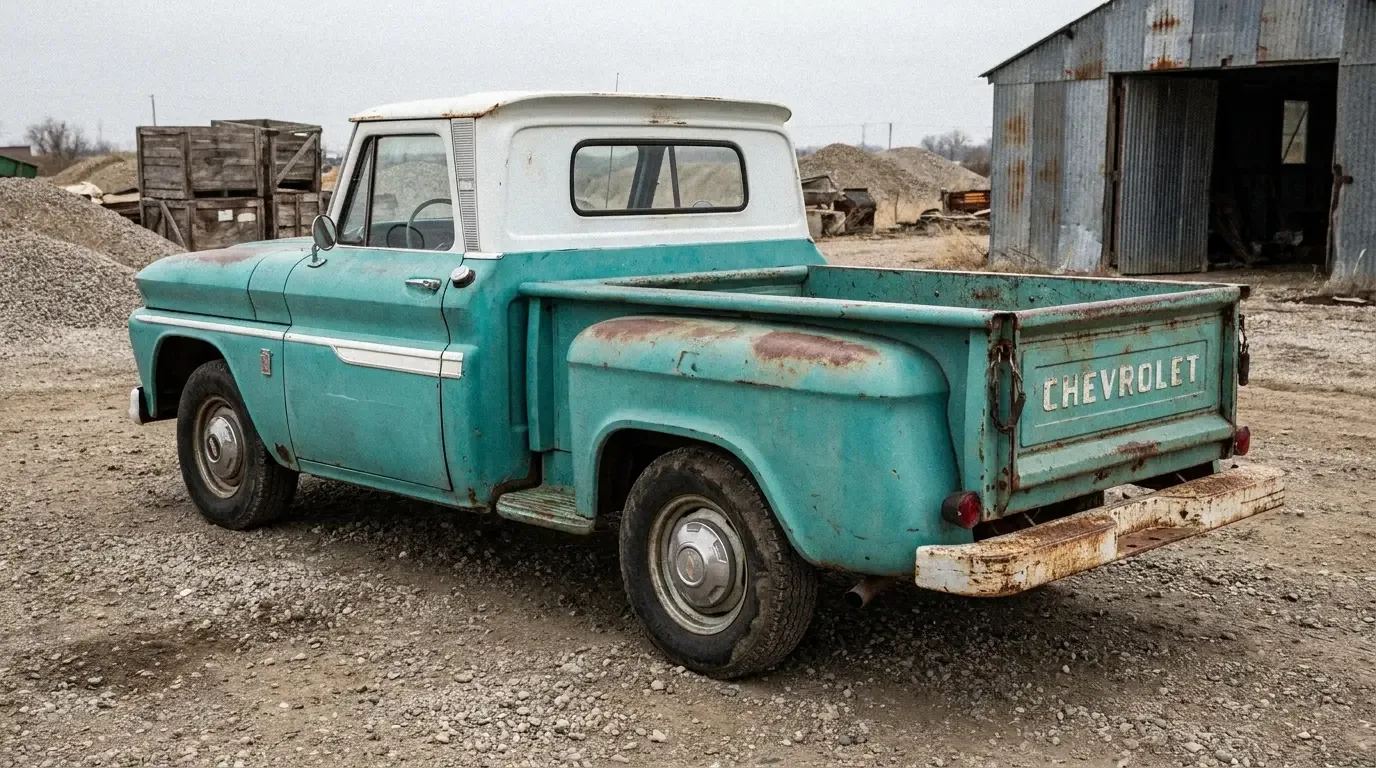
What Stepside and Fleetside actually meant on the order form
Stepside goes back further than the C10 itself. It's the traditional pickup bed shape, narrow at the top with the rear fenders standing outside the bed walls, leaving a stepped platform on each side you could actually stand on to reach into the bed. Fleetside, sometimes called Wideside on other GM literature, is the smooth-sided bed with the fenders built into the bed walls so the whole cargo area reads as one flat rectangle. Chevrolet introduced the smooth-side option on the 1958 Task Force trucks, and by the time the C10 launched for 1960 it was already a real choice, not a novelty. If you want the full rundown on wall height, fender shape, and how to spot a swapped bed on a truck that's been through a few owners, I've laid out the fuller Stepside vs Fleetside breakdown separately. Here I want to stick to the numbers: how many of each actually left the factory, and how that changed.
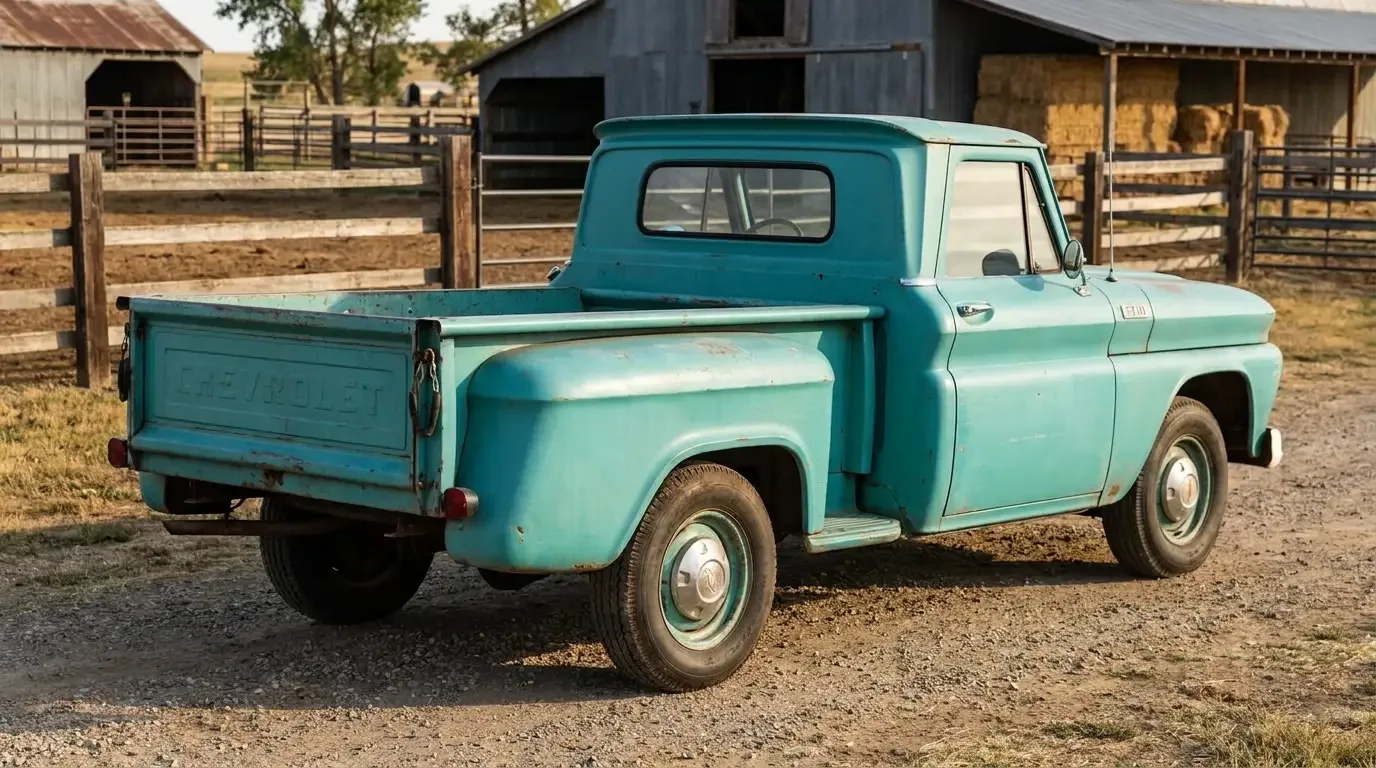
How Fleetside took over the sales floor
In the first few years of C10 production, Stepside wasn't a niche order. Plenty of working trucks left the factory with stepped beds because that's just what a pickup bed looked like to a lot of buyers, and the exposed fenders were genuinely useful for stepping up to reach feed sacks or lumber stacked high. But the market moved fast. Fleetside's flat load floor and taller bed walls held more volume for the same footprint, and by the mid-1960s the smooth-side truck was outselling the stepped one on most dealer lots. That shift lines up with the broader arc of the C10's generational history, where Chevrolet kept nudging the truck away from pure work-tool proportions and toward something a family might actually park in the driveway. Once buyers started cross-shopping trucks against wagons and sedans, the stepped bed started to look old-fashioned rather than practical.
Stepside production by generation
Nobody I know has a clean, published, year-by-year split of exact Stepside-to-Fleetside build counts straight from GM. What follows is the general shape of it, pieced together from registry data, dealer literature, and what actually shows up at truck shows generation after generation. Treat the percentages as directional, not gospel.
| Generation | Years | Fleetside share (approx.) | Stepside share (approx.) |
|---|---|---|---|
| First-gen C10 | 1960-1966 | Roughly even, edging toward a slim majority (est. low-to-mid 50s%) | Roughly even, edging toward a substantial minority (est. upper 40s to mid 40s%) |
| Second-gen C10 | 1967-1972 | Clear majority (est. roughly 65-75%) | Clear minority (est. roughly 25-35%) |
| Third-gen C10 (square body) | 1973-1987 | Dominant share (est. roughly 80-90%) | Small minority (est. roughly 10-20%) |
GM never published a clean year-by-year Stepside/Fleetside split, so treat those figures as informed estimates drawn from registry and enthusiast production data rather than an audited factory count. The trend line matters more than any single number in that table. Every generation, Fleetside eats a bigger share of total production, and Stepside slides toward the bottom of the order guide. By the square body years it's basically a special-order item on half-ton trucks, more common on the smaller 1/2-ton short bed than anywhere else, and largely gone by the time the C10 name gave way to the C/K badge in the late 1980s.
Why Stepside held on longer than you'd expect
If Fleetside was winning every year, why didn't GM just drop the Stepside bed outright somewhere in the 1970s? Cost and tooling, mostly. The Stepside bed used simpler stampings than the Fleetside's wraparound fenders, so it stayed cheaper to build even at low volume, and Chevrolet wasn't about to walk away from a bed style that still had a loyal, if shrinking, base of ranch and construction buyers who genuinely preferred it. There's also the simple fact that some jobs favor a narrower bed floor between the wheel tubs. Anybody who's hauled hay bales or stacked lumber against the inner fenders knows the stepped bed isn't just nostalgia. It does specific jobs a little better than the wide flat floor does.
What the numbers mean for buyers today
Here's where I get blunt. Rarity by itself doesn't make a truck worth more. A rough, rusted-out Stepside with a bent frame is still a rough, rusted-out truck, no matter how few left the factory that way. What the production numbers do tell you is that a clean, honest Stepside from any generation is genuinely less common at a show or on a for-sale lot than a Fleetside from the same year, and that scarcity does show up in what people are willing to pay for a solid one. If you're specifically hunting a stepped-bed truck, don't expect to find one as easily as a Fleetside, and don't let a seller talk you into a premium just because the truck is "rare" without backing that up with actual condition. There are Stepside C10s for sale in every generation if you're patient and know what you're looking at underneath the bed style.
"I've had guys walk past a mint Fleetside to go stand in front of a rusted Stepside just because it's got the stepped fenders. Rare and good are two different words. Make sure you're paying for the one you actually mean."
Mike Sullivan
The bottom line on bed style and value
Stepside started out as the default bed and ended up as the minority option, and that arc plays out differently depending on which generation you're shopping. On a first-gen truck, a Stepside isn't unusual at all. On a square body, it's genuinely harder to find, and that scarcity is real. Either way, the bed style is a detail, not a verdict. Frame condition, floor rust, and whether the drivetrain matches what left the factory matter more to the truck's long-term value than which fenders it happened to leave the plant with.
Sources and notes
- Chevrolet C/K first generation (1960-1966) overview, Wikipedia
- Chevrolet Task Force, on the 1958 introduction of the Fleetside bed, Wikipedia
- Chevrolet C/K third generation (1973-1987 square body) overview, Wikipedia
- Squarebody C10 Complete Guide (1973-1987), FullSizeChevy.com
- The Squarebody Wasn't Supposed to Last 15 Years, Fesler USA
Related Reading
Have a
Chevrolet C10
for Sale?
Reach thousands of serious classic car collectors across the US.
Sell It Here →
Are You a Classic Car Dealer?
List your full inventory and connect with targeted classic car buyers.
Join as a Dealer →

About the author
Mike Sullivan
Detroit-area muscle car enthusiast and restoration specialist with three decades of hands-on experience working on American iron.
Related Listings - Chevrolet C10
More in History & Heritage
Comments
Be the first to comment on this article.