
Through the 1980s, a Rolls-Royce or Bentley on an American driveway did not necessarily arrive through the official importer. A parallel channel, the grey market, brought in European-specification cars directly, bypassing the factory's US distribution network. For a stretch of years the economics were compelling enough that thousands of luxury cars came in this way, until the rules changed and the window closed. Understanding how that market worked, and why it ended, still matters when you are valuing an imported car today.
History & Heritage
6 min read
Grey-Market Rolls-Royce and Bentley Imports to the US Explained
How grey-market Rolls-Royce and Bentley imports reached America in the 1980s, why the window closed, and what documentation to check before you buy.
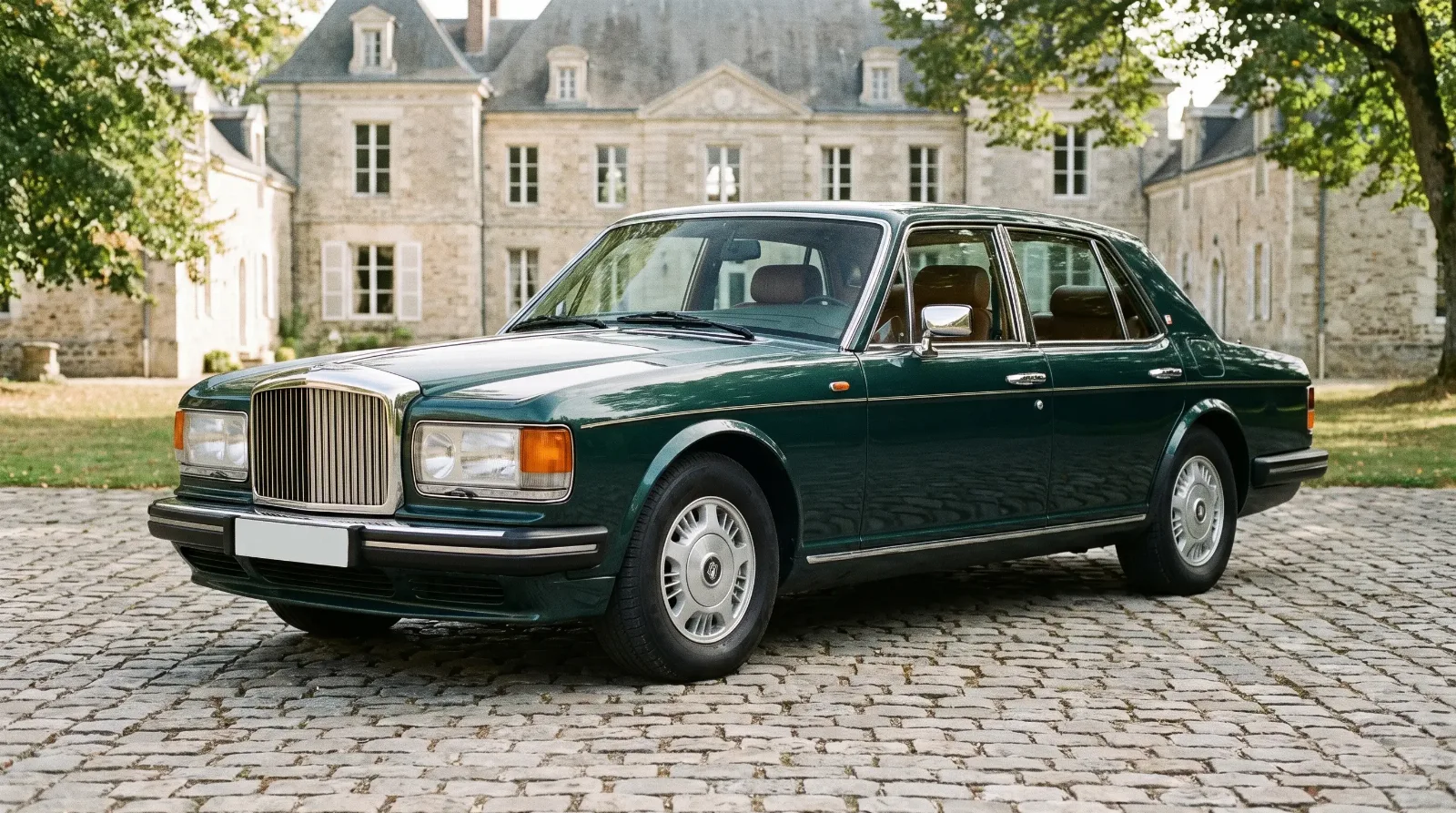
The term "grey market" is worth defining precisely, because it is not the black market. These were legally imported cars, brought in by independent importers or private buyers and then modified to meet US standards, rather than cars smuggled or sold illegally. The distinction is central to how these vehicles are titled, insured, and priced. It is also a recurring theme in the Rolls-Royce/Bentley story, where the American market always played by its own rules.
Why the grey market existed at all
The driver was arbitrage. A European-market Rolls-Royce or Bentley could be bought abroad and imported for meaningfully less than the US list price of the federalized equivalent, even after the cost of conversion. Currency swings through the early and mid-1980s widened that gap at times. Add the appeal of specifications not officially offered in the States, and there was a genuine market for buyers willing to accept the paperwork burden in exchange for the saving.
The official importers, understandably, disliked it. Grey-market cars undercut their pricing and sat outside their warranty and service structure. For the buyer, the trade-off was real, a lower entry price against uncertain support, non-standard equipment, and the compliance work required to make the car street-legal. Some conversions were done well by competent shops. Others were done badly, and the consequences of a poor federalization job still surface in the market decades later.
There was also a genuine quality-of-car argument that pulled buyers toward Europe. A car built to home-market specification had not been altered for US sealed-beam headlamps, heavier bumpers, or emissions equipment that could dull the engine's response. Some enthusiasts specifically wanted the European car as the factory intended it, and were willing to accept the paperwork burden to keep the car closer to its original form. That preference is part of why certain grey-market examples retain a following among purists even now, provided the conversion was done sympathetically and the documentation survives.
What federalization actually required
To register a European car in the United States, it had to be brought into compliance with two separate federal regimes, and this is where buyers should be careful about the specifics. On the safety side, the car had to meet the Federal Motor Vehicle Safety Standards administered by the Department of Transportation through NHTSA, which governed things like lighting, bumpers, and glazing. On the emissions side, it had to satisfy the Environmental Protection Agency's requirements. A car could pass one and fail the other, and both had to be cleared before the vehicle could be legally titled for road use.
"A grey-market car lives or dies on its conversion paperwork. Two identical cars can be worlds apart in value if one has a clean, documented federalization file and the other has a folder full of question marks."
David Mercer
Why the window closed
The grey market largely ended after federal law tightened around the end of the 1980s. The Imported Vehicle Safety Compliance Act of 1988, which took effect at the start of the 1990s, restructured how non-conforming vehicles could be brought in, requiring importation through a registered importer and against a recognized compliance path rather than by any private buyer with a willing conversion shop. That change sharply reduced the flow of new grey-market cars. The practical effect was that the casual, high-volume importing of the mid-1980s was no longer viable.
Separately, a long-standing exemption shapes what can be imported freely now. A vehicle that is at least 25 years old is generally exempt from the DOT safety standards that a newer car would have to meet, which is why older imported cars move so much more easily than cars caught in the awkward middle. For a Rolls-Royce or Bentley, this "25-year rule" context means many of the very cars that once came in grey are now old enough to import without the compliance headache that defined the original market. Strictly, the 25-year exemption covers the DOT safety standards; the EPA runs its own separate exemption, generally for vehicles at least 21 years old in original configuration.
| Consideration | Official import | Grey-market import (1980s) |
|---|---|---|
| Channel | Factory US distributor | Independent importer / private buyer |
| Spec | US-federalized from factory | Euro-spec, converted after arrival |
| Typical appeal | Warranty, support, resale ease | Lower entry price, unusual specs |
| Main risk | Higher purchase cost | Conversion quality, documentation gaps |
| Status after ~1990 | Continued | Largely curtailed by law |
What it means for a buyer now
If you are looking at an imported Rolls-Royce or Bentley, the single most valuable thing in the file is documentation. A car with a complete, legible federalization history, a clear title, and records of who did the conversion is a fundamentally more liquid asset than one with gaps. Buyers should treat a thin paper trail as a price factor, not a footnote. The mechanical condition can be excellent and the title can still create friction at resale or with an insurer.
None of this makes a grey-market car a poor choice. Plenty are well sorted and correctly documented, and the segment can offer value against officially imported examples. It simply means the due diligence is different, weighted toward paperwork and provenance rather than only condition. For buyers weighing imported examples against domestically delivered cars in the current market, it is worth browsing the available classic luxury cars for sale to see how documentation is reflected in asking prices before committing.
Price, of course, is the question underneath all of this, and the two marques never sat at the same number even when they shared a factory. Why one badge cost less than the other, despite sharing an engine, is the subject of next: Why Bentley Stayed Cheaper Than Rolls-Royce Despite Sharing an Engine.
Related Reading

Have a
Classic Car
for Sale?
Reach thousands of serious classic car collectors across the US.
Sell It Here →
Are You a Classic Car Dealer?
List your full inventory and connect with targeted classic car buyers.
Join as a Dealer →

About the author
David Mercer
Classic car market analyst with two decades of experience tracking collector car valuations, auction results, and investment trends.
More in History & Heritage
Comments
Be the first to comment on this article.