
Insurance companies didn't care what an engine actually made once "SS" showed up on the fender. They cared about the letters. That's the whole reason the Heavy Chevy package exists, and it's why I tell guys shopping on a budget to stop ignoring these cars just because they don't say Super Sport anywhere on the body. For 1971 and 1972, Chevrolet built a way to look the part and skip the surcharge, and fifty years later that same car is still one of the more overlooked ways into a second-gen Chevelle that actually looks aggressive.
History & Heritage
7 min read
Heavy Chevy 1971-72: Budget Muscle
How the Heavy Chevy appearance package let buyers get the muscle car look on a 1971-72 Chevelle without the SS insurance surcharge.
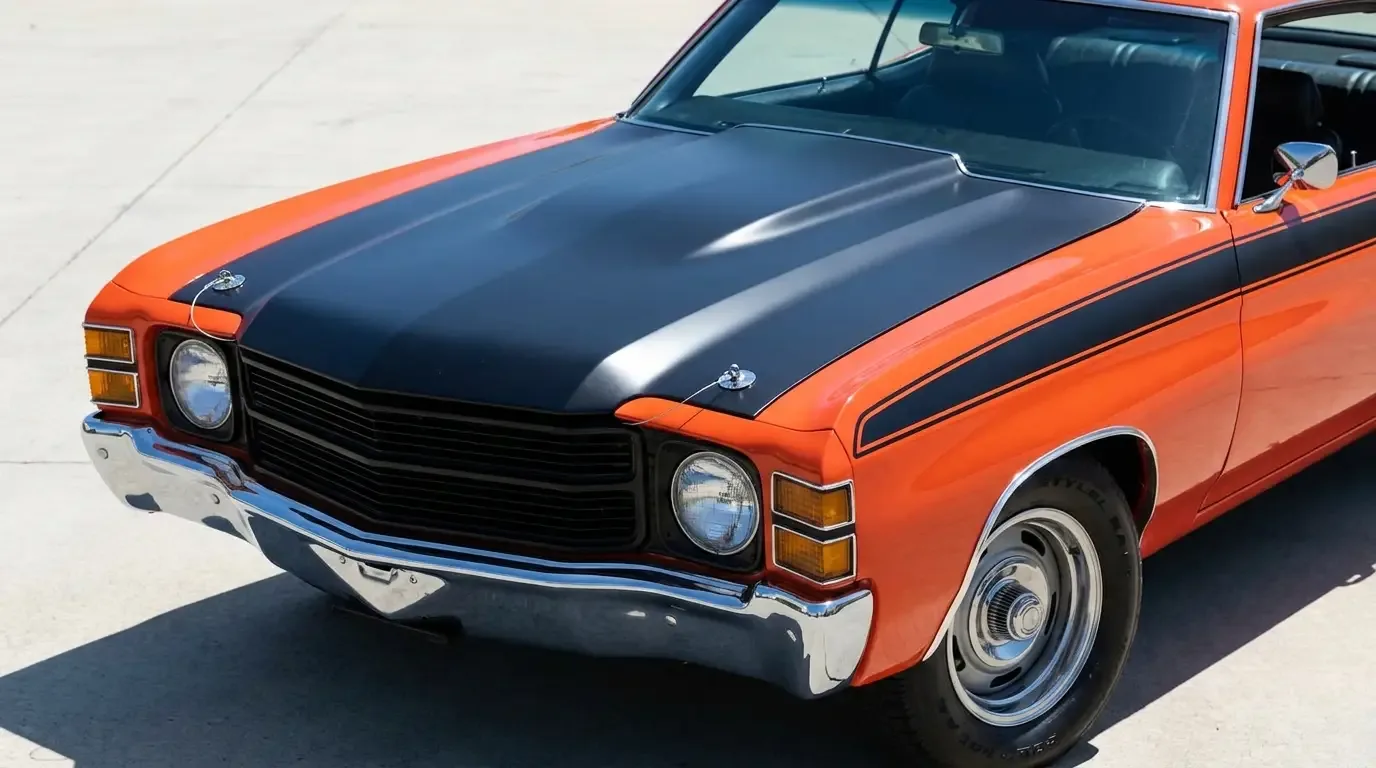
What the Heavy Chevy package actually was
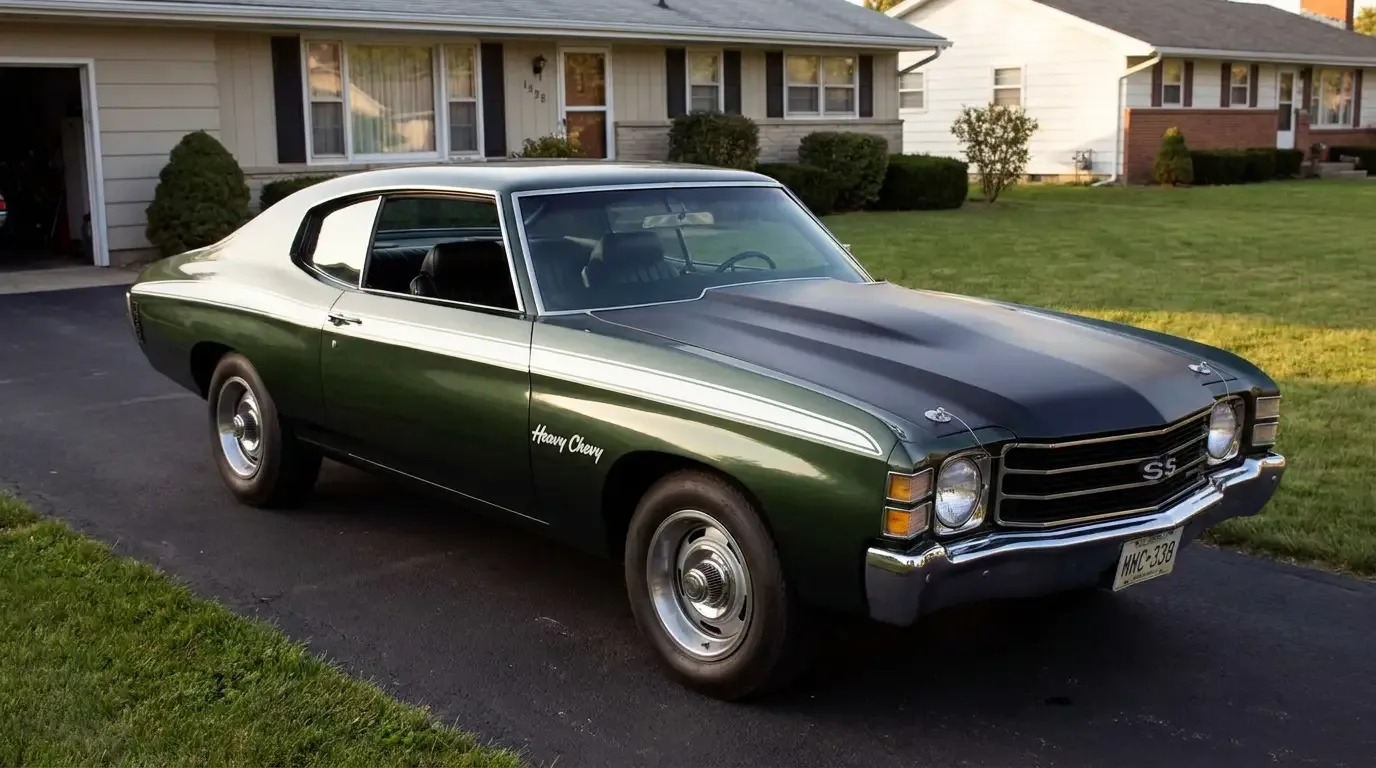
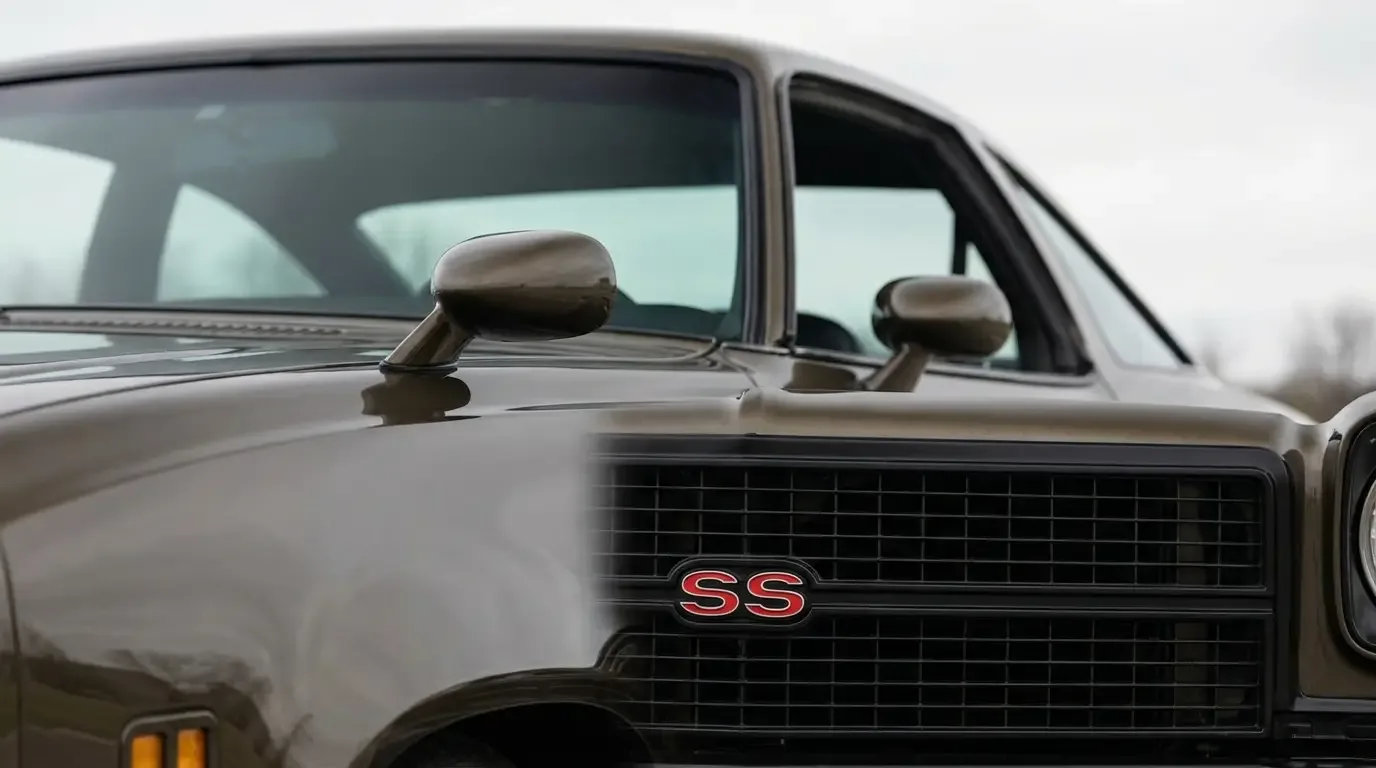
Heavy Chevy was an option package (RPO YF3) available on the 1971 and 1972 Chevelle, built around a blacked-out hood with bold "Heavy Chevy" lettering, sport striping down the sides, a domed SS-style hood with hood pins, a blacked-out grille and headlamp bezels, and styled Rally wheels without trim rings, all of it giving the car a muscle car stance without requiring the SS designation or its insurance rate. It wasn't a separate model, and it wasn't offered on the Malibu. It sat exclusively on the base Chevelle Sport Coupe, the stripped, entry-level hardtop, and bolted the visual language of a performance car onto the cheapest body in the lineup.
That last part matters more than the stripes do, and it's worth being precise about it because the engine story is where Heavy Chevy is easiest to misunderstand. This was not a small-block-only package. Buyers could spec the base 307 two-barrel, a 350 two-barrel (L65), the 350 four-barrel L48, or the 402 big-block sold as the Turbo-Jet 400, but the 454 LS5 was kept off the order form on purpose, reserved for the SS so the Super Sport stayed the top dog in Chevrolet's own lineup. Heavy Chevy's whole trick was decoupling the look from the SS name and its insurance rate, not decoupling it from displacement limits.
Why it existed at all
By 1971, insurance surcharges on cars carrying the SS badge and a big-block engine had been climbing for years, and muscle car buyers were getting priced out of the exact cars they wanted to drive. Chevrolet wasn't alone in responding to this. Every manufacturer built some version of the "looks fast, insures cheap" idea in the early seventies, because the muscle car buyer hadn't disappeared, they'd just gotten squeezed by their insurance agent instead of their bank. Heavy Chevy is Chevrolet's answer for the Chevelle line specifically, and it landed at almost exactly the moment the second generation's compression ratios and horsepower ratings were already coming down from their 1970 peak, which made the gap between an SS and a well-optioned non-SS car smaller than it had ever been.
What to look for if you're shopping one
The Heavy Chevy package is documented through the same option code system as everything else Chevrolet built in this era, so a legitimate car should show the correct RPO code on its build sheet or cowl tag, not just the decals and stripe kit. Reproduction stripe and decal kits are widely available and correctly installed, which means the trim alone tells you almost nothing about whether a car is a factory Heavy Chevy or a Malibu somebody dressed up later. Confirm the option code before you pay a premium for the name.
Engine originality matters here in the same way it matters on every Chevelle from this stretch of years, even though the range is narrower than on an SS. Don't assume a base 307 car is somehow a lesser example of the package just because it isn't running the L48 350 four-barrel. The package was never about outright output, it was about the look, and a correctly documented 307 or 350 two-barrel Heavy Chevy in solid condition is a legitimate piece of the car's history, not a consolation prize next to the L48 cars.
| Feature | Detail |
|---|---|
| Model years | 1971 and 1972 |
| Package type | Appearance and trim package, not a separate model or SS variant |
| Base body | Base Chevelle Sport Coupe only, not the Malibu |
| Engine range | 307 two-barrel, 350 two-barrel (L65), 350 four-barrel (L48), and the 402 big-block (Turbo-Jet 400). LS5 454 reserved for the SS |
| Visual cues | Blacked-out domed hood, "Heavy Chevy" lettering, sport stripes, styled wheels |
"I've had guys turn their nose up at a Heavy Chevy like it's a knockoff SS. It's not a knockoff of anything. It's a car built specifically so a regular buyer could get the look without getting robbed by his insurance agent every six months. Respect it for what it actually is instead of what it isn't."
Mike Sullivan
Why the value case has held up
Chevrolet built roughly 6,727 Heavy Chevys for 1971, the package's mid-year debut, and about 9,500 for 1972, its one full model year on the order sheet, out of Chevelle production runs in the hundreds of thousands each year. Fifty years later, the same math that made Heavy Chevy attractive to a young buyer dodging insurance rates makes it attractive to a collector on a budget. Auction results consistently show a real spread between a documented SS454 and a comparably equipped Heavy Chevy running a small-block or a milder big-block option, and a lot of that spread comes down to the badge rather than anything mechanical. For a buyer who wants period-correct muscle car styling, a domed blackout hood, and stripe graphics that turn heads at a show, without competing for the same six-figure LS6 money everyone else is chasing, the Heavy Chevy is one of the more rational entry points into this generation of Chevelle.
That doesn't mean walk in expecting a bargain on every car with the decals. Well-documented, unmolested Heavy Chevy cars have gotten harder to find precisely because more buyers have caught on to the value case over the last decade. The stripe kit being reproducible cuts both ways: it keeps a legitimate car easy to restore correctly, and it also makes it easy for somebody to build a convincing fake out of a plain Malibu. That's exactly why the option code on the cowl tag matters more here than on almost any other Chevelle variant. The car has to prove itself on paper, because the visual package alone tells you nothing reliable.
For the full context of where this fits in the Chevelle's run, the second-gen Chevelle covers the whole stretch these cars came out of. And if the sleeper angle appeals to you more than the stripe package does, next: The 1969 300 Deluxe SS covers Chevrolet's earlier take on the same basic idea, a serious car wearing a modest badge.
Sources and notes
- Mac's Motor City Garage: "Discount-Bin Muscle Car: The 1971-72 Heavy Chevy"
- MotoGallery: 1971-1972 Chevrolet Chevelle Heavy Chevy specs and history
- ClassicCars.com Journal: Pick of the Day, 1972 Chevrolet "Heavy Chevy"
- autoevolution: 1971 Chevrolet Chevelle Heavy Chevy junkyard find
- Muscle Cars Illustrated: Heavy Chevy, the very sporty Chevelle (1971-1972)
- Hagerty Valuation Tools: 1971 Chevrolet Chevelle Heavy Chevy
Updated October 6, 2026: Corrected the Heavy Chevy engine list: the 402 big-block was available, and only the 454 was excluded.
Related Reading
Have a
Chevrolet Chevelle
for Sale?
Reach thousands of serious classic car collectors across the US.
Sell It Here →
Are You a Classic Car Dealer?
List your full inventory and connect with targeted classic car buyers.
Join as a Dealer →

About the author
Mike Sullivan
Detroit-area muscle car enthusiast and restoration specialist with three decades of hands-on experience working on American iron.
Related Listings - Chevrolet Chevelle
More in History & Heritage
Comments (1)
J
Jimmy Borowski
2 months ago
Prices vary dramatically by region. Same car asking $18k in Texas might be $26k in the Northeast. Know the geography before you assume market value.