
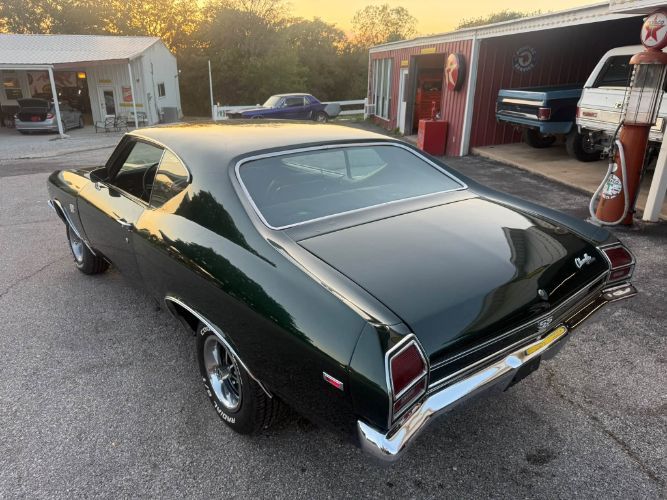
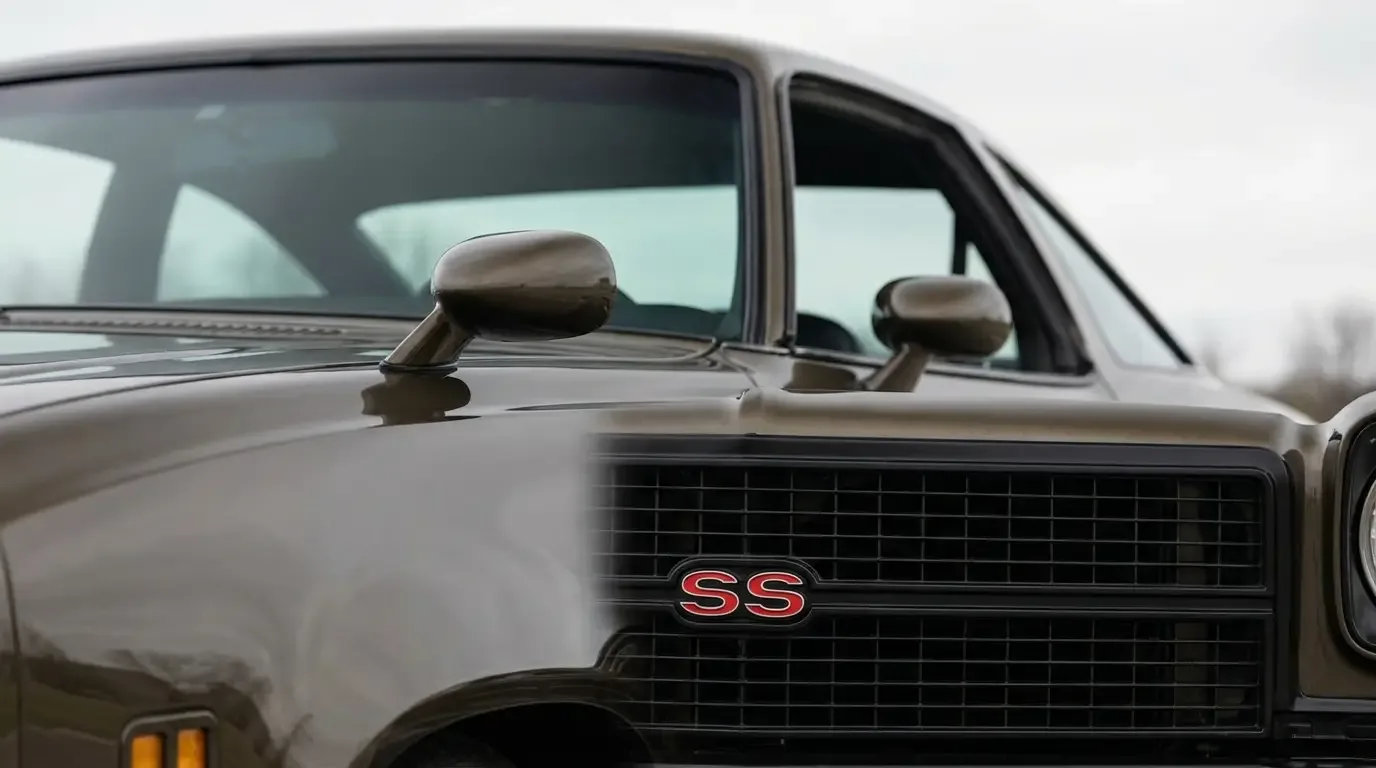
Most guys shopping a '69 SS396 want the Malibu body. Bucket seats, the SS hood, the trim that says something at a stoplight. Fewer of them know Chevrolet also let you order the same running gear in the plainest body on the lot, and that combination built some of the meanest sleepers of the whole muscle car era. The 300 Deluxe SS isn't a car you see at every show, and that's part of the appeal. It looks like somebody's grandmother's grocery getter until the light turns green.
History & Heritage
8 min read
The 1969 300 Deluxe SS: Chevelle's Sleeper Muscle Car
The 1969 Chevelle 300 Deluxe hid a real SS396 under plain sheet metal. How to spot a genuine sleeper and avoid an expensive clone.
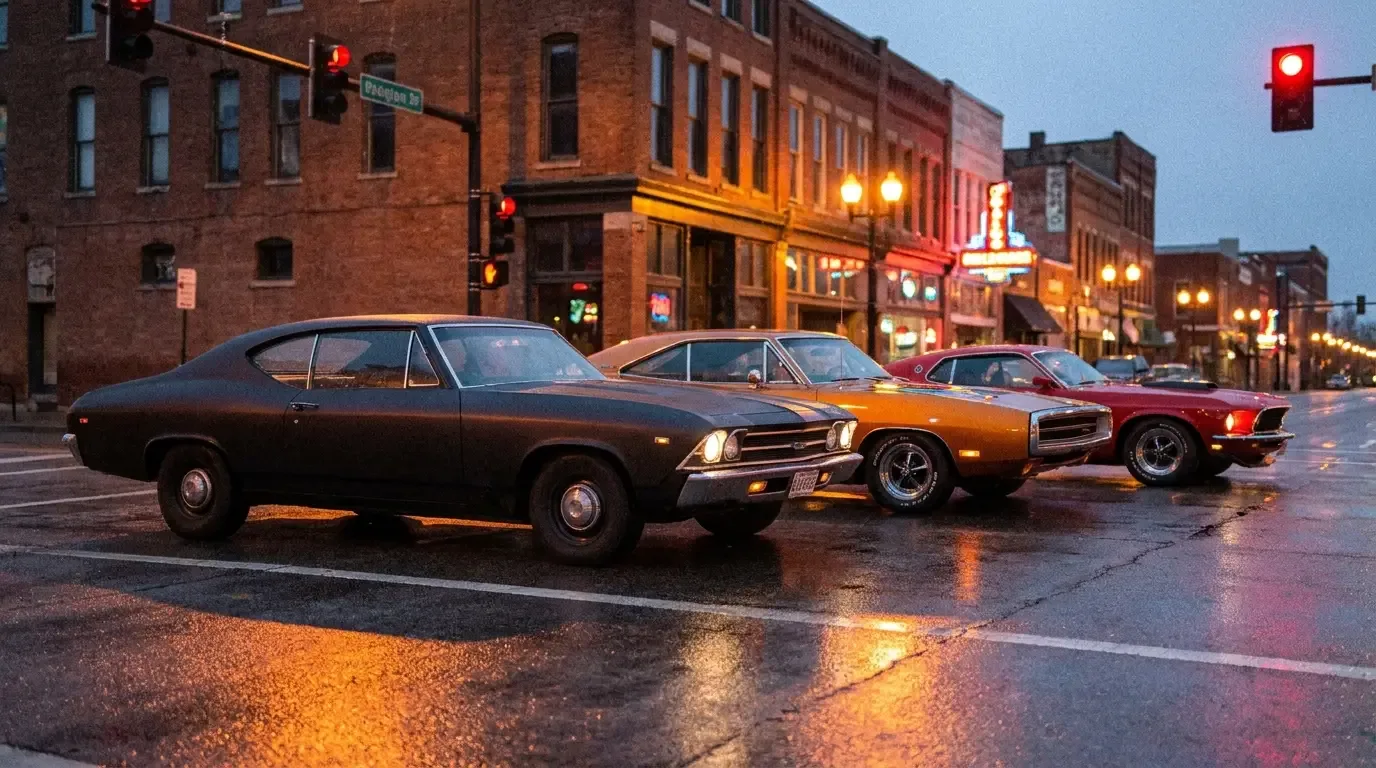
I've pulled apart enough of these to tell you the appeal wasn't styling. It was math. A stripped-down body with less brightwork and fewer standard comfort options weighs a little less than a loaded Malibu, and the buyer who checked the SS396 box on a 300 Deluxe order form wasn't paying for trim he didn't want. He was paying for the engine. That's the whole story of this car in one sentence, and it's why it still finds a specific kind of buyer today.
Why the 300 Deluxe existed in the first place
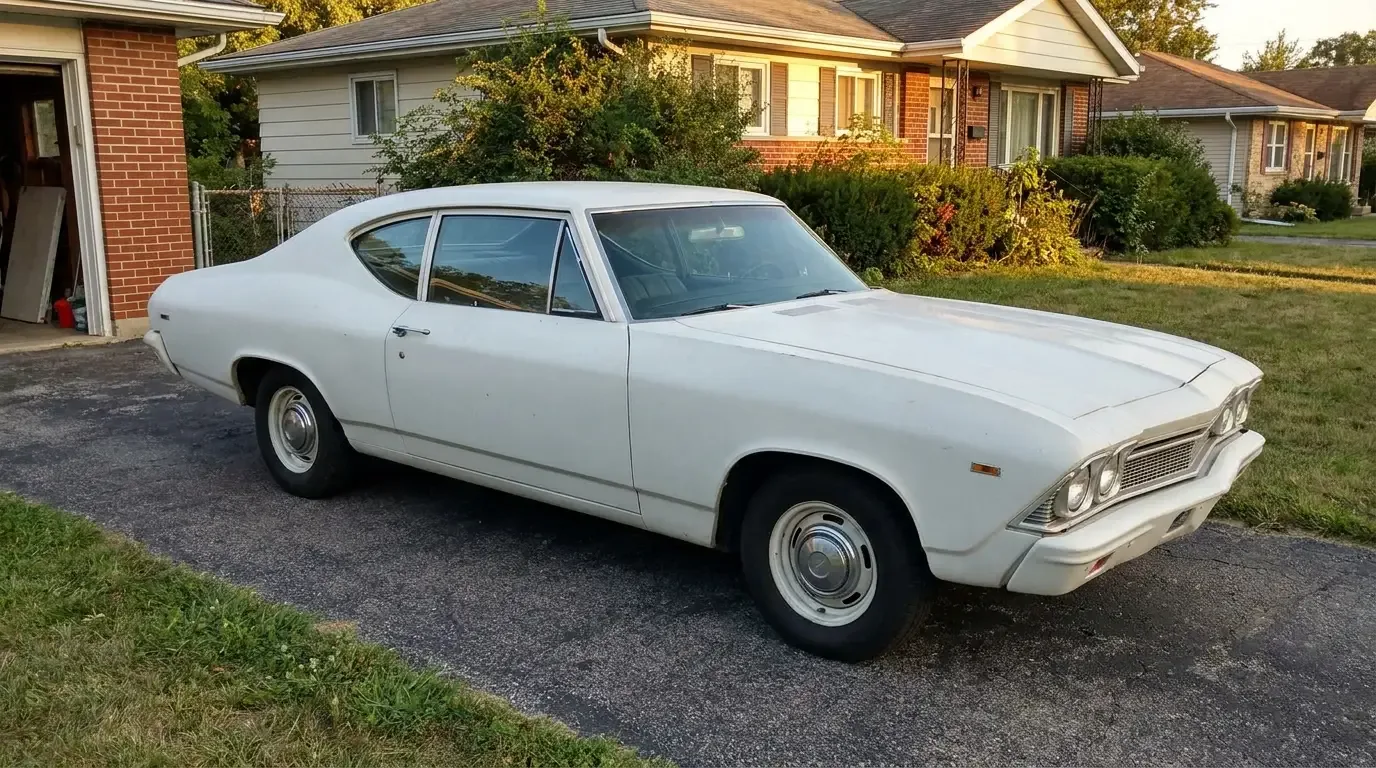
Chevrolet actually dropped the plain-Jane base "300" series for 1969, which left the 300 Deluxe as the entry point into the whole Chevelle line, with Malibu sitting above it. SS was layered on as an option package rather than a series of its own that year. The 300 Deluxe was built for fleet buyers, taxi companies, and budget-minded families who wanted a mid-size Chevrolet without the chrome. Bench seats were standard. Interior trim was rubber floor mats and vinyl in place of Malibu's carpet and cloth options. Exterior brightwork was minimal, no bodyside moldings unless somebody ordered them separately.
What most people forget is that none of that had anything to do with what engine you could order. Chevrolet's build sheets didn't tie the SS396 package to a specific trim level the way some manufacturers locked performance options to their top trim. If you wanted a 300 Deluxe two-door with the SS package, the dealer could write it up, and the factory would build it. It wasn't common. It also wasn't a fluke or a factory error people love to claim on forums. It was a documented, ordering-guide combination, and it only happened this way in 1969. That year is the only one where Chevrolet let the Z25 SS package land on anything but a Malibu or El Camino, and the option was limited specifically to the 300 Deluxe two-door coupe and two-door sport coupe body styles. Chevrolet closed that door for 1970 and never reopened it.
What the SS package actually did to a 300 Deluxe
Order the SS396 package (RPO Z25) on a 300 Deluxe and you got the same mechanical content as the Malibu SS: the 396 big-block in one of its available states of tune, F41 suspension components in some configurations, the SS wheels and trim badging, dual exhaust, and the heavier-duty cooling and driveline pieces that came bundled with the package regardless of what body wore it. What you did not get, unless you ordered it separately, was the Malibu's interior upgrades or exterior brightwork. The result is a car that reads as basic transportation from the outside and hits like a Malibu SS from the driver's seat.
Engine choices for the 396 in '69 broke down this way: the base L35 rated at 325 horsepower, the L34 at 350 horsepower, and the L78 at 375 horsepower with solid lifters, 11.0:1 compression, and a much more aggressive cam. Those are the factory gross ratings, and they're the numbers the ordering guide and period literature back up. The L78 is the one people chase hardest, and it's also the one with the most documented history of dealer-installed substitutions and engine swaps over fifty-plus years, so paperwork matters more on that engine than any other.
| Engine (RPO) | Horsepower | Notes |
|---|---|---|
| L35 396 | 325 hp | Hydraulic lifters, standard engine on the Z25 package |
| L34 396 | 350 hp | Hydraulic lifters, higher compression, better cam |
| L78 396 | 375 hp | Solid lifters, most desirable, most cloned |
Spotting a real one instead of a clone
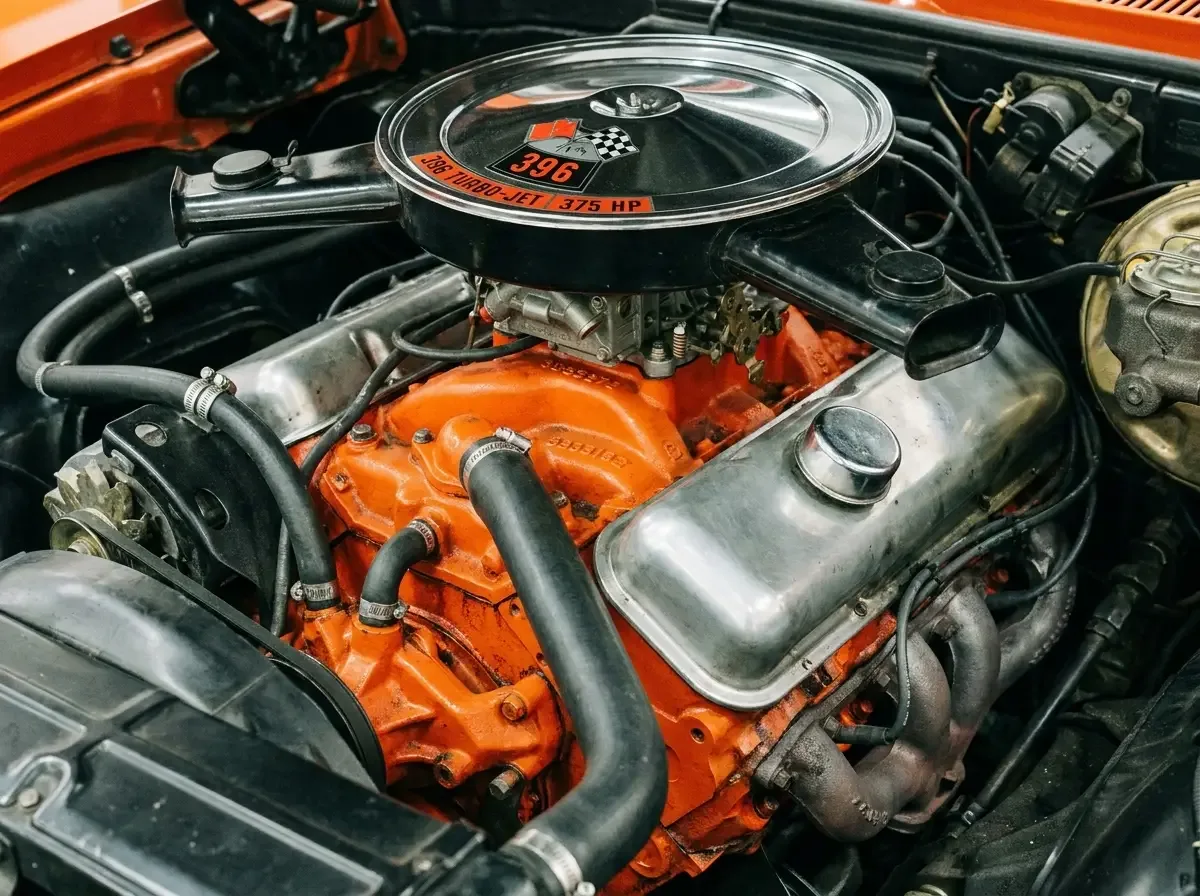
Here's where the sleeper angle turns into a headache for buyers. Because the 300 Deluxe SS is rare and desirable, it's also one of the more commonly recreated combinations out there. Somebody takes a plain 300 Deluxe, drops in a 396, bolts on SS trim, and calls it a survivor. The tell is always in the paperwork and the stampings, not the shiny stuff. You want to see the trim tag decoded properly, the cowl tag matching the body style and options claimed, and ideally a Protect-O-Plate or build sheet that lines up. Engine block casting numbers and the partial VIN stamped into the block need to match the car's actual VIN, not just be "period correct."
I've seen guys get burned buying a car described as numbers-matching over the phone, only to find the block casting date was months after the car's build date once they finally got a light on it. That's not a small detail. That's the difference between paying real money for a documented car and paying real money for a very convincing story. Bring a flashlight, bring a decode sheet, and don't let anybody rush you through the inspection because "there's another buyer coming at noon."
🔧 Inspection Priorities
- Cowl tag and trim tag decode. Confirms body style, trim level, and factory-ordered options actually match what's being sold. A mismatch here means the car isn't what the ad says, full stop.
- Engine block casting number and date. The casting date has to predate the car's build date. A later casting date means a replacement block, which changes the value conversation entirely.
- Partial VIN stamp on the block. Should match the car's VIN. Missing or altered stamping is the single biggest red flag on a claimed numbers-matching big-block.
- Rust in the usual second-gen spots. Trunk floor, lower quarters, and the front subframe mounts. A cheap 300 Deluxe body doesn't rust any differently than a Malibu body built on the same line.
What they're worth and who's actually buying them
Pricing on a documented 300 Deluxe SS396 tracks below an equivalent Malibu SS in most cases, simply because the market still rewards the trim and brightwork Malibu buyers wanted. A solid driver-quality L35 car might land in the mid five figures, while a documented L78 with matching numbers and clean paperwork can push well past that. A restored, Registry-documented L78 300 Deluxe with an M22 four-speed sold for $71,500 at RM Sotheby's Hilton Head auction in 2015, and that was for a car believed to be one of fewer than 20 L78 300 Deluxe coupes built. Rough project cars missing drivetrain or documentation trade for a fraction of those numbers, and that gap is exactly where you find the clone problem creeping in.
The buyer who wants this car isn't chasing show trophies. He wants the performance without the target on his back that a Malibu SS with full stripes and hood pins can attract, whether that's from other drivers at a light or from insurance companies who see "SS" on the title. If that's you, you're looking for a real one, and real ones exist. You just have to be more careful finding them than you would with a car that announces itself.
"A plain-jane 300 Deluxe with a real L78 under the hood is one of the best-kept secrets in this hobby. Nobody looks twice at it in a parking lot, and that's exactly the point. But I've watched more than one guy pay Malibu money for a car that turned out to be a 300 Deluxe body with a swapped engine and a good paint job. Do the paperwork before you do the deal."
Mike Sullivan
Whether you're chasing the sleeper angle or just want a solid big-block second-gen without paying Malibu premiums, it helps to understand where the 300 Deluxe fits inside the second-generation story, and how the trim ladder played out across the whole run in the classic Chevelle story. If you want to see what's actually on the market right now, it's worth taking a look to browse 1969 Chevelles before you commit to a specific trim.
The 300 Deluxe SS wasn't the only way second-gen buyers stretched their dollar toward performance while keeping the exterior modest. If open-air motoring interests you more than sleeper status, next: Second-Gen Convertibles covers the other side of that same era, where Chevelle buyers traded a hardtop roof for wind in their hair without giving up much under the hood.
Sources and notes
- Chevelle Stuff: 1969 Chevelle SS option (300 Deluxe & Malibu series)
- RM Sotheby's: 1969 Chevrolet Chevelle SS 300 Deluxe L78, Hilton Head 2015
- Chevy Hardcore: 1969 Chevelle engine options
- Hagerty: 1969 Chevelle SS 396, not your run-of-the-mill Chevelle
- Wikipedia: Chevrolet Chevelle, 1969 model-year trim changes
- Chevelle Stuff: Chevelle series/model lineup by year
Related Reading
Have a
Chevrolet Chevelle
for Sale?
Reach thousands of serious classic car collectors across the US.
Sell It Here →
Are You a Classic Car Dealer?
List your full inventory and connect with targeted classic car buyers.
Join as a Dealer →

About the author
Mike Sullivan
Detroit-area muscle car enthusiast and restoration specialist with three decades of hands-on experience working on American iron.
Related Listings - Chevrolet Chevelle
More in History & Heritage
Comments
Be the first to comment on this article.