
Before you hand over money for a Chevrolet C10, learn to read the tag. Paint fades, engines get swapped, and interiors get redone by three different owners with three different ideas about what looked good. The VIN and trim tag don't lie about what left the factory, and knowing how to read them is the fastest way to confirm whether the truck in front of you is what the seller says it is.
History & Heritage
7 min read
How to Decode a Chevrolet C10 VIN Tag
Learn where to find the VIN and trim tag on a Chevrolet C10 and what the codes actually tell you about a truck's originality before you buy.
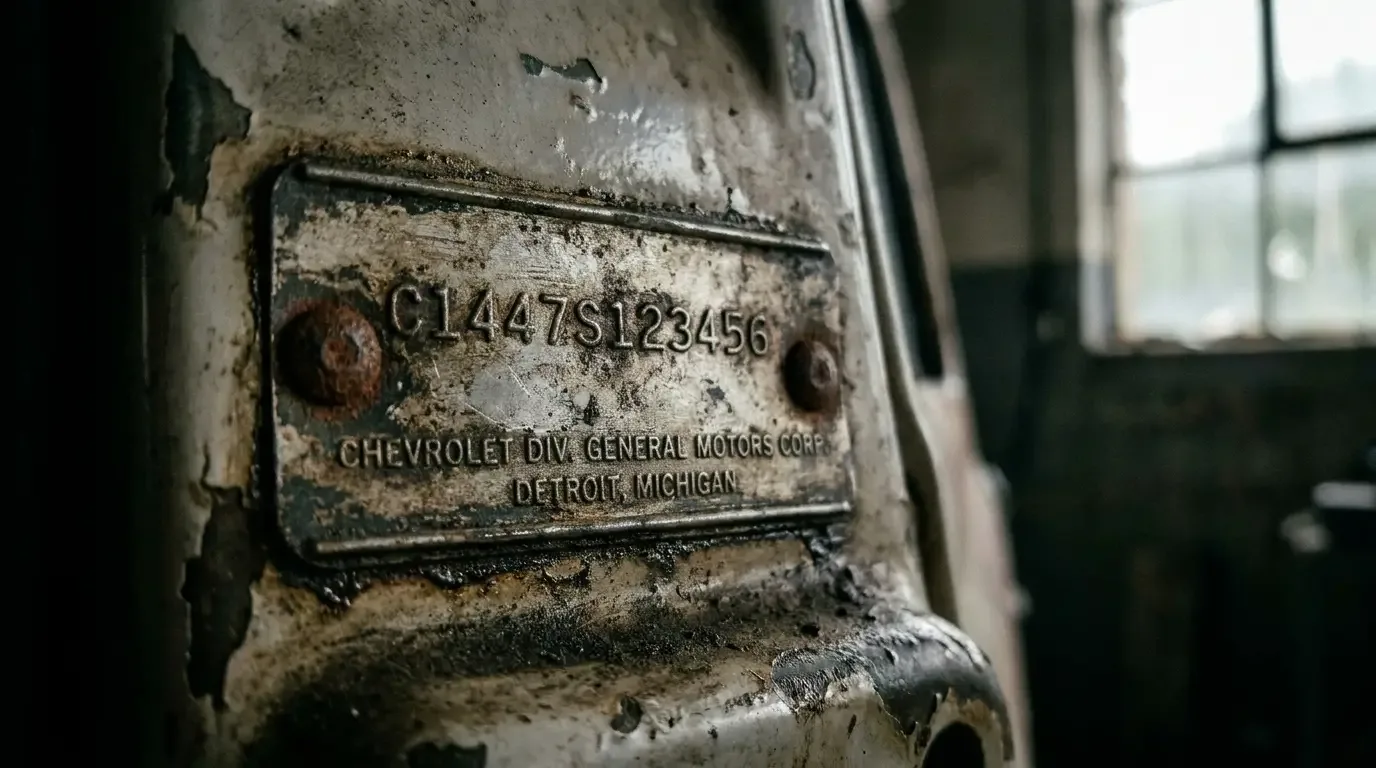
I've walked away from more than one "numbers matching" truck because the tag told a different story than the seller's pitch. This isn't complicated once you know where to look and what the codes mean, but it does take some patience the first few times through.
Where to find the tags
On most C10s, you're dealing with two separate pieces of information: the VIN, usually found on a plate riveted to the driver's side door hinge pillar or visible through the windshield on later trucks, and a separate trim or body tag that carries production details like paint code, trim code, and build date. Location of the trim tag shifted across the three generations, so don't assume a first-generation truck and a square body carry their tags in the same spot.
On first- and second-generation trucks, look at the door hinge pillar area first. On square body trucks, the tag is commonly found on the tailgate hinge area of the cowl or the glovebox door depending on the specific year, and some trucks carry a secondary tag under the hood on the firewall. If a tag looks like it's been removed and reattached, or if rivets don't match the rest of the truck's original hardware, treat that as a flag worth investigating further before you assume anything about originality.
Reading the VIN
The VIN format changed over the C10's production run, and older trucks used a shorter, differently structured number than what became standard after federal VIN requirements were tightened in the 1980s. Early VINs typically encode information about the plant of manufacture, model year, and a sequential production number, but the exact structure and digit count differs between first-generation, second-generation, and square body trucks. First-generation trucks used a 12-character VIN through 1964 that opened with a single digit for model year, growing to 13 characters for 1965 and 1966. The second generation (1967-1972) used its own 13-character format, leading with a letter pair for drive type and engine (C or K for two- or four-wheel drive, paired with E for V8 or S for six-cylinder), followed by the series and body-style digits, a single model-year digit, an assembly-plant letter, and a six-digit production sequence. Square body trucks (1973-1987) carry yet another 13-character VIN, stamped on the driver's door jamb, that encodes make, model year, and assembly plant ahead of the serial sequence. Because the coding schema shifted more than once across this platform's run, always cross-reference the specific digit sequence against a year-correct decoding reference rather than assuming one format applies across all three generations.
What you're checking the VIN for, practically speaking, is confirming the model year matches what the seller claims, confirming the truck is genuinely a C10 (half-ton, two-wheel drive) rather than a K10 or heavier-duty C20 or C30 with different badging, and cross-referencing against title paperwork to make sure everything lines up. A mismatch between VIN and title is a serious red flag and, depending on your state, can create real problems getting the truck registered.
Decoding the trim tag
The trim tag carries the details that matter most to a buyer trying to confirm originality: paint code, trim level code, and often a build date stamp. This is where you confirm whether a truck claiming to be a factory Custom Sport Truck or a Silverado-trim square body actually carries the trim code that matches that claim, rather than just having the badge and upgraded interior added later by a previous owner chasing more money at resale.
Paint codes on the trim tag will tell you the factory color, which matters if you're doing a correct restoration or just want to confirm a truck hasn't been repainted a different shade than what left the factory. Trim codes similarly correspond to specific interior configurations, and cross-referencing that code against a decoding chart for the correct model year tells you whether the seats, door panels, and dash trim in the truck are actually what the factory installed.
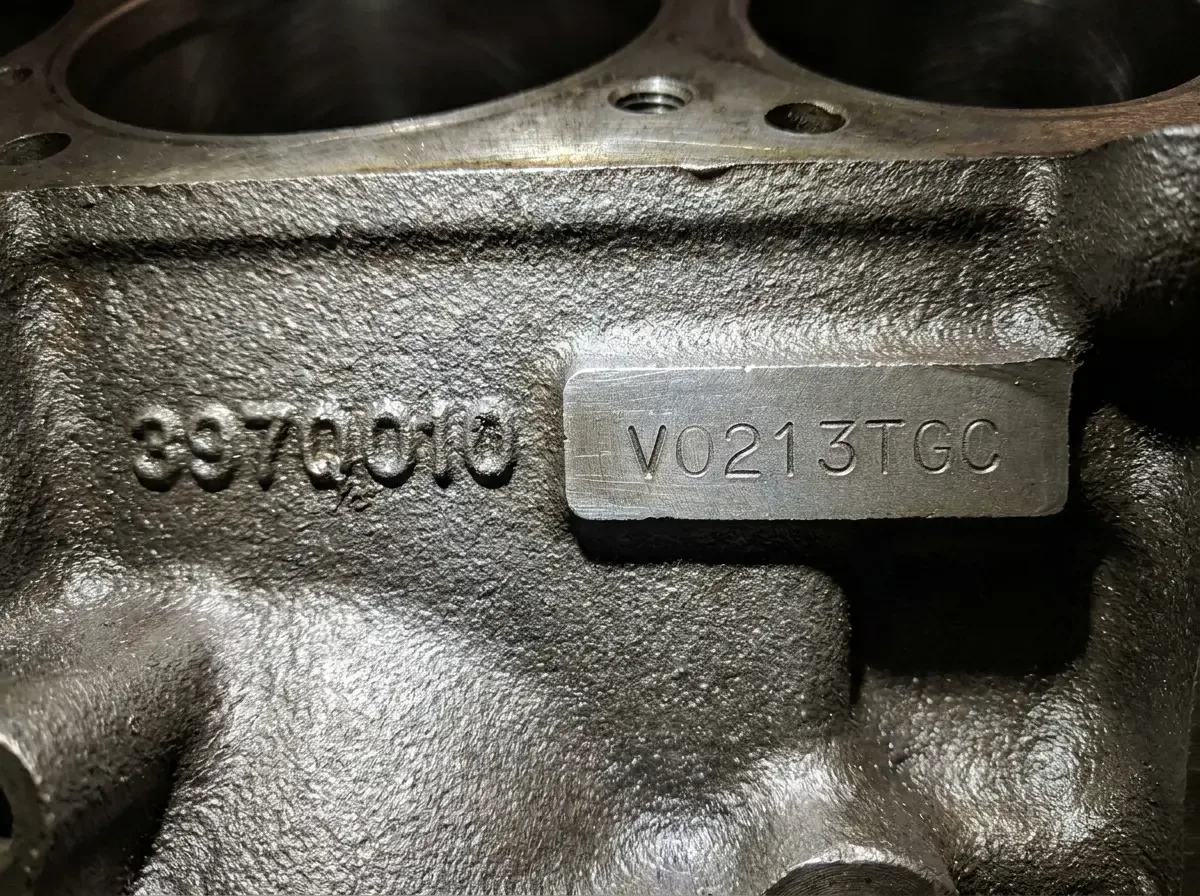
Engine codes are sometimes included on the trim tag or on a separate engine pad stamping, depending on generation and year. This is one of the most valuable things to verify before buying, because engine swaps are extremely common on trucks this age. On small-block and big-block Chevrolet V8s, the assembly stamping pad sits on a machined surface just forward of the passenger-side cylinder head (often hidden under the alternator), while the casting number is found on a raised ledge at the rear of the block, near the bellhousing on the driver's side. A truck advertised with its "original" engine should have that claim checked against those stampings and casting numbers, not just taken on the seller's word, and it's worth knowing that a block previously decked by a machine shop can have its assembly date code machined away entirely, since decades of ownership changes make swapped or resurfaced engines common on many surviving examples.
| Tag element | What it tells you | Common tag location |
|---|---|---|
| VIN plate | Model year, plant, sequential production number, model designation (C10 vs K10, C20, C30) | Door hinge pillar or windshield-visible plate |
| Trim tag | Factory paint code, trim/interior code, build date | Door hinge, tailgate hinge, glovebox, or firewall depending on generation |
| Engine pad/stamping | Engine casting and assembly details for confirming originality | Engine block, typically near the front of the block or on the pad below the cylinder head |
"A tag with rivets that don't match the rest of the truck's hardware is telling you something. Maybe it's nothing. Maybe it's a truck that's been dressed up to look like something it isn't. Either way, that's a question worth answering before you write a check."
Robert Halloran
What to do when the numbers don't match
Finding a mismatch doesn't automatically mean walk away. Plenty of honest, well-loved C10s have a replacement engine or a repaint in a different color than what the tag shows, and that's normal for a working truck that's been through several owners over sixty years. What matters is that the seller is upfront about it and that the asking price reflects the truck's actual originality rather than a claim that doesn't hold up under inspection.
Where I get cautious is when a seller insists everything is original and matching, but the physical evidence says otherwise. That's not a truck with an honest history. That's a truck being sold on a story, and the story is worth exactly nothing once you're the one holding the title. Take your time with the tags before you commit to a price, and if you're not confident reading them yourself, it costs very little to have someone who knows the platform take a look before the deal closes.
Reading the tags correctly also matters because year-specific details change enough that a mistake in dating the truck throws off everything else about your evaluation. For a full breakdown of exactly what changed year to year on the earliest trucks, it helps to understand what changed on the earliest C10s so you're comparing the tag against the correct set of factory specifications for that specific model year. And if you want the bigger picture of how the platform evolved before you get into tag-level detail, that's covered in the C10's full generational history.
Sources and notes
Related Reading
Have a
Chevrolet C10
for Sale?
Reach thousands of serious classic car collectors across the US.
Sell It Here →
Are You a Classic Car Dealer?
List your full inventory and connect with targeted classic car buyers.
Join as a Dealer →

About the author
Robert Halloran
Texas-based classic truck enthusiast with decades of experience buying, restoring, and writing about American pickups from the 1940s through the 1980s.
Related Listings - Chevrolet C10
More in History & Heritage

Comments
Be the first to comment on this article.