
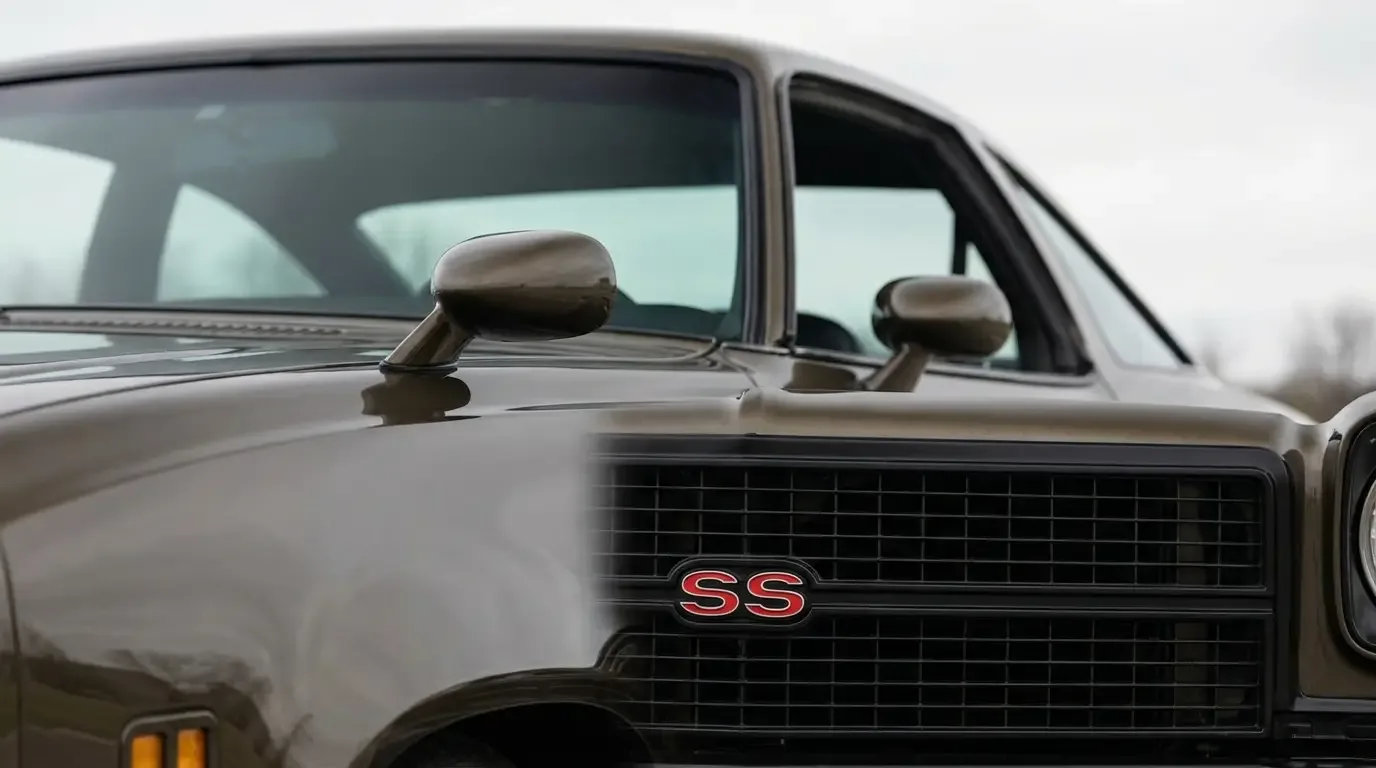
Most of the 1973 Colonnade Chevelle lineup wore a bumper the way GM had always built bumpers: chrome, bolted on, obviously a bumper. The Laguna did not. Chevrolet gave its new top-line Chevelle a molded, body-color nose that swallowed the front bumper into the sheet metal, and the result looked like nothing else in the Chevelle brochure that year. It was not decoration. It was Chevrolet solving a federal safety mandate and a styling problem at the same time, and doing it in a way that happened to look better than the mandate required.
History & Heritage
7 min read
The Soft-Nose Laguna: A Styling Story
How the 1973 Chevelle Laguna's urethane nose solved a federal bumper rule and became the car's signature styling detail.
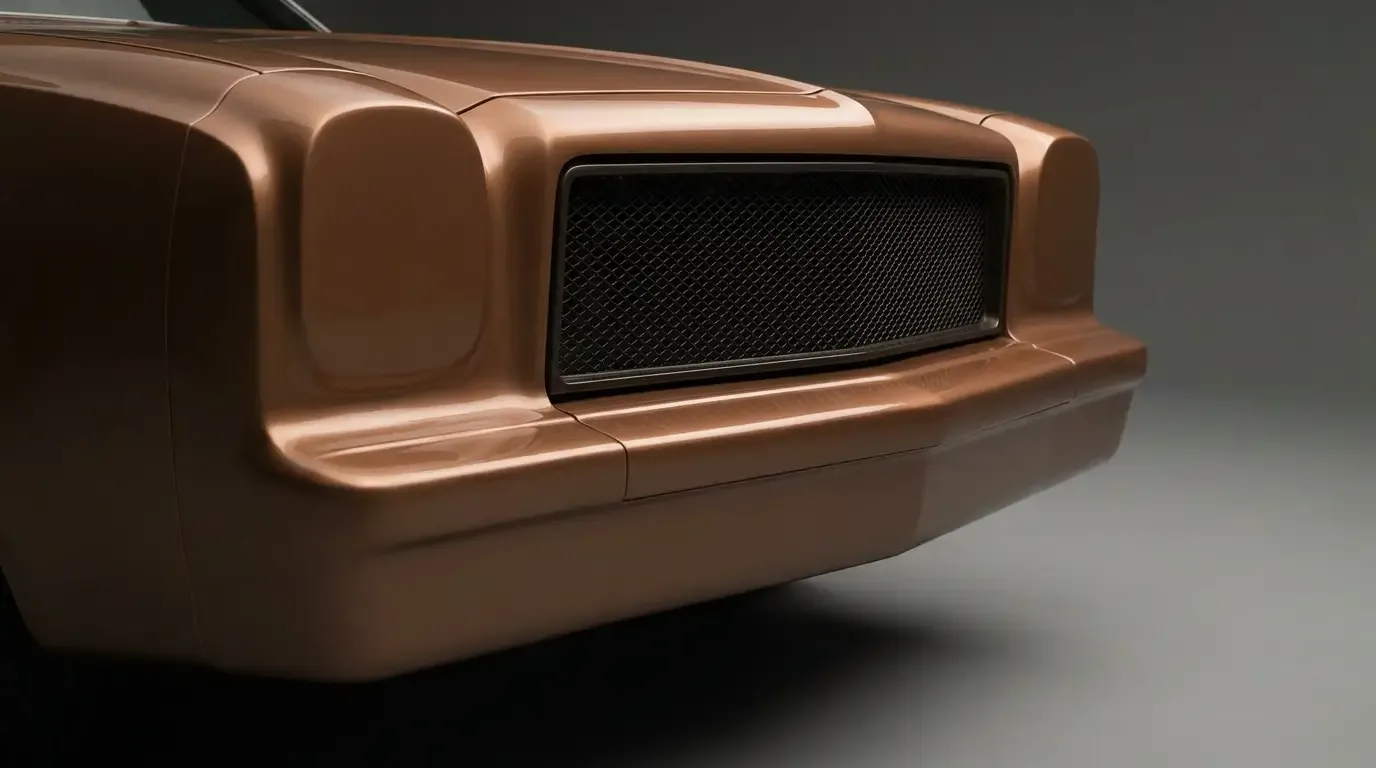
I have gone back through the Laguna's introduction more than once because the story gets flattened in casual retellings to "GM copied the GTO's Endura nose." That is not wrong, exactly, but it skips the part that actually matters: why Chevrolet thought a mid-size family car needed that treatment in the first place, and what it cost them to build it that way.
Why the laguna got its own nose
The 1973 model year brought the first phase of the federal 5 mph front-bumper standard, and every domestic manufacturer had to figure out how to meet it without making their cars look like they were wearing railroad ties. Pontiac had already answered the question with the Endura nose on the GTO and later the Grand Am, a flexible, color-matched material bonded over a steel impact structure. Chevrolet's answer for the Chevelle line was the Laguna, introduced as the top trim for 1973 with a similar concept: a resilient, urethane-faced nose panel finished to match the body color, backed by shock-absorbing cylinders that let the whole assembly deflect and rebound on a minor impact rather than dent.
Every other 1973 Chevelle, from the base 300 Deluxe through the Malibu, kept a conventional chrome front bumper. Only the Laguna got the soft nose, and Chevrolet marketed it as the difference between an ordinary Chevelle and the one built to look like something European. The brochures leaned on words like "European flair," which is generous, but the shape did read differently on the showroom floor. It was the first time a full-size-adjacent Chevrolet used a flexible fascia instead of a bumper as the leading edge of the car.
What the panel actually was
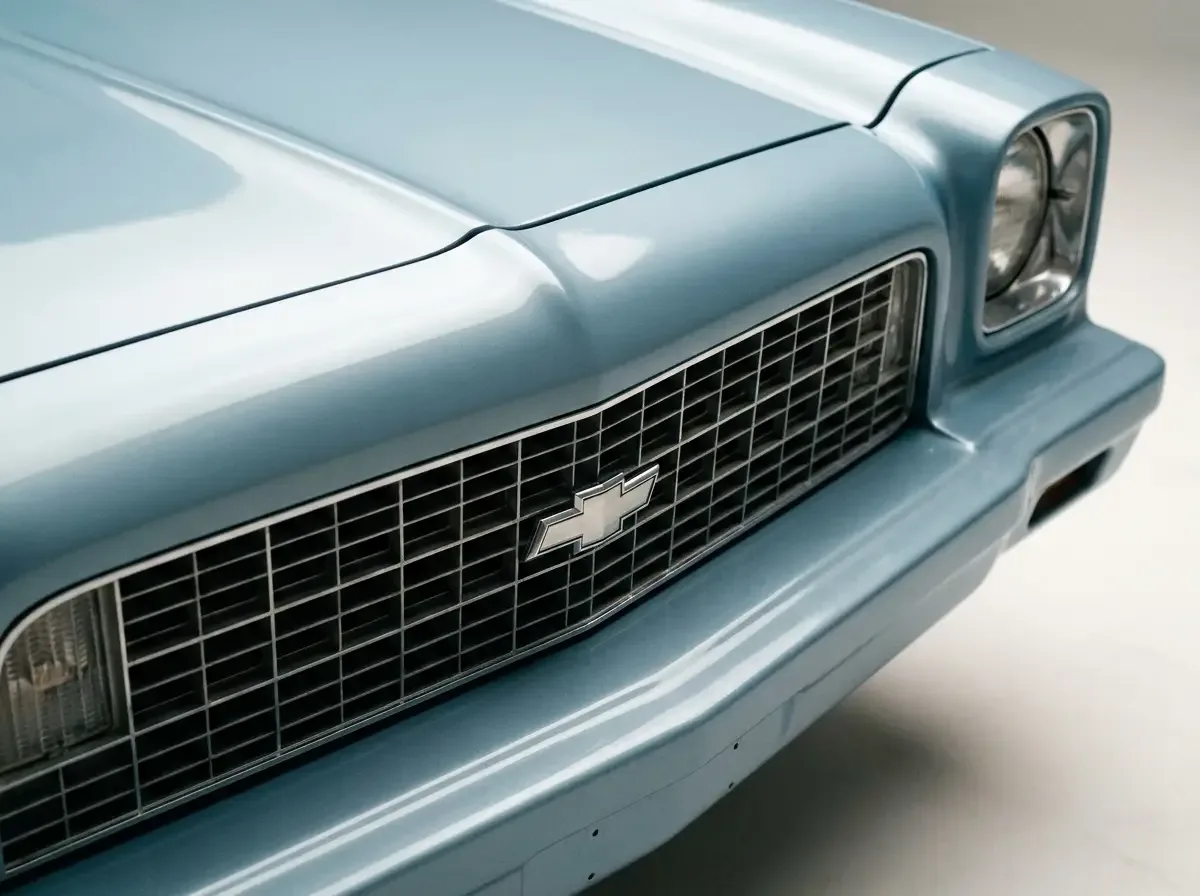
The nose was not simply painted plastic bolted to the grille shell. It was a resilient urethane skin over an energy-absorbing structure, designed to flex back into shape after a low-speed impact rather than crack or dent the way a chrome bumper would show every parking-lot tap. That resilience is also why so few original noses survive in good condition today. The material ages, the color-match paint on urethane requires a flexible additive that not every restoration shop gets right even now, and a stiff repaint without that additive will crack the first cold morning the car sees. Anyone shopping a Laguna with a nose that looks suspiciously perfect should ask when it was last redone and with what paint system.
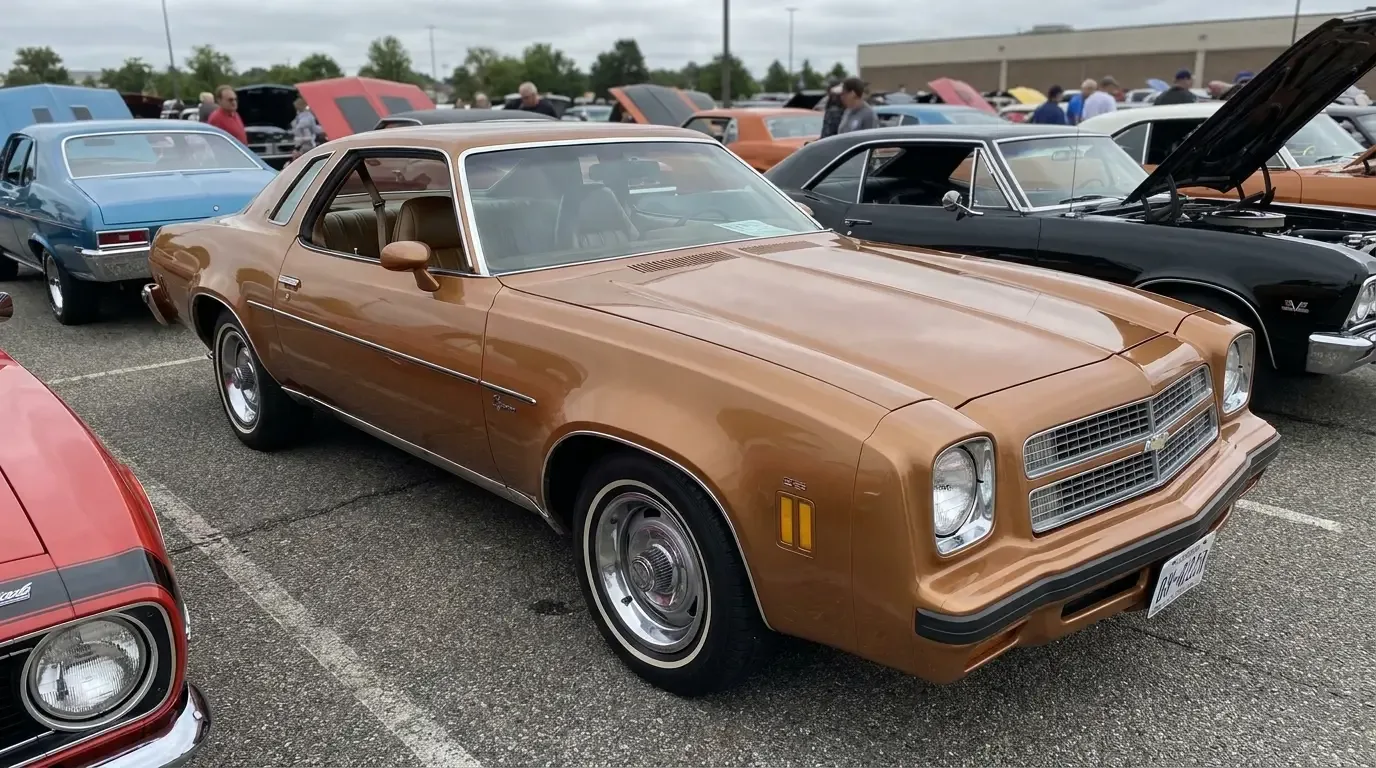
The rear bumper on the 1973 Laguna was not the chrome piece people assume when they picture a seventies GM bumper. The federal 5 mph standard did not apply to rear bumpers until the 1974 model year, so the 1973 Laguna carried a body-colored steel rear bumper rated only to the older 2.5 mph standard, distinct from the plain chrome bumpers on the lower Malibu and Deluxe Chevelles. That means a 1973 Laguna wore body-color trim at both ends of the car, a soft urethane nose up front and a painted steel bumper out back, with neither one chrome. The familiar chrome rear bumper did not arrive on the Laguna until 1974, when the federal standard caught up to the back of the car.
From styling exercise to superspeedway shape
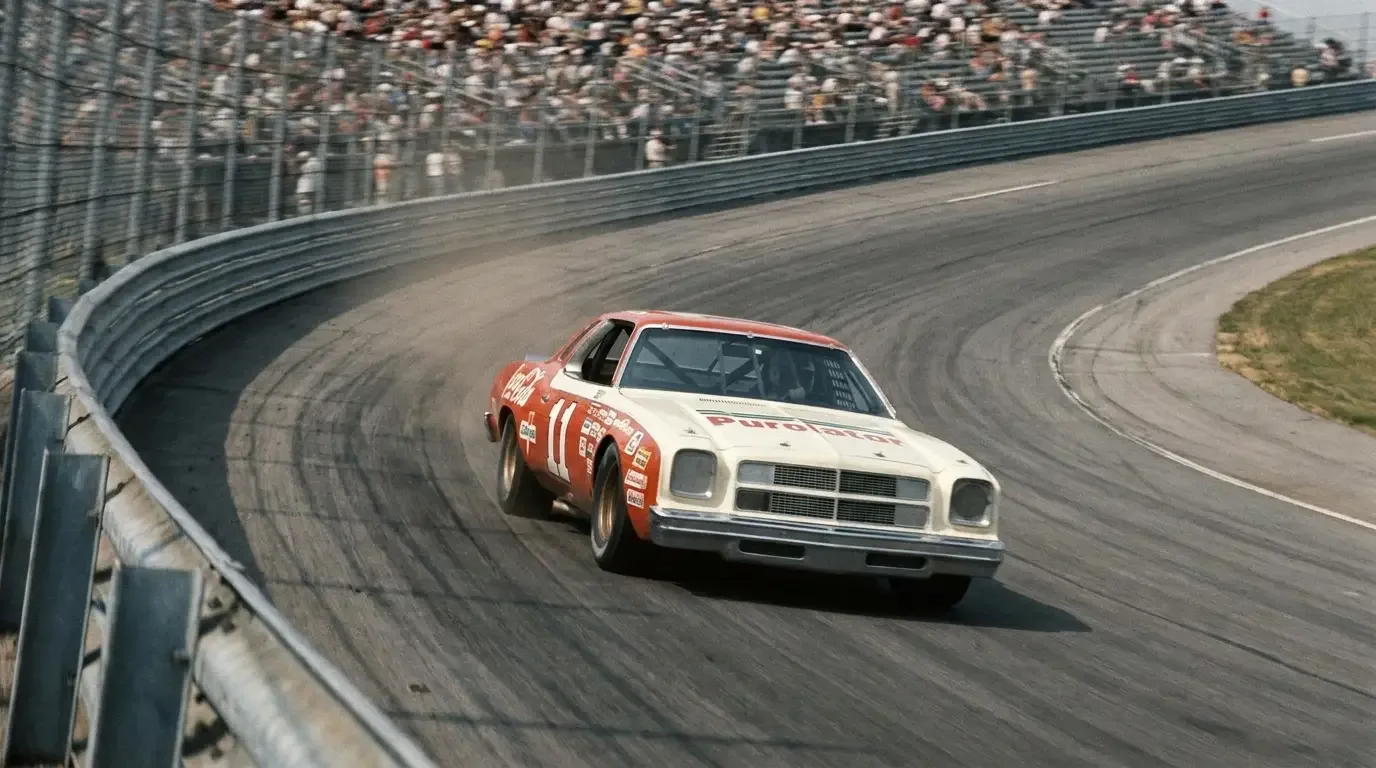
The soft nose turned out to matter for reasons that had nothing to do with parking lot dents. Chevrolet's NASCAR Grand National program was running Chevelles through the Colonnade years, and the Laguna Type S-3, introduced mid-1974 as the sport-suspension successor to the Malibu SS, picked up a sharper, more pointed urethane nose starting with the 1975 model year, purpose-built for the aero-sensitive superspeedway cars Cale Yarborough and Benny Parsons were racing. That sloped, color-keyed fascia gave the stock car a slicker leading edge than a flat chrome bumper ever could, and it worked. The Laguna S-3 racked up roughly fifty NASCAR wins across 1973-1977 in Chevrolet's hands, with Yarborough's team alone contributing the bulk of them on the way to consecutive Winston Cup championships, a run strong enough that NASCAR eventually required the cars to run restrictor plates while rivals didn't.
That racing connection is part of why the Laguna nose gets remembered fondly today, more so than its showroom sales numbers alone would justify. It looked like it belonged on a car that wanted to go fast, and on the superspeedway, it was.
Why the treatment didn't last
The Laguna S-3 debuted for 1974 without the pointed aero fascia, wearing a nose closer in spirit to the standard 1973 Laguna treatment. The sloped, more aggressive urethane nose that people associate with the S-3 today did not arrive until partway through the 1975 model year, once the NASCAR program made the aerodynamic case for it. Chevrolet kept the flexible nose on the performance-image S-3 through 1976, but the plain 1973-style soft-nose treatment on the ordinary Laguna trim was essentially a one-year styling statement before the whole approach narrowed to the sportier package. Urethane noses were more expensive to build and repair than a stamped chrome bumper, and Chevrolet was watching costs closely as the mid-1970s fuel crisis reshaped what buyers wanted from a mid-size car.
Anyone chasing a 1973 Laguna with the original nose intact should expect to pay a premium over a comparable Malibu from the same year, and should budget for a nose respray done with proper flexible urethane paint additive if the panel needs refinishing. It is a small detail that separates a correctly restored Laguna from one that merely looks right in photographs.
| Model year | Front treatment | Rear bumper | Trim availability |
|---|---|---|---|
| 1973 Laguna | Color-keyed urethane nose | Body-color painted steel (2.5 mph) | Laguna trim only |
| 1974 Laguna / Laguna S-3 | Urethane nose, standard-style fascia | 5 mph impact chrome bumper | Laguna trim; S-3 sport package introduced mid-year |
| 1975-1976 Laguna Type S-3 | Sloped, pointed aero-style urethane nose | 5 mph impact bumper | Type S-3 performance trim |
"People see the soft nose on a Laguna and assume it was pure styling flair. It wasn't. It was Chevrolet's engineers meeting a federal impact standard the same year, and the styling studio making sure the solution didn't look like a compromise. That's a harder job than starting with a clean sheet."
Tom Ramirez
The Laguna's nose is a small footnote in most tellings of the Chevelle's later era, but it is one of the clearest examples of a federal regulation reshaping a car's face and the styling department finding a way to make the requirement look intentional. For how the era's road testers judged the results once they got a Laguna on their test track, next: How Period Magazines Judged the Colonnade Chevelle.
Sources and notes
- Chevrolet Chevelle Laguna: Wikipedia
- Motorious: NASCAR Hero, 1974 Chevrolet Laguna S-3
- Barn Finds: Only Two Owners, 1973 Chevrolet Chevelle Laguna
- Carscoops: How the NHTSA 5 mph bumper rule reshaped 1970s car design
- MotoGallery: 1974-1976 Chevrolet Chevelle Laguna S-3 Guide
- Curbside Classic: 1973 Chevelle Laguna: Blue Lagoon
Related Reading
Have a
Chevrolet Chevelle
for Sale?
Reach thousands of serious classic car collectors across the US.
Sell It Here →
Are You a Classic Car Dealer?
List your full inventory and connect with targeted classic car buyers.
Join as a Dealer →

About the author
Tom Ramirez
Corvette researcher and historian based in Bowling Green, Kentucky. Two decades documenting Corvette production history from original factory records.
Related Listings - Chevrolet Chevelle
More in History & Heritage
Comments (1)
R
Ray Staubach
2 months ago
Found mine through a marque club contact rather than a public listing. Paid fair value and knew exactly what I was getting. Worth the connections.