
Every neighborhood that grew up in the seventies had one of these parked in a driveway with a bike rack bolted to the back and a dog nose-print smeared across the tailgate glass. Nobody called it a collector car back then. It was just the wagon, the one that hauled the Scout troop to the lake and the Christmas tree home from the lot every December for a decade, and nobody thought to keep the paperwork because who keeps paperwork on a family wagon.
History & Heritage
6 min read
The Colonnade Chevelle Wagon
The Colonnade-era Chevelle wagon hauled families through the seventies. Why so few survive, and what makes a good one worth chasing today.
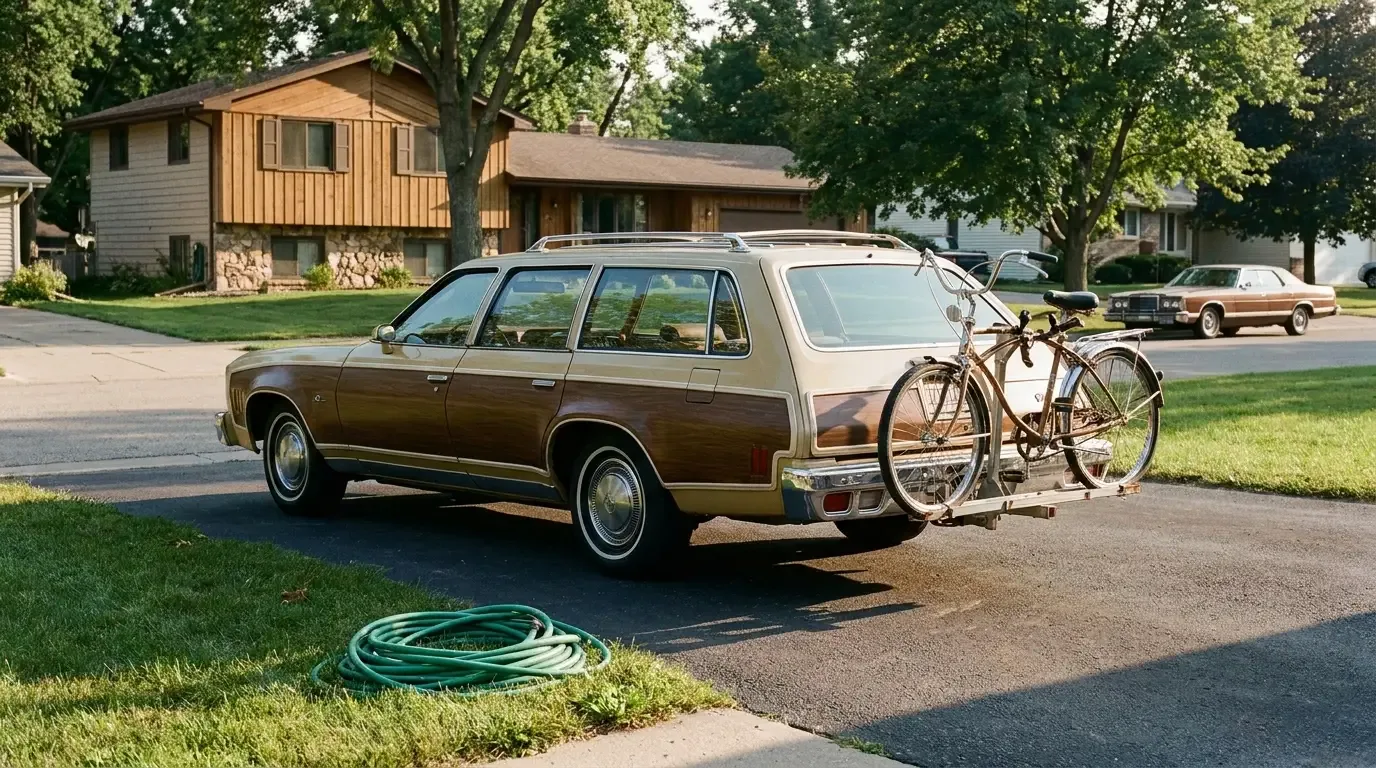
That is exactly why so few of them survive in good shape now, and why the ones that do carry a different kind of weight than the coupes and sedans that share their Colonnade bones.
A wagon built for a family, not a magazine cover
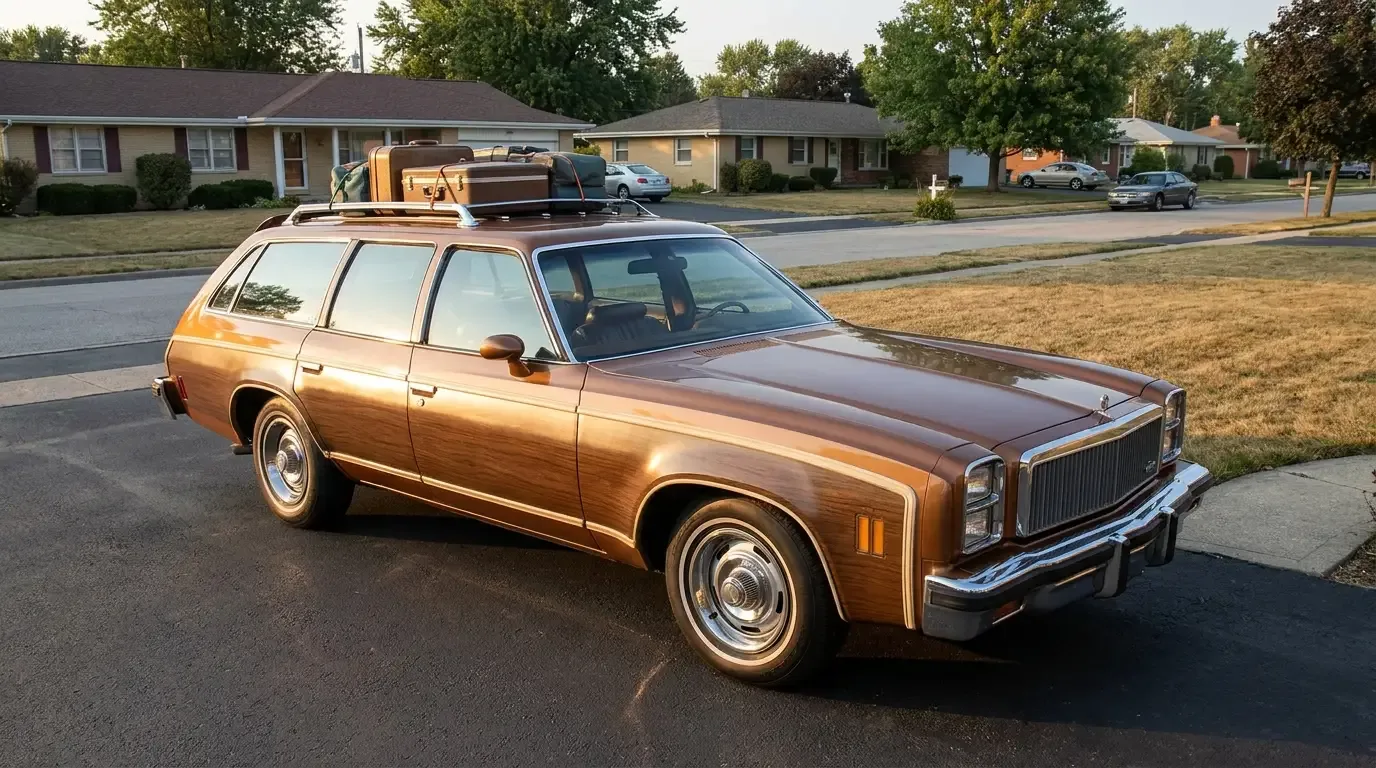
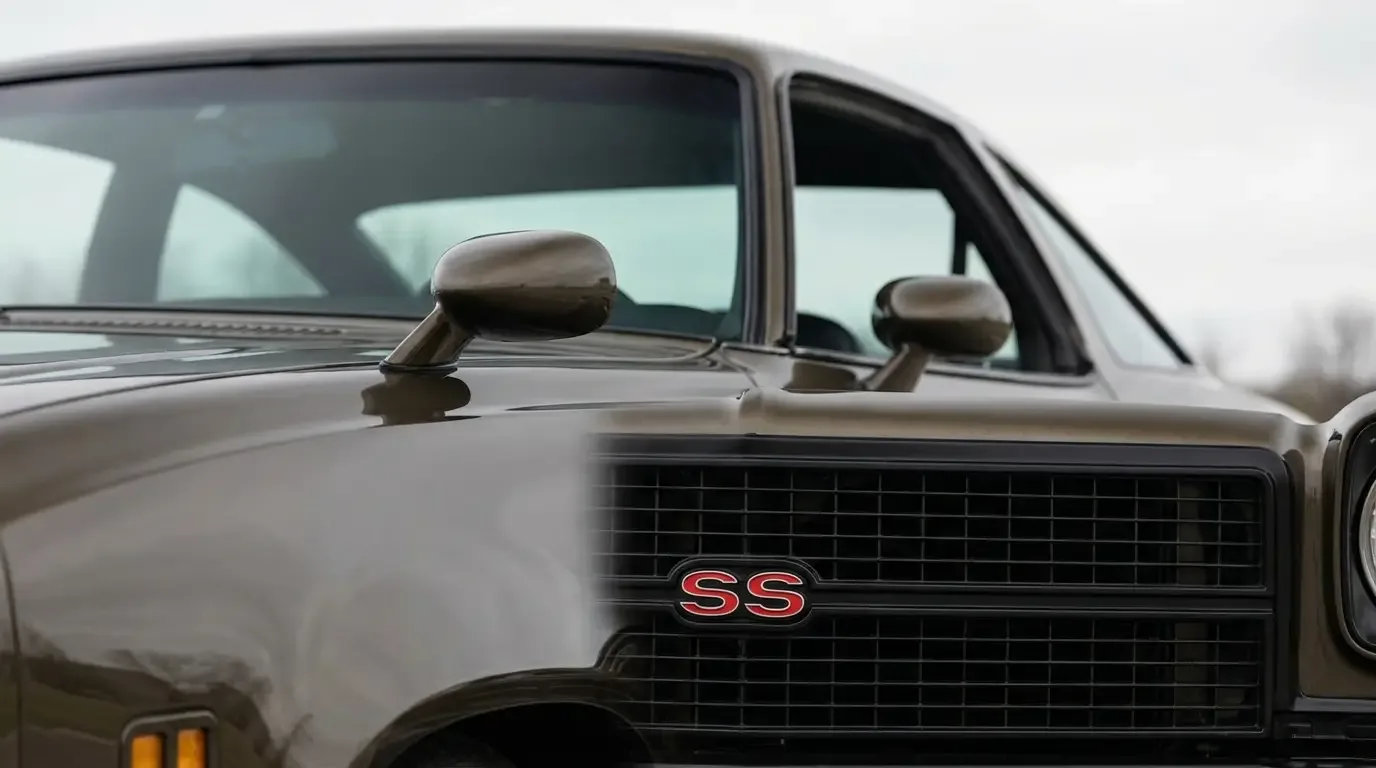
The Colonnade-era Chevelle wagon rode on the same basic architecture as the SS coupes and the Malibu Classic sedans, the redesigned mid-size platform Chevrolet introduced for 1973. But nobody cross-shopped a Chevelle wagon against an SS454. It was a different conversation entirely, aimed at a buyer thinking about a third row of seats, a load floor long enough for a folded bike, and a V8 with enough torque to pull a small camper without complaint.
Chevrolet offered the wagon in both base Chevelle Malibu trim and the nicer Malibu Classic Estate, the latter dressed up with woodgrain-look side paneling that, love it or not, is exactly the detail that makes a period photograph of one of these instantly recognizable. Unlike the rest of the Colonnade lineup, the wagon body style was not offered with the base six-cylinder engine at all. Order a Chevelle wagon and you were ordering a V8, ranging from a 307 or 350 on the low end up to the 400 and, for one memorable year, the 454 big-block on an SS-optioned wagon.
The tailgate nobody remembers correctly
Ask someone who grew up around one of these wagons what they remember about it, and the tailgate usually comes up before the engine does, though the memory is usually wrong in a specific way. People confuse it with the clamshell "Glide-Away" tailgate GM built for its full-size wagons, the Caprice Estate, Buick Estate, Olds Custom Cruiser, and Pontiac Safari, where the rear glass powered up into the roofline while the lower gate dropped and slid forward under the load floor. That mechanism never made it onto the mid-size Colonnade Chevelle wagon. The Chevelle kept a conventional tailgate that swung out sideways like a door for loading people, or dropped down flat for cargo, the same basic two-way arrangement the A-body wagons had used since the late sixties.
It is an easy mix-up to make, since both wagons were built and sold by GM in the same driveways during the same decade, and the full-size clamshell got far more magazine ink at the time. But a Colonnade Chevelle wagon with a swinging, dropping tailgate is behaving exactly as designed, not missing a feature that was never part of the mid-size car in the first place.
Why so few survived
Family wagons live hard lives. They get driven every day, loaded past what anyone would call reasonable, parked outside through winters that a coupe owner would have avoided, and eventually handed down to a teenager who treats the interior the way teenagers treat anything they did not pay for themselves. By the time a Chevelle wagon was ten years old, it had usually been through more real use than a Laguna or an SS would see in twenty.
That is the honest reason these wagons are scarcer now than the coupe and sedan body styles from the same years. It was never about lower production numbers on paper so much as a much shorter useful life on the road, followed by an even shorter window before scrap value beat sentiment for most owners.
Cargo room that actually mattered
The numbers behind the wagon's practicality get lost easily against a coupe's horsepower figures, but they were the whole reason a family chose this body style in the first place. A Colonnade Chevelle wagon offered a genuinely long, flat load floor with the second-row seat folded, room for a third-row bench on some trims for families who needed to seat six or more, and a roof rack option that turned into the default carrier for canoes, luggage, and Christmas trees across a decade of American driveways.
None of that shows up in a spec sheet the way a compression ratio does, but it is the reason these cars logged so many more miles, so many more years of daily duty, than the coupes built alongside them. A Chevelle SS might have spent Sunday afternoons at the drag strip. The wagon spent every single day doing something useful, and the accumulated mileage on surviving examples reflects it.
What a surviving wagon is worth to the right buyer
A well-kept Colonnade Chevelle wagon is not a car that chases muscle car money, and it is not trying to be. What it offers instead is a piece of a very specific American decade, the one where a family wagon still had real presence, real chrome, and a V8 under the hood as a matter of course rather than an upgrade. For a buyer who remembers riding in the way-back seat of one of these as a kid, finding one restored or well preserved is closer to finding a piece of a childhood than finding a car.
Shoppers looking at Chevelle wagons today should expect rust in the usual places, the rear wheel arches, the lower tailgate opening, and the floor pans under the third-row area, before anywhere else. A clean example with a solid tailgate mechanism and the woodgrain trim still presentable is worth chasing, because there are simply not many of them left to compare against.
The wagon's place in the larger story of the Colonnade and Laguna years tends to get overlooked next to the SS and Laguna performance variants, but it represents just as honest a piece of what the Chevelle actually was to most of the people who bought one. And the wagon was not the only place Chevrolet experimented with the Colonnade car's front-end styling during these years. The Laguna's distinctive soft nose, covered in next: The Soft-Nose Laguna, tells a related story from the sportier end of the same lineup.
"Nobody photographed the family wagon back then. Everybody photographed the SS. Now the wagon is the one that's hard to find, and there's something honest about that."
Nora Beckett
Sources and notes
- Curbside Classic: 1973 Chevrolet Chevelle Malibu SS 454 Wagon
- The Autopian: The Chevelle Malibu SS wagon with the 7.4L V8
- Clamshell Tailgate on 1971-1976 GM Station Wagons
- Station Wagon FAQ, stationwagon.com
- Chevrolet Chevelle Malibu Classic Estate Wagon reference
- Curbside Classic: 1977 Chevrolet Malibu Classic Wagon
Related Reading
Have a
Chevrolet Chevelle
for Sale?
Reach thousands of serious classic car collectors across the US.
Sell It Here →
Are You a Classic Car Dealer?
List your full inventory and connect with targeted classic car buyers.
Join as a Dealer →

About the author
Nora Beckett
Automotive features writer and photographer who tells the human stories behind the cars, from show fields to cross-country road trips.
Related Listings - Chevrolet Chevelle
More in History & Heritage
Comments
Be the first to comment on this article.