
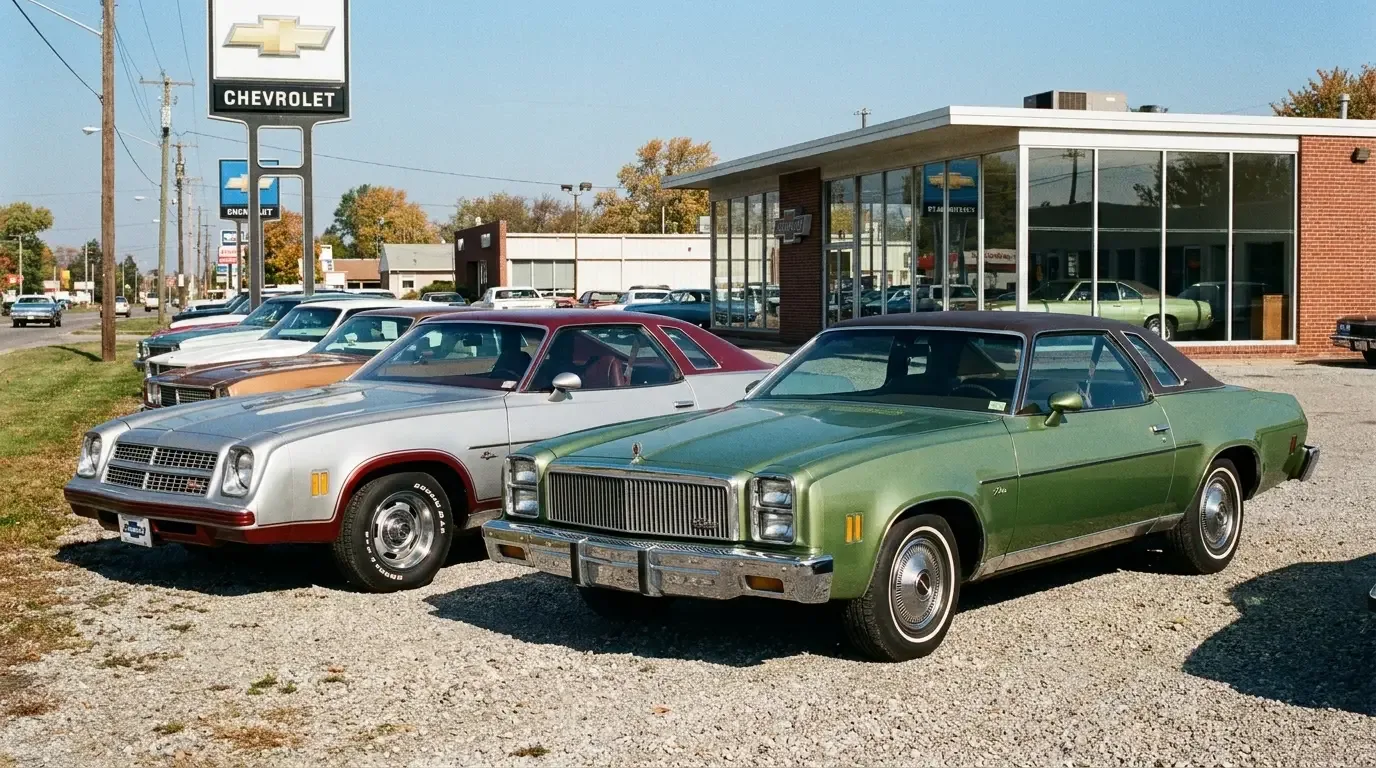
Everybody wants to talk about what a 1973-77 Chevelle should have done on paper. I'd rather look at what the magazines actually measured when they strapped a fifth wheel to one and ran it down a test strip. The numbers from period road tests tell a more honest story than the brochures, and they explain a lot about why these cars get judged so differently depending on which year you're talking about.
History & Heritage
6 min read
How Period Magazines Judged the Colonnade Chevelle
What Motor Trend, Car and Driver, and Hot Rod actually measured and said about the 1973-77 Colonnade Chevelle, year by year.
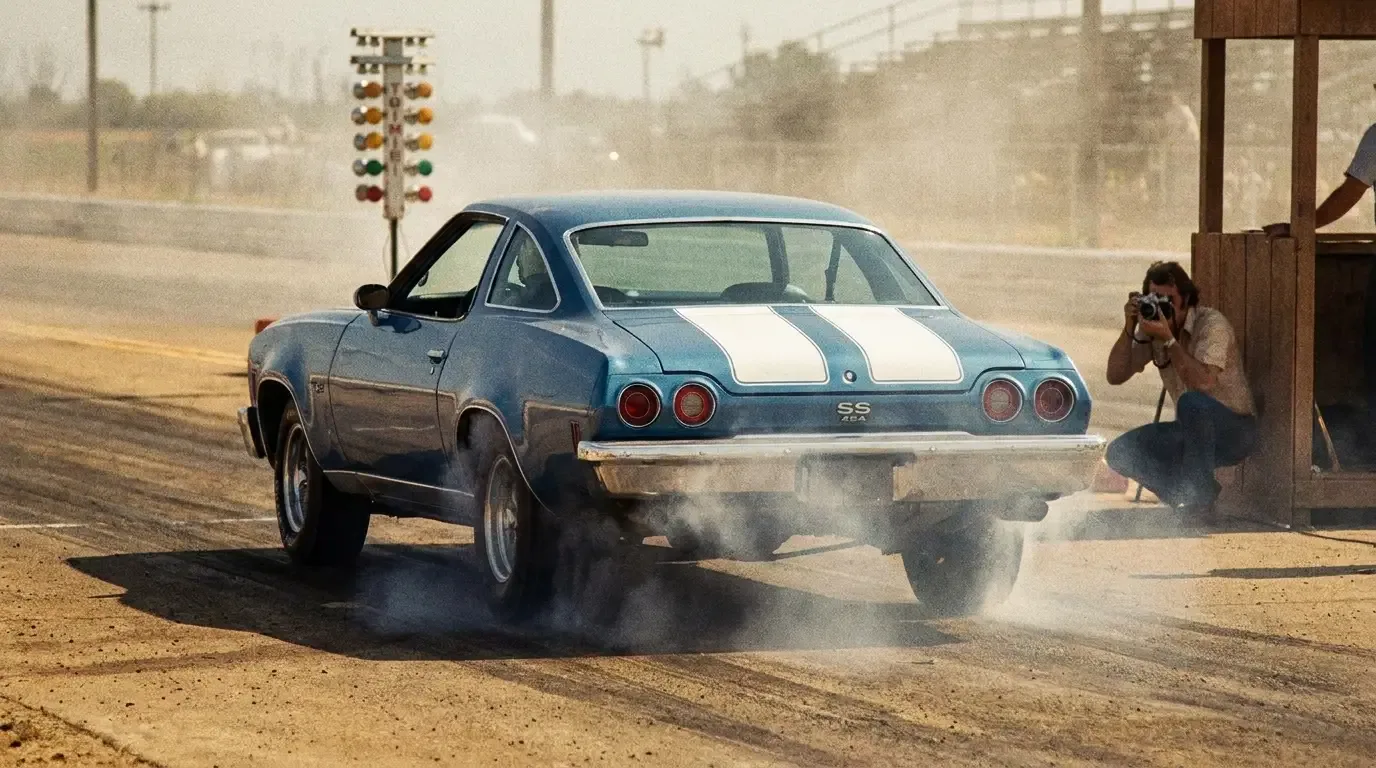
The short version: early Colonnade Chevelles still had real muscle-era output on the option sheet, and the testers clocked times that back it up. By the back half of the run, the numbers dropped hard, and the magazines said so in print, not politely either.
What the testers were working with
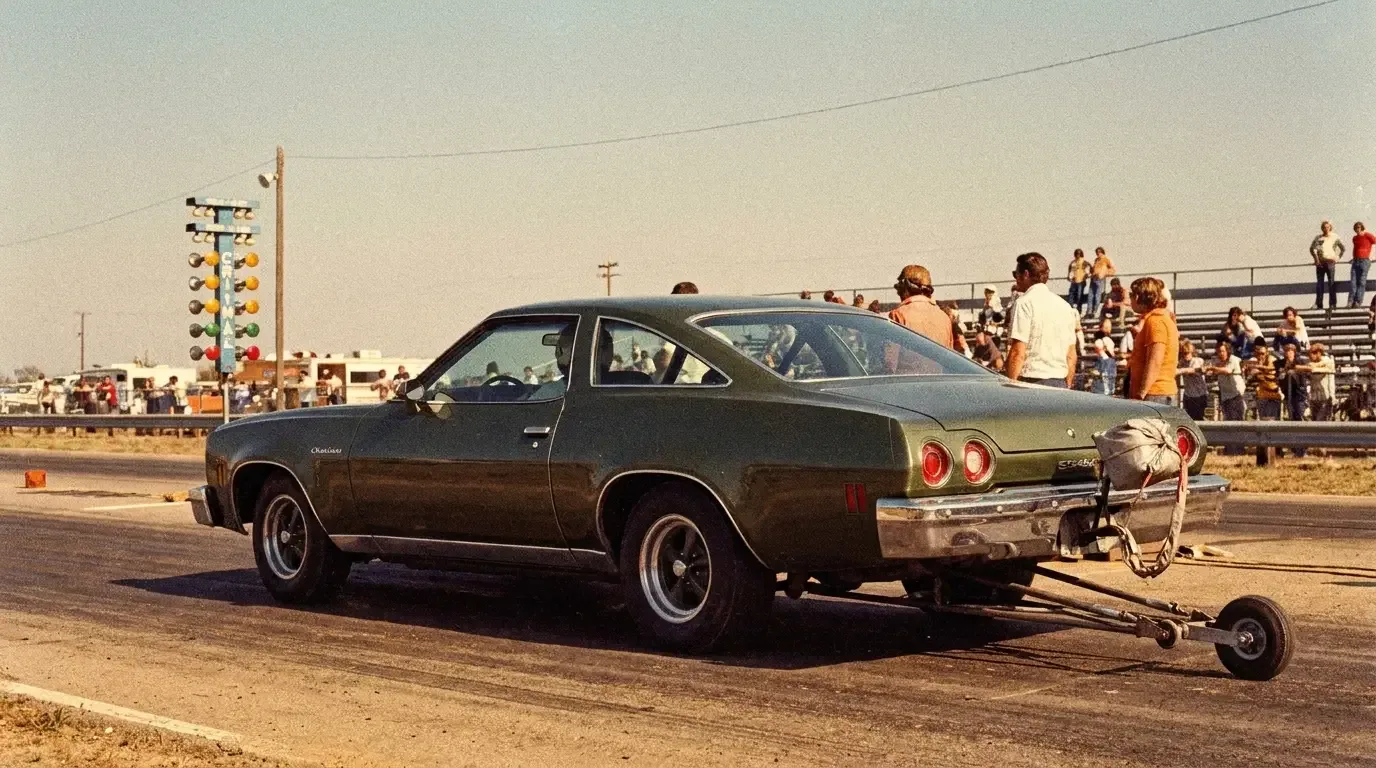
Motor Trend, Car and Driver, and Hot Rod all put Colonnade-era Chevelles through instrumented testing across 1973 through 1977, usually the SS or Laguna S-3 when Chevrolet would supply one, sometimes a plain Malibu when that's what a dealer loaner turned up. The test numbers moved around depending on rear axle ratio, transmission, and which big-block or small-block was under the hood that particular year, so nobody should treat a single quarter-mile time as gospel for "the Chevelle." What's consistent is the trend line: quicker in 1973, noticeably slower by 1975, and slower again by 1977.
A 1973 Chevelle running the LS4 454, rated at 245 hp SAE net that year against the 450 gross-rated LS6 of just three seasons earlier, was running in the mid-15s to upper-16s in the quarter mile depending on the specific test, rear gear, and whether the car was an SS or a Laguna with the same engine, numbers that were still respectable for a full-size mid-size sedan but a clear step down from the muscle-era peak. By 1975, testers running a 350 four-barrel Chevelle, down to around 155 hp net, were seeing quarter-mile times climb noticeably further, a swing that had everything to do with falling compression ratios and tightening emissions calibration rather than any change in the car's weight or aerodynamics.
Where the reviewers actually praised the car
What surprises people who only know the Malaise-era reputation is how consistently the magazines liked the Colonnade Chevelle's ride and handling. The perimeter frame and revised suspension geometry that came with the 1973 redesign got real praise for isolating road noise and holding a line through a sweeping highway curve better than the boxier 1968-72 A-body it replaced. Car and Driver in particular noted that the new body, heavier and less lively than the old Chevelle in a straight line, actually felt more composed at speed, which matters more to a magazine writer doing 500 miles in a week than a stoplight launch does.
The steering came in for less praise. Reviewers across the board called out the power steering as overboosted and numb, a common complaint about full-size and mid-size GM cars of the era, and one that never really got fixed across the Colonnade run. If you read enough period tests back to back, the same sentence shows up in different words nearly every time: quiet, comfortable, composed at speed, and steering that tells you nothing about what the front tires are doing.
Where the tone turned
The tone shifts hard once you get to the 1975 and 1976 tests. Reviewers who had genuinely liked the composed ride quality started writing paragraphs about how little power was left to move all that composure down the road. A test of a 1976 Malibu Classic with the 350 two-barrel and single exhaust reads almost apologetic, praising the interior and the quiet cabin while noting, more or less directly, that the car needed real patience to merge onto a highway. That's not hostile writing. It's a magazine being honest that the muscle era it grew up covering had ended, and the Colonnade Chevelle was living through the aftermath in real time, model year by model year.
By 1977, the last year of the Colonnade body before the Chevelle nameplate gave way entirely to Malibu, most tests treated the car as a competent family sedan rather than anything with performance pretensions at all, which is a fair description of what it had become.
| Model year (approx.) | Typical test engine | Net horsepower | Tester consensus on ride |
|---|---|---|---|
| 1973 | 454 V8 (LS4), SS or Laguna | 245 hp SAE net | Composed, quiet, praised handling |
| 1975 | 350 four-barrel | Around 155 hp SAE net | Still composed, power criticized |
| 1977 | 305 or 350, catalytic-equipped | 145-170 hp SAE net | Treated as family sedan, not performance car |
"The number that tells you the real story isn't the quarter mile. It's how fast the same nominal engine got slower from one model year to the next with almost nothing else about the car changing. That's not a car getting worse. That's a decade of emissions rules landing on one engine bay at a time."
Dan Reeves
Reading old road tests correctly today
If you're using period reviews to shop a car today, read them for the ride and build-quality commentary more than the numbers. The performance figures were measured on pump gas that no longer exists, with test equipment that wasn't always consistent between magazines, and the specific car handed to a magazine wasn't always representative of what a regular buyer drove off a dealer lot. What holds up is the qualitative stuff: which years got praised for composure, which years got called out for numb steering, and exactly when the tone shifted from performance disappointment to frank acceptance that the car had become something else entirely. That trend line matches up cleanly with the 1973-1977 Chevelle story and with the full Chevelle story more broadly, where the same horsepower decline shows up across the whole model line, not just in a handful of magazine test numbers.
For the two Colonnade-era trims the magazines spent the most column space comparing directly against each other, next: Laguna S-3 vs Malibu Classic lays out how the era's testers, and today's buyers, actually weigh the two against each other.
Sources and notes
- Corvsport: 1973 LS4 454ci Engine Guide
- CorvetteForum: 1973-1974 LS4 454 Horsepower discussion
- Muscle Car Facts: 1973 Chevelle
- Automobile-Catalog: 1975 Chevelle Malibu Classic 350-4 specs
- Automobile-Catalog: 1977 Chevelle Malibu Classic 305 specs
- Curbside Classic: 1975 Chevrolet Chevelle Malibu Classic
Related Reading
Have a
Chevrolet Chevelle
for Sale?
Reach thousands of serious classic car collectors across the US.
Sell It Here →
Are You a Classic Car Dealer?
List your full inventory and connect with targeted classic car buyers.
Join as a Dealer →

About the author
Dan Reeves
Performance engine builder from North Carolina's motorsports corridor, focused on swaps, forced induction and making real, repeatable power.
Related Listings - Chevrolet Chevelle
More in History & Heritage
Comments
Be the first to comment on this article.