
Ask ten people when the muscle car era happened and you will get "the sixties and seventies" ten times. True enough, but useless. The era did not move at a steady pace. It lurched forward in a handful of specific model years where everything changed at once, and it fell apart in a couple of years that were just as decisive. If you want to understand the whole run, you learn the years that mattered and let the rest fill in around them.
History & Heritage
6 min read
The Most Important Years in Muscle Car History
1964, 1968, 1970 and 1972 changed everything. A model-year guide to the years that built and broke the American muscle car era.
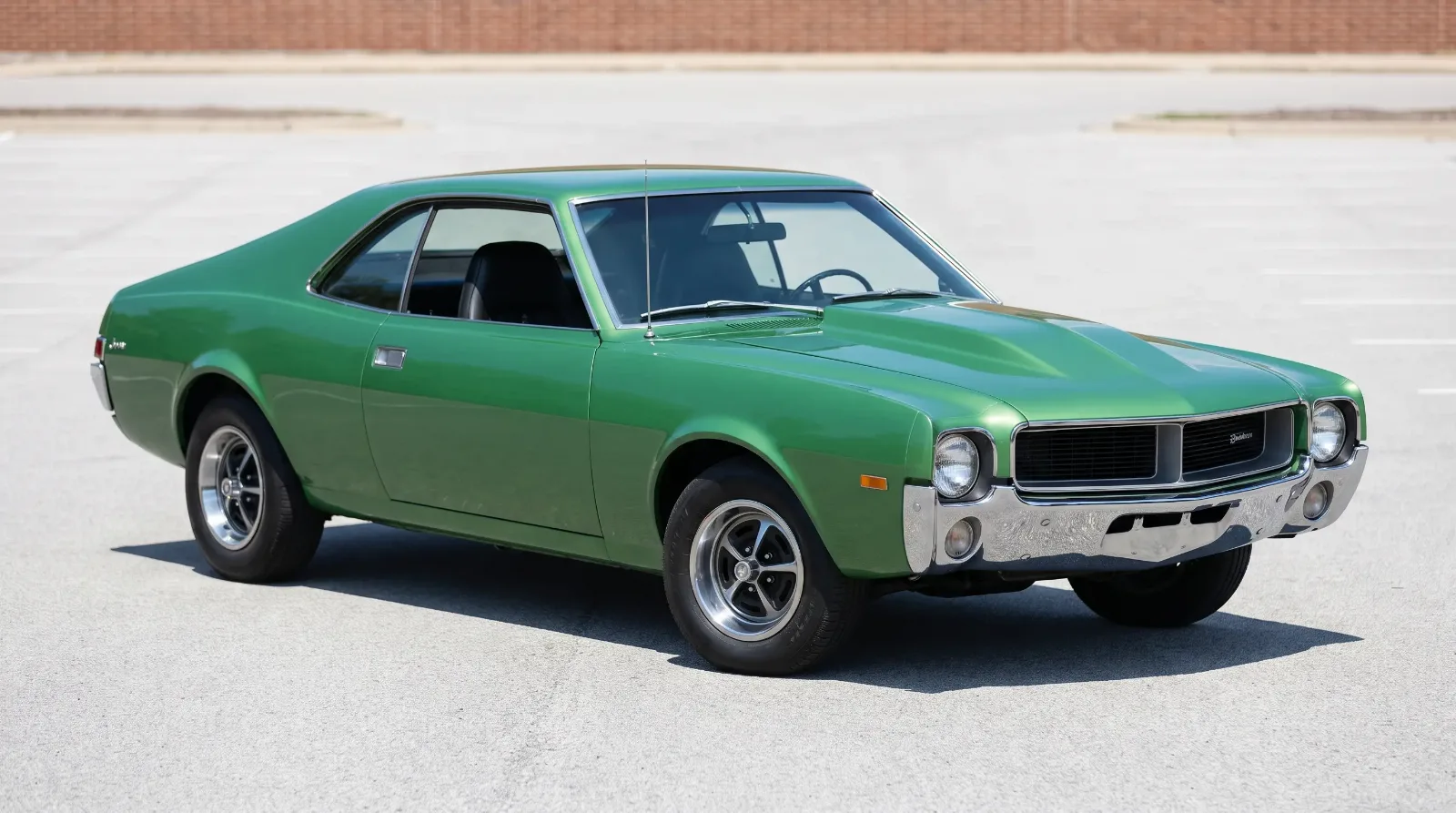
I have spent a lot of time around people who lived through this, and the good ones always talk in model years, not decades. A 1970 car and a 1972 car of the same name can be entirely different animals. The calendar is the story. For the complete rundown of how it all fits together, the timeline is the spine of everything.
1964: the year it began
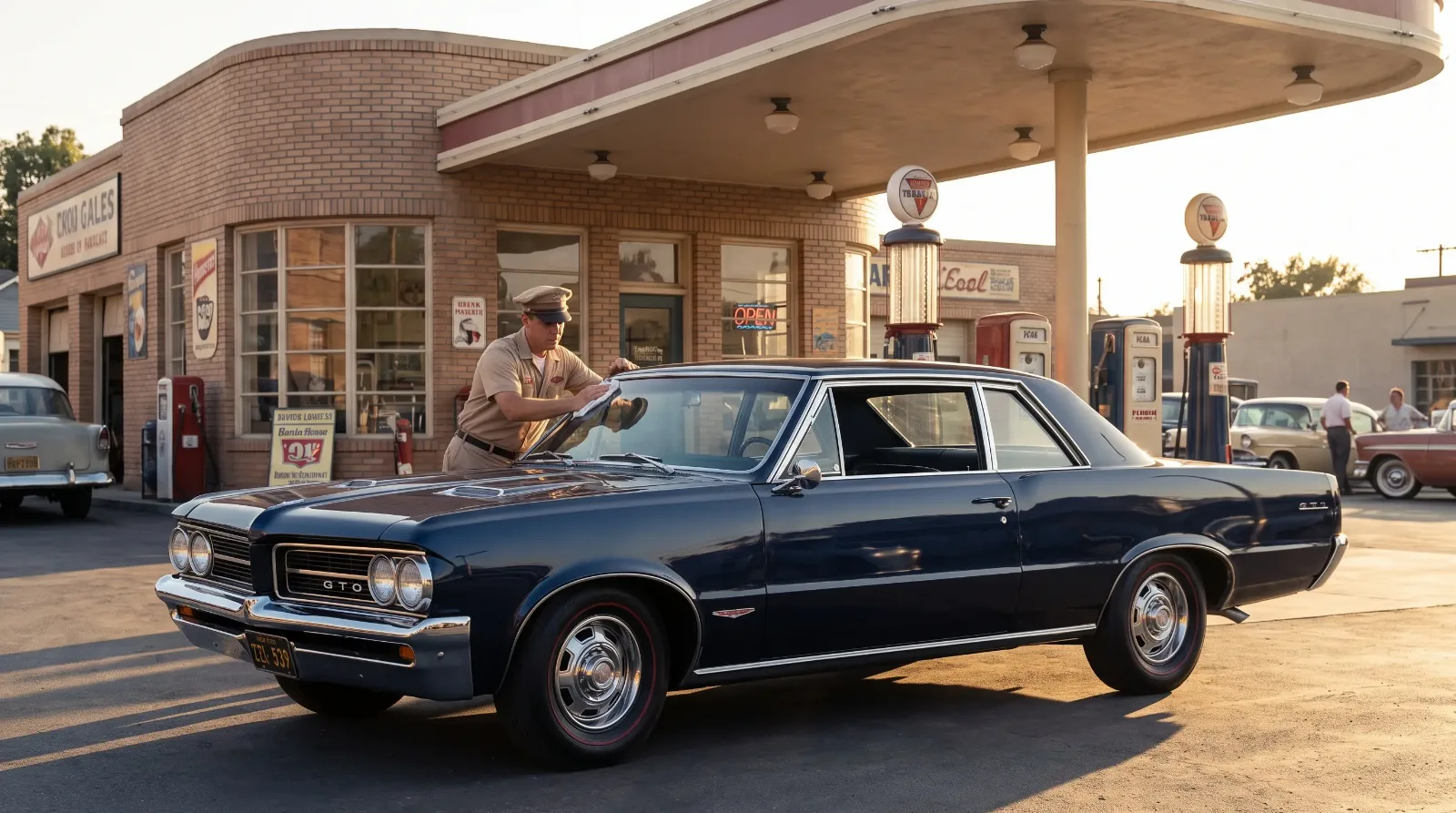
The muscle car has a birth year, and it is 1964. Pontiac took the mid-size Tempest-based LeMans, added the 389 cubic-inch V8, and called the package the GTO. It made 325 horsepower with the four-barrel and 348 with Tri-Power. More important than the numbers, Pontiac sold it as an option package to young buyers at a price they could reach. It sold about 32,000 copies in its first year against a modest sales projection.
That combination of big engine, mid-size body, youth marketing, and reachable price is the recipe every following car copied. Before 1964 the ingredients existed in scattered form. In 1964 somebody put them all in one car and sold it on purpose.
The reason 1964 matters more than any car that came before is the sales response. Pontiac had to fight its own corporate rules to build the GTO at all, since General Motors had a policy limiting engine size in intermediate cars. The car got out the door as an option package precisely to slip past that rule, and then it outsold every projection. That result did two things at once. It proved the demand was real, and it embarrassed the rest of the industry into responding.
1966 to 1968: the formula spreads
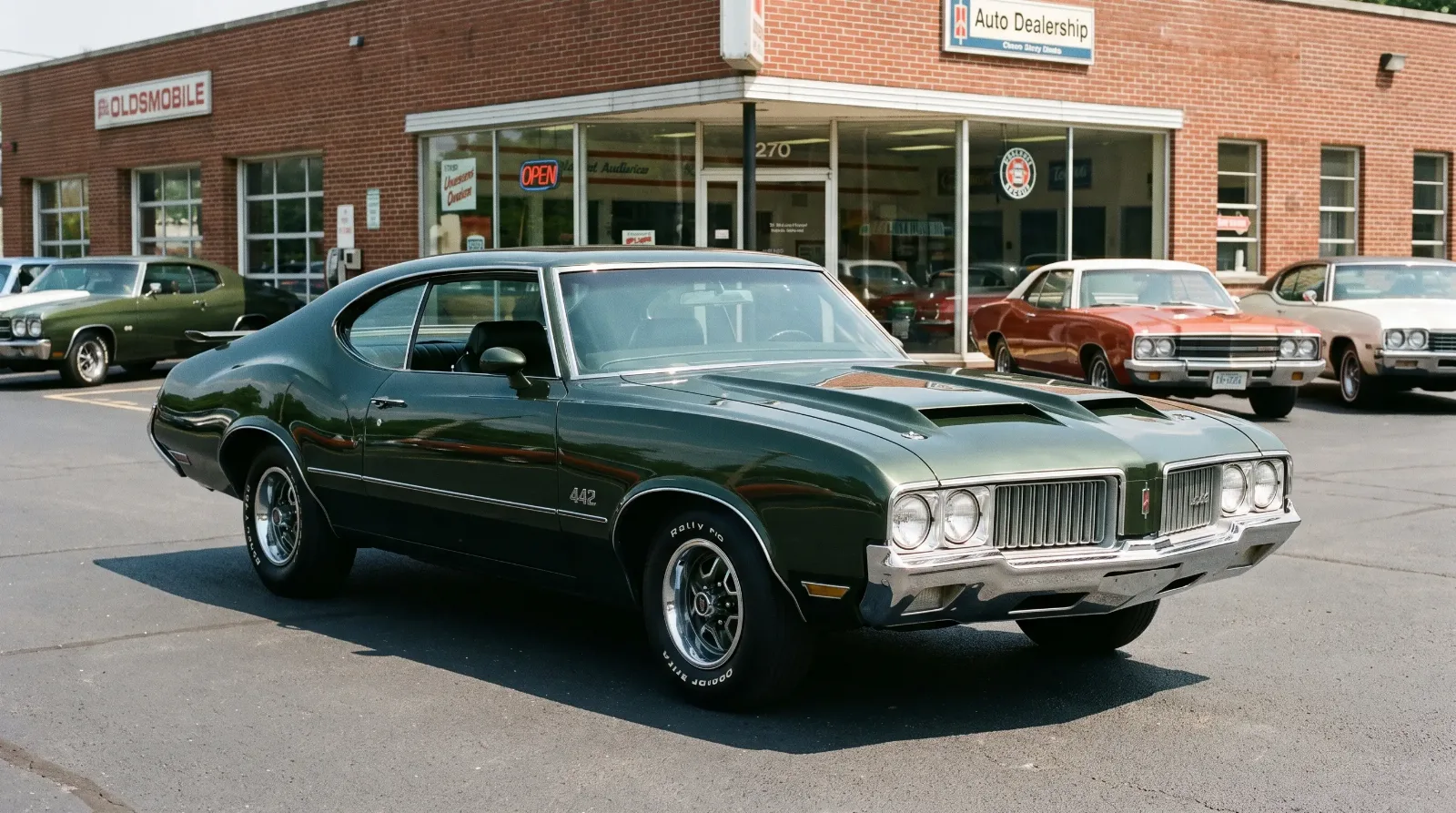
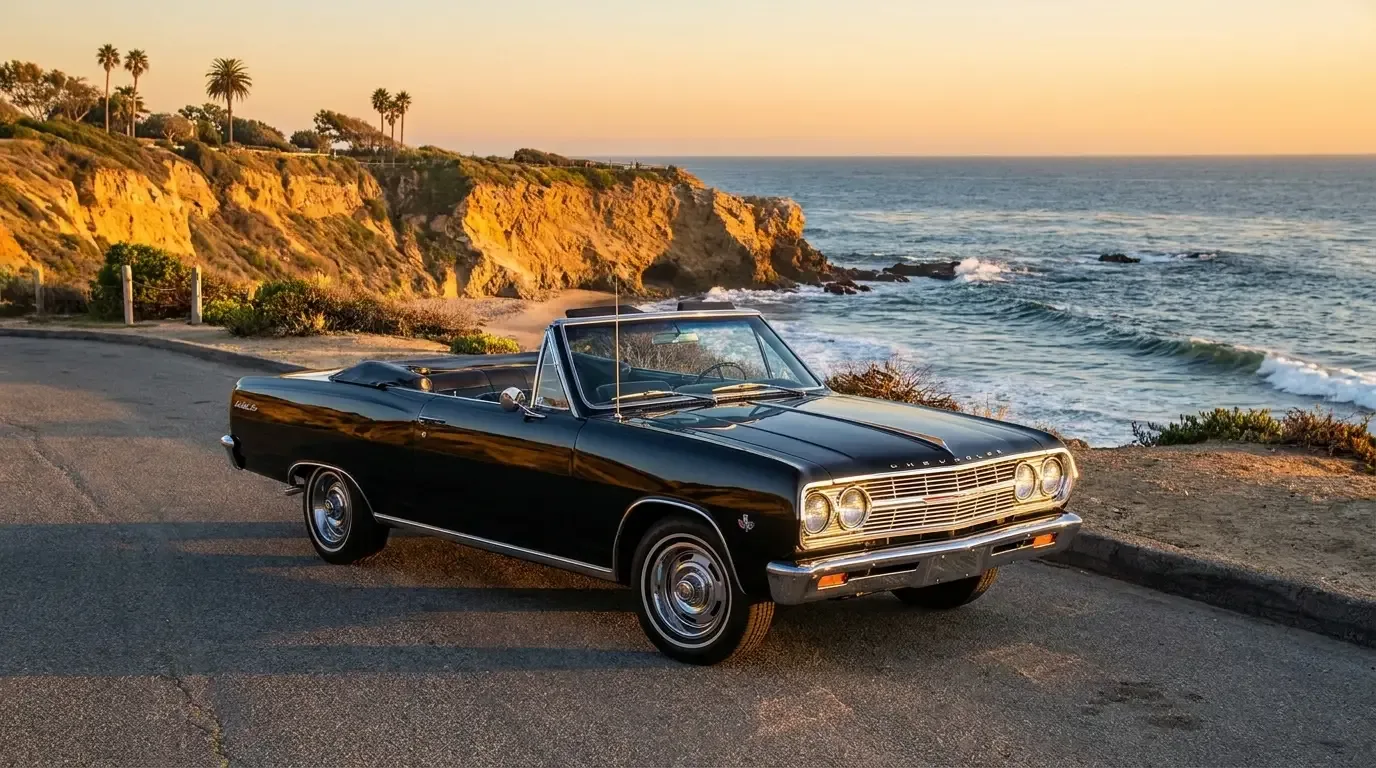
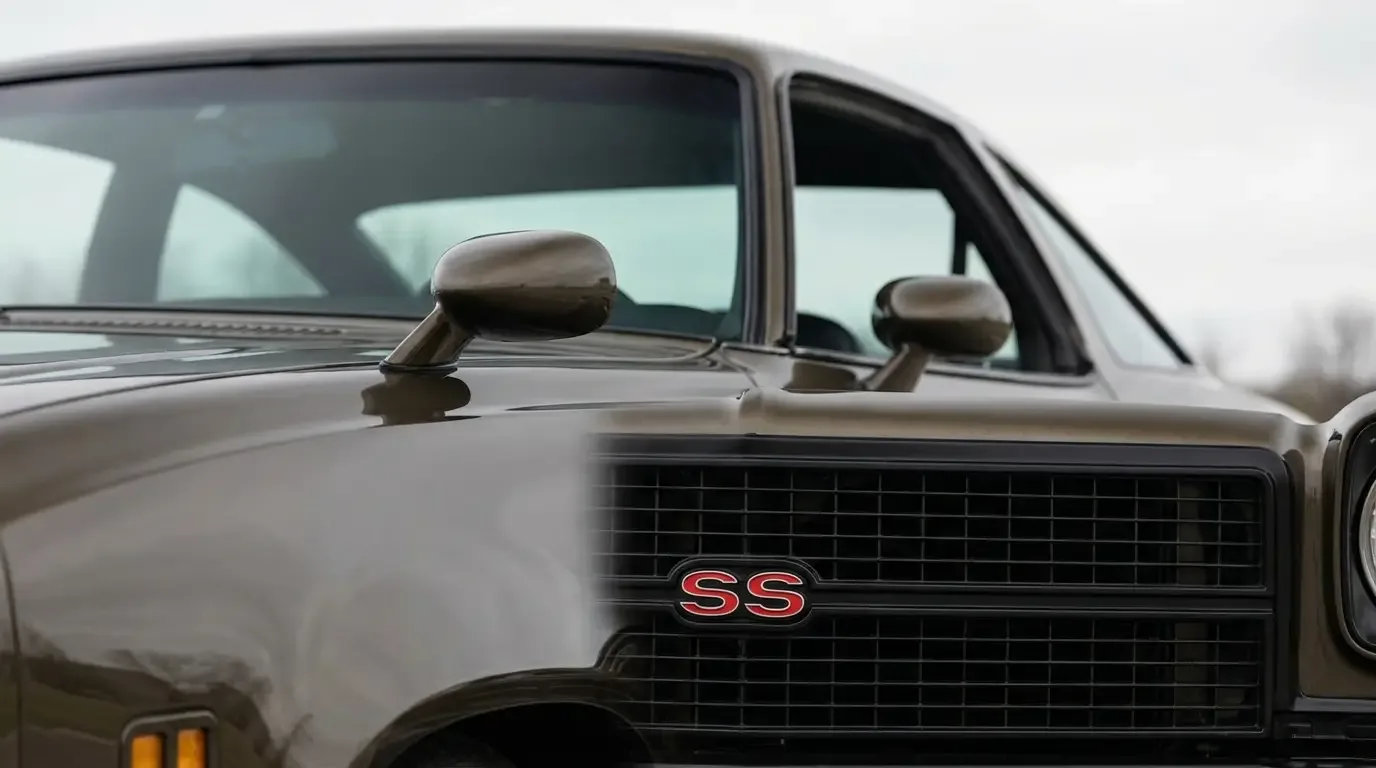
The middle years were about everyone else catching up. Chevrolet launched the Chevelle SS396 in 1966, and the big-block intermediate became a full segment rather than one Pontiac's clever idea. Oldsmobile pushed the 442, Buick built the GS, and the mid-size performance war was on across all of General Motors.
Then 1968 reset the board. GM redesigned the A-body, shortening the two-door coupes to a 112-inch wheelbase and giving the cars the swoopy shape people picture today. Plymouth introduced the Road Runner that same year, a stripped-down, cheap, brutally effective car that proved buyers wanted speed more than luxury. The market had matured from novelty to category.
1969: peak variety
If any single year had the most different muscle cars available at once, it was 1969. The dealer-special world exploded, with COPO Camaros and the all-aluminum ZL1 427, of which only around 69 were built. Ford ran the Boss 302 and Boss 429. The aero wars sent the Dodge Charger Daytona and the Ford Talladega to the track and the street. There was more choice, more variety, and more wild engineering in 1969 than in any year before or after.
The reason 1969 was so rich is that the manufacturers had spent five years escalating and had not yet run into the walls that would stop them. Insurance companies were only starting to notice. Emissions law was coming but had not yet bitten hard. Every division had a mature performance program with real racing budgets behind it, and the homologation rules pushed them to build street versions of cars designed to win on Sunday. It was the last year before the pressure started building against the whole enterprise.
"You can love the whole era and still admit it was not one long party. It was a few incredible years stacked on top of each other, and then it ended fast. Knowing which years did what is the difference between liking these cars and understanding them."
Patrick Walsh
1970: the high-water mark
Power peaked in 1970. Chevrolet's LS6 Chevelle carried a 454 rated at 450 horsepower, the highest factory rating of the classic era. Chrysler offered the 426 Hemi in the Cuda and Challenger at 425 horsepower. Buick's GSX Stage 1 made its huge torque. Almost every manufacturer fielded its most powerful engine in its best-looking body in the same model year.
| Year | Milestone | Marker car |
|---|---|---|
| 1964 | The era begins | Pontiac GTO |
| 1966 | Big-block intermediate goes mainstream | Chevelle SS396 |
| 1968 | A-body redesign, budget muscle | Plymouth Road Runner |
| 1970 | Peak factory horsepower | Chevelle LS6 454 |
| 1972 | Ratings and compression collapse | net-rated engines across the board |
These are period advertised figures, and several of the gross ratings were optimistic or deliberately soft for insurance reasons, so read them as claims of the day. Whatever the exact dyno truth, 1970 was the summit. Everything after it went downhill, and quickly.
1971 and 1972: the years it ended
The decline was not gradual either. For 1971 GM ordered compression ratios lowered across its engines to prepare for unleaded fuel, and power fell before anyone changed how they measured it. Then in 1972 the industry switched from gross horsepower ratings to the more honest SAE net figures, and the numbers on the window sticker seemed to fall off a cliff. A car that read 300-plus horsepower one year read closer to 200 the next, partly real and partly accounting.
Add rising insurance surcharges and tightening emissions rules, and the formula that started in 1964 was finished as a mass-market product by 1972. Understanding those two years explains why the whole thing collapsed so fast, and it feeds directly into how the era reshaped Detroit for good, which you can read the full story on to see the longer consequences.
What makes these years worth memorizing is that they are not evenly spaced highlights. They are hinges. 1964 opened the door, 1968 widened it, 1970 pushed it as far as it would go, and 1972 slammed it shut. Everything else in the era is a variation on what those years established. Learn the hinges and the rest of the decade stops being a blur of similar cars and starts making sense as a story with a clear beginning, a peak, and a hard ending.
Related Reading
Have a
Classic Car
for Sale?
Reach thousands of serious classic car collectors across the US.
Sell It Here →
Are You a Classic Car Dealer?
List your full inventory and connect with targeted classic car buyers.
Join as a Dealer →

About the author
Patrick Walsh
Automotive journalist covering classic car shows, events, and the enthusiast community across North America.
More in History & Heritage
Comments
Be the first to comment on this article.